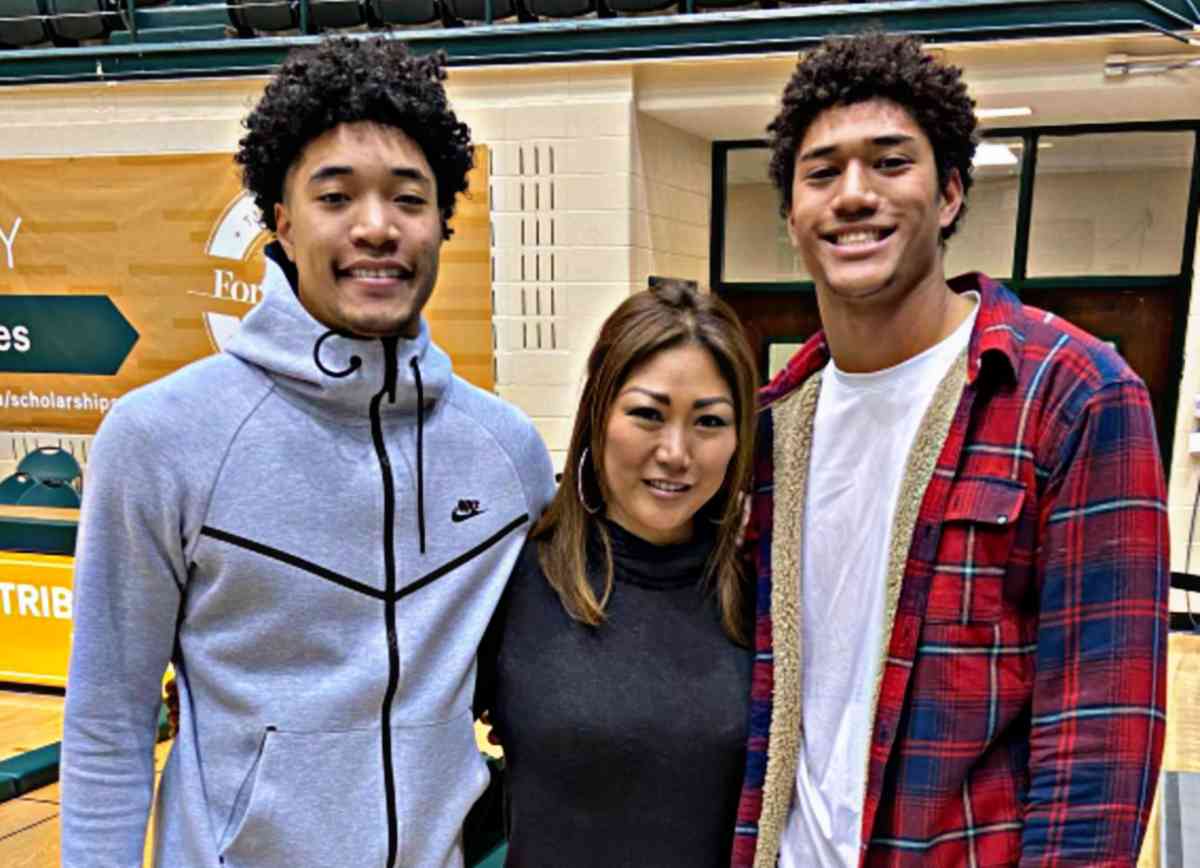
Understanding the Background of Kyle KJ Jackson: Family and Identity
Kyle KJ Jackson is a private individual whose personal background, including the identities of his parents, remains largely outside of the public domain. There is no verified, publicly available information confirming the names or prof...
Kyle KJ Jackson is a private individual whose personal background, including the identities of his parents, remains largely outside of the public domain. There is no verified, publicly available information confirming the names or professional identities of his parents. Because he is not a widely documented public figure, his biographical details—specifically family lineage—are not matters of public record.
Contents
The Nature of Privacy for Private Individuals
In the digital age of 2026, the intersection between public interest and personal privacy has become increasingly complex. While the internet provides access to vast amounts of data, it remains essential to distinguish between public figures—such as celebrities, politicians, or high-profile corporate executives—and private citizens.
For individuals like Kyle KJ Jackson, who do not hold public office or maintain a career that necessitates the disclosure of private life, information regarding family members is generally protected under standard expectations of privacy. When searching for details regarding the parents of an individual, it is common to encounter speculation or social media conjecture. However, in the absence of official statements, confirmed genealogical records, or verified biographical profiles, any claims regarding such details should be treated as unverified.
Navigating Digital Information and Public Records
Understanding why information about an individual’s family might be absent from search results requires an appreciation of how data is aggregated online. Official records, such as birth certificates, marriage licenses, and census data, are often restricted to maintain individual privacy. These documents are typically accessible only to the individuals named on them, their immediate family members, or authorized legal representatives.
When searching for biographical details, users often find that the absence of information is the most accurate reflection of reality. In the context of 2026 data standards, major search engines and social platforms have increasingly tightened policies surrounding the doxing of private information. This means that even if data exists within databases, it is rarely surfaced unless it has been explicitly made public by the individual or a reputable, authorized source.
Distinguishing Between Public Interest and Public Record
The question regarding a person's parentage often stems from a curiosity about their background or potential familial connections to other known entities. In many cases, individuals share names with others, leading to misattribution or confusion. It is common for people to attempt to link private individuals to famous figures or organizations simply due to common surnames.
To verify identity without relying on conjecture, one must look for the following markers of reliability:
- Official Statements: Has the individual or a verified representative ever issued a press release or biography?
- Reputable Journalism: Have major, fact-checked news organizations published a profile that includes family details?
- Primary Documents: Are there records from trusted institutions (such as universities or chambers of commerce) that confirm personal information?
If these markers are absent, it is professionally and ethically sound to conclude that the information is not publicly available.
Evaluating Online Search Results
When using search engines to resolve questions about specific individuals, it is helpful to categorize the types of information one might encounter. The table below illustrates the difference between verifiable information and common pitfalls.
| Category | Type of Data | Reliability | Source Example |
|---|---|---|---|
| Verified Data | Educational, Professional | High | Official school records, LinkedIn, News coverage |
| Public Record | Legal, Tax, Property | High (if accessible) | County clerk offices, court dockets |
| Speculative Data | Rumors, Social Media | Low | Fan forums, gossip sites, unsourced blogs |
| Aggregated Data | People-search engines | Variable | Often inaccurate or outdated third-party databases |
Users looking for information on individuals should be cautious of "people-search" sites. These platforms frequently aggregate metadata and attempt to guess familial relationships through algorithmic matching based on geographic proximity or shared surnames. These guesses are often incorrect and should not be cited as factual evidence.
Common Questions Regarding Personal Backgrounds
To better understand how to approach the search for information about a person’s background, consider these common inquiries:
1. Is it possible for a private citizen to hide their parentage? Yes. In most jurisdictions, individuals are not required to publish or maintain public profiles detailing their family, upbringing, or parentage. This information is considered personal and is not a requirement for standard professional or social engagement.
2. Why do some search results link to unrelated people with the same name? This is known as the "name collision" phenomenon. Because many people share common names, search algorithms often struggle to differentiate between them, pulling in data from anyone with that name regardless of whether they are the same person.
3. Should I trust genealogy websites for this information? Genealogy websites are effective for ancestry research, but they require significant verification. Unless a user has personally verified the tree, data found on these sites is often user-generated and prone to error or misinterpretation of historical records.
4. How can I confirm the identity of a specific professional? If the goal is to verify a professional, focus on their current work. Check the company’s "About Us" page, professional licensing boards, or official industry publications. These sources rarely focus on parents but provide the necessary verification of the individual's current status and credentials.
5. What should I do if I cannot find the information? If a thorough search of reliable sources yields no mention of parents, it is statistically likely that the information is intentionally private. Respecting the privacy of the individual is the most accurate approach to their biography.
Next Steps for Research
If you are attempting to locate this information for a specific, legitimate reason—such as historical research, genealogical interest, or legal necessity—the recommended path is to utilize formal channels rather than internet search engines.
- Vital Records: Consult with the state or regional vital records office where the individual was born. This is the only way to obtain official, verified documentation regarding parentage.
- Professional Documentation: If the individual is a business owner, check state secretary of state filings or corporate registry records. While these do not typically list parents, they provide a verified path for official correspondence.
- Direct Inquiry: If there is a professional or academic reason for needing this information, the most direct approach is to reach out to the individual's office or representation via official contact channels.
In summary, regarding the specific inquiry of who the parents of Kyle KJ Jackson are, there is no credible evidence available. The absence of this data in professional and public registers indicates that such details are personal in nature and not intended for public knowledge. It is recommended to rely only on information that has been explicitly confirmed by the individual or through official, verified documentation.
Image Gallery