How Often to Feed Oscar Fish: A Comprehensive Nutritional Guide
Establishing a consistent feeding schedule for Oscar fish (Astronotus ocellatus) is fundamental to their long-term health, growth, and metabolic stability. As a general rule, juvenile Oscars require daily feedings of two to three small...
Establishing a consistent feeding schedule for Oscar fish (Astronotus ocellatus) is fundamental to their long-term health, growth, and metabolic stability. As a general rule, juvenile Oscars require daily feedings of two to three small portions to support rapid development, while adult Oscars thrive on a schedule of one feeding per day or every other day, depending on their specific size and body condition.
Contents
Understanding the Metabolic Requirements of Oscar Fish
Oscars are large, intelligent cichlids native to South America, known for their voracious appetites and high waste production. Because they are messy eaters that can rapidly foul water quality, understanding how often to feed them is inextricably linked to maintaining a healthy aquarium environment.
In their natural habitat, Oscars are opportunistic omnivores. They consume a variety of proteins, including insects, crustaceans, and small fish, alongside plant matter. In a home aquarium, the frequency of feeding is not merely a matter of hunger; it is a management tool for water chemistry. Overfeeding is the leading cause of elevated nitrate and phosphate levels, which can lead to stress, disease, and stunted growth in large cichlids.
Age-Based Feeding Schedules
The nutritional needs of an Oscar change significantly as it transitions from a juvenile to a full-grown adult. Tailoring the frequency of meals to the fish’s biological life stage ensures optimal organ function and prevents obesity.
Juveniles (Up to 4 inches)
Young Oscars are in a state of rapid physical development. They possess a higher metabolic rate and require frequent nutrient intake to fuel bone and muscle growth.
- Frequency: Twice daily.
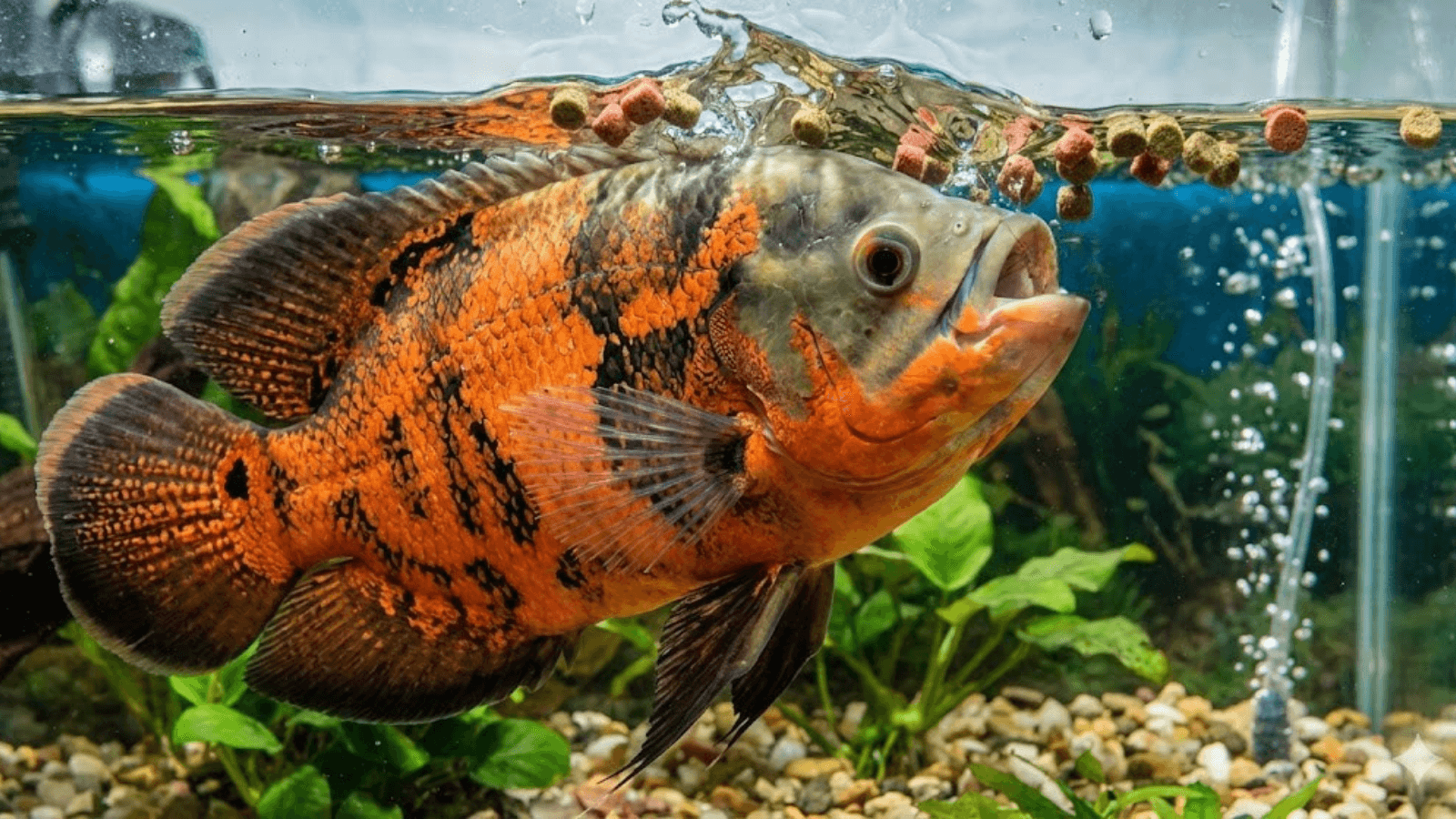
- Method: Provide small amounts that can be consumed within two minutes. If food hits the substrate, it is likely that the fish is being overfed.
- Objective: To provide a steady supply of energy without overwhelming the immature digestive tract.
Sub-Adults (4 to 8 inches)
As the fish reaches adolescence, the frequency of feeding should be tapered back to prevent excessive fat accumulation.
- Frequency: Once daily.
- Method: Offer a varied diet of high-quality pellets, supplemented with occasional frozen or live treats.
- Objective: To maintain consistent growth while monitoring the fish’s abdominal profile to ensure it is not becoming bloated.
Adults (8 inches and larger)
Adult Oscars are robust fish that do not need to hunt as frequently as younger specimens. Maintaining an adult Oscar requires focus on quality rather than frequency.
- Frequency: Once daily or every other day.
- Method: A "fasting day" once a week is highly recommended for adult fish. This allows the digestive system to clear completely, which can reduce the incidence of impaction and bloating.
- Objective: Long-term health maintenance and water quality preservation.
Nutritional Composition and Feed Types
Frequency must be balanced with the nutritional density of the feed. An Oscar fed high-quality, protein-dense pellets requires less frequent feeding than one fed low-quality, filler-heavy flakes.
| Food Type | Frequency | Primary Benefit |
|---|---|---|
| High-Quality Cichlid Pellets | Daily/Every other day | Balanced nutrition, less waste |
| Frozen Bloodworms/Krill | 1-2 times weekly | Protein variety, natural foraging |
| Fresh Vegetables (Peas/Zucchini) | Weekly | Fiber for digestion |
| Live Feeders | Rarely/Not recommended | Psychological stimulation (high disease risk) |
Feeding pellets as a staple is standard practice because they are formulated to provide a complete nutritional profile. When choosing a product, ensure the first few ingredients are whole protein sources (e.g., krill meal, fish meal) rather than grain-based fillers like soy or wheat.
Common Feeding Mistakes and How to Avoid Them
Even experienced keepers encounter issues with feeding routines. Recognizing these errors is the most effective way to prevent health complications.
1. The "Big Belly" Syndrome Many owners equate a round, protruding belly with a healthy fish. In reality, this is often a sign of overfeeding or early-stage bloat. An Oscar should have a relatively smooth, streamlined body shape. If the belly appears unnaturally rounded after a meal, reduce the portion size immediately.
2. Over-Reliance on Live Feeders Many hobbyists believe that feeding live fish (feeder goldfish or minnows) is necessary for an Oscar’s development. This is a misconception. Live fish from pet stores often carry parasites or bacterial infections. Furthermore, they are nutritionally incomplete. If you wish to provide live prey, home-raised feeder insects like crickets or earthworms are a safer, more hygienic alternative.
3. Ignoring Water Quality Post-Feeding The frequency of feeding dictates the frequency of water changes. Because Oscars produce significant waste, every meal contributes to the bioload. If you notice ammonia or nitrite spikes, it is a clear indicator that your feeding frequency is higher than your biological filtration can process.
Monitoring and Troubleshooting
Monitoring the fish’s behavior is the final step in refining your feeding schedule. A healthy Oscar should exhibit "begging" behavior when it senses movement near the tank. However, lethargy or refusal to eat can indicate several underlying issues:
- Temperature Stress: If the water temperature falls outside the ideal 75°F–80°F range, the fish’s metabolism will slow, and it may refuse food.
- Water Chemistry: Check for elevated nitrate levels. Oscars are sensitive to high waste concentrations, and poor water quality is a primary cause of appetite loss.
- Dental or Oral Issues: Occasionally, a fish may struggle to eat due to mouth injuries from fighting or sharp substrate.
If an Oscar skips a single meal, do not be alarmed. Observe the fish for 24 hours. If it continues to ignore food, perform a partial water change and check for symptoms of illness, such as clamped fins or strange swimming patterns.
Frequently Asked Questions
Can I feed my Oscar twice a day if it is an adult? While you can, it is generally discouraged for fully grown adults. Multiple feedings per day significantly increase the amount of organic waste in the tank. If you feel the fish is not getting enough food, it is better to increase the portion size of a single daily feeding rather than increasing the frequency.
How do I know if I am overfeeding? The most reliable indicators are uneaten food settling on the bottom, a rapid accumulation of algae in the tank, and frequent spikes in nitrate levels. If you have to clean the substrate of leftover food daily, you are definitely providing too much.
Should I stop feeding my Oscar if I go on vacation? Healthy, adult Oscars can easily go three to five days without food without any adverse effects. For longer absences, an automatic feeder calibrated to dispense a very small, controlled amount of pellets is preferable to having a friend overfeed the tank.
Are peas good for Oscar fish? Yes. Shelled, boiled peas are an excellent source of fiber and can help prevent constipation and digestive blockage, particularly in fish that seem slightly bloated.
Does the type of substrate affect feeding? Yes. If you use a coarse gravel, food pellets can fall into the gaps, where they remain inaccessible to the fish and decay. A fine sand substrate or a bare-bottom tank makes it easier for the fish to retrieve every pellet, keeping the water cleaner.
Final Recommendation
For the average hobbyist maintaining an adult Oscar in 2026, the most successful approach is a single, high-quality daily feeding with a mandatory 24-hour fasting period once per week. Always prioritize the cleanliness of the water over the perceived "hunger" of the fish. Observe your Oscar’s physical shape and temperament, and adjust portions incrementally to keep your fish lean, active, and thriving.
Image Gallery