Tiger Woods Car Crash Breaking News: A Definitive Timeline and Legacy Analysis
The February 2021 single-vehicle rollover involving Tiger Woods remains one of the most documented accidents in sports history. While the crash resulted in devastating leg injuries that permanently altered his professional trajectory,...
The February 2021 single-vehicle rollover involving Tiger Woods remains one of the most documented accidents in sports history. While the crash resulted in devastating leg injuries that permanently altered his professional trajectory, Woods survived due to the structural integrity of his vehicle and immediate medical intervention. As of 2021, the investigation concluded that excessive speed was the primary cause, and by 2026, the incident serves as a benchmark for both automotive safety and elite athletic rehabilitation.
Contents
The Morning of February 23, 2021: The Incident Report
The "breaking news" that gripped the world began at approximately 7:12 a.m. Pacific Time. Tiger Woods was driving a 2021 Genesis GV80—a courtesy vehicle provided by the Genesis Invitational tournament—northbound on Hawthorne Boulevard in the Rolling Hills Estates and Rancho Palos Verdes area of Los Angeles County.
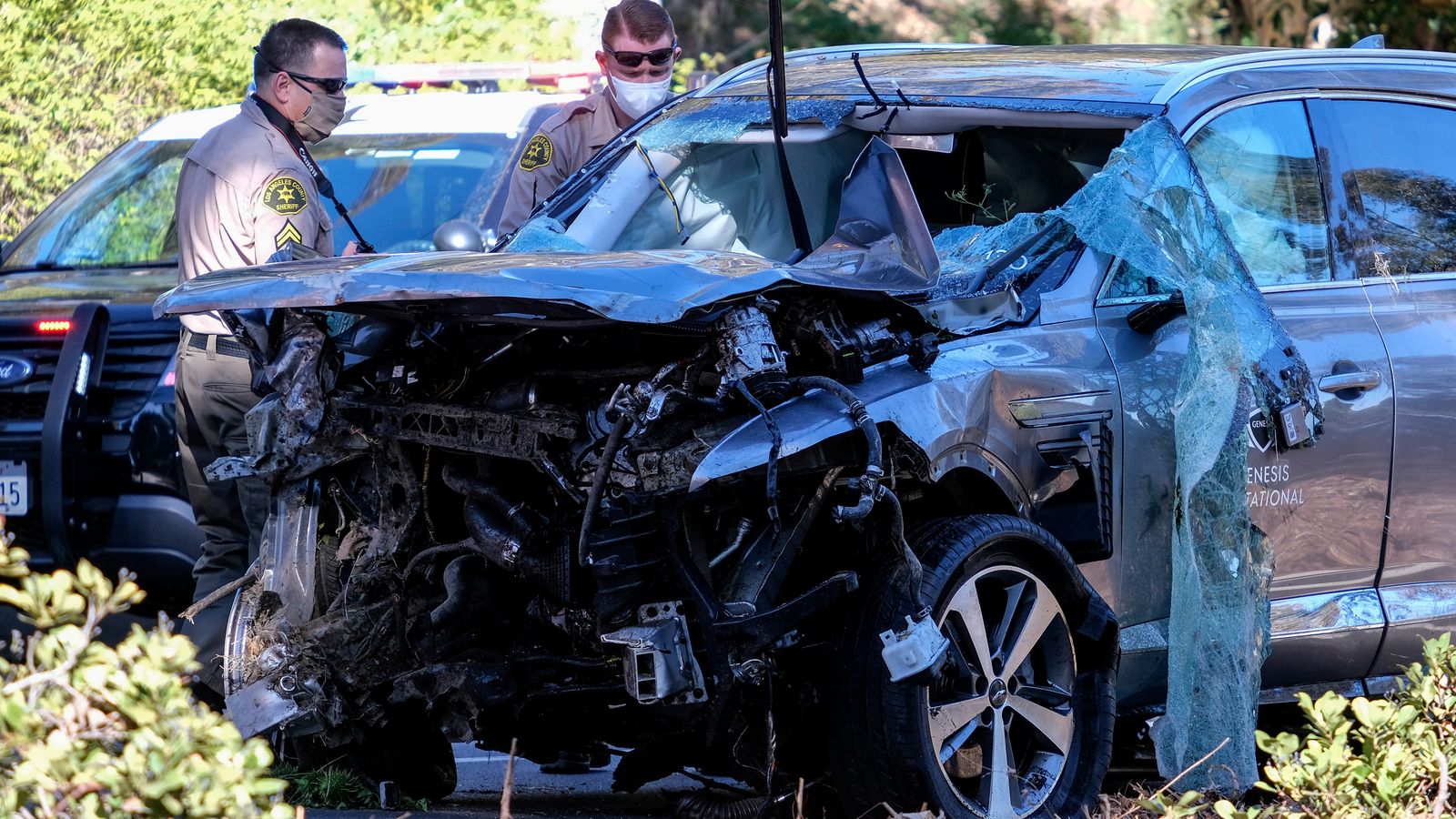
The stretch of road where the accident occurred is a steep, winding descent known for high-speed incidents. Woods’ vehicle crossed the center median, struck a wooden sign, hit a tree, and rolled several times before coming to rest on its side in the brush. Los Angeles County Sheriff’s Department (LASD) officials reported that the vehicle traveled several hundred feet from the initial point of impact.
First responders used a "halligan" tool and an axe to remove Woods through the windshield. Despite the severity of the wreckage, Woods remained conscious and was able to communicate with Deputy Carlos Gonzalez, who was the first on the scene. The deployment of the vehicle's interior airbags and the use of a seatbelt were cited by authorities as the primary reasons Woods survived a crash of that magnitude.
Official Investigation Results and Technical Findings
Following a multi-week investigation, the Los Angeles County Sheriff’s Department released its final report in April 2021. The findings clarified several points of public speculation regarding the cause of the crash and the conditions surrounding it.
Speed and Driver Input
Data retrieved from the vehicle’s Event Data Recorder (EDR), commonly known as the "black box," indicated that Woods was traveling at speeds between 82 and 87 mph in a zone with a posted speed limit of 45 mph. The report suggested that Woods may have inadvertently hit the accelerator instead of the brake pedal while attempting to navigate the downhill curve.
Crucially, there was no evidence of braking recorded by the EDR before the initial impact. Investigators concluded that the primary cause of the collision was driving at a speed unsafe for the road conditions and an inability to negotiate the curve of the roadway.
Absence of Impairment
One of the most scrutinized aspects of the breaking news was whether substances played a role. Sheriff Alex Villanueva confirmed that there were no signs of impairment, no open containers, and no evidence of narcotics or alcohol at the scene. Because there was no probable cause to suggest impairment, no blood tests were administered at the hospital for legal purposes, though medical toxicology is standard in trauma care.
The Role of the Genesis GV80 Safety Suite
The 2021 Genesis GV80 was a relatively new entrant in the luxury SUV market at the time of the crash. The incident provided a real-world, high-stakes demonstration of modern automotive safety engineering.
The GV80 was equipped with ten airbags, including a unique center-side airbag designed to prevent occupants from colliding with each other during a side impact. The structural cage of the vehicle remained largely intact despite the repeated rollovers, protecting the "survival space" of the driver's seat.
Key Safety Features Involved:
- Frontal and Side-Curtain Airbags: Deployed correctly to cushion the primary and secondary impacts.
- Advanced High-Strength Steel (AHSS): Used in the A and B pillars to prevent the roof from collapsing during the rollover.
- Seatbelt Pretensioners: Locked Woods into the seat, preventing him from being ejected or tossed within the cabin.
Automotive safety experts often point to this incident when discussing the evolution of "crumple zones" and how energy is diverted away from the passenger compartment.
Medical Diagnosis and Surgical Interventions
Woods was transported to the Harbor-UCLA Medical Center, a Level 1 trauma center. The injuries were localized primarily to his lower right extremity. The medical team, led by Dr. Anish Mahajan, described the injuries as "comminuted open fractures," meaning the bone had broken into several pieces and had pierced the skin.
Surgical Procedures and Internal Fixation
To stabilize the right leg, surgeons performed an emergency procedure to insert a rod into the tibia. Additional injuries to the bones of the foot and ankle were stabilized with a combination of screws and pins.
Trauma to the muscle and soft tissue of the leg required a surgical release of the covering of the muscles (fasciotomy) to relieve pressure due to swelling—a critical step to prevent compartment syndrome, which can lead to limb loss. Woods later underwent further procedures and spent months in a specialized hospital bed at his home in Florida before beginning the grueling process of learning to walk again.
Long-Term Impacts on Tiger Woods’ Career
The "breaking news" of the crash shifted from a survival story to a recovery story. Before the accident, Woods was already managing a fused spine and multiple knee surgeries. The 2021 injuries introduced a permanent "limp" and significant mobility restrictions.
| Milestone | Date | Significance |
|---|---|---|
| Initial Crash | Feb 23, 2021 | Critical injuries to right leg/ankle. |
| First Public Appearance | Nov 2021 | Woods seen hitting balls at Albany, Bahamas. |
| The Masters Return | April 2022 | Completed 72 holes at Augusta National. |
| Subsequent Surgeries | 2023–2024 | Additional ankle fusion to alleviate chronic pain. |
| 2026 Status | Current | Limited schedule; focus on Major Championships and Sun Day Red brand. |
In 2026, Woods continues to compete on a highly restricted basis. His return to the Masters in 2022 remains one of the most significant "comebacks" in sports, though he has admitted that the physical toll of walking 72 holes is the primary barrier to his competitiveness. The right leg remains "hardware-heavy," and his gait is noticeably affected by the lack of mobility in his subtalar joint.
Comparative Context: High-Profile Athlete Recovery Timelines
Woods is not the first elite athlete to suffer a catastrophic limb injury. His recovery is often compared to Ben Hogan, who survived a head-on collision with a Greyhound bus in 1949 and returned to win the U.S. Open just 16 months later. However, the complexity of modern orthopedics and the sheer force of the 2021 rollover make Woods' return unique.
Unlike Hogan, who dealt primarily with blood clots and pelvic fractures, Woods faced "shattered" bone structures that required extensive metal reinforcement. In the context of 2026, medical professionals use Woods' case as a study in "limb salvage" versus amputation for high-impact trauma victims.
FAQs: Addressing the Most Searched Questions
Was Tiger Woods charged with a crime after the crash?
No. The Los Angeles County Sheriff’s Department did not file criminal charges. The incident was classified as a single-vehicle accident. Woods was issued a citation for speed, but because there were no witnesses or other vehicles involved, and no evidence of impairment, it remained a traffic matter rather than a criminal one.
Did the Genesis GV80's "black box" reveal any mechanical failure?
No. The investigation into the Event Data Recorder found that the vehicle was functioning as intended. There was no evidence of brake failure or steering malfunction. The data showed that the driver continued to apply pressure to the accelerator in the final seconds before the crash, suggesting a "pedal misapplication" error under stress.
How many surgeries has Tiger Woods had on his leg since 2021?
While the exact number of minor procedures is not public, Woods has undergone at least four major surgeries related specifically to the crash. These include the initial emergency stabilization, a subsequent procedure to remove hardware, and a subtalar fusion in 2023 to address post-traumatic arthritis in his ankle.
What is the current status of Tiger Woods’ health in 2026?
In 2026, Woods is in a "maintenance phase." He manages his right leg through daily physical therapy and specialized footwear. While he can no longer play a full PGA Tour schedule, he remains active in the golf world as a player-director and through his course design business, TGR Design. His ability to walk long distances remains his greatest physical challenge.
Practical Recommendations for Recovery and Safety
The Tiger Woods crash provides two critical lessons for the general public: the importance of vehicle safety ratings and the reality of orthopedic rehabilitation.
- Prioritize Top Safety Picks: When purchasing a vehicle, look for IIHS "Top Safety Pick+" ratings. The structural integrity that saved Woods is a result of specific engineering standards that vary between manufacturers.
- Understand "Pedal Misapplication": In high-stress driving situations, it is common for the human brain to mistake the accelerator for the brake. Advanced driver assistance systems (ADAS) that include automatic emergency braking (AEB) can help mitigate these errors.
- Orthopedic Patience: For those recovering from similar "crush" or "comminuted" injuries, Woods' journey highlights that recovery is not linear. It often takes 2-3 years to reach "maximum medical improvement," and chronic pain management is a long-term reality.
For the latest updates on Tiger Woods' tournament schedule or his ongoing recovery protocols, fans should monitor official PGA Tour communications or the TGR Live platforms.
Image Gallery