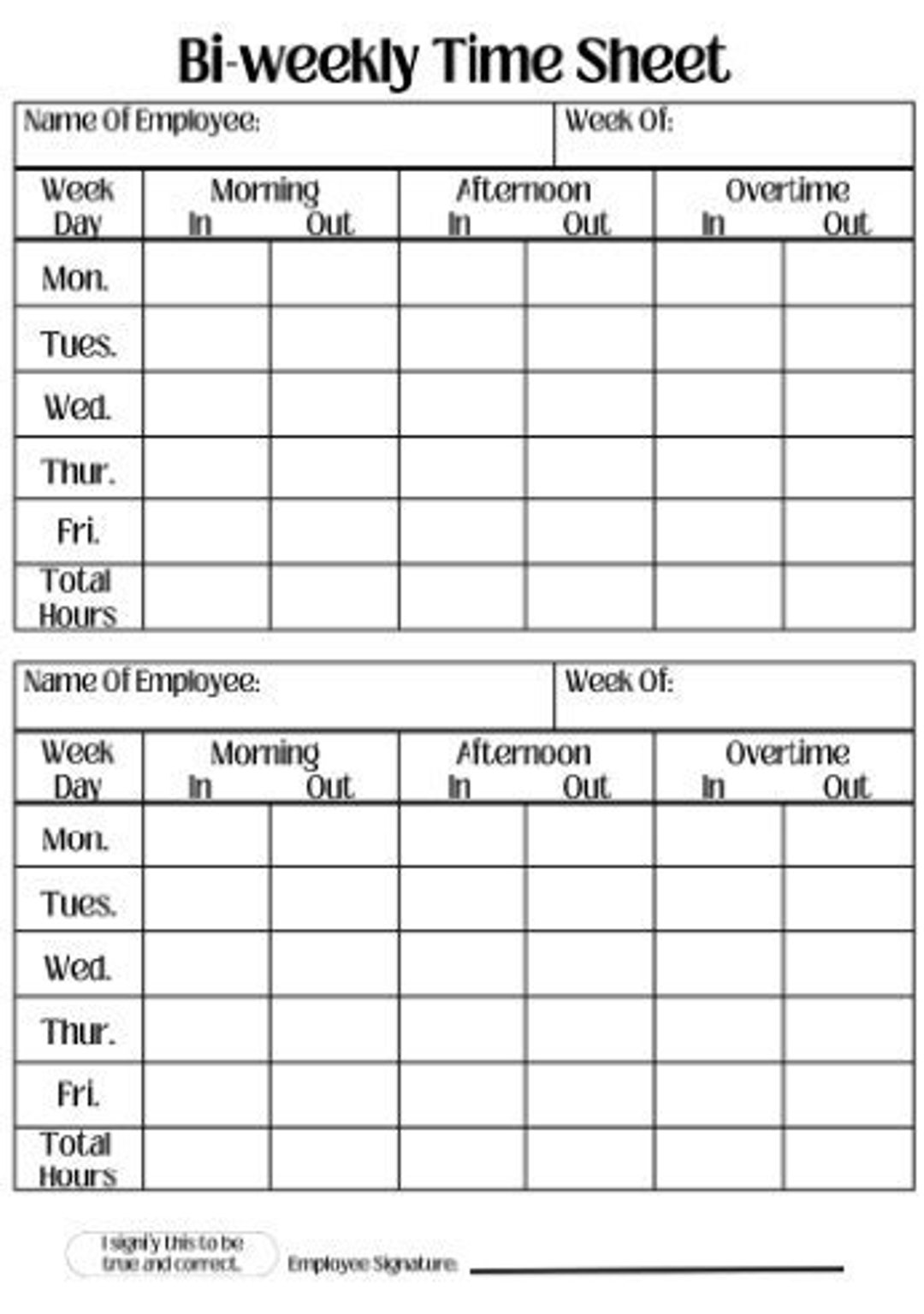
How Employee Weekly Timesheets Shape Work: Impact on Productivity and Culture
Employee weekly timesheets act as a fundamental feedback mechanism that shapes work by defining resource allocation, influencing employee focus, and providing the data necessary for strategic decision-making. Beyond simple payroll proc...
Employee weekly timesheets act as a fundamental feedback mechanism that shapes work by defining resource allocation, influencing employee focus, and providing the data necessary for strategic decision-making. Beyond simple payroll processing, these records quantify labor, allowing organizations to bridge the gap between abstract effort and measurable business outcomes while ensuring regulatory compliance and financial accuracy.
Contents
The Structural Role of Timesheets in Modern Operations
In the professional landscape of 2026, the weekly timesheet remains a cornerstone of organizational structure. While the methods of collection have evolved from manual entries to AI-assisted captures, the core function remains the same: the synchronization of time and value. By requiring employees to account for their hours on a weekly cadence, organizations create a rhythmic cycle of accountability. This "weekly beat" allows for regular intervals of reflection where both management and staff can assess whether the time spent aligns with the week’s stated objectives.
The structural impact is most visible in project management. Timesheets transform work from a series of tasks into a predictable flow of billable and non-billable units. For service-based industries, such as legal, engineering, or consulting firms, the timesheet is the primary source of revenue data. It dictates the pace of project progression and serves as the baseline for estimating future work. Without this granular data, firms would be forced to rely on guesswork, leading to thin margins or over-quoted bids that lose competitive edge.
Furthermore, the weekly interval provides a balance between the micromanagement of daily tracking and the data decay of monthly reporting. A weekly view is fresh enough for employees to remember specific task nuances while being broad enough for managers to identify trends in productivity or project drift before they become catastrophic failures.
Shaping Productivity: The Psychological Feedback Loop
The act of recording time inherently alters the way work is performed—a phenomenon often linked to the Hawthorne Effect, where individuals modify their behavior in response to being observed. When employees know that their time must be categorized at the end of the week, it creates a psychological "nudge" toward intentionality.
- Temporal Awareness: Weekly timesheets force a level of temporal awareness that is often lost in the "busyness" of the workday. Employees become more cognizant of "time sinks," such as excessive internal meetings or repetitive administrative tasks that do not contribute to core KPIs.
- Combating Parkinson’s Law: This law states that "work expands so as to fill the time available for its completion." Weekly tracking sets a boundary. If a task is estimated to take five hours but the timesheet reveals it consistently takes ten, it prompts a necessary conversation about process efficiency or scope creep.
- Task Prioritization: Knowing that a Friday afternoon submission is looming encourages employees to prioritize high-value tasks earlier in the week. It discourages "productive procrastination," where one performs easy, low-impact tasks to avoid more difficult, meaningful work.
However, the influence on culture can be dual-edged. If implemented purely as a surveillance tool, timesheets can foster resentment and a "clock-punching" mentality. Conversely, when framed as a tool for personal productivity and resource advocacy—allowing employees to prove they are over-capacity—timesheets become a mechanism for empowerment and burnout prevention.
Data-Driven Management and Resource Allocation
For leadership, the aggregation of weekly timesheet data is an indispensable asset for high-level resource planning. In 2026, sophisticated Enterprise Resource Planning (ERP) systems analyze these inputs to forecast hiring needs and identify departmental bottlenecks.
Capacity Planning By analyzing the delta between "capacity" (the total hours an employee is contracted to work) and "utilization" (the hours actually logged to projects), managers can identify who is at risk of burnout and who has the bandwidth for new initiatives. This prevents the common pitfall of overloading top performers, a leading cause of turnover in high-stress environments.
Identifying "Vampire Tasks" Timesheets reveal the hidden costs of organizational friction. If a team of ten engineers is collectively spending 50 hours a week on "internal syncs," management can quantify the financial cost of those meetings. This data often serves as the catalyst for structural changes, such as moving to asynchronous communication models or reducing the frequency of recurring status updates.
ROI Analysis Weekly timesheets allow for real-time Return on Investment (ROI) calculations for specific clients or internal products. By comparing the cost of labor (derived from timesheets) against the revenue or value generated by a project, companies can make informed "keep or kill" decisions regarding their portfolio.
Legal Compliance and Financial Integrity in 2026
The legal necessity of accurate time tracking cannot be overstated. In many jurisdictions, including the United States under the Fair Labor Standards Act (FLSA), maintaining accurate records of hours worked for non-exempt employees is a strict requirement. Weekly timesheets serve as the primary evidence in the event of labor audits or wage-and-hour disputes.
For government contractors, particularly those subject to Defense Contract Audit Agency (DCAA) guidelines, the requirements are even more stringent. Timesheets must be contemporaneous, meaning they are filled out as work is performed, and they must provide a clear audit trail. Failure to maintain these records can lead to the forfeiture of contracts and significant legal penalties.
From a financial perspective, timesheets are the bedrock of the "Quote-to-Cash" cycle. They ensure that:
- Invoicing is Accurate: Clients receive detailed breakdowns of work performed, reducing billing disputes.
- Payroll is Seamless: Integration between time-tracking software and payroll systems minimizes manual data entry errors.
- Tax Credits are Captured: Many R&D tax credits require detailed documentation of the time spent on specific innovative activities. Without weekly logs, companies often leave significant money on the table.
Comparing Manual vs. Automated Weekly Tracking
The method by which timesheets are collected significantly influences their accuracy and the subsequent "shape" of work. As of 2026, the transition toward AI-augmented tracking has shifted the burden away from the employee.
| Feature | Manual Entry (Spreadsheets) | Digital SaaS Tracking | AI-Automated Capture |
|---|---|---|---|
| Accuracy | Low (subject to "Friday guessing") | Medium to High | Highest (real-time logs) |
| Admin Overhead | Very High | Moderate | Minimal |
| Strategic Value | Low (static data) | High (real-time reporting) | Highest (predictive insights) |
| Employee Sentiment | Generally Negative | Neutral | Positive (low friction) |
| Audit Readiness | Poor | Good | Excellent |
| Cost | Low (direct) / High (indirect) | Moderate Subscription | High Initial / Low Long-term |
Challenges and Mitigations in Time Tracking
Despite their benefits, weekly timesheets present several challenges that can distort the work they are meant to measure.
The "Friday Afternoon Scramble" A common issue is the tendency for employees to wait until the end of the week to log their hours. This leads to "approximation error," where tasks are rounded up or down, and smaller, intermittent tasks are forgotten entirely. To mitigate this, many organizations in 2026 use automated prompts or "nudge" technology that encourages daily updates rather than a single weekly data dump.
Incentivizing the Wrong Metrics If an organization places too much emphasis on "billable percentage," employees may feel pressured to inflate hours or avoid necessary but non-billable professional development. Management must balance time data with quality metrics to ensure that the drive for "logged hours" does not degrade the actual output quality.
Privacy Concerns With the rise of automated tracking, concerns regarding "tattleware" or excessive surveillance have surfaced. Ethical organizations address this by maintaining transparency about what data is collected and ensuring that tracking is focused on outcomes and project costs rather than minute-by-minute keystroke monitoring.
Common Mistakes to Avoid
- Vague Task Descriptions: Entries like "Administrative Work" or "General Tasks" provide zero strategic value. Encouraging specific, action-oriented labels ensures the data is actionable.
- Ignoring Non-Project Time: Failing to track internal training, sick leave, or holiday time leads to an incomplete picture of company capacity.
- Delayed Approval Workflows: If managers take weeks to review timesheets, the opportunity to correct project drift or billing errors is lost.
Frequently Asked Questions
Do weekly timesheets reduce trust between employees and management?
When used as a tool for micro-management, they can. However, when framed as a resource for project transparency and fair compensation, they can actually build trust. They provide an objective record of an employee's contribution, which is essential for performance reviews and promotions.
How do weekly timesheets differ from daily ones?
Daily timesheets offer the highest accuracy but can be seen as intrusive and administratively heavy for the employee. Weekly timesheets provide a balance, allowing for a broader view of the week's accomplishments while still maintaining enough detail for accurate billing and payroll.
Can AI replace manual timesheets entirely by 2026?
AI has significantly reduced the manual burden by suggesting entries based on calendar invites, emails, and active applications. However, most organizations still require a human "review and submit" step to ensure contextual accuracy and compliance with specific project codes.
What is the legal requirement for time tracking?
Legal requirements vary by country and employee classification. In the US, the FLSA requires employers to keep records of total hours worked per day and total hours worked per workweek for all non-exempt employees. Specific industries, like federal contracting, have even more rigorous "daily entry" requirements.
How do timesheets impact project profitability?
They provide the "Cost" side of the profit equation. By tracking exactly how many hours of specific labor (e.g., senior vs. junior staff) go into a project, companies can calculate their true gross margin and adjust their pricing or processes for future engagements.
Strategic Recommendation for 2026
To maximize the benefits of weekly timesheets while minimizing their friction, organizations should move toward Integrated Time Orchestration. This involves connecting time-tracking tools directly with project management software and communication platforms (like Slack or Teams).
By 2026, the goal is not "tracking" but "capturing." Management should prioritize tools that automatically suggest time entries based on work performed, allowing employees to spend less than five minutes a week simply verifying their data. This shifts the focus from the administrative burden of "filling out a sheet" to the strategic value of "reviewing the week's impact," ultimately shaping a work environment that is data-informed, equitable, and highly efficient.
Image Gallery