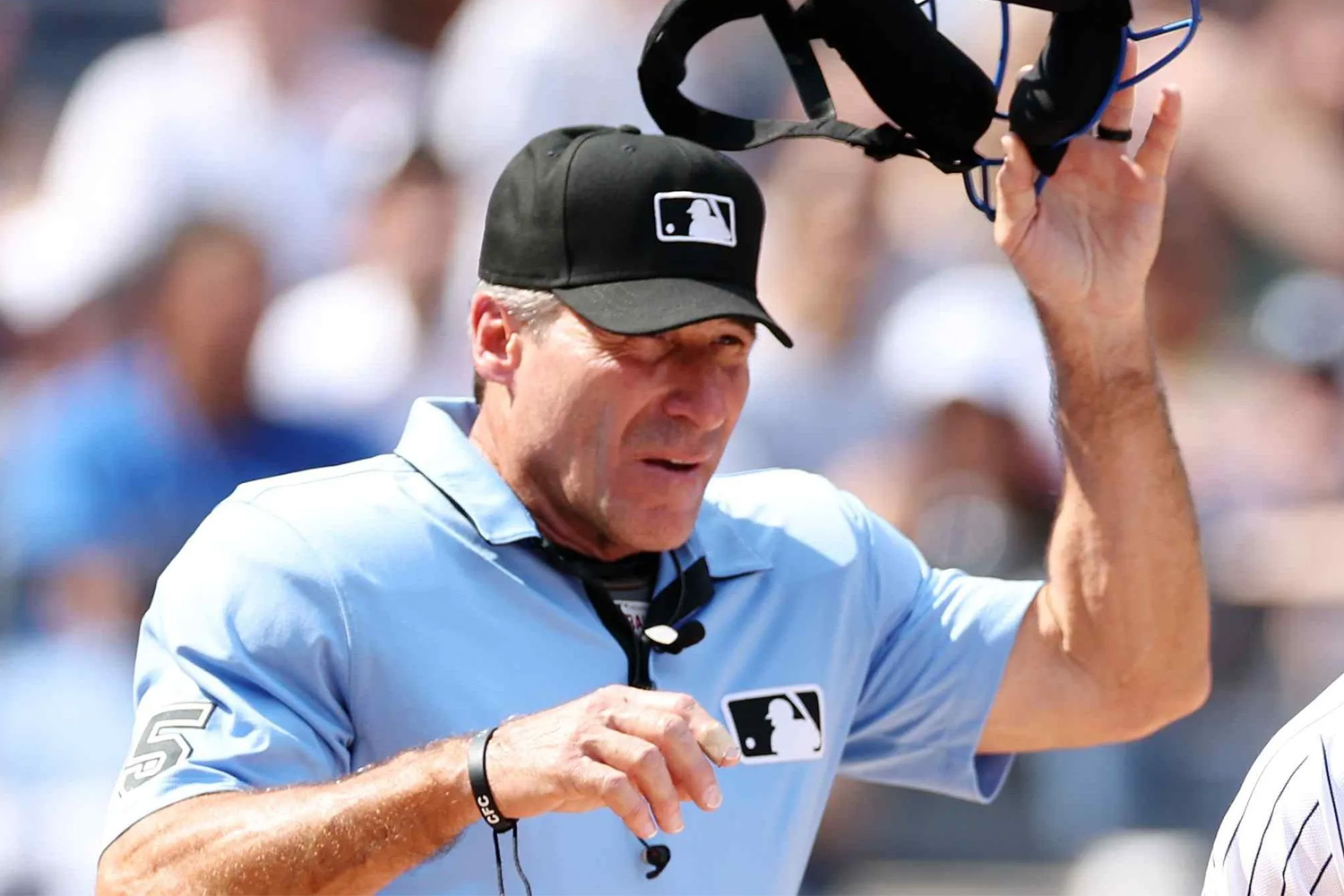
Why Did Angel Hernandez Retire After 30 MLB Seasons
Angel Hernandez retired from Major League Baseball in May 2024, concluding a 33-year career as a professional umpire, including 32 seasons on the MLB staff. His departure followed a period of intense public scrutiny regarding his offic...
Angel Hernandez retired from Major League Baseball in May 2024, concluding a 33-year career as a professional umpire, including 32 seasons on the MLB staff. His departure followed a period of intense public scrutiny regarding his officiating accuracy, consistent legal battles against the league over discrimination claims, and a mutual agreement reached with the commissioner’s office to step down.
Contents
The retirement of Angel Hernandez marked the end of one of the most controversial tenures in modern professional sports. To understand the conclusion of his career, it is necessary to examine the intersection of performance evaluations, the evolving landscape of officiating technology, and the complex legal relationship between the veteran umpire and the league office.
A Career Defined by Longevity and Scrutiny
Angel Hernandez began his journey into professional umpiring in the minor leagues in 1991, eventually earning his promotion to the National League staff in 1993. By the time of his retirement in 2024, he was one of the most recognizable figures on the field. However, this recognition was frequently tied to high-profile mistakes, particularly regarding ball-strike calls and check-swing rulings.
Throughout the 2010s and early 2020s, the rise of advanced pitch-tracking technologies—such as PitchFX and Statcast—allowed fans and media to scrutinize umpire performance with unprecedented precision. These metrics often highlighted Hernandez as an outlier in terms of accuracy compared to his peers. As the gap between human error and technological precision widened, the public pressure on MLB to address officiating consistency reached a boiling point, placing Hernandez at the center of the discourse.
Legal Struggles and Employment Relations
A significant portion of Hernandez’s later career was defined by his 2017 lawsuit against Major League Baseball. Hernandez alleged that the league discriminated against him by failing to promote him to a crew chief position and by consistently excluding him from high-profile assignments, such as the World Series, based on his race.
The litigation spanned several years, moving through various stages of the judicial system. In 2021, a federal judge granted summary judgment in favor of MLB, finding that the league had legitimate, non-discriminatory reasons for its personnel decisions, including performance evaluations that cited recurring officiating errors. Hernandez appealed the decision, but the legal strain added a layer of friction to the employer-employee relationship that was already strained by public perceptions of his work. By the time of his retirement, the legal exhaustion and the ongoing scrutiny likely made a continued professional relationship untenable for both parties.
The Evolution of Umpiring in the 2020s
The environment in which MLB umpires operate has shifted dramatically since Hernandez began his career. The 2020s brought the introduction of the Automatic Ball-Strike System (ABS) in the minor leagues and its testing in spring training. This shift suggests that the era of the home plate umpire as the sole arbiter of the strike zone is coming to an end.
For veteran umpires like Hernandez, whose reputation was built on traditional, manual umpiring, the transition to a technologically integrated game created a disconnect. While the league maintained that veteran umpires provided essential "game management" skills—the ability to handle player disputes, control the pace of play, and navigate high-tension moments—these skills were increasingly overshadowed by the data-driven demand for technical perfection. The shift toward an automated strike zone fundamentally changed the job description of an MLB umpire, and it appears the league and Hernandez arrived at a juncture where his specific skillset no longer aligned with the modern vision of officiating.
Comparative Factors in Umpire Tenure
| Factor | Early Career (1990s) | Late Career (2020s) |
|---|---|---|
| Strike Zone Authority | Subjective / Human | Data-Verified / Automated |
| Media Environment | Local Newspaper Coverage | Social Media / Real-Time Analytics |
| Performance Tracking | Internal Review Boards | Public-Facing Statcast Data |
| Legal/HR Context | Traditional Union Contracts | Complex Civil Litigation |
The Mechanics of the Retirement Agreement
When Hernandez announced his retirement in May 2024, the process was described as a mutual decision. In professional sports, such departures are rarely unilateral. They are typically the result of private negotiations between the league office and the union representing the umpires, the World Umpires Association (WUA).
These negotiations often involve a severance agreement or a settlement that allows the individual to exit the game with their pension and benefits intact while shielding the league from further litigation or public spectacle. By stepping down, Hernandez resolved the ongoing friction between his career standing and the league’s desire to modernize and streamline the officiating experience for fans and players. His retirement effectively closed the door on the possibility of further high-stakes controversies, allowing the league to focus on the transition toward newer officiating standards.
Legacy and Impact on Future Officiating
The legacy of Angel Hernandez is one of intensity and transition. While his career was marred by persistent calls for better accuracy, he remained a fixture on the field for over three decades, surviving numerous administrative changes and the rapid evolution of the game. His departure serves as a case study in how technology can fundamentally alter the career trajectory of officials who were once considered standard-bearers of their profession.
The impact of his retirement is already being felt in the way the league manages its umpire crews. There is a clearer emphasis on consistency and a more rigorous application of performance standards. Younger umpires coming into the league are trained in an environment where pitch-tracking data is a core component of their development, a luxury that was not available when Hernandez was rising through the ranks.
Frequently Asked Questions
Did Angel Hernandez retire voluntarily?
The retirement was described as a mutual agreement. While the specific terms remain confidential, such an exit typically involves negotiations between the umpire, their union, and the league to resolve ongoing performance and legal disputes.
How did technology affect his career?
The introduction of advanced pitch-tracking data, such as Statcast, provided fans and the league with objective proof of strike-zone inaccuracies. This shifted public sentiment and increased pressure on the league to prioritize analytical precision over the traditional, human-reliant model of officiating.
Was the retirement related to his lawsuit against MLB?
The lawsuit created a long-standing, adversarial relationship between Hernandez and MLB. It is highly probable that the desire to resolve this litigation definitively was a contributing factor in the negotiation of his departure.
Will there be a replacement for his position?
MLB manages its umpire staff through a rotating crew system. The league regularly promotes umpires from the Triple-A level to fill vacancies created by retirements, ensuring that the total number of umpires remains consistent with the league's operational requirements.
What is the future of home plate umpiring?
The future of umpiring is moving toward the "Challenge System" and potentially a full ABS (Automated Ball-Strike System), where technology handles the strike zone while human umpires focus on base calls and game management. This transition is expected to continue throughout the remainder of the 2020s.
Moving Forward
The departure of a veteran official after thirty years is a significant milestone that reflects broader trends in professional baseball. For those interested in the future of the sport, the focus is now on how the league integrates technology to ensure that the game remains fair, transparent, and efficient. The era of the "human element" in the strike zone is yielding to the data-driven era, and the retirement of one of the game's most scrutinized figures is a clear signal that this evolution is permanent.
Image Gallery