How to Calculate Your Hourly Paycheck: A Complete Guide for 2026
To calculate your hourly paycheck, multiply your total hours worked by your hourly rate to find your gross pay. Then, subtract mandatory withholdings—including federal income tax, Social Security (6.2%), Medicare (1.45%), and state tax...
To calculate your hourly paycheck, multiply your total hours worked by your hourly rate to find your gross pay. Then, subtract mandatory withholdings—including federal income tax, Social Security (6.2%), Medicare (1.45%), and state taxes—along with voluntary deductions like health insurance or 401(k) contributions, to determine your final net take-home pay.
Contents
Determining exactly how much money will land in your bank account on payday is more complex than a simple multiplication problem. While the base of the calculation is your hourly wage, the transition from gross pay to net pay involves navigating a web of federal regulations, state mandates, and personal benefit choices. As of 2026, payroll calculations remain a cornerstone of personal financial planning, requiring an understanding of current tax brackets and withholding rules. This guide provides a step-by-step framework to ensure you can verify your earnings with professional accuracy.
Understanding the Components of an Hourly Paycheck
Before performing the math, it is essential to distinguish between the two primary figures on any paystub: gross pay and net pay. Gross pay represents the total amount of money earned before any subtractions. Net pay, often called "take-home pay," is the amount remaining after all taxes and deductions have been cleared.
For hourly employees, the calculation is dynamic. Unlike salaried workers who receive a fixed amount each period, hourly workers' paychecks fluctuate based on the number of hours recorded. This requires a diligent tracking of time, inclusive of regular hours, overtime, and any "premium" pay such as holiday rates or shift differentials.
The Impact of Pay Frequency
How often you get paid affects the size of each individual check, even if your annual income remains the same. The most common pay frequencies in 2026 are:
- Weekly: 52 paychecks per year.
- Bi-weekly: 26 paychecks per year (occurring every two weeks).
- Semi-monthly: 24 paychecks per year (typically on the 15th and last day of the month).
- Monthly: 12 paychecks per year.
Understanding your cycle is vital because certain deductions, like health insurance premiums, are often divided equally across the number of pay periods in a year.
Step 1: Calculating Your Gross Pay
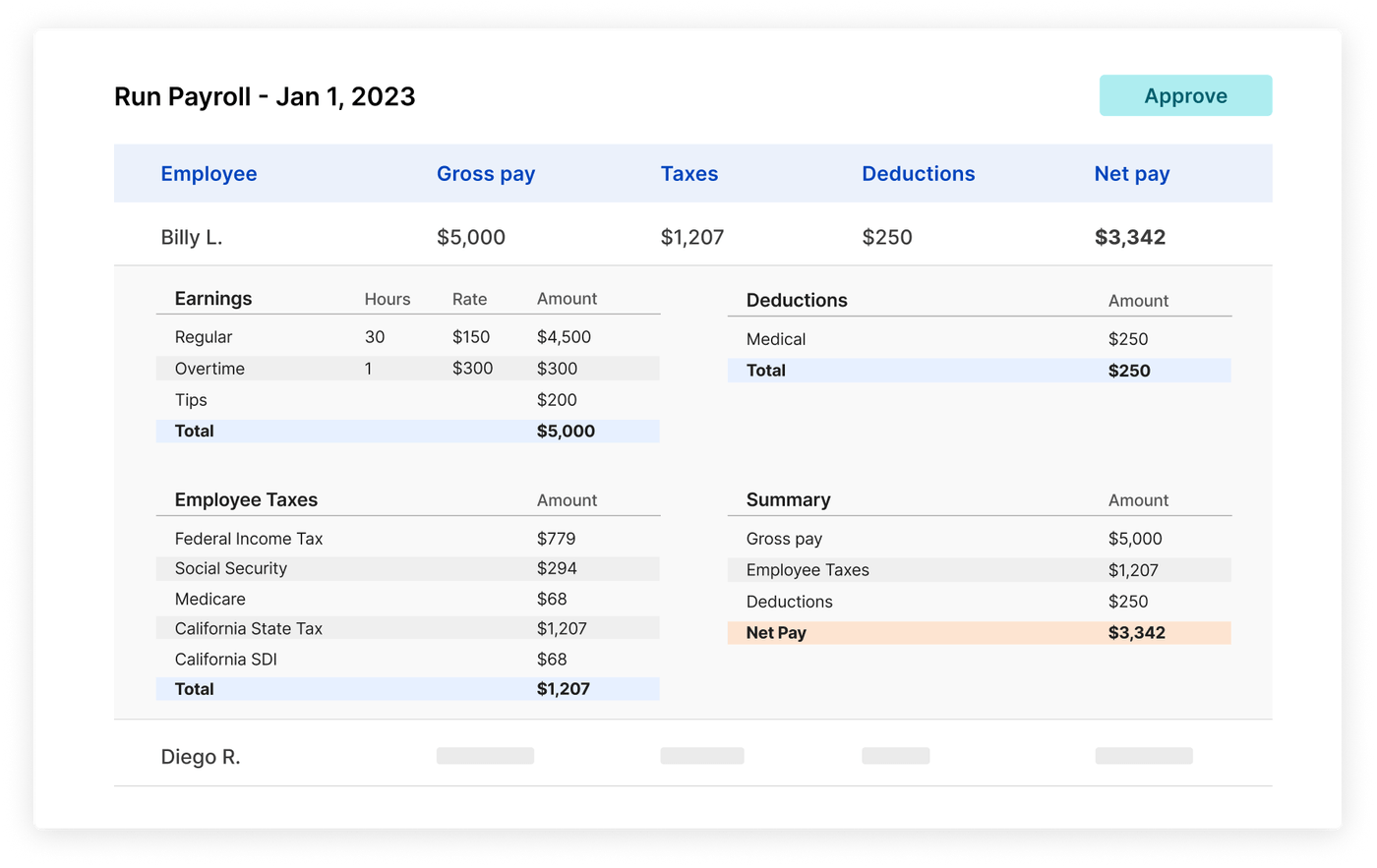
The foundation of your paycheck is your gross earnings. For an hourly worker, this calculation must be broken down by hour type to account for legal requirements like overtime.
Regular Hours
Multiply your standard hourly rate by the number of hours worked up to 40 hours in a workweek.
- Formula: Regular Hours × Hourly Rate = Regular Gross Pay.
Overtime Pay
Under the Fair Labor Standards Act (FLSA), which remains the federal standard in 2026, non-exempt employees must be paid "time and a half" for any hours worked over 40 in a single workweek. Some states, such as California, have more stringent requirements, including daily overtime for hours worked beyond eight in a single day.
- Formula: Overtime Hours × (Hourly Rate × 1.5) = Overtime Gross Pay.
Other Earnings
If you receive tips, commissions, or bonuses during the pay period, these must be added to your regular and overtime pay to arrive at your Total Gross Pay. In 2026, many employers also include "wellness incentives" or "remote work stipends" in this category, which are typically taxable.
Step 2: Determining Mandatory Tax Withholdings
Once you have your total gross pay, the government requires several deductions. These are not optional and are governed by federal and state law.
Federal Income Tax
This is the most variable deduction. It is based on the information you provided on your Form W-4. The Internal Revenue Service (IRS) uses a graduated tax system. As of 2026, the tax brackets are adjusted for inflation, but the fundamental logic remains: as you earn more, a higher percentage of your income is withheld. Factors affecting this include:
- Filing Status: Single, Married Filing Jointly, or Head of Household.
- Dependents: Credits for children or other qualifying relatives.
- Multiple Jobs: Adjustments if you or your spouse hold more than one position.
FICA Taxes (Social Security and Medicare)
The Federal Insurance Contributions Act (FICA) mandates two specific withholdings that are shared between the employer and the employee:
- Social Security: Usually 6.2% of your gross pay, up to the annual wage base limit. For 2026, ensure you check the updated wage cap, as income earned above this limit is not subject to the 6.2% tax.
- Medicare: 1.45% of all gross pay. There is no wage limit for Medicare tax. In fact, high-income earners may be subject to an Additional Medicare Tax of 0.9% if their earnings exceed specific thresholds (e.g., $200,000 for individuals).
State and Local Taxes
Depending on your location, you may see deductions for state income tax. In 2026, nine U.S. states (including Florida, Texas, and Washington) do not tax earned income. However, other states have either a "flat tax" (a single percentage for everyone) or a "progressive tax" (similar to the federal system). Some municipalities also charge a local or city tax, which is typically a small percentage (e.g., 1% to 4%).
Step 3: Accounting for Voluntary Deductions
After mandatory taxes are calculated, voluntary deductions are subtracted. These are services or benefits you have opted into through your employer.
Pre-Tax Deductions
Pre-tax deductions are highly beneficial because they are taken out of your gross pay before taxes are calculated, effectively lowering your taxable income. Common examples include:
- Traditional 401(k) or 403(b): Retirement savings.
- Health Insurance Premiums: Your portion of the medical, dental, or vision plan.
- Health Savings Account (HSA) or Flexible Spending Account (FSA): Funds set aside for medical or childcare expenses.
Post-Tax Deductions
These are taken out after taxes have been calculated, meaning they do not lower your tax liability. Common examples include:
- Roth 401(k) Contributions: Retirement savings where you pay tax now to enjoy tax-free withdrawals later.
- Life or Disability Insurance: Supplemental policies not covered by the employer.
- Union Dues: Fees for labor organization membership.
- Wage Garnishments: Court-ordered deductions for child support, student loans, or unpaid taxes.
Step 4: The Final Calculation (Net Pay)
To arrive at your final hourly paycheck amount, follow this sequence:
- Total Gross Pay (Regular + Overtime + Bonuses)
- Minus Pre-Tax Deductions = Taxable Income
- Minus Mandatory Taxes (Federal, State, FICA)
- Minus Post-Tax Deductions (Roth, Garnishments, etc.)
- EQUALS Net Pay (The amount on your check)
Hourly Pay Translation Table (2026 Estimates)
The following table illustrates the relationship between hourly wages and gross earnings across different pay frequencies, assuming a standard 40-hour workweek.
| Hourly Rate | Weekly Gross | Bi-Weekly Gross | Monthly Gross (Avg) | Annual Gross |
|---|---|---|---|---|
| $15.00 | $600.00 | $1,200.00 | $2,600.00 | $31,200.00 |
| $25.00 | $1,000.00 | $2,000.00 | $4,333.33 | $52,000.00 |
| $35.00 | $1,400.00 | $2,800.00 | $6,066.67 | $72,800.00 |
| $50.00 | $2,000.00 | $4,000.00 | $8,666.67 | $104,000.00 |
| $75.00 | $3,000.00 | $6,000.00 | $13,000.00 | $156,000.00 |
Note: Monthly averages are calculated as (Annual Gross ÷ 12). Net pay will be significantly lower depending on your specific tax bracket and benefits.
Common Pitfalls and Troubleshooting
Errors in hourly paychecks are more common than in salaried ones due to the manual nature of time tracking. If your check looks incorrect, consider the following:
Unpaid Breaks vs. Paid Breaks
Under federal law, short breaks (usually 5 to 20 minutes) are typically considered compensable work time. However, "bona fide" meal periods (typically 30 minutes or more) are usually not paid, provided the employee is completely relieved of duty. Ensure your math accounts for these subtractions.
The "Ninth Hour" and Daily Overtime
If you work in a state like California or Nevada, you might be owed overtime even if you didn't exceed 40 hours in the week. For example, working one 10-hour day and three 8-hour days (34 hours total) would still trigger two hours of overtime pay in these jurisdictions.
Incorrect W-4 Settings
If your take-home pay is lower than expected, check your federal withholding settings. A common mistake is not accounting for a spouse's income or a second job, which can lead to the IRS requiring a higher withholding rate to avoid a large tax bill at year-end.
Tools and Resources for Accuracy
While manual calculation is helpful for understanding the process, using updated digital tools is recommended for precision:
- IRS Tax Withholding Estimator: An official tool to help you determine if you are having the right amount of federal tax withheld.
- State Department of Labor Websites: Essential for verifying local minimum wage increases and overtime rules, which often change annually on January 1st.
- Payroll Software Portals: Most employers in 2026 provide access to portals (like ADP, Workday, or Gusto) that offer "Paycheck Modelers." These allow you to simulate how changes to your 401(k) or tax withholdings will affect your net pay.
FAQ
How do I calculate my paycheck if I receive tips? If you receive tips, you must still calculate your base hourly wage (which may be a lower "tipped minimum wage") and add your total reported tips. Employers are required to ensure that your base pay plus tips equals at least the standard minimum wage. Taxes are then calculated on the sum of your hourly pay and your tips.
What is the difference between a 401(k) and a Roth 401(k) on my paycheck? A traditional 401(k) is a pre-tax deduction, which lowers the amount of income you are taxed on today. A Roth 401(k) is a post-tax deduction; you pay the full tax on that money now, but the funds grow tax-free, and you won't owe taxes when you withdraw them in retirement.
Why is my bi-weekly paycheck smaller than half of my monthly expenses? This is a common budgeting error. Because there are slightly more than four weeks in a month, a bi-weekly schedule results in two months every year where you receive three paychecks instead of two. Most months, you are only receiving pay for four weeks, not the full calendar month.
Can my employer deduct for uniforms or broken equipment? In many jurisdictions, employers can only deduct for these items if the deduction does not bring your hourly earnings below the minimum wage. Furthermore, many states have specific laws prohibiting these deductions entirely without written consent.
Is holiday pay mandatory for hourly workers? Under federal law, employers are not required to pay extra for working on holidays or weekends unless it puts the employee into overtime (over 40 hours for the week). However, many companies offer "Holiday Premium Pay" as a benefit, usually at 1.5x or 2x the regular rate.
Practical Recommendation: Always keep a personal log of your hours worked each day, including start times, end times, and meal breaks. Compare this log against your official paystub every pay period. If a discrepancy occurs, contact your payroll or HR department immediately with your records to request a "payroll adjustment" or "manual check" to correct the error.
Image Gallery