The Cost of Adding Drivers to Business Auto Insurance
Adding a driver to a business auto insurance policy typically increases premium costs by $500 to $2,500 per driver annually, though expenses can fluctuate beyond this range based on specific risk factors. Key cost determinants include...
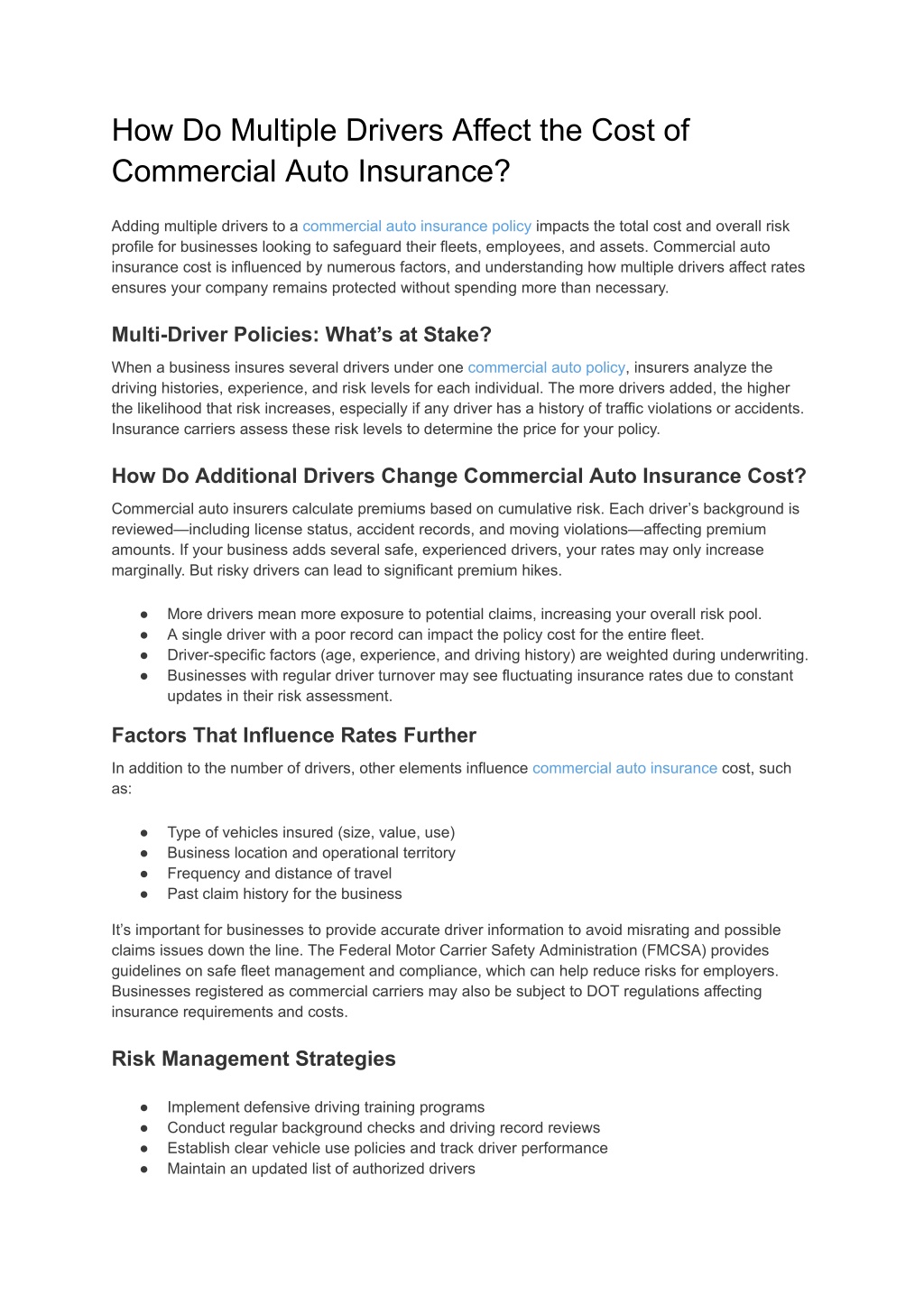
Adding a driver to a business auto insurance policy typically increases premium costs by $500 to $2,500 per driver annually, though expenses can fluctuate beyond this range based on specific risk factors. Key cost determinants include the driver’s Motor Vehicle Record (MVR), age, commercial driving experience, vehicle type, and geographical radius of business operations.
Contents
Overview of Commercial Auto Policy Pricing
Commercial auto insurance policies are written to cover business vehicles and the individuals operating them on behalf of an enterprise. Unlike personal auto insurance, where policy rates primarily reflect the vehicle owner and household members, business auto coverage assesses liability based on operational risk, fleet exposure, vehicle classification, and employee driving habits.
When an employer registers a new driver with their insurer, the underwriter evaluates the incremental risk that individual introduces to the business. Insurance underwriters evaluate how often the driver will operate company vehicles, the gross vehicle weight rating (GVWR) of those vehicles, the nature of cargo or passengers carried, and the driver’s historical driving habits. Adding a low-risk, experienced employee to a lightweight delivery van might result in a modest annual increase of $400 to $700. Conversely, adding a driver under 25 years old or an individual with prior traffic violations to a heavy commercial truck can increase annual premiums by $2,000 to $4,500 or more per year.
Disclaimer: Insurance rules, state regulations, and underwriting guidelines vary significantly across jurisdictions. The financial estimates and policy considerations provided below serve as general guidance. Business owners should consult a licensed commercial insurance agent or broker to review specific policy terms and obtain binding premium quotes.
Primary Factors Influencing the Cost of Adding a Driver
Insurers do not apply a flat fee when adding a new driver to a commercial fleet policy. Instead, underwriters evaluate several core risk variables to calculate the specific premium adjustment (endorsement cost).
- Driver Addition Premium Cost
- Driver's MVR
- Driver's Age & Experience
- Vehicle Type & Weight Class
- Operational Radius & Duty
- Employment Status
1. Motor Vehicle Record (MVR) and Driving History
A driver’s MVR is the most influential factor in calculating added insurance costs. Commercial insurers review an applicant's driving record over a rolling 3- to 5-year period.
- Clean Driving Record: Drivers with zero moving violations, minor infractions, or at-fault accidents present minimal risk and trigger the lowest rate increases.
- Minor Infractions: Speeding tickets (less than 15 mph over the limit), improper lane changes, or minor equipment violations usually cause moderate premium surcharges of 10% to 25% per violation.
- Major Infractions: Driving under the influence (DUI/DWI), reckless driving, excessive speeding, or at-fault accidents involving bodily injury dramatically increase policy costs. In many cases, major violations can double the per-driver cost or prompt insurers to issue a driver exclusion, refusing coverage for that employee altogether.
2. Driver Age and Experience
Underwriters rely on actuarial data showing that younger and less experienced drivers pose a higher statistical risk for vehicle collisions.
- Drivers Under 25: Adding young drivers typically results in the highest premium increases, often adding 50% to 150% more to the base endorsement cost compared to mature drivers.
- Drivers Aged 25 to 65: This demographic represents the standard risk baseline. Rates remain relatively stable for experienced drivers within this range who maintain clean driving records.
- Commercial Driving Experience: For heavy commercial vehicles requiring a Commercial Driver's License (CDL), insurers evaluate the years of experience holding that specific license class rather than just standard driving years.
3. Vehicle Classification and Fleet Type
The risk profile of the vehicle assigned to the driver directly alters the rate calculation.
- Light-Duty Vehicles: Sedans, minivans, and small pickup trucks carrying minimal business equipment present lower liability risks.
- Medium- to Heavy-Duty Trucks: Box trucks, flatbeds, cargo vans, and semi-tractors carry higher potential claims costs due to weight, momentum, and potential property damage during collisions.
- Specialized Cargo: Vehicles transporting hazardous materials (HazMat), passenger groups, or high-value freight require elevated liability limits, escalating the cost of adding any driver.
4. Operational Radius and Geography
Where and how far the driver operates company vehicles alters risk exposure:
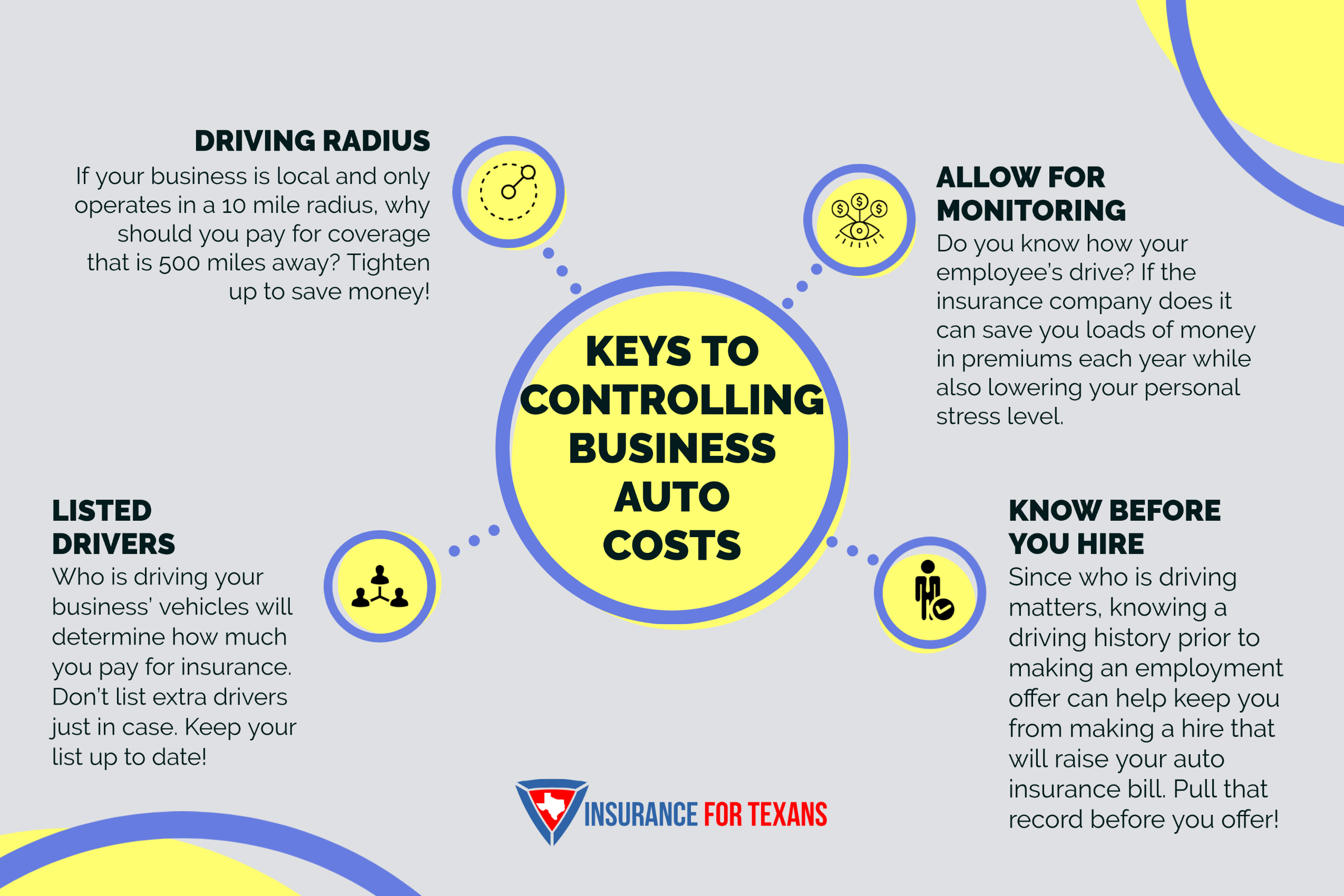
- Local Operations: Driving within a limited radius (e.g., under 50 miles) in suburban or rural areas carries lower premium surcharges.
- Urban Driving: Frequent operation in densely populated metropolitan areas increases traffic density risk, leading to higher baseline rates.
- Long-Haul/Interstate: Driving across state lines or over extended distances increases highway exposure, driver fatigue risk, and regulatory scrutiny by organizations such as the Federal Motor Carrier Safety Administration (FMCSA), driving up premiums.
Commercial Underwriting Risk Classifications
Insurers evaluate prospective company drivers against internal underwriting guidelines, typically categorizing them into three primary risk tiers.
| Driver Risk Classification | Qualifications & MVR Profile | Typical Annual Premium Impact (Per Driver) | Typical Underwriting Outcome |
|---|---|---|---|
| Preferred / Low Risk | Age 25+; 3+ years experience; 0 moving violations or accidents in past 3–5 years. | $500 – $900 | Approved immediately; standard policy rates apply. |
| Standard / Moderate Risk | Age 21–24 OR 25+ with 1–2 minor moving violations or 1 minor non-injury accident. | $1,000 – $1,800 | Approved with minor surcharge; driver safety training may be recommended. |
| High Risk / Non-Standard | DUI/DWI history, reckless driving, multiple moving violations, or major at-fault accidents. | $2,000 – $4,500+ | Conditional approval with heavy surcharges, high deductible requirements, or named driver exclusion. |
Step-by-Step Process for Adding a Driver to Commercial Coverage
Adding an employee to a commercial auto policy requires formal documentation to maintain policy validity and ensure claims coverage.
Step 1: Collect Required Driver Documentation
Before contacting your insurance carrier or broker, obtain the following information from the prospective driver:
- Full legal name (as it appears on their driver's license).
- Date of birth and social security number (if required for background checks).
- Driver's license number and state of issuance.
- Commercial Driver’s License (CDL) class and endorsements (e.g., HazMat, Passenger, Tanker), if applicable.
- Written consent from the employee permitting an MVR review.
Step 2: Submit a Driver Change Request (Endorsement)
Submit the driver's details through your commercial insurance carrier's online management portal or directly to your licensed insurance agent. Specify the primary vehicle the employee will operate, their regular job duties, and whether they will drive full-time or part-time.
Step 3: Underwriting Review and MVR Screening
The insurance carrier pulls the official MVR from the state licensing authority. The underwriter evaluates the record against their company guidelines. This process typically takes between 24 hours and 5 business days, depending on carrier automation and license complexity.
Step 4: Policy Endorsement and Premium Adjustment
If approved, the carrier issues a policy endorsement (a formal amendment to the insurance contract) listing the new driver. The insurer issues a revised premium statement reflecting the pro-rated cost for the remaining policy term.
Consequences of Failing to List Drivers
Skipping the driver addition process to save money on commercial insurance creates serious financial and legal liabilities for a business owner.
1. Claim Denials
If an unlisted employee drives a company vehicle and causes an accident, the insurer may investigate whether the driver was a regular operator. If the insurer determines the employee should have been listed on the policy, they may deny coverage for third-party liability, property damage, and bodily injury claims.
2. Fraud and Material Misrepresentation
Failing to disclose regular drivers can be interpreted as material misrepresentation or insurance fraud. Insurance companies reserve the right to void the policy retroactively (ab initio), leaving the business fully exposed to pending lawsuits and legal costs.
3. Policy Cancellation or Non-Renewal
Carriers audit commercial accounts regularly. Discovering unlisted drivers during routine audits or claims investigations frequently results in mid-term policy cancellation or a refusal to renew coverage, making it difficult to secure commercial insurance with other carriers in the future.
Strategies to Lower the Cost of Adding Commercial Drivers
Businesses can implement proactive risk-management strategies to suppress the insurance costs associated with adding new drivers.
Implement Strict Pre-Employment Screening
Establish clear hiring guidelines regarding MVR records. Setting a baseline threshold—such as rejecting applicants with more than one minor moving violation in three years—prevents high-risk drivers from entering your talent pipeline and inflating insurance premiums.
Adopt Telematics and Fleet Management Systems
Many commercial insurers offer premium discounts ranging from 5% to 25% for businesses that deploy telematics devices across their fleets. These systems track driver behavior, including hard braking, rapid acceleration, speeding, and cornering force. Reliable telemetry data demonstrating safe driving habits can help offset the baseline surcharges of newly added employees.
Offer Certified Defensive Driving Programs
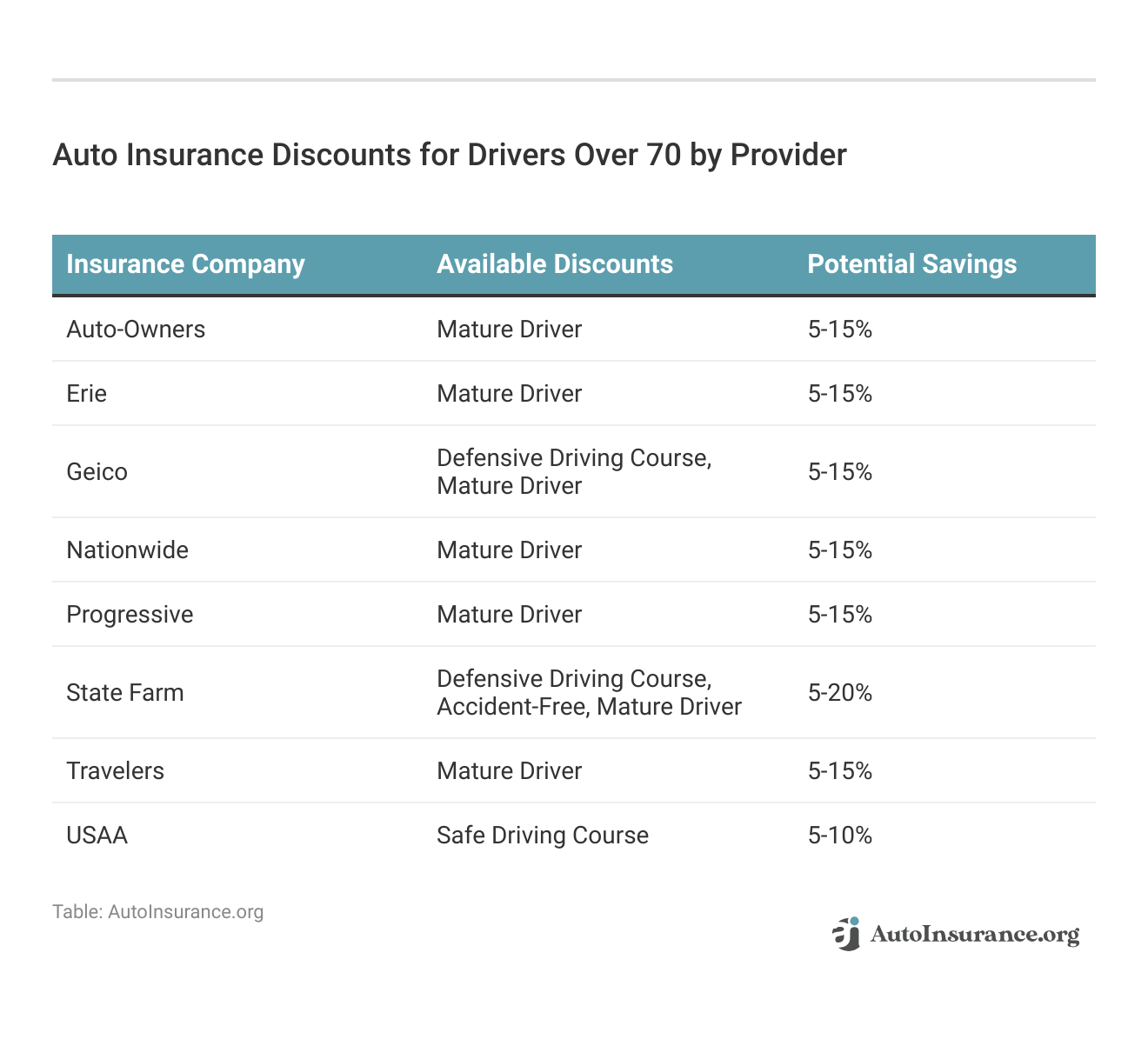
Enrolling drivers in recognized safety courses—such as those certified by the National Safety Council (NSC)—can qualify your business for safe driver premium discounts. Periodic retraining reinforces fleet safety culture and lowers overall loss ratios.
Evaluate Deductible Structures
Increasing the policy deductible for collision and comprehensive coverages can help offset higher premium costs when adding standard- or high-risk drivers. However, the business must maintain adequate cash reserves to cover the higher out-of-pocket costs in the event of a claim.
Special Considerations: Permissive Use and HNOA Coverage
Businesses must distinguish between regular company vehicle operators and occasional drivers to structure coverage correctly.
Permissive Use in Commercial Insurance
Unlike personal auto policies, which often extend automatic coverage to guest drivers under permissive use rules, commercial auto policies strictly restrict permissive use. Permissive use in a commercial setting typically applies only to rare, unpredictable situations (e.g., a mechanic moving a truck across a parklot or an employee driving once in an emergency). Regular drivers cannot rely on permissive use clauses; they must be formally named on the policy schedule.
Hired and Non-Owned Auto (HNOA) Coverage
If employees drive their personal vehicles or rented cars for business errands, adding them as named drivers to a standard commercial auto policy may not be required. Instead, businesses should purchase Hired and Non-Owned Auto (HNOA) coverage.
- Hired Auto Coverage: Protects the business against liability when renting or leasing vehicles for commercial purposes.
- Non-Owned Auto Coverage: Protects the business against third-party liability when employees drive personal vehicles to conduct business tasks (e.g., dropping off bank deposits or visiting client sites).
HNOA coverage is typically added as an endorsement to a Commercial General Liability (CGL) or Commercial Auto policy and generally costs $100 to $500 per year, offering a cost-effective alternative for businesses whose employees drive infrequently or use personal transport.
Frequently Asked Questions
How long does it take to add a new driver to a commercial policy?
In most cases, insurance brokers or digital carrier portals can process a driver endorsement within 24 to 48 hours. However, if the applicant has an out-of-state license, a complex MVR, or requires specialized underwriting review, approval may take up to 5 business days.
Can an insurance company refuse to add a driver to a business policy?
Yes. If an employee's Motor Vehicle Record contains major violations—such as DUIs, reckless driving, or multiple at-fault accidents—the underwriter may classify the individual as unacceptable. The insurer may issue a named driver exclusion, requiring the employer to sign an agreement stating that the excluded employee will never operate company vehicles.
Does adding a part-time employee cost less than a full-time employee?
Not necessarily. Commercial underwriters assess the driver’s overall risk profile and MVR rather than hours worked per week. However, if the part-time status limits total annual vehicle mileage or duty classification, the underwriter may adjust the premium surcharge downward.
What happens to the insurance cost when a high-risk driver cleans up their MVR?
Moving violations and accidents typically fall off insurance rating calculations after 3 to 5 years (depending on state regulations and carrier guidelines). Once a driver’s MVR clears, the business can request a rate re-evaluation from the insurer to reduce or eliminate the driver surcharge.
Do business owners need to list themselves as drivers on their commercial policy?
Yes. Any business owner, partner, or officer who regularly operates vehicles registered under the business entity must be listed as an approved driver on the commercial auto policy to maintain full liability and physical damage coverage.
Recommendations for Business Owners
To maintain proper risk management and optimize insurance expenditures, business owners should take the following steps:
- Conduct MVR Audits Prior to Hiring: Make job offers conditional upon passing a commercial auto insurance underwriting check to avoid hiring individuals who cannot be affordably insured.
- Review Fleet Schedules Quarterly: Remove former employees and inactive drivers from your policy promptly to receive pro-rated premium credits and avoid unnecessary expenses.
- Engage an Independent Commercial Agent: Work with a broker who has access to multiple commercial auto carriers to shop rates when onboarding new drivers or expanding your fleet.
Image Gallery