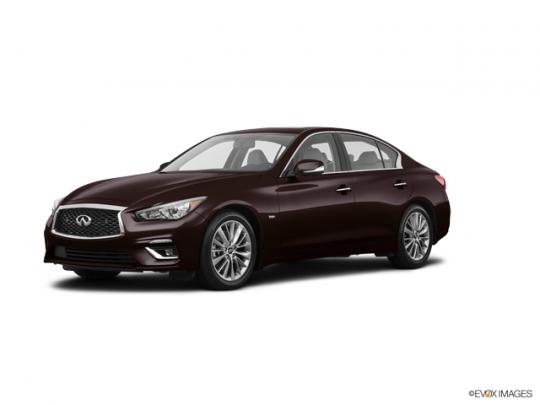
2018 Infiniti Q50 3.0t Sport Specs Explained: A Deep Dive Into Performance and Engineering
The 2018 Infiniti Q50 3.0t Sport is a luxury sport sedan powered by a 3.0-liter V6 twin-turbocharged engine producing 300 horsepower and 295 lb-ft of torque. It distinguishes itself from lower trims through performance-oriented hardwar...
The 2018 Infiniti Q50 3.0t Sport is a luxury sport sedan powered by a 3.0-liter V6 twin-turbocharged engine producing 300 horsepower and 295 lb-ft of torque. It distinguishes itself from lower trims through performance-oriented hardware, including larger sport brakes, a Dynamic Digital Suspension system, and enhanced interior bolstering designed for spirited driving.
Contents
As we look back from 2026, the 2018 model year remains a pivotal moment for the Q50 lineage. It marked a significant mid-cycle refresh that restructured the trim levels and refined the vehicle's aesthetic and technological offerings. For enthusiasts and used-market buyers, the "Sport" trim represents the "sweet spot" in the lineup—offering the aggressive chassis tuning of the flagship Red Sport 400 but paired with the more efficient 300-horsepower variant of the VR30DDTT engine.
The Heart of the Machine: The VR30DDTT Engine
At the core of the 2018 Infiniti Q50 3.0t Sport is the VR-series engine, a successor to the legendary VQ-series V6. This specific iteration is a 3.0-liter, 60-degree V6 that utilizes a twin-turbocharged configuration to deliver a broad torque curve.
Turbocharger Technology and Intercooling
Unlike many turbocharged engines that suffer from "turbo lag," the VR30DDTT employs integrated exhaust manifolds within the cylinder heads. This design allows the catalytic converter to be positioned closer to the turbos, reducing the distance the exhaust gases must travel and speeding up turbine response. The Sport trim utilizes a small-diameter turbine design to ensure quick spool-up at low RPMs.
To manage the heat generated by these twin turbines, Infiniti equipped the Q50 3.0t Sport with a water-to-air intercooler system. This system is significantly more efficient at maintaining cool intake temperatures than traditional air-to-air units, especially during repeated heavy acceleration. By keeping the air charge cool, the engine can maintain optimal ignition timing and prevent power loss due to heat soak.
Direct Injection and Valve Timing
The engine features a high-pressure Direct Injection Gasoline (DIG) system. This allows for precise control over fuel spray into the combustion chamber, improving both power output and fuel efficiency. Furthermore, the 2018 Q50 utilizes advanced electric motor-driven Valve Timing Control (VTC) on the intake cams. This replaces the older hydraulic systems, providing faster and more accurate adjustments to valve timing, which translates to a smoother idle and more immediate power delivery when the driver demands it.
Drivetrain and Transmission Mechanics
The 2018 Q50 3.0t Sport transmits its power through an electronically controlled 7-speed automatic transmission with Adaptive Shift Control (ASC). This transmission was specifically tuned to match the torque delivery of the twin-turbo V6.
Adaptive Shift Control and Manual Mode
The ASC system uses an onboard accelerometer to sense changes in road gradients and cornering forces. When driving aggressively, the transmission will hold lower gears longer to ensure the engine stays within its power band. For drivers seeking more control, the Sport trim includes solid magnesium paddle shifters mounted to the steering column. These shifters allow for manual gear selection with Downshift Rev Matching (DRM), which blips the throttle during downshifts to synchronize engine speed and ensure a smooth, stable transition into the lower gear.
Intelligent All-Wheel Drive vs. Rear-Wheel Drive
The 2018 Q50 3.0t Sport was available in both Rear-Wheel Drive (RWD) and Intelligent All-Wheel Drive (AWD) configurations.
- RWD Performance: The RWD version offers a traditional sports sedan feel, with lighter front-end weight and more communicative steering feedback.
- Intelligent AWD: This system is rear-biased, sending 100% of the power to the rear wheels under normal conditions to preserve fuel economy and handling characteristics. When slip is detected, the system can redirect up to 50% of the torque to the front wheels to improve traction and stability.
Chassis, Suspension, and Braking: The "Sport" Distinction
The most significant "specs" that separate the Sport trim from the "Luxe" or "Pure" models are found in the chassis and braking departments. The 2018 Sport trim was designed to bridge the gap between a standard luxury cruiser and a high-performance machine.
Dynamic Digital Suspension (DDS)
Standard on the 3.0t Sport, the Dynamic Digital Suspension is an adaptive damping system. It monitors body roll, pitch, and bounce rates to constantly adjust the shock absorbers' firmness. In "Standard" mode, the suspension prioritizes ride comfort, absorbing road imperfections effectively. However, when the driver selects "Sport" or "Sport+" mode, the dampers stiffen significantly, reducing body lean in corners and providing a more connected feel to the road.
Enhanced Braking System
While the base Q50 models utilize standard sliding calipers, the 3.0t Sport is upgraded to a high-performance braking package. This includes:
- Front: 4-piston opposed fixed calipers with 14.0-inch ventilated discs.
- Rear: 2-piston opposed fixed calipers with 13.8-inch ventilated discs.
These larger rotors and fixed calipers provide much better heat dissipation and a firmer pedal feel, which is essential for performance driving or navigating mountain passes where brake fade can occur with smaller systems.
Direct Adaptive Steering (DAS)
The 2018 model year featured the second generation of Infiniti’s Direct Adaptive Steering (available as an option on the Sport trim). This "steer-by-wire" system removes the mechanical connection between the steering wheel and the front tires under normal operation, using electronic sensors and actuators instead. This allows for incredibly fast steering ratios and the ability to filter out unwanted vibrations from rough pavement, though some purists still prefer the standard Rack-Electronic Power Steering that comes standard.
2018 Q50 3.0t Sport Technical Specifications Table
The following table outlines the critical dimensions and performance data for the 2018 Infiniti Q50 3.0t Sport.
| Feature | Specification |
|---|---|
| Engine Type | 3.0L V6 Twin-Turbo (VR30DDTT) |
| Horsepower | 300 hp @ 6,400 rpm |
| Torque | 295 lb-ft @ 1,600 – 5,200 rpm |
| Compression Ratio | 10.3:1 |
| Transmission | 7-Speed Automatic with Manual Mode |
| Brakes (Front/Rear) | 14.0" / 13.8" Sport Brakes |
| Wheels | 19 x 9.0-inch Aluminum-Alloy |
| Tires | 245/40R19 Summer Performance (RWD) or All-Season (AWD) |
| Wheelbase | 112.2 inches |
| Curb Weight | ~3,840 lbs (RWD) / ~3,990 lbs (AWD) |
| Fuel Economy (EPA) | 20 City / 29 Highway (RWD) / 19 City / 27 Highway (AWD) |
Interior and Exterior Design Refinements for 2018
The 2018 refresh brought a more aggressive look to the Q50 Sport. The front fascia was redesigned with a more angular bumper and larger air intakes to feed the intercoolers. The headlights featured a more prominent "human eye" LED signature, which became a hallmark of Infiniti’s design language during this period.
Inside, the Sport trim received specific upgrades to match its performance credentials. The seats are "Sport-type" leather-appointed units with power lumbar and power torso bolsters. These bolsters are adjustable, allowing the driver to "cinch" themselves into the seat for better lateral support during hard cornering. Additionally, the 2018 model introduced a new steering wheel design with more ergonomic thumb rests and a sportier shift knob, both featuring authentic stitching.
The dual-screen Infiniti InTouch infotainment system remained the centerpiece of the cabin. The upper 8-inch screen typically handles navigation and vehicle settings, while the lower 7-inch screen manages media, climate control, and apps. While this system was criticized in its era for a lack of physical buttons, the 2018 update improved the processor speed, making the interface more responsive than in earlier 2014-2016 models.
Safety and Driver Assistance Technology
For 2018, Infiniti expanded the availability of its safety suite on the Sport trim. While many features were bundled into the ProASSIST and ProACTIVE packages, the core hardware was world-class for the time.
- Predictive Forward Collision Warning: This system can "see" two cars ahead. By using radar to monitor the velocity and distance of the vehicle in front of the car directly ahead of you, it can alert the driver to a potential collision before it is even visible to the human eye.
- Around View Monitor: Utilizing four cameras, this system creates a virtual 360-degree bird's-eye view of the vehicle, making parking the wide-stanced Q50 significantly easier.
- Blind Spot Warning and Intervention: Beyond just lighting up a sensor, the intervention system can apply slight braking pressure to individual wheels to help "guide" the car back into the lane if the driver attempts to merge while a vehicle is in their blind spot.
Frequently Asked Questions
What is the difference between the 3.0t Sport and the Red Sport 400?
The primary difference lies in the engine output. While both use the 3.0L twin-turbo V6, the Red Sport 400 produces 400 hp and 350 lb-ft of torque thanks to higher boost pressure and an optical turbine speed sensor. The Red Sport also features unique exhaust tips and exclusive wheel designs. However, the 3.0t Sport shares the same suspension and braking hardware as the Red Sport, making it a better value for those planning to use aftermarket tuning to increase power.
Does the 2018 Infiniti Q50 3.0t Sport require premium fuel?
Yes, the VR30DDTT engine is a high-compression, turbocharged power plant that requires 91 octane (premium) fuel or higher. Using lower-grade fuel can lead to engine knocking and will cause the ECU to pull back timing, significantly reducing horsepower and fuel efficiency.
How reliable is the twin-turbo V6 in the 2018 model?
By 2018, Infiniti had addressed some of the early production issues found in the 2016-2017 VR30 engines. Common maintenance items include checking for belt alignment (a known issue on early VR30s) and ensuring the turbo seals are healthy. With regular oil changes every 5,000 miles, these engines have proven to be robust, though the infotainment system is more likely to show its age than the mechanical components.
Is the 2018 Q50 Sport good for tuning?
The 2018 Q50 3.0t Sport is widely considered one of the best platforms for aftermarket tuning. Because the 300 hp engine is mechanically almost identical to the 400 hp version, a simple ECU "reflash" can often bring the 3.0t Sport up to Red Sport power levels or higher.
Does it have Apple CarPlay or Android Auto?
Standard 2018 Infiniti Q50 models did not come with Apple CarPlay or Android Auto from the factory. These features were not officially integrated into the InTouch system until the 2020 model year. Owners of 2018 models often rely on aftermarket interface modules to add this functionality.
Practical Recommendation
If you are evaluating the 2018 Infiniti Q50 3.0t Sport in today's market, prioritize vehicles that have a documented history of oil changes and cooling system inspections. The water-to-air intercooler system is highly effective but requires a healthy coolant level to protect the turbos. For the best driving experience, seek out a model equipped with the ProACTIVE package to get the most out of Infiniti's safety technology, but be aware that the Direct Adaptive Steering is a "love it or hate it" feature; a thorough test drive is essential to determine if you prefer the digital steering feel over the standard mechanical setup.
Image Gallery