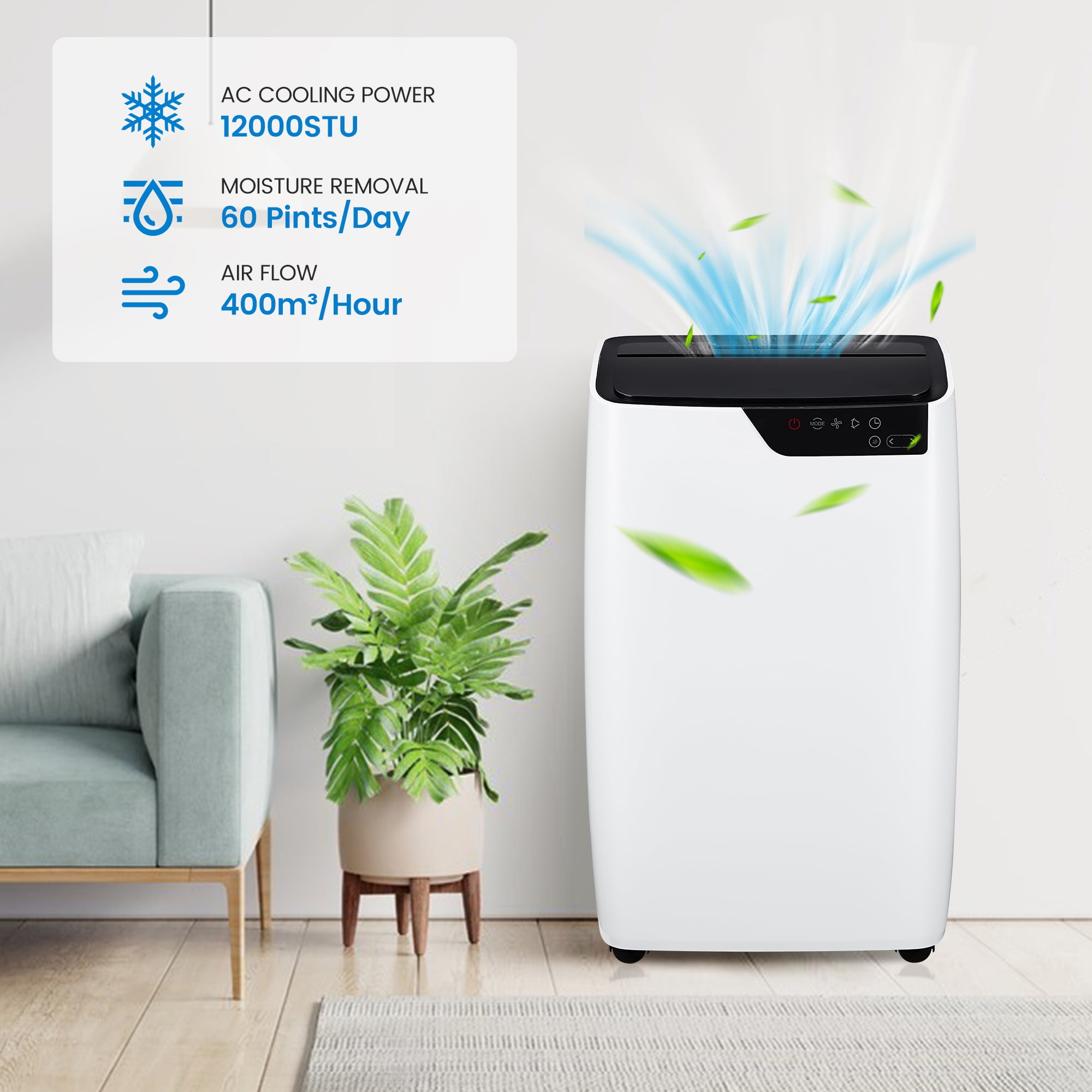
How a Small 12,000 BTU Air Conditioner Works: The Mechanics of Cooling
A 12,000 BTU air conditioner operates by continuously cycling a refrigerant fluid through a closed-loop system of coils, using phase changes—liquid to gas and back—to absorb heat from indoor air and release it outdoors. Through the syn...
A 12,000 BTU air conditioner operates by continuously cycling a refrigerant fluid through a closed-loop system of coils, using phase changes—liquid to gas and back—to absorb heat from indoor air and release it outdoors. Through the synchronized interaction of a compressor, expansion valve, and heat-exchanging coils, the unit lowers indoor temperature and removes humidity, maintaining a set thermal comfort level within a space of approximately 450 to 550 square feet.
Contents
The Physics of Heat Exchange
To understand how a 12,000 BTU (British Thermal Unit) air conditioner functions, one must first recognize that the device does not technically "create" cold air. Instead, it extracts thermal energy from the indoor environment and transports it outside. A BTU is a unit of measurement representing the amount of heat required to raise the temperature of one pound of water by one degree Fahrenheit. In the context of HVAC (Heating, Ventilation, and Air Conditioning), a 12,000 BTU rating indicates the unit’s capacity to remove 12,000 BTUs of heat per hour from a room.
The process relies on the laws of thermodynamics, specifically the principle that as a refrigerant changes from a liquid to a gas, it absorbs heat, and as it reverts from a gas back to a liquid, it releases that heat.
The Four Primary Components of the Cycle
Every standard 12,000 BTU air conditioner—whether it is a window unit, portable unit, or a small ductless mini-split—utilizes four essential components connected in a sealed circuit.
1. The Compressor
The compressor is the heart of the air conditioning system. Located on the "hot" side of the unit, its job is to pressurize the refrigerant, which enters as a cool, low-pressure gas. As the compressor squeezes this gas, its temperature and pressure increase significantly, turning it into a hot, high-pressure gas.
2. The Condenser Coil
The hot, high-pressure gas flows into the condenser coil. A fan blows ambient outdoor air over these fins and tubes. Because the gas is much hotter than the outdoor air, heat is transferred out of the refrigerant and into the air stream. As it loses heat, the refrigerant condenses into a high-pressure liquid.
3. The Expansion Valve (or Metering Device)
The high-pressure liquid refrigerant moves toward the indoor side of the unit. Before it enters the evaporator coil, it passes through the expansion valve. This valve acts as a restriction point. As the liquid passes through the small opening, the pressure drops drastically. This rapid expansion causes the refrigerant to cool down significantly, transforming it into a cold, low-pressure liquid-gas mixture.
4. The Evaporator Coil
This cold mixture flows through the evaporator coil, which is located inside the space you wish to cool. A blower fan pulls warm air from the room and forces it across these cold coils. As the warm air passes over the evaporator, the refrigerant absorbs the heat, causing the refrigerant to evaporate into a gas. Simultaneously, the air passing over the coils is cooled and circulated back into the room. This gas then returns to the compressor to begin the cycle again.
Humidity Control and Condensate Management
A secondary, yet critical, function of a 12,000 BTU unit is dehumidification. As warm room air hits the cold evaporator coil, the air’s ability to hold moisture decreases. This causes water vapor to condense on the coil’s surface, similar to how condensation forms on a glass of ice water in a warm room.
The moisture drips into a drain pan. In small window or portable units, this water is often collected and either drained out via a hose or, in many modern designs, flung by a slinger ring onto the hot condenser coil to evaporate, which improves the unit's cooling efficiency.
Operational Requirements and Performance
For a 12,000 BTU unit to perform as intended, several environmental factors must be considered. While 12,000 BTUs is a standard size for a medium-sized bedroom or living area, efficacy depends on the square footage and thermal load.
| Factor | Impact on Cooling Efficiency |
|---|---|
| Room Size | Must match 450–550 sq. ft. recommendation; undersizing results in constant running. |
| Insulation | Poor insulation allows outdoor heat infiltration, forcing the compressor to work harder. |
| Sun Exposure | South-facing rooms or high-window density increases the "heat load." |
| Airflow | Blocked intake or output vents severely degrade performance and cause icing. |
If the unit is too large for the space, it will "short-cycle," meaning it cools the room so quickly that it shuts off before it has had sufficient time to remove humidity, leading to a clammy, uncomfortable room climate. If it is too small, it will run indefinitely, leading to higher electricity consumption and mechanical wear.
Common Maintenance and Troubleshooting
Understanding the cooling cycle makes troubleshooting significantly easier for the average user.
- Unit running but not cooling: The most common cause is a dirty air filter. When the filter is clogged, airflow over the evaporator coil is restricted, which can lead to the coil freezing over. If the coil is encased in ice, air cannot pass through, and the room will remain warm.
- Water leaking inside: This usually indicates a clogged condensate drain or a unit that is not properly tilted. Most window units are designed to sit with a slight downward angle toward the outside to ensure water drains away from the interior.
- Compressor clicking or failing to start: This may indicate a failing capacitor, which provides the electrical "kick" needed to start the compressor motor.
Safety and Professional Limitations
While the basic maintenance of cleaning filters and clearing debris is a DIY-friendly task, the sealed refrigeration system—containing pressurized refrigerant—is not. If the system has a leak or a low refrigerant charge, it requires a certified technician. Attempting to modify or repair the sealed lines can lead to the release of refrigerant, which is strictly regulated by environmental agencies to prevent atmospheric damage.
Frequently Asked Questions
How long does it take for a 12,000 BTU unit to cool a room? On average, a properly sized unit will lower the temperature of a 500-square-foot room by 10–15 degrees within 30 to 60 minutes. However, time varies based on the starting temperature, humidity levels, and how many heat-generating appliances are active in the room.
Should I leave my AC on all day or turn it off when I leave? In most moderate climates, it is more efficient to turn the unit off or set it to a higher temperature when you are away. Because a 12,000 BTU unit is designed to handle the heat load of a specific space, it can typically recover the set temperature within an hour of your return.
What does the "Energy Efficiency Ratio" (EER) mean for my bill? The EER measures the ratio of cooling output (BTUs) to electricity usage (Watts). A higher EER number signifies a more efficient unit, meaning you get more cooling per dollar of electricity spent. When choosing a unit, look for the EER rating on the yellow EnergyGuide label.
Can a 12,000 BTU AC be used to cool multiple rooms? Generally, no. Air conditioners rely on unobstructed airflow. If you leave the bedroom door open, the unit will attempt to cool the hallway and the adjacent rooms, which will likely exceed its capacity. This results in the unit running constantly without ever reaching the desired set point in any room.
Why does my AC make a clicking sound when it turns on? That sound is usually the compressor relay engaging. It is a normal mechanical sound as the electrical contact closes to provide power to the compressor motor. If the clicking is rapid or accompanied by the unit failing to turn on, the start capacitor may be failing.
Next Steps for Optimal Cooling
To ensure your 12,000 BTU air conditioner operates at peak efficiency in 2026, establish a routine of cleaning the air filter every two to four weeks during the cooling season. Inspect the outdoor condenser fins for debris like leaves or dust, and ensure the area around the unit remains clear to allow for adequate heat dissipation. By maintaining clear airflow and regular filter maintenance, you maximize the longevity of the compressor and keep your energy consumption stable.
Image Gallery