What Is a DL Number? Driver's License Number Meaning Explained
A driver's license number (DL number) is a unique alphanumeric code assigned by a state motor vehicle department or national licensing authority to track an individual's driving privileges, legal identification, and public traffic reco...
A driver's license number (DL number) is a unique alphanumeric code assigned by a state motor vehicle department or national licensing authority to track an individual's driving privileges, legal identification, and public traffic records. It serves as a primary identity credential for law enforcement, insurance underwriting, financial transactions, and official government background checks.
Contents
What Does a DL Number Stand For?
In the vast majority of personal, financial, and legal contexts, DL number stands for Driver's License Number (or Driving Licence Number in international jurisdictions like the UK, Canada, and India). It acts as a unique database key linking an individual to their official motor vehicle record maintained by a government licensing agency, such as a state Department of Motor Vehicles (DMV) in the United States or the Driver and Vehicle Licensing Agency (DVLA) in the United Kingdom.
While "DL number" almost universally refers to a driver's license, the acronym occasionally appears in specialized commercial contexts:
- Drug License Number: Used in pharmaceutical regulation and medical supply chains (particularly in India) to grant authorization for manufacturing or selling restricted medications.
- Document Location Number: Used in enterprise record management and logistics to track archived physical or electronic files.
In everyday legal identification, background checks, auto insurance applications, and identity verification, a DL number strictly refers to your driver's license credential.
Where to Find Your DL Number on Your License Card
Locating your DL number depends on your state or national issuing authority, but standard formatting guidelines established by organizations like the American Association of Motor Vehicle Administrators (AAMVA) ensure relative consistency across modern identification cards.
Physical Card Positioning
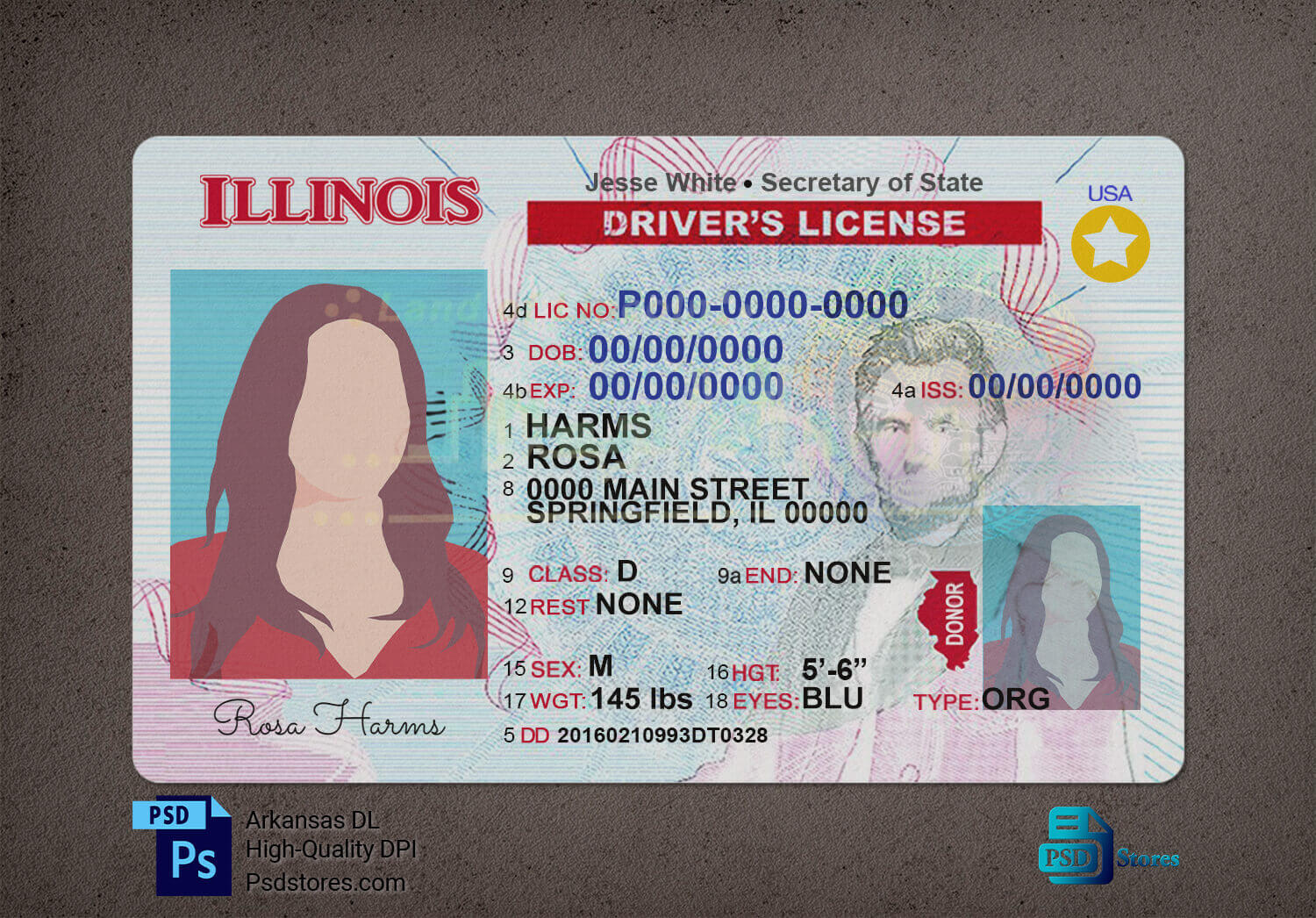
- Header Section: On most modern U.S. and Canadian state licenses, the DL number is printed near the top of the card, directly adjacent to or beneath the issuing state's name (e.g., "California Driver License" or "Texas Driver License").
- Direct Labeling: The number is usually prefixed with clear labels such as DL, DL NO, LIC NO, or ID.
- Color Differentiation: To prevent tampering and assist law enforcement officers during traffic stops, many states print the DL number in a distinct color—often bright red or bolded blue—separate from standard black demographic text.
Distinguishing the DL Number from the Audit / DD Number
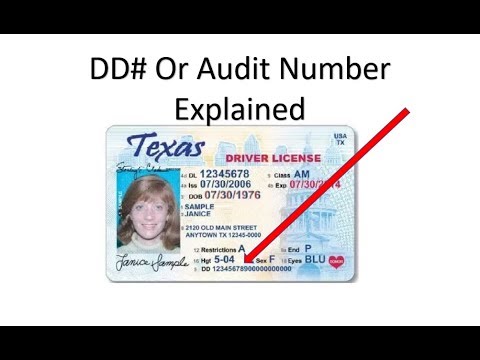
Many cardholders confuse their permanent driver's license number with the Document Discriminator (DD) or Audit Number.
- DL Number: This is your permanent account identifier. It remains the same every time you renew your license within the same state.
- Audit Number / DD Code: This is a secondary code (often 12 to 16 digits long or printed vertically on the front or back of the card). The audit number is unique to that specific physical piece of plastic. If you request a duplicate or renewed card, the DL number remains unchanged, but the audit number changes to track the issuance of the new physical card.
How State DMVs Structure and Format DL Numbers
Unlike Social Security Numbers, which followed a uniform federal structure prior to randomizing in 2011, driver's license numbers are created independently by individual state agencies. As a result, formats vary widely across the United States.
Some states use completely randomized sequential numbers, while others rely on complex algorithmic formulas that encode personal demographic data directly into the character string.
Sample Formats Across Selected States: - California: 1 Letter followed by 7 Digits (e.g., A1234567) - New York: 9 Digits (e.g., 123 456 789) - Texas: 8 Digits (e.g., 12345678) - Florida: 1 Letter followed by 12 Digits (Soundex Encoding System)
The Soundex Encoding System
Several states—including Florida, Illinois, and Wisconsin—use a modified version of the Soundex algorithm to construct driver's license numbers. This system converts an individual's name and birth details into a standardized alphanumeric code.
In a Soundex-based state like Florida, a 13-character DL number (F-LLL-YYY-MM-DD-G) is broken down into specific data fields:
- First Character (Letter): Represents the first letter of the licensee's last name.
- Next 3 Digits: A numerical code representing the phonetic sound of the last name.
- Next 3 Digits: A numerical code derived from the combination of the applicant's first name and middle initial.
- Next 2 Digits: The last two digits of the licensee's birth year.
- Final Digits & Gender Indicator: Encodes the birth day and month. In many Soundex algorithms, a value of 500 is added to the month code for female drivers to differentiate gender within the database key.
Because encoded formats reveal demographic information, several state legislatures and motor vehicle bureaus have transitioned toward randomized, non-descriptive numbering systems to better protect consumer privacy.
DL Number vs. Related Identification Numbers
Understanding how a driver's license number differs from other standard identification records is essential for identity security and compliance paperwork.
| ID Identifier | Issuing Authority | Format Standard | Primary Purpose | Change Frequency |
|---|---|---|---|---|
| DL Number | State DMV / Licensing Agency | Varies by state (8–13 alphanumeric characters) | Tracks driving privileges, motor vehicle record, and local legal ID | Changes only when moving to a new state |
| State Non-Driver ID | State DMV / Identification Bureau | Identical structure to state DL number in most jurisdictions | Provides legal proof of identity for non-drivers | Changes only when moving to a new state |
| Audit / DD Code | State Security Card Printer | 8–16 digits or alphanumeric string | Verifies card authenticity and physical batch issuance | Changes every time a new physical card is printed |
| Social Security Number (SSN) | U.S. Social Security Administration | 9 numerical digits (XXX-XX-XXXX) |
Tracks federal tax reporting, social benefits, and credit history | Permanent for life |
| Passport Number | U.S. Department of State / National Passport Agency | 6 to 9 alphanumeric characters | International travel authorization and citizenship proof | Changes with every document renewal (every 10 years) |
Why Your DL Number Matters: Key Uses and Verification
Your DL number is much more than a reference key for traffic citations; it is a primary anchor for identity management in modern commerce and legal administration.
1. Motor Vehicle Records (MVR) and Auto Insurance
When you apply for auto insurance, underwriters request your DL number to pull your official Motor Vehicle Record (MVR). This report details your complete driving history, including:
- Moving violations (speeding, reckless driving, red-light infractions)
- At-fault and non-fault accidents
- License suspensions, revocations, or administrative reinstatements
- Special driver class endorsements (commercial licenses, motorcycle privileges)
Insurance companies use this historical data to calculate risk profiles and determine monthly premium costs.
2. Employment and Background Screening
For positions that require operating commercial vehicles, delivery routes, corporate fleet cars, or equipment, employers use your DL number to verify that you hold a valid, unexpired license. Background screening agencies also cross-reference DL numbers with state registries to verify identity details and check for criminal history tied to traffic offenses.
3. Identity Verification and Financial Services
Banks, mortgage lenders, notary public officials, and credit unions require a valid DL number during account opening procedures. Under federal anti-money laundering regulations and Customer Identification Programs (CIP), financial institutions must capture and verify government-issued ID numbers before extending credit or establishing deposit accounts.
4. REAL ID Federal Compliance
Under the federal REAL ID framework, state-issued driver's licenses must meet strict security guidelines to be accepted for domestic air travel and access to secure federal facilities. While the REAL ID standard does not alter the fundamental structure of your state DL number, it ensures that your underlying identity documents (such as birth certificates and proof of residency) were thoroughly validated before the DL number was bound to your profile.
How Moving to a New State Affects Your DL Number
Because licensing authority is held at the state level under the U.S. federal system, your DL number does not transfer across state lines.
When you establish residency in a new state:
- Surrender: You must turn in your existing state driver's license.
- Application: You submit identity verification documents to the new state's DMV.
- Reissuing: The new state generates an entirely new DL number formatted according to its own state numbering algorithms.
- Database Transfer: Your driving history is transferred through national networks like the Problem Driver Pointer System (PDPS) and the Commercial Driver's License Information System (CDLIS) to ensure outstanding suspensions or violations carry over to your new state profile.
Protecting Your DL Number from Identity Theft
A compromised driver's license number poses significant financial and legal risks. Criminals use stolen DL numbers to manufacture counterfeit physical IDs, open fraudulent line-of-credit accounts, avoid arrest warrants by presenting stolen credentials during traffic stops, or commit synthetic identity fraud.
Best Practices for DL Security
- Limit Disclosure: Only share your DL number when legally required (such as with insurance agencies, employers, financial institutions, or government bodies). Avoid writing your DL number on personal checks or merchant loyalty applications.
- Safeguard Physical Cards: Carry only your active driver's license. Never carry expired licenses, duplicate copies, or Social Security cards in your wallet.
- Report Losses Immediately: If your driver's license card is lost or stolen, report it to local law enforcement immediately and obtain a police report copy. File a notification with your state DMV so an administrative flag can be placed on your record to prevent unauthorized access or fraudulent renewals.
- Monitor Your Credit and Driving Record: Request a copy of your state driving record annually to ensure no unauthorized traffic citations or fraudulent vehicles have been associated with your DL profile.
Frequently Asked Questions
Does a DL number change when you renew your license?
No. In almost all state jurisdictions, your driver's license number remains identical throughout your lifetime in that state, even when you complete routine renewals or update your address. Only the secondary audit number (DD code) printed on the physical card changes with each new printing.
Is your DL number the same as your state ID number?
Yes, in most states. If you hold a non-driver state identification card issued by the DMV, the state uses the same alphanumeric numbering system as it does for driver's licenses. However, an individual cannot hold both an active state driver's license and a non-driver state ID concurrently in the same state.
Can someone steal your identity with just your DL number?
While a DL number alone is rarely enough to complete full identity theft, it serves as a critical piece of data for scammers. Combined with your full name, date of birth, and address, a thief can use a stolen DL number to open fraudulent accounts, bypass verification checks, or manufacture fake credentials.
What does the "DD" code next to a DL number mean?
"DD" stands for Document Discriminator. It is a unique security code used by state licensing agencies and law enforcement to verify that the physical card in hand is the most recently issued official copy. It links the physical security features of the card directly to the state's central database record.
What should you do if your DL number is stolen?
If your DL number or physical card is stolen, file a formal police report immediately. Contact your state DMV to report the stolen credential, request a replacement card, and ask if your state allows a new DL number to be issued in cases of documented fraud. Additionally, place a fraud alert on your credit reports with Equifax, Experian, and TransUnion.
Summary and Next Steps
Your driver's license number is a foundational identification key that connects your legal identity, driving privileges, auto insurance status, and public records. Understanding how your state formats and uses this identifier allows you to spot security risks, accurately complete financial applications, and navigate state transfer requirements seamlessly.
If you suspect your driver's license number has been compromised, your immediate next step should be contacting your local DMV office to place a security flag on your motor vehicle record and requesting a replacement card.
Image Gallery