Why Insurance Companies That Offer Participating Life Insurance Matter
Life insurance companies that issue participating life insurance policies matter because they align the financial interests of the policyholder directly with the long-term profitability, solvency, and operational performance of the ins...
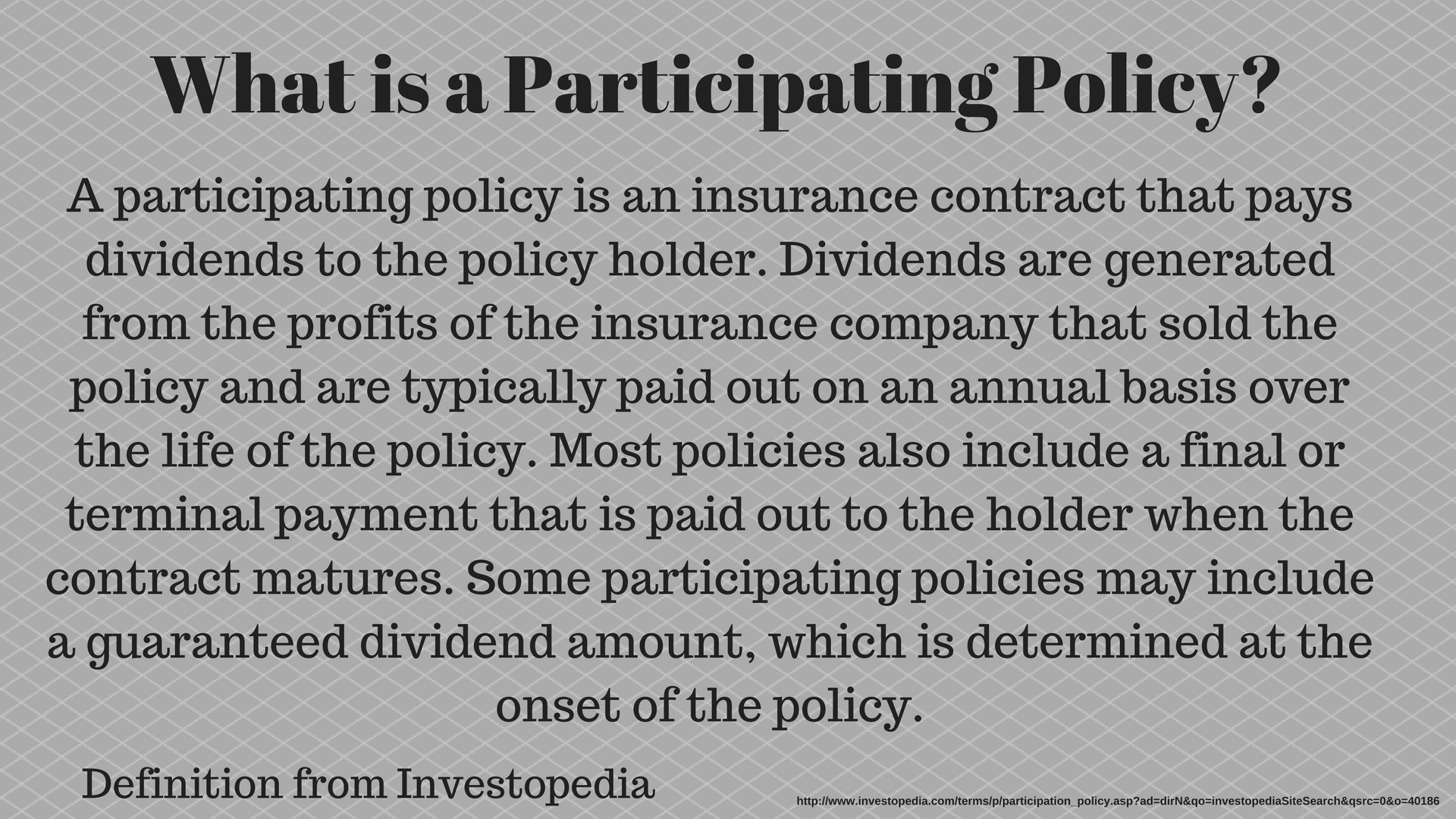
Life insurance companies that issue participating life insurance policies matter because they align the financial interests of the policyholder directly with the long-term profitability, solvency, and operational performance of the insurer. Through participating policies, policyholders receive annual dividend distributions generated by the company's pooled investment returns, underwriting surpluses, and expense management.
Contents
Understanding Participating Life Insurance and Insurer Structure
Participating life insurance—commonly referred to as "par life"—is a form of permanent life insurance where policyowners are entitled to share in the overall earnings and surplus of the life insurance company. Unlike non-participating policies, which provide fixed benefits without any adjustment based on company performance, participating policies act as a financial mechanism that passes a portion of favorable business outcomes directly back to policyholders in the form of policy dividends.
The foundation of participating life insurance relies heavily on the corporate and operational structure of the issuing insurer. Life insurance companies offering these products generally operate under one of two structures:
- Mutual Insurance Companies: Owned entirely by their policyholders. In a mutual company, there are no public shareholders demanding quarterly earnings growth. Excess capital generated through investment earnings, favorable mortality experience, and operational savings is retained as surplus reserves or distributed to participating policyholders as dividends.
- Stock Life Insurance Companies with Participating Accounts: Publicly traded or privately held companies owned by shareholders, but maintaining a dedicated, legally ring-fenced participating account. By law in major jurisdictions like Canada and various U.S. states, a substantial percentage (often 90% or more) of the earnings within the participating account must be returned to participating policyholders rather than distributed to corporate shareholders.
Because participating policies are designed to remain active for decades—often across an entire lifetime—the long-term financial stability, asset-management philosophy, and capital management policies of the issuing insurer directly determine the growth of policy cash values and total death benefits.
Why the Choice of Insurer Matters for Participating Policies
When buying a standard non-participating policy or term insurance contract, the primary evaluation criterion is whether the insurer can honor the guaranteed face value at the time of claim. However, with participating permanent life insurance, the ongoing performance and operational integrity of the insurance company dictate the non-guaranteed upside, which frequently makes up a large portion of the policy's long-term cash value accumulation.
- Participating Policy Returns:
- Guaranteed Base Growth
- Policy Dividends (Investment Return + Mortality Savings + Expense Efficiency)
1. Investment Strategy and Asset Quality
Participating policy dividends are driven primarily by the performance of the insurer’s participating investment block. Insurers manage these multibillion-dollar portfolios with an emphasis on capital preservation and steady yield over multi-decade cycles. Strong insurers invest in high-quality fixed income, long-term corporate bonds, infrastructure, private debt, and institutional real estate. An insurer with superior credit analysis, disciplined risk management, and broad asset diversification can maintain high Dividend Scale Interest Rates (DSIR) even during low-interest-rate market cycles.
2. Dividend Scale Smoothing Mechanisms
One of the key operational advantages of well-managed participating life insurers is "dividend smoothing." Insurers use reserve accounts to absorb market volatility. During years of exceptionally high investment returns, the insurer holds back a portion of earnings in reserve. During market downturns or prolonged low-interest environments, the insurer draws upon those stored reserves to support stable dividend payouts. The historical consistency and disciplined governance of an insurer's board of directors dictate how effectively this smoothing process protects policyholders from market shocks.
3. Underwriting Rigor and Mortality Experience
Dividends do not stem solely from investment yields; they also reflect mortality experience. If an insurance company maintains strict, actuarially sound underwriting practices, its actual mortality claims will often be lower than the conservative estimates built into premium pricing. The cost savings resulting from fewer or deferred death claims flow directly into the participating account surplus, increasing the dividend fund available to policyholders.
4. Cost Ratios and Operational Efficiency
Operational overhead—administrative costs, policy processing fees, distribution expenses, and corporate technology investments—directly impacts the net earnings of the participating fund. Insurers that maintain lower expense ratios retain a higher proportion of gross earnings within the participating account. Evaluating an insurance company's operational track record offers clear visibility into how much revenue is absorbed by administrative friction versus how much returns to policyholders.
How Dividend Options Enhance Financial Flexibility
Participating policies grant owners the flexibility to utilize annual dividends in several ways, depending on their broader financial goals, tax planning requirements, and wealth transfer strategies. The stability of the issuing company ensures these options remain valuable across different financial stages:
- Paid-Up Additions (PUA): Dividends automatically purchase small, single-premium increments of permanent life insurance. These additions increase both the total death benefit and the guaranteed cash value of the policy, compounding growth tax-deferred over time.
- Premium Reduction: Policyholders apply dividends directly toward paying future annual premiums, reducing or eventually eliminating out-of-pocket costs while keeping full coverage intact.
- Cash Payout: The insurer pays the dividend directly to the policy owner as cash, providing annual liquidity (though subject to local tax regulations if payouts exceed policy basis).
- Accumulate at Interest: Dividends remain in a separate, interest-bearing account managed by the insurer, acting as an accessible liquid reserve alongside the policy's cash value.
Because paid-up additions purchase additional permanent coverage that itself earns future dividends, choosing an insurer with a reliable dividend history creates a compounding financial effect over 20, 30, or 40 years.
Key Metrics for Evaluating Participating Life Insurers
Evaluating companies that issue participating life insurance requires assessing key financial indicators, independent ratings, and historical performance metrics.
| Metric / Indicator | Purpose & Meaning | Ideal Benchmark / Target |
|---|---|---|
| Financial Strength Ratings | Evaluates long-term solvency and ability to pay claims (A.M. Best, S&P, Moody's, Fitch). | Superior / Excellent rating (e.g., A.M. Best A+ or A++, S&P AA- or higher). |
| Comdex Score | A composite index scaling carrier performance from 1 to 100 based on all major rating agencies. | A score of 85 to 100 indicates top-tier financial strength. |
| Dividend Scale Interest Rate (DSIR) | The gross rate credited to the participating account before expense and mortality deductions. | Consistent long-term historical average, with transparent historical reporting. |
| Historical Dividend Consistency | Tracks whether the insurer has paid annual dividends continuously without interruption. | Track record of continuous dividend payments through major recessions and crises. |
| Participating Account Asset Base | Total assets allocated specifically to the participating account fund. | Deep capital base multi-billion dollar fund size offering broad diversification. |
| Capital Adequacy Ratio (LICAT / RBC) | Measures capital adequacy and surplus buffer against catastrophic economic shocks. | Well above regulatory minimums (e.g., Risk-Based Capital ratio > 300%). |
Mutual vs. Stock Insurers: Structural Alignment
Understanding the structural differences between mutual insurance companies and stock insurance companies helps explain why insurer ownership matters to participating policy owners.
- Mutual Insurance Company Flow:
- Policyholders
- Pay Premiums
- Operations & Reserves
- Surplus/Dividends returned 100% to Policyholders
- Stock Insurance Company (Participating Account) Flow:
- Policyholders
- Pay Premiums
- Par Account Reserves
- ~90%+ Dividends to Policyholders
- ~10% Max to Shareholders
The Mutual Advantage
In a mutual insurance company, participating policyholders hold membership rights, including the right to vote for the board of directors. Because there are no outside equity investors demanding quarterly profit margins, the leadership team focuses on multi-generational solvency and steady risk-adjusted returns. Profits are retained for corporate stability or returned to participating members.
The Stock Company Participating Account
Stock insurance companies can also be strong options for participating policies, provided they manage large, well-established participating accounts. Regulatory frameworks mandate strict accounting separation between general corporate funds and participating accounts. While up to 10% of participating account profits may be distributed to company shareholders in some jurisdictions, major stock life insurers compensate by scaling operations, deploying global asset management platforms, and leveraging proprietary investment access to maintain competitive dividend scale interest rates.
Common Risks, Misconceptions, and Limitations
While participating life insurance issued by stable carriers offers key advantages, policyholders must understand the inherent limitations and financial mechanics of these contracts:
- Dividends Are Not Guaranteed: While top-tier participating life insurance companies have paid dividends annually for over a century, dividend scales are not contractually guaranteed. They adjust annually based on underlying investment returns, actual claims, and corporate expenses.
- Illustrated Rates vs. Actual Performance: Sales illustrations provided during initial policy purchase reflect current dividend scale interest rates projected decades into the future. If broader economic interest rates decline, actual dividend payouts may drop below initial projections.
- Upfront Cost Structure: Participating whole life policies carry higher initial premium costs than term insurance or non-participating policies. Policyholders must maintain the contract long enough for the compounding effect of paid-up additions and cash values to offset early acquisition expenses.
- Jurisdictional and Tax Nuances: Tax treatments of policy dividends, cash value growth, and policy loans vary significantly across regions (such as the U.S. Internal Revenue Code section 7702 rules or Canadian Modified Actuarial Reserves and Exempt Policy testing). Policyholders should confirm tax parameters with qualified professionals.
Disclaimer: Life insurance regulations, dividend mechanics, and tax implications vary based on jurisdiction and individual financial circumstances. This article provides educational information and does not constitute formal legal, accounting, or financial advice.
Frequently Asked Questions
What makes an insurance company's participating life account different from its standard assets?
A participating life account is a segregated or separately tracked portfolio of assets specifically managed to fund participating life policies. Returns generated within this account—minus costs, reserves, and mortality claims—are earmarked primarily for distribution to participating policyholders rather than general corporate expenditure.
Are dividends from participating life insurance policies taxable?
In many primary jurisdictions, life insurance policy dividends are legally treated as a non-taxable return of premium up to the cumulative cost basis of the policy. However, if dividends are paid out in cash exceeding the policy basis, or if dividends accumulate interest in a separate account, those excess earnings may be subject to income tax.
Can a life insurance company lower its dividend scale interest rate?
Yes. The board of directors of a life insurance company reviews and approves the dividend scale annually. If market interest rates fall, investment performance declines, or mortality claims spike, the company may lower its dividend scale interest rate for the upcoming policy year.
Why do mutual life insurance companies dominate the participating market?
Mutual life insurance companies dominate this market because their corporate structure inherently eliminates conflict between outside shareholders and policyholders. All net surplus generated by the enterprise belongs entirely to the policyholders, aligning long-term corporate governance with policy value accumulation.
How does a participating policy differ from a universal life policy?
A participating policy relies on a bundled, insurer-managed pool where dividends are determined by the carrier's actuarial experience and smoothed over time. Universal life insurance, conversely, unbundles investment choices, allowing the policyholder to directly select underlying investment options or market indexes while assuming individual investment risk.
Strategic Recommendations for Selecting a Participating Life Insurer
Choosing the right participating life insurance company requires a thorough review of the carrier's financial foundation and operational history. Follow these recommended steps:
- Verify Independent Credit Ratings: Focus on insurers maintaining top-tier ratings (A+ or A++ from A.M. Best; AA- or higher from Standard & Poor's). High credit ratings ensure the insurer has the reserves required to navigate severe economic downturns.
- Review Historical Dividend Consistency: Request the insurer's historical dividend scale interest rate track record spanning the last 30 to 50 years. Look for carriers that maintained dividend payments through high-inflation periods, severe recessions, and historic low-interest-rate environments.
- Examine Asset Class Diversification: Review the participating account’s asset allocation summary. A healthy fund will hold a mix of government debt, high-grade corporate bonds, institutional real estate, and private placements.
- Compare Policy Options and Riders: Ensure the carrier offers options like Paid-Up Additions (PUA) riders, flexible premium adjustments, and cash-value loan access without triggering unnecessary policy lapse risks or tax consequences.
- Work with an Independent Specialist: Consult a licensed financial advisor or insurance specialist who can provide comparative, side-by-side illustrations across multiple mutual and stock participating carriers, avoiding single-carrier bias.
Image Gallery