Understanding Ground Delays: How Traffic Management Programs Impact Aviation in 2026
A ground delay is a traffic management initiative where aircraft are held at their departure airport to manage congestion or safety issues at their destination. By keeping planes on the ground rather than allowing them to circle in the...
A ground delay is a traffic management initiative where aircraft are held at their departure airport to manage congestion or safety issues at their destination. By keeping planes on the ground rather than allowing them to circle in the air, air traffic control reduces fuel consumption and enhances safety during periods of reduced capacity.
Contents
In the complex ecosystem of modern aviation, timing is everything. As we move through 2026, the global airspace remains more crowded than ever, necessitating sophisticated systems to prevent gridlock. While passengers often view a "ground delay" as a simple inconvenience, it is actually a highly coordinated tactical maneuver used by aviation authorities to maintain the integrity of the entire national airspace system.
The Mechanics of a Ground Delay Program (GDP)
A Ground Delay Program (GDP) is the most common formal mechanism used to implement these pauses. It is primarily managed by the Federal Aviation Administration (FAA) in the United States, or similar regional bodies like Eurocontrol in Europe. A GDP is initiated when the projected demand for arrivals at a specific airport exceeds that airport’s "Acceptance Rate"—the number of aircraft that can safely land per hour.
When a GDP is active, aircraft destined for the affected airport are assigned a specific Expect Departure Clearance Time (EDCT). This time is calculated by the FAA’s Traffic Flow Management System (TFMS). Instead of departing at their scheduled time and being forced to wait in an expensive and environmentally taxing "holding pattern" near their destination, the aircraft waits at the gate or on a taxiway at its origin.
How Air Traffic Control (ATC) Implements Delays
The process begins at the Air Traffic Control System Command Center (ATCSCC). Specialists monitor weather patterns, equipment status, and flight schedules across the country. If they determine that a major hub—such as Chicago O'Hare (ORD) or New York’s John F. Kennedy (JFK)—cannot handle the incoming volume, they "meter" the flow.
- Capacity Analysis: ATC determines the current Arrival Acceptance Rate (AAR) based on factors like runway availability and visibility.
- Software Allocation: The TFMS software analyzes every flight scheduled to land at the bottlenecked airport.
- Slot Assignment: Each flight is given a "slot" for arrival. If the slot is two hours later than the original arrival time, the flight is given an EDCT that is two hours later than its original departure.
- Communication: These times are transmitted to airline dispatchers and pilots, who must then coordinate boarding and pushback to meet the specific window.
Primary Causes of Ground Delays
Ground delays are rarely the result of a single factor; they are usually the byproduct of systemic pressures. Understanding these causes helps passengers and stakeholders manage expectations.
Weather-Related Factors
Weather remains the leading cause of ground delays in 2026. However, it is not always "bad" weather in the traditional sense.
- Wind Direction and Velocity: If winds shift, an airport may have to change its runway configuration. Some configurations have lower capacity than others. For example, if a crosswind prevents the use of two parallel runways, the airport’s capacity can be cut in half instantly.
- Low Ceilings and Visibility: Fog or low clouds require pilots to use Instrument Flight Rules (IFR). This increases the required spacing between aircraft for safety, effectively slowing down the "conveyor belt" of landings.
- Convective Activity: Thunderstorms are unpredictable. Even if the airport itself is clear, a line of storms along a major arrival route can force ATC to funnel all traffic through a narrow "hole" in the weather, creating a massive backlog.
Airport Capacity and Infrastructure
Sometimes the ground delay is caused by the airport's physical or technical limitations.
- Runway Construction: In 2026, many major hubs are undergoing infrastructure modernization. A closed runway for repaving or lighting upgrades significantly reduces the Arrival Acceptance Rate.
- Equipment Failures: If a Navigational Aid (NAVAID) or a specific radar system goes offline, the safety buffers between aircraft must be increased, leading to immediate delays.
- Staffing Levels: Air traffic controller shortages can lead to reduced capacity in specific sectors of airspace, forcing the Command Center to implement delays to ensure controllers are not overwhelmed.
Ground Delay vs. Ground Stop: Key Differences
It is common for passengers to confuse a "ground delay" with a "ground stop," but the two serve very different operational purposes. A ground stop is a much more severe measure.
| Feature | Ground Delay Program (GDP) | Ground Stop (GS) |
|---|---|---|
| Primary Goal | Metering flow to match capacity. | Immediate halt to traffic for safety or total capacity loss. |
| Duration | Usually several hours; planned in advance. | Short-term (15–60 mins) but can be extended. |
| Scope | Typically affects flights from specific regions. | Can affect all flights bound for a specific airport. |
| Predictability | High; flights are given specific EDCTs. | Low; usually implemented due to sudden events. |
| Exit Strategy | Transition back to normal scheduling. | Often transitions into a Ground Delay Program. |
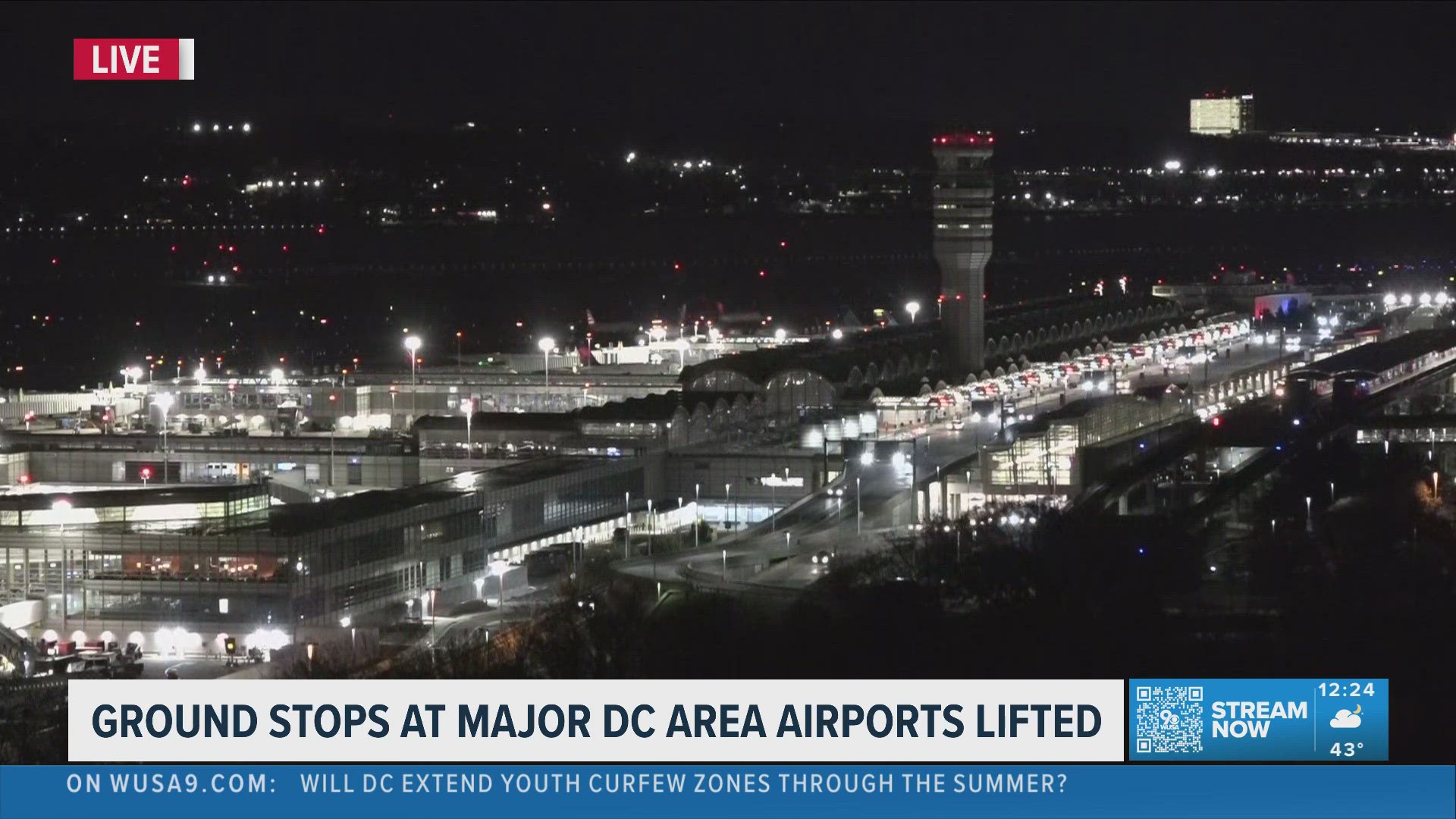
A Ground Stop is a "emergency brake." It is used for sudden events like a security breach, a disabled aircraft on the only active runway, or a fast-moving severe weather cell directly over the airfield. During a ground stop, no aircraft are allowed to depart for the affected airport until the stop is lifted.
The Impact on Airlines and Passengers
For an airline, a ground delay is a logistical puzzle. Because the "clock" for flight crew duty hours keeps ticking while the plane is on the ground, a long ground delay can cause a crew to "time out," meaning they are legally prohibited from flying the rest of their schedule. This can lead to cancellations even if the weather clears.
The Role of the EDCT
The Expect Departure Clearance Time is the most critical piece of information during a ground delay. If a pilot misses their EDCT window (usually a small margin of a few minutes), they may lose their "slot" at the destination airport and be forced to wait for a new calculation, which could result in an even longer delay.
Airline Re-accommodation
Airlines utilize sophisticated software to decide which flights to prioritize during a GDP. If an airline has ten flights headed to a delayed hub, they may choose to cancel two low-occupancy flights to ensure their flagship international flights get the available arrival slots. This "slot swapping" is a standard practice authorized by the FAA to help airlines minimize the number of displaced passengers.
Legal Rights and Passenger Protections in 2026
As of 2026, passenger protections regarding ground delays have become more standardized globally. In the United States, the Department of Transportation (DOT) maintains strict rules regarding Tarmac Delays.
- The Three-Hour Rule: For domestic flights, airlines generally cannot keep passengers on a plane on the tarmac for more than three hours (four hours for international flights) without giving them the opportunity to deplane.
- Hard Requirements: During any ground delay where passengers are on the aircraft, the airline must provide food and water no later than two hours after the aircraft leaves the gate or touches down. Working toilets and medical attention must also be available.
- Refunds: If a ground delay leads to a significant delay (typically defined by the DOT as 3+ hours) or a cancellation, passengers are entitled to a full refund of their ticket price, regardless of the reason for the delay, if they choose not to travel.
For more information on current consumer protections, you can visit the U.S. Department of Transportation Aviation Consumer Protection page.
Technological Advancements in 2026
The way ground delays are managed has evolved significantly. By 2026, Trajectory-Based Operations (TBO) has become more prevalent. Rather than relying on simple miles-in-trail spacing, TBO uses precise satellite navigation and data exchange to manage an aircraft's entire path from gate to gate.
Furthermore, AI-driven predictive modeling now allows the FAA to anticipate capacity imbalances up to 24 hours in advance. This means Ground Delay Programs are often announced earlier, allowing passengers to stay at home or their hotel rather than waiting at the airport terminal. These "pre-emptive" delays are part of a broader shift toward "Collaborative Decision Making" (CDM), where airlines and ATC share real-time data to optimize the use of limited airspace.
Frequently Asked Questions
Why is my flight delayed on the ground when the weather is clear here?
Ground delays are almost always caused by conditions at your destination airport or in the airspace between here and there. Even if the sun is shining at your departure point, your destination may be experiencing heavy fog, high winds, or high traffic volume that prevents them from accepting your flight on time.
Can a ground delay be shortened?
Yes. If weather conditions improve faster than expected or if other flights cancel, the FAA may "compress" the schedule. This results in your EDCT being moved earlier. This is why airlines often ask passengers to remain at the gate even during a long ground delay.
Does a ground delay mean my flight will be canceled?
Not necessarily. Most ground delays are designed to avoid cancellations by creating an orderly flow. However, if the delay becomes so long that the flight crew exceeds their legal working hours (Duty Limits), the airline may be forced to cancel the flight if a backup crew is not available.
How can I check if a ground delay is active?
The FAA provides real-time status updates for major U.S. airports. You can check the FAA National Airspace System Status to see if a Ground Delay Program or Ground Stop is currently in effect for your destination.
Why do some planes take off while mine stays on the ground?
Ground Delay Programs are often "filtered" by distance or aircraft type. Flights coming from shorter distances are often held longer because they are easier to "fit into" a slot later. Additionally, some flights may be heading to a different destination that is not experiencing any congestion.
Practical Recommendations for Travelers
If you find yourself facing a ground delay in 2026, the best course of action is to stay informed and flexible.
- Monitor Your Airline's App: In the current aviation environment, digital notifications are often faster than gate announcements. The app will provide the most current EDCT.
- Do Not Leave the Gate Area: Ground delays are fluid. If a slot opens up, the airline will want to board and depart immediately to avoid losing that window.
- Check Connections: If your ground delay is more than an hour, use the time to look up alternative connecting flights at your hub. It is better to have a plan B ready before you even take off.
- Understand the "Tarmac Clock": If you have already boarded, keep track of the time. If the delay approaches the three-hour mark, the airline must provide you with an update and the option to deplane, though doing so usually means you will not be on that flight when it eventually departs.
Ground delays are a vital safety tool. While they represent a pause in your journey, they are the primary reason modern aviation remains the safest and most efficient mode of transport in 2026.
Image Gallery