Understanding the Principal Life Insurance Statement of Health (MO)
The Principal Life Insurance Statement of Health (SOH)—often referred to as Evidence of Insurability (EOI)—is a detailed medical history form required by Principal Financial Group when an applicant requests life insurance coverage exce...
The Principal Life Insurance Statement of Health (SOH)—often referred to as Evidence of Insurability (EOI)—is a detailed medical history form required by Principal Financial Group when an applicant requests life insurance coverage exceeding guaranteed limits, applies after an enrollment window, or seeks coverage reinstatement. In Missouri (MO), state-specific disclosure guidelines govern these medical statements.
Contents
What Is a Principal Life Insurance Statement of Health?
A Statement of Health (SOH) is a medical questionnaire used by life insurance underwriters to evaluate individual mortality risk. When an employer offers group term life insurance through Principal Financial Group, eligible employees are typically offered a specific level of coverage without demonstrating good health. This automatic protection is known as Guaranteed Issue (GI).
However, when an applicant requests coverage above the GI threshold, enrolling outside the initial 31-day eligibility period, or adding supplemental benefits for dependents, Principal requires the applicant to submit an SOH. In Missouri, the state-specific SOH form incorporates state statutory disclosures, fraud warnings, and privacy guidelines mandated by the Missouri Department of Commerce and Insurance.
The primary objective of the SOH is to collect self-reported health data, including chronic medical conditions, recent surgical procedures, prescription drug history, and lifestyle factors like tobacco usage. Based on this information, Principal's underwriting team determines whether to approve, decline, or modify the requested insurance coverage.
When Is the SOH Required for Missouri Applicants?
Not every employee enrolling in a group life plan needs to complete a Statement of Health. Principal mandates an SOH under specific policy triggers and life events.
1. Requesting Coverage Beyond Guaranteed Issue Limits
Group insurance plans establish maximum dollar amounts of coverage available without medical underwriting. For example, an employer plan might offer a Guaranteed Issue limit of $150,000 for employees. If an employee requests $300,000 in life insurance, the first $150,000 is issued automatically, while the remaining $150,000 remains subject to an SOH review.
2. Late Enrollment
When a newly hired employee is eligible for benefits, they generally have a initial enrollment window (usually 31 calendar days from the date of hire or eligibility). If an employee declines coverage during this window and later decides to opt in during an annual open enrollment period, Principal considers them a late enrollee. Late enrollees must submit an SOH for any amount of life insurance, including amounts below the standard Guaranteed Issue cap.
3. Plan Reinstatement or Portability
If group coverage lapses due to unpaid premiums, non-payment, or employment termination, re-instating the original policy or converting to a portable individual policy often requires proof of good health via an SOH form.
4. Dependent and Spouse Supplemental Coverage
Spousal life insurance options frequently carry lower Guaranteed Issue thresholds than employee coverage (e.g., $25,000 or $50,000). Requests above the spousal GI cap require the spouse to fill out their own separate SOH questionnaire.
Key Components of the Principal MO Statement of Health Form
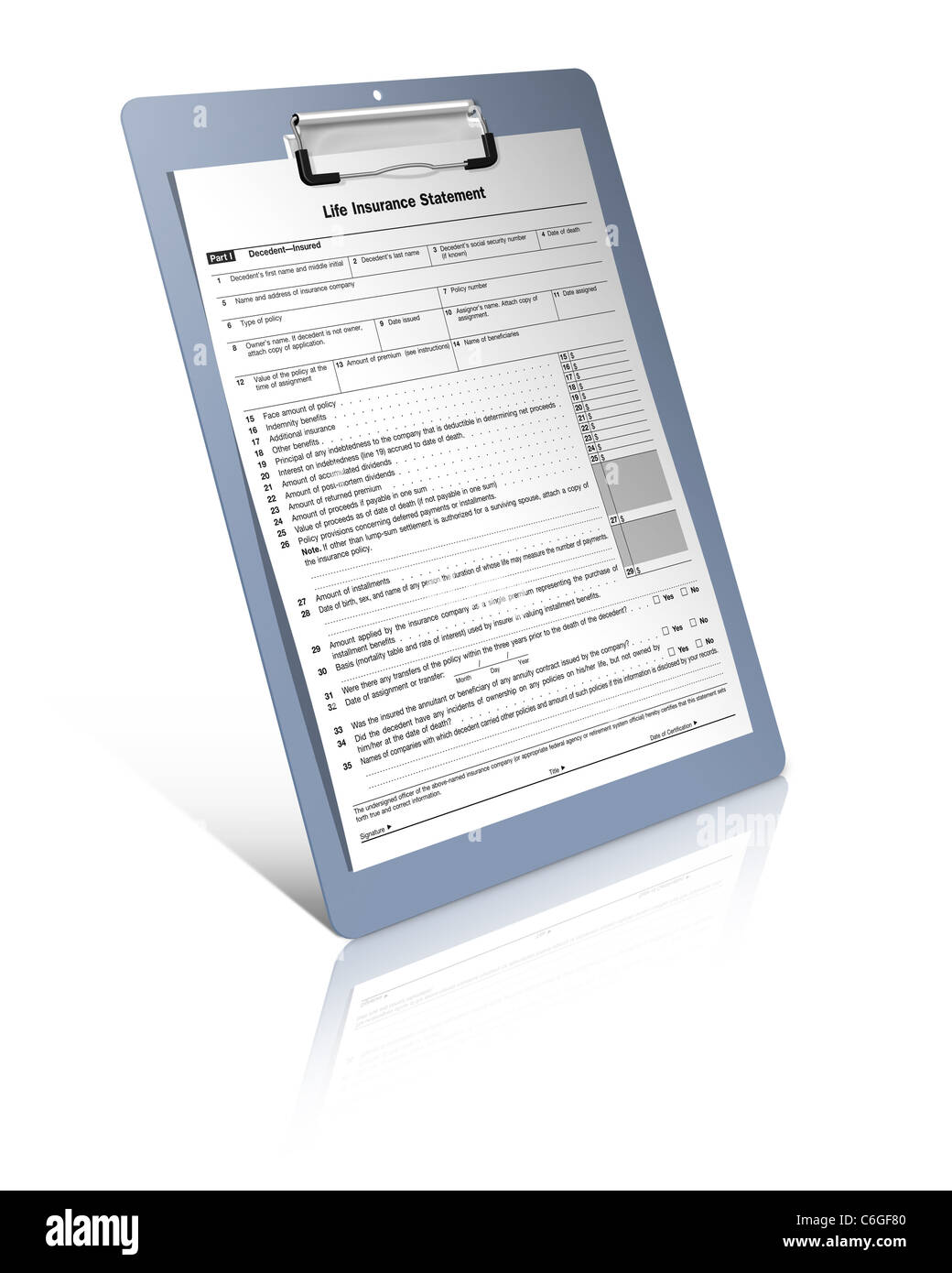
The Missouri-specific Principal Statement of Health is structured into several distinct sections. Accuracy across all fields is critical to prevent underwriting delays or post-issuance policy rescissions.
| Principal SOH Form Architecture (MO) |
|---|
| Section 1: General Information (Policy & Applicant Data) |
| Section 2: Coverage Selection & Dollar Amounts Requested |
| Section 3: Detailed Medical History & Lifestyle Disclosures |
| Section 4: State Disclosures (Missouri Fraud & MIB Notices) |
| Section 5: Signature, HIPAA Authorization & Date |
Section 1: Employer and Applicant Identification
This section collects administrative metadata, including:
- Group Policy Number and Plan Sponsor (Employer Name).
- Employee/Applicant Full Legal Name, Social Security Number, Date of Birth, and Home Address in Missouri.
- Occupation, Date of Hire, and Annual Earnings (if policy benefit is salary-based).
Section 2: Benefit Details
Applicants must specify the exact type and amount of coverage applied for:
- Basic Term Life Insurance vs. Voluntary/Supplemental Life.
- Dependent/Spouse Life Coverage amounts.
- Accidental Death and Dismemberment (AD&D) elections (if subject to medical evidence).
Section 3: Comprehensive Health Questionnaire
This core section contains series of direct "Yes" or "No" medical questions covering the past 5 to 10 years. Key questions focus on:
- Cardiovascular Health: Heart attack, high blood pressure, stroke, or chest pain.
- Oncology: Cancer, tumors, or malignant lesions.
- Metabolic & Respiratory: Diabetes, kidney disorders, asthma, or COPD.
- Neurological & Mental Health: Major depression, anxiety disorders, epilepsy, or multiple sclerosis.
- Substance Use: Tobacco, nicotine delivery products, marijuana, or alcohol abuse history.
- Prescriptions & Consultations: Ongoing prescription medications, recommended treatments, or pending lab test results.
Any "Yes" response requires detailed explanations in the remarks block, including dates of diagnosis, treatment plans, prescribing physicians, and facility locations.
Section 4: State-Specific Disclosures (Missouri Mandates)
Missouri law requires explicit statutory notices on insurance application forms. These include:
- Missouri Fraud Warning: Informing the applicant that knowingly presenting false or fraudulent statements on an insurance application is a crime under state law.
- MIB Group Notice: Explaining how health details may be reported to and cross-referenced with the Medical Information Bureau (MIB) database to prevent insurance fraud.
- Contestability Disclosure: Notifying policyholders that false statements on the application can invalidate coverage within the statutory two-year contestability period.
Section 5: Authorizations and Signatures
The applicant must sign a broad HIPAA-compliant release authorization, granting Principal's medical underwriters permission to request medical records directly from physicians, hospitals, and clinics. Unsigned forms cannot be processed.
Step-by-Step: How to Complete and Submit the SOH Form
Completing the SOH correctly accelerates underwriting and prevents policy processing bottlenecks.
Step 1: Verify Requirements with HR
Before downloading or completing an SOH form, verify with your human resources department:
- The exact policy number.
- Your current Guaranteed Issue threshold.
- The specific amount of coverage needing underwriting approval.
Step 2: Choose Paper vs. Electronic Submission (e-SOH)
Principal offers an online e-SOH application portal for most group plans, which guides users through dynamic questions based on prior answers. If using paper forms, ensure you select the specific state form designated for Missouri residents (Form SOH-MO or standard state equivalent provided by Principal).
Step 3: Gather Medical History
Collect names, addresses, phone numbers, and treatment dates for all personal primary care providers, specialists, and hospital visits within the last 5 to 10 years. List all current prescription medications and exact dosages.
Step 4: Answer Questions Honestly and Completely
Full disclosure is legally mandatory. Omitting a pre-existing condition—even if minor or controlled by medication—can lead to claim denials later. Underwriters routinely cross-check applications against MIB records and prescription history databases.
Step 5: Sign and Submit
Ensure both the applicant signature and spouse signature (if applicable) are affixed with the correct date. Submit the document through Principal's secure online portal or forward it to the designated employer benefits manager.
Guaranteed Issue vs. Statement of Health (Underwritten) Coverage
The administrative paths, requirements, and approval conditions for life insurance vary significantly based on whether an SOH is required.
| Feature / Dimension | Guaranteed Issue (GI) Coverage | Statement of Health (SOH) Required |
|---|---|---|
| Medical History Questions | None required | Extensive 5-10 year detailed medical history |
| Medical Exam / Blood Work | Never required | Potentially required based on age/health responses |
| Approval Timeline | Instant / Automatic upon enrollment | 2 to 6 weeks depending on medical review |
| Maximum Coverage Available | Limited by plan cap (e.g., $100k - $200k) | Higher plan caps (e.g., $500k+) subject to approval |
| Late Enrollee Qualification | Typically unavailable | Required for all late enrollees regardless of amount |
| Pre-existing Condition Review | No individual underwriting | Scrutinized by medical underwriters |
| Cost / Premium Rates | Standard group plan rates | Standard group rates (or declined/rated if individual policy) |
The Medical Underwriting Process at Principal Life Insurance
Once submitted, your SOH form enters Principal's underwriting pipeline. The review process follows a standard sequence:
Form Submission
Initial Underwriting Review
Database Checks: MIB / Rx History
- Clean History:
- Instant Approval
- Complex History Identified:
- Request APS / Paramedical Exam
- Final Decision Rendered
- Clean History:
Initial Triaging: The application is scanned for completeness. Simple applications with no health disclosures are frequently approved automatically by automated underwriting rules.
Database Verification: Principal queries the MIB, state prescription drug monitoring databases, and motor vehicle records to verify self-reported responses.
Attending Physician Statement (APS): If an applicant lists a significant medical condition (e.g., cardiac history, past surgical procedure, abnormal lab results), the underwriter requests formal medical records directly from the attending physician.
Paramedical Examination: For very high coverage amounts or complex medical histories, Principal may schedule a free home or office paramedical exam. This may include blood samples, urinalysis, blood pressure checks, and an ECG.
Possible Underwriting Decisions
Upon review completion, Principal will issue one of four formal determinations:
- Approved: The requested coverage amount is granted in full at standard group rates.
- Approved with Limitation: A lower dollar amount than requested is approved without additional evidence, while the remaining balance is declined.
- Declined: The requested incremental coverage is denied based on underwriting risk guidelines. Note: Declining incremental coverage through an SOH does not void or reduce any existing Guaranteed Issue coverage already in effect.
- Incomplete / Closed File: The file is closed without a decision due to missing physician records or applicant failure to complete requested paramedical exams within required windows.
Common Mistakes to Avoid When Filling Out the Form
- Inaccurate Medical History Dates: Estimating treatment dates incorrectly can cause delays when underwriters cross-reference hospital records. Always provide accurate month and year estimates.
- Failing to Disclose Controlled Conditions: Assuming that a health issue "does not count" because it is well-managed with medication (such as hypertension or thyroid conditions) is a common error. All diagnosed conditions must be declared.
- Missing HIPAA Release Signatures: An incomplete authorization signature prevents Principal from requesting medical records directly from your doctor, stalling your file indefinitely.
- Using the Incorrect State Form: Missouri residents must ensure they complete the Missouri-compliant version of Principal's SOH form containing state-mandated consumer rights disclosures.
Frequently Asked Questions
What does SOH stand for in Principal life insurance?
SOH stands for Statement of Health. It is Principal Financial Group's designation for an Evidence of Insurability (EOI) application, which collects self-reported medical history to evaluate an applicant's insurance risk profile.
Does completing a Statement of Health always require a medical exam?
No. Most group Statement of Health applications are evaluated and approved solely based on the written answers, database checks, and prescription records. A physical paramedical exam or blood draw is only requested for high coverage thresholds or complex medical conditions.
How long does Principal take to review a Statement of Health in Missouri?
Standard applications without complex medical histories are processed in 5 to 10 business days. If Principal must request an Attending Physician Statement (APS) from your doctors, processing can take 3 to 6 weeks, depending on how quickly medical providers release records.
What happens if my Principal SOH request is declined?
If your application for supplemental life insurance is declined, your existing Guaranteed Issue coverage remains fully active and unaffected. You will receive a written explanation detailing the underwriting reasons for the denial, along with instructions on how to request a re-evaluation or appeal.
Is the Statement of Health form state-specific for Missouri residents?
Yes. Insurance regulations vary by state. Missouri requires specific statutory disclosures regarding fraud warnings, contestability periods, and consumer privacy rights. Applicants residing in Missouri must use the Missouri-designated SOH version provided by Principal or their employer's HR portal.
Next Steps and Recommendations
If you need to complete a Principal Life Insurance Statement of Health in Missouri:
- Confirm Your Guaranteed Threshold: Contact your HR representative to confirm how much life insurance coverage you can receive without an SOH.
- Download the Correct Form: Ensure you are completing the Missouri-specific form or using Principal's dynamic e-SOH portal.
- Gather Physician Contact Info: Compile accurate names, clinic addresses, and treatment dates before beginning the form to prevent processing delays.
- Submit Promptly: Submit the completed form within 30 days of initiation to prevent application expiration.
Disclaimer: Life insurance underwriting rules, policy terms, and state disclosure requirements are subject to regulatory updates and carrier policy variations. Consult your employer's plan administrator, a licensed life insurance producer, or direct Principal representatives for specific policy guidance.
Image Gallery