The Oldest Plane Still Flying: The Legend of the 1909 Blériot XI
As of 2026, the oldest original aircraft still in flying condition is the 1909 Blériot XI, specifically the airframe designated as Number 14, housed at the Shuttleworth Collection in Old Warden, England. This remarkable machine, powere...
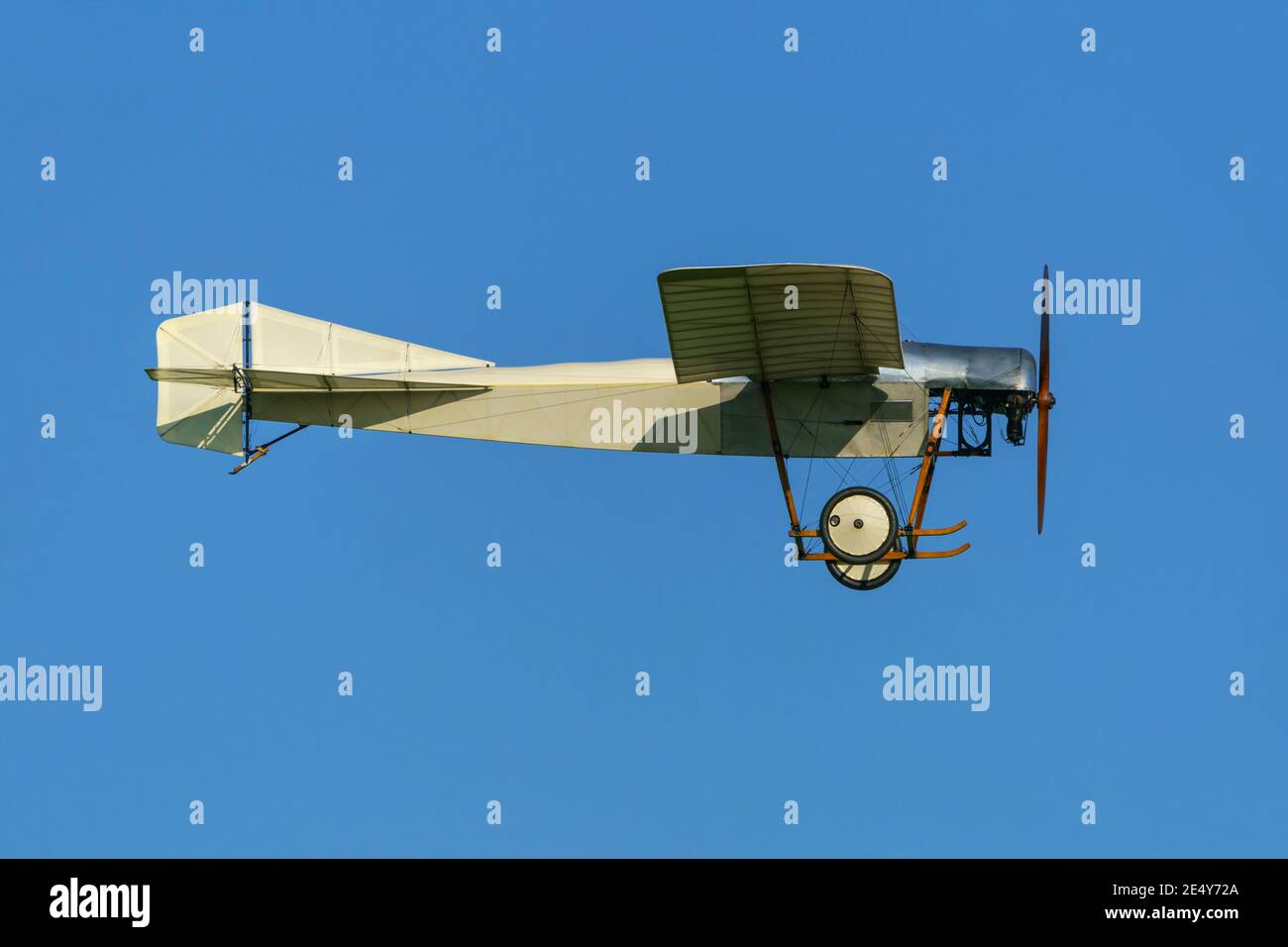
As of 2026, the oldest original aircraft still in flying condition is the 1909 Blériot XI, specifically the airframe designated as Number 14, housed at the Shuttleworth Collection in Old Warden, England. This remarkable machine, powered by its original three-cylinder Anzani engine, continues to perform short flights during calm weather, representing the pinnacle of Edwardian aviation heritage.
Contents
The Identity of a Century-Old Aviator: The Blériot XI
To understand which aircraft holds the title of the oldest still flying, one must distinguish between "flying replicas" and "original airworthy aircraft." While many museums house replicas of the 1903 Wright Flyer, none of those are original airframes. The 1909 Blériot XI (No. 14) at the Shuttleworth Collection is the genuine article. It was discovered in a garage in France in the 1930s by Richard Shuttleworth and painstakingly restored to its original flight specifications.
The Blériot XI is not just a relic; it is the same model that achieved the first powered flight across the English Channel on July 25, 1909, piloted by Louis Blériot. While the Channel-crossing aircraft itself is in the Musée des Arts et Métiers in Paris (as a static display), the Shuttleworth example is the oldest surviving airframe of its kind that still takes to the sky.
Technical Specifications and the Anzani Engine
The Blériot XI was a monoplane at a time when biplanes were considered the safer, more stable standard. Its design was revolutionary, featuring a slender fuselage, a distinctive "pigeon-tail" elevator, and a landing gear system that utilized "castering" wheels to assist with crosswind landings—a feature that was decades ahead of its time.
| Feature | Specification |
|---|---|
| Manufacturer | Louis Blériot / Blériot Aéronautique |
| First Flight | 1909 |
| Engine Type | Anzani 3-cylinder "Fan" or "W" type |
| Horsepower | Approximately 25 hp |
| Wingspan | 7.79 meters (25 ft 7 in) |
| Length | 7.62 meters (25 ft) |
| Control System | Wing warping (no ailerons) |
| Maximum Speed | 75 km/h (47 mph) |
| Current Location | Shuttleworth Collection, UK |
The heart of the aircraft is the Anzani three-cylinder engine. In 1909, internal combustion engines were heavy and prone to overheating. Alessandro Anzani’s design was air-cooled, which saved weight, but it lacked a throttle in the modern sense. To manage speed, pilots had to manually "blip" the ignition, cutting the engine intermittently to prevent it from racing or overheating.
Engineering Heritage: How a 117-Year-Old Plane Stays Airworthy
Maintaining an aircraft from the "Pioneer Era" in 2026 requires a level of craftsmanship that has largely vanished from modern aerospace engineering. The preservation of the Blériot XI involves a delicate balance between replacing worn components and maintaining historical integrity.
Materials and Structural Integrity
The airframe is primarily constructed from ash wood and spruce, braced with high-tensile steel wire. Unlike modern composite or aluminum wings, the Blériot’s wings are covered in linen fabric, which must be "doped" (treated with a specialized lacquer) to remain taut and airtight. Over time, this fabric degrades and must be carefully replaced using historical methods to ensure the wing retains its lift properties.
The Wing-Warping System
Modern aircraft use ailerons (hinged sections on the trailing edge of the wing) to roll the plane. The Blériot XI utilizes wing warping. By pulling on wires connected to the rear spar, the pilot literally twists the entire wooden structure of the wing to change its aerodynamic shape. In 2026, the structural health of these wooden spars is monitored with ultrasonic testing and visual inspections to ensure the wood has not become brittle or infested with rot, which would be catastrophic during a flight maneuver.
Total-Loss Lubrication
One of the most authentic—and messy—aspects of the Blériot XI is its lubrication system. The Anzani engine uses a "total-loss" system, meaning castor oil is pumped through the engine and then sprayed out of the exhaust and into the slipstream. This creates a distinctive smell that is legendary among aviation historians. For the ground crew at the Shuttleworth Collection, this requires hours of cleaning after every flight to prevent the acidic oil from damaging the linen fabric and wooden fuselage.
Why It Matters: The Significance of the Flying Blériot
The existence of an airworthy 1909 Blériot XI in 2026 is more than a feat of mechanical endurance; it is an essential piece of human history.
A Connection to the "Age of Wonder"
In 1909, flight was a miracle. People would gather by the thousands just to see a machine lift a few feet off the ground. By keeping the Blériot XI in the air, we preserve the sensory reality of that era. A static museum display cannot replicate the staccato "pop-pop-pop" of the Anzani engine, the sight of the vibrating wire bracing, or the way the aircraft dances in the slightest breeze. It provides a tangible link to the bravery of pioneers like Louis Blériot, who crossed the sea in a machine that many today would consider a "kite with a lawnmower engine."
Evolution of Flight Mechanics
The Blériot XI matters because it represents a fork in the road of design. Before this aircraft, the Wright brothers favored the "pusher" configuration (engine and propeller behind the pilot). Blériot championed the "tractor" configuration (engine and propeller in front). His success standardized the layout of almost every aircraft that followed for the next century. Seeing it fly allows engineers and students to observe the "raw" physics of flight before the advent of sophisticated flight computers and aerodynamic smoothing.
The Educational Value of Failure Modes
Operating the Blériot XI in 2026 serves as a case study in mechanical reliability. The aircraft is only flown in "dead calm" conditions (usually winds less than 5 knots) because its control authority is so limited. This teaches modern aviators about the margins of safety. If the engine fails—which it frequently did in the early 1900s—the pilot must rely on the aircraft's glide ratio, which is surprisingly good for its weight, but requires immediate and decisive action.
Challenges and Operational Limits in the Modern Era
Flying the world's oldest plane is not a routine task. It is a highly choreographed event that requires specific permissions and environmental conditions.
- Weather Sensitivity: Because the wing-warping system is less effective than ailerons, the Blériot XI is susceptible to being "flipped" by a sudden gust of wind. It is generally only flown at dusk or dawn when the air is "still."
- Pilot Specialization: Flying a Blériot is counter-intuitive for a modern pilot. The lack of a standard throttle, the castering landing gear, and the significant gyroscopic effect of the engine require a pilot who has spent hundreds of hours studying pioneer flight dynamics.
- Regulatory Hurdles: Organizations like the Civil Aviation Authority (CAA) in the UK maintain strict oversight on "Annex II" (historical) aircraft. The Blériot must undergo rigorous inspections to prove that its 117-year-old design still meets basic safety requirements for public displays.
Other Historic Contenders for the Title
While the 1909 Blériot XI is the oldest original airworthy plane, other aircraft are often cited in the conversation of aviation longevity.
- 1910 Deperdussin Monoplane: Also kept at Shuttleworth, this is the second-oldest flying aircraft. It is slightly faster and more stable than the Blériot but uses a similar rotary engine.
- 1912 Blackburn Monoplane: This is the oldest surviving British aircraft that still flies. It represents the rapid advancement in design that occurred in the three short years after Blériot's Channel crossing.
- Old Rhinebeck Aerodrome: Located in New York, this museum maintains a fleet of early aircraft, including a 1911 Curtiss Pusher (often a mix of original and reproduction parts). You can learn more about their fleet at Old Rhinebeck Aerodrome.
FAQ: The Oldest Plane Still Flying
Is the plane entirely original?
No aircraft that flies for over a century can remain 100% original. Critical "life-limited" components like the fabric covering, spark plugs, and certain wires are replaced for safety. However, the airframe structure and the engine block of the Shuttleworth Blériot XI are original components from 1909.
Can I fly in the oldest plane?
No. The Blériot XI is a single-seat aircraft with very limited lift capacity. It is far too fragile and valuable to carry passengers. It is only flown by a handful of highly experienced display pilots.
How high does it fly?
In 2026, the Blériot XI typically performs "hops" or low-level circuits, rarely exceeding an altitude of 50 to 100 feet. This minimizes the risk to the pilot and the airframe in the event of an engine failure.
Why doesn't the Smithsonian fly their Blériot?
The Smithsonian National Air and Space Museum prioritizes the preservation of the physical artifact for future centuries. Flying an aircraft introduces stresses, vibrations, and the risk of a crash. The Smithsonian chooses "static preservation" to ensure the aircraft exists in 500 years, whereas the Shuttleworth Collection chooses "living history."
What fuel does a 1909 engine use?
The Anzani engine runs on modern high-octane unleaded gasoline, but it must be mixed or used in conjunction with pure castor oil for lubrication. The engine consumes the oil as it runs, which is why it requires constant replenishment.
The Future of the Blériot XI
As we look toward the second half of the 21st century, the question of whether to keep the Blériot XI flying remains a topic of debate among curators. Every flight carries a risk of losing a priceless artifact. However, the consensus among heritage aviators is that an aircraft "dies" once it is permanently grounded. The movement, the sound, and the presence of the 1909 Blériot XI in the air ensure that the story of the pioneers remains a vibrant, living narrative rather than a dusty chapter in a textbook.
To witness this aircraft in person, enthusiasts should visit the Shuttleworth Collection during their scheduled flying proms or heritage days, which typically occur between May and October. It remains the only place on Earth where you can see the dawn of aviation still taking flight in 2026.
Image Gallery