Understanding the Role of Swiss Natural Resources in Economic and Environmental Strategy
Understanding the role of Swiss natural resources requires examining both domestic assets and international trade dynamics. While Switzerland possesses limited fossil fuels and industrial metallic ores, its abundant water systems, dens...
Understanding the role of Swiss natural resources requires examining both domestic assets and international trade dynamics. While Switzerland possesses limited fossil fuels and industrial metallic ores, its abundant water systems, dense forests, and building minerals form the backbone of its renewable energy, environmental protection, and construction sectors. Concurrently, Switzerland serves as a major global hub for commodity trading and resource financing.
Contents
Overview of Domestic Natural Resource Assets in Switzerland
Switzerland’s physical geography—dominated by the Alps, the Jura mountains, and the Central Plateau—defines its natural resource profile. Rather than relying on heavy extractive industries like coal mining or petroleum drilling, the nation leverages ecological stability, hydrological assets, and structural raw materials to sustain its economy.
- Swiss Natural Resource Base
- Water: Hydropower & Reservoirs
- Forest & Wood: Natural Hazard Protection
- Minerals: Sand, Gravel, & Stone Agg.
Water Resources: The Hydrological Engine of Europe
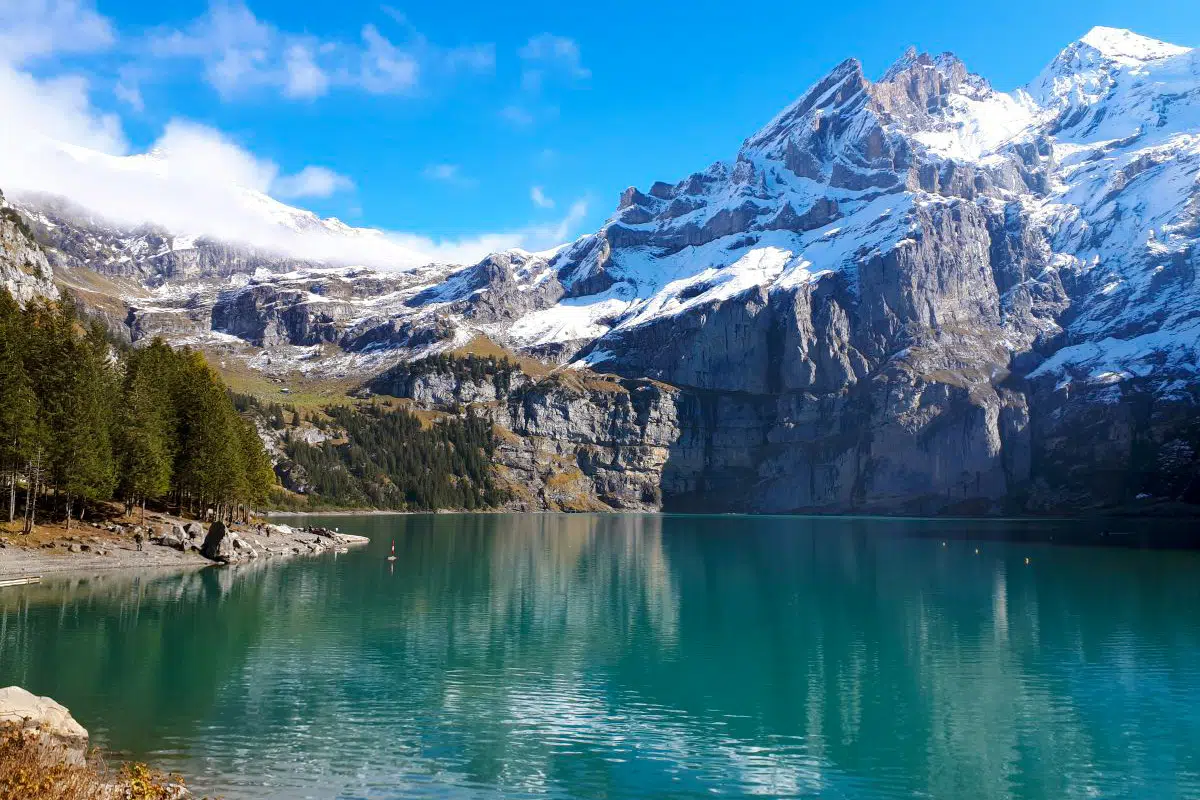
Often described as the "Water Tower of Europe," Switzerland contains roughly 6% of the continent's freshwater reserves. Topographical height and seasonal precipitation yield major European rivers, including the Rhine, the Rhone, and tributaries to the Po and Danube.
Water serves two critical national functions:
- Hydropower Generation: Water is Switzerland’s primary domestic source of electricity. Hydropower plants—comprising both run-of-river installations and high-altitude reservoir storage facilities—generate over 55% of the nation's domestic electricity. Pumped-storage plants act as massive energy storage systems, balancing fluctuations in the European grid.
- Freshwater Supply: Abundant subterranean aquifers and pristine lakes supply high-quality drinking water to domestic municipalities while supporting regional agriculture and industrial processing across international borders.
Forests and Timber: Protective Shields and Renewable Materials
Forests cover approximately 31% of Switzerland's total land area, expanding steadily over recent decades. Managed under strict federal legislation, Swiss forests fulfill three main functions:
- Protection Against Natural Hazards: In mountainous zones, "protection forests" (Schutzwald) act as natural infrastructure against avalanches, rockfalls, landslides, and mudslides. This bio-engineering function saves billions of Swiss francs in mechanical barrier costs.
- Sustainable Timber Supply: Swiss forestry emphasizes sustainable yield practices governed by the Swiss Federal Office for the Environment. Timber provides raw material for low-carbon construction, paper manufacturing, and localized heating networks.
- Biodiversity and Carbon Sinks: Healthy forest ecosystems absorb atmospheric carbon while preserving habitats for indigenous Flora and Fauna in the Alpine biome.
Mineral Resources: Essential Construction Aggregates
Switzerland lacks commercial deposits of iron ore, coal, or rare earths. However, its geological structure provides substantial non-metallic mineral reserves used in civil engineering and urban development:
- Gravel and Sand: Extracted predominantly from river valleys and glacial deposits, gravel and sand represent the highest volume of extracted raw materials in the country.
- Limestone, Marl, and Clay: These minerals supply the domestic cement and concrete production sectors, reducing reliance on heavy structural imports.
- Dimension Stone: Specialized granites, quartzites, and limestones are quarried for architectural applications and infrastructure projects.
The Economic Shift: From Resource Constraints to Global Trade Leadership
The relative scarcity of industrial fossil fuels and metallic minerals historically forced Switzerland to adopt an economic model focused on value addition, technological precision, high-skilled labor, and international trade governance.
How Resource Limits Shaped Swiss Industrialization
During the 19th-century Industrial Revolution, the absence of domestic coal and iron reserves prevented Switzerland from building heavy steel mills. Instead, Swiss industry concentrated on high-value, low-raw-material sectors such as watchmaking, fine machinery, specialty chemicals, and pharmaceuticals.
To power these operations without imported coal, Swiss engineers pioneered long-distance hydroelectric power transmission and built extensive rail networks powered by clean electricity. This early adaptation established a resilient, low-carbon industrial framework that persists today.
- Limited Raw Materials (No domestic coal/iron)
- Abundant Water & Elevation (Alpine topography)
- High-Value Industrial Model
- Precision manufacturing & watchmaking
- Hydroelectric power deployment
- Technological specialization over bulk extraction
- High-Value Industrial Model
Switzerland’s Role in International Commodity Trading
While domestic extraction remains modest, Switzerland is one of the world's most influential hubs for international commodity trading. Commercial clusters in Geneva, Zug, and Ticino facilitate the global movement of physical resources:
- Market Share: Swiss-based trading houses handle significant global volumes of crude oil, refined petroleum, metals, minerals, grains, and agricultural goods.
- Trade Finance: Swiss private and commercial banks provide structured trade finance, letters of credit, and risk management solutions that underwrite global resource supply chains.
- Refining and Processing: Switzerland hosts major international gold refineries. These facilities process a substantial portion of the world's newly mined and recycled gold into investment-grade bars and commercial components under standard security and purity guidelines overseen by the Swiss Federal Customs and Border Security Bureau.
Governance, Sustainability, and Environmental Policies
Managing natural resources in Switzerland requires balancing environmental conservation with energy security and economic demand. Federal and cantonal authorities enforce stringent environmental regulations to protect natural ecosystems.
Energy Strategy 2050 and Renewable Integration
Under the long-term Energy Strategy 2050, Switzerland is shifting its energy mix to address nuclear phase-out goals while reducing carbon emissions. Key resource management directives managed by the Swiss Federal Office of Energy include:
- Hydropower Modernization: Upgrading existing dams, expanding reservoir capacities, and optimizing run-of-river plants to boost winter generation capacity.
- Solar and Geothermal Expansion: Integrating photovoltaic systems on Alpine infrastructure and exploring deep geothermal energy to reduce seasonal supply gaps.
- Efficiency Mandates: Imposing strict energy standards on residential buildings, industrial machinery, and transportation networks.
Circular Economy and Material Recycling
Because domestic primary raw materials are limited, Switzerland relies heavily on circular economy practices. The nation achieves high recycling rates for municipal and construction waste:
| Category | Recycling & Recovery Rate |
|---|---|
| PET Beverage Containers | 82%+ |
| Glass Packaging | 95%+ |
| Aluminum Cans | 90%+ |
| Concrete Waste (Reused) | 75%+ |
Reclaimed mineral materials from demolition sites are routinely re-processed into concrete aggregates, preserving primary gravel reserves and reducing land consumption from quarrying.
Transboundary Water Governance
Because major European rivers originate within its borders, Switzerland participates in international water management agreements. Through treaties with neighbouring nations (Germany, France, Italy, and Austria), Switzerland regulates river flow rates, coordinates flood prevention measures, and manages water quality standards across shared river basins like the Rhine and Rhone.
Key Resource Attributes and Operational Overview
The table below outlines Switzerland's primary domestic natural resources, their economic and environmental functions, legislative oversight mechanisms, and primary strategic challenges as of 2026.
| Resource Type | Primary Functions | Governing Framework / Oversight | Strategic Challenges (2026) |
|---|---|---|---|
| Water (Hydropower & Fresh) | Electricity generation, drinking water supply, transboundary flow control | Federal Water Governance Act, Cantonal Water Rights | Climate-induced glacier retreat, winter supply deficits, ecosystem protection |
| Forests & Timber | Natural hazard defense, timber production, carbon absorption | Federal Act on Forest (Forestry Act), FOEN | Pest pressure from warmer summers, balancing harvesting with biodiversity |
| Gravel, Sand & Stone | Concrete production, civil engineering, transport infrastructure | Cantonal Spatial Planning Laws, Mining & Extractive Codes | Zoning limits, land-use conflicts, public opposition to new quarries |
| Agricultural Soil | Food production, crop rotation, regional food security | Federal Agriculture Act, Crop Rotation Area (Suchtfflächen) protections | Urban sprawl, soil compaction, adaptation to changing rainfall patterns |
| Gold & Precious Metals | Commercial refining, bullion vaulting, industrial applications | Precious Metals Control Act, Anti-Money Laundering Act (AMLA) | Supply chain transparency, international due diligence compliance |
Future Challenges in Swiss Natural Resource Management
Swiss natural resource management faces evolving pressures driven by environmental changes, demography, and geopolitical shifts.
Climate Change and Alpine Hydrology
Glacial retreat across the Swiss Alps alters seasonal water availability. Historical weather patterns provided predictable summer meltwater to fill reservoirs and support downstream river levels. As glaciers shrink:
- Seasonal Runoff Shifts: Spring runoff occurs earlier in the year due to premature snowmelt, while late summer river flows diminish, limiting run-of-river electricity generation during hot periods.
- Infrastructure Vulnerability: Melting permafrost destabilizes high-altitude rock faces, threatening alpine dams, transmission towers, and transportation corridors with landslides and rockfalls.
Land-Use Conflicts and Biodiversity Constraints
Switzerland’s high population density on the Central Plateau creates intense competition for land. Balancing housing, industrial expansion, agricultural preservation, and mineral extraction presents ongoing planning challenges:
- Quarry Expansion vs. Conservation: Opening new gravel pits or expanding existing stone quarries frequently clashes with local landscape protection mandates and community resistance.
- Hydropower vs. Aquatic Ecosystems: Expanding reservoir capacity or building new alpine dams can flood sensitive river ecosystems, sparking debates between energy security advocates and conservation groups.
Frequently Asked Questions
What are the main domestic natural resources found in Switzerland?
Switzerland’s primary domestic natural resources are water (used for hydropower and freshwater supply), forests (providing timber and natural hazard protection), and non-metallic building minerals like gravel, sand, clay, and limestone. Switzerland has virtually no domestic production of fossil fuels or metallic ores.
Why is water considered Switzerland's most critical natural resource?
Water generates over half of Switzerland's domestic electricity through hydroelectric power plants. Additionally, Swiss lakes and aquifers hold high-quality freshwater reserves that supply domestic consumption and feed major European river systems used for international transport, agriculture, and cooling.
How does Switzerland manage its energy needs without major fossil fuel reserves?
Switzerland relies on a combination of hydroelectric power, nuclear energy, imported natural gas, and imported refined petroleum products. Under its Energy Strategy 2050, the country is expanding solar generation, wind power, biomass, energy efficiency mandates, and grid-scale energy storage to reduce dependence on imported fossil fuels.
What role does Switzerland play in the global commodity resource market?
Despite low domestic extraction, Switzerland is a leading global hub for international commodity trading and trade finance. Major firms operating out of Geneva, Zug, and Ticino manage physical trade flows of crude oil, metals, minerals, and agricultural goods globally.
How does forest management protect Swiss infrastructure?
Protective forests (Schutzwald) on alpine slopes act as natural barriers against avalanches, mudslides, and falling rocks. By stabilizing soil and dampening snow movement, these managed forests protect roads, railways, and alpine villages from natural hazards without requiring expensive concrete barriers.
What is Switzerland’s approach to recycling raw materials?
Switzerland relies heavily on circular economy practices to offset its lack of raw material deposits. Federal regulations enforce high recycling targets for glass, PET, metals, and construction debris. Over three-quarters of mineral waste from building demolitions is recycled back into construction projects.
Practical Recommendations for Business and Policy Stakeholders
To align operations with Switzerland’s resource framework, industry leaders, investors, and public sector administrators should focus on three strategic areas:
- Prioritize Circular Material Integration: Developers and civil engineering firms operating in Switzerland should prioritize recycled aggregates and certified local timber to meet federal sustainability standards and navigate strict cantonal raw-material extraction limits.
- Adapt Energy Planning to Alpine Hydrology: Industrial users and utility operators must account for seasonal shifts in hydroelectric generation driven by glacial retreat. Investment in flexible energy management, local solar integration, and winter thermal storage can offset projected seasonal power deficits.
- Ensure Supply Chain Transparency in Commodity Operations: Trading firms and financial institutions operating within Swiss jurisdiction must maintain robust due diligence procedures. Aligning corporate practices with federal anti-money laundering and environmental standards protects operations from regulatory friction and legal liability.
Image Gallery