Professional Foundation Crack Repair in Broomfield, CO: A Comprehensive 2026 Guide
Repairing foundation cracks in Broomfield, Colorado, requires a specialized approach tailored to the region’s unique expansive soils and semi-arid climate. Effective repair involves identifying whether a crack is cosmetic or structural...
Repairing foundation cracks in Broomfield, Colorado, requires a specialized approach tailored to the region’s unique expansive soils and semi-arid climate. Effective repair involves identifying whether a crack is cosmetic or structural, selecting the appropriate injection material—typically polyurethane or epoxy—and addressing the underlying drainage issues that cause Colorado foundations to shift.
Contents
Understanding the Broomfield Geological Context
To successfully repair a foundation in Broomfield, one must first understand the "why" behind the damage. Broomfield sits within a region characterized by high concentrations of bentonite clay, often referred to as expansive soil. As of 2026, geological surveys continue to highlight the Front Range as a high-risk zone for soil-related foundation movement.
When these clay-heavy soils get wet—due to heavy spring snowmelt or localized thunderstorms—they expand significantly, exerting tremendous hydrostatic pressure against basement walls. Conversely, during the hot, dry late-summer months typical of Colorado, the soil shrinks and pulls away from the foundation. This constant cycle of expansion and contraction leads to the shearing and cracking of concrete. Furthermore, the freeze-thaw cycles in Broomfield, where temperatures can swing 50 degrees in a single day, cause moisture trapped within existing micro-cracks to expand, widening the gaps over time.
Evaluating Foundation Cracks: DIY vs. Professional Intervention
Before purchasing a repair kit, a homeowner must determine the nature of the crack. Not all cracks are created equal, and some represent systemic structural failures that a simple injection cannot fix.
Hairline and Vertical Cracks
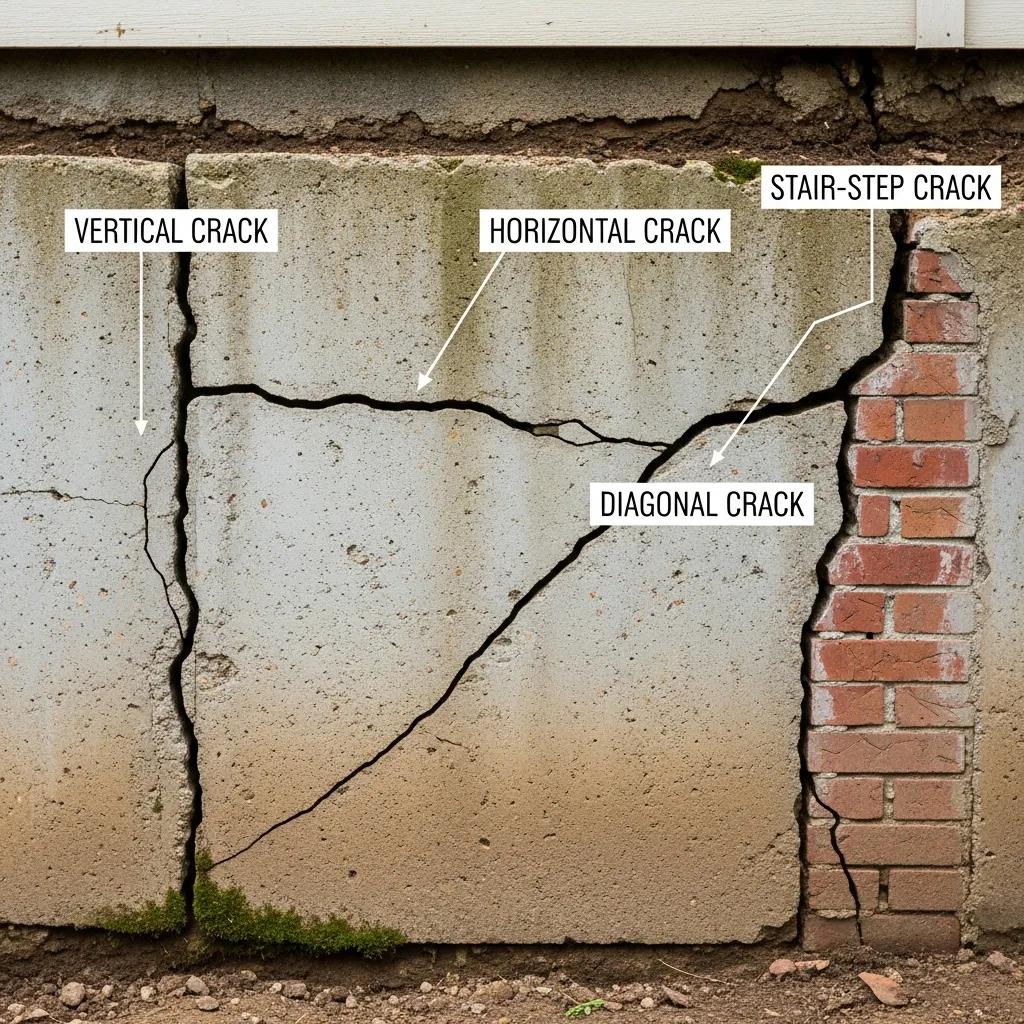
Vertical cracks are common in Broomfield and are often the result of the concrete shrinking during its initial curing process or minor settling. If the crack is narrower than 1/8th of an inch and is not leaking water, it may be considered cosmetic. These are the primary candidates for DIY injection methods.
Diagonal and Stair-Step Cracks
Stair-step cracks in brickwork or concrete blocks often indicate differential settlement. This occurs when one part of the foundation is sinking faster than the rest. In Broomfield’s hilly terrain, this is frequently seen on the downslope side of a property. These cracks require a professional structural evaluation to determine if piering is necessary.
Horizontal Cracks
Horizontal cracks are the most severe. They generally indicate that the foundation wall is bowing inward due to excessive lateral pressure from saturated expansive soil. A horizontal crack is a sign of potential structural collapse and should never be treated as a DIY project. In 2026, Broomfield building codes and safety standards strictly dictate that these repairs involve structural reinforcement, such as carbon fiber straps or steel I-beams.
Step-by-Step DIY Foundation Crack Repair (Non-Structural)
If you have identified a vertical, non-structural crack that is leaking or simply needs sealing, the following procedure using a low-pressure injection system is the industry standard for 2026.
1. Surface Preparation and Cleaning
The bond between the repair material and the concrete is only as strong as the cleanliness of the surface. Use a wire brush to scrub the crack and the area at least two inches on either side. Remove all loose dust, efflorescence (white salty deposits), and old paint. If the crack is oily or greasy, use a concrete-safe degreaser. Vacuum the crack thoroughly to ensure no debris remains inside the fissure.
2. Installing Injection Ports
Injection ports are small plastic nozzles that allow the repair material to enter the crack from the inside out. Starting at the bottom of the crack, mark locations for ports every 8 to 12 inches. Use a fast-setting epoxy paste to adhere the base of each port to the crack. Do not plug the hole of the port or the crack directly behind the port.
3. Sealing the Crack Surface
Apply the same epoxy paste over the remainder of the crack between the ports. This creates a "cap" that prevents the injection material from leaking out the front of the crack while you are under pressure. Extend the paste about an inch on both sides of the crack to ensure a liquid-tight seal. Allow this to cure for the timeframe specified by the manufacturer—usually 2 to 4 hours in Colorado's typical humidity levels.
4. Injecting the Repair Material
For most Broomfield basements, hydrophilic polyurethane foam is the preferred choice. Polyurethane expands upon contact with moisture, making it ideal for sealing cracks that may still be damp.
- Start at the lowest port.
- Attach the cartridge or pump nozzle and inject slowly until the material begins to flow out of the port directly above it.
- Cap the bottom port and move to the next one up.
- Repeat this process until the entire crack is filled to the top.
5. Final Finishing
Once the material has fully expanded and cured (usually 24 hours), you can saw off the protruding necks of the injection ports. If aesthetic finish is a priority, the epoxy surface seal can be ground off with a small angle grinder, though many homeowners leave it in place for added reinforcement.
Professional Structural Repair Methods
When a crack exceeds 1/4 inch or displays signs of structural movement, professional intervention in Broomfield typically involves one of the following high-tech 2026 solutions:
- Resistance Piering: Steel pipes are driven deep into the ground until they hit competent load-bearing strata or bedrock. The weight of the house is then transferred to these piers, allowing the foundation to be leveled.
- Helical Piers: These look like large screws and are "torqued" into the ground. They are particularly effective in the sandy-clay mixes found in parts of Broomfield near the Interlocken area.
- Carbon Fiber Reinforcement: High-tensile strength carbon fiber straps are bonded to the interior of foundation walls using specialized resins. This is the least invasive way to stop a wall from bowing inward due to soil pressure.
Comparison of Foundation Repair Methods in Broomfield
| Method | Best For | Estimated Cost (2026) | DIY Suitability |
|---|---|---|---|
| Polyurethane Injection | Waterproofing, non-structural vertical cracks | $300 - $600 per crack | High |
| Epoxy Injection | Structural bonding of dry, non-moving cracks | $350 - $800 per crack | Medium |
| Carbon Fiber Straps | Preventing wall bowing/lateral movement | $600 - $1,200 per strap | Low (Pro recommended) |
| Helical/Push Piers | Foundation settlement and sinking | $1,500 - $3,500 per pier | None (Requires heavy machinery) |
Preventing Future Foundation Issues in Colorado
Repairing the crack is only half the battle. In Broomfield, you must manage the moisture around your home to prevent the expansive clay from re-damaging your foundation.
Advanced Drainage Systems
Ensure that your gutters are clear and that downspouts extend at least 5 to 10 feet away from the foundation. In the 2026 Colorado climate, characterized by intense but brief precipitation events, standard 3-foot extensions are often insufficient. Consider underground "pop-up" emitters to move water further into the yard.
Soil Grading
The ground should slope away from your foundation at a rate of at least 6 inches for every 10 feet. Over time, soil near the foundation settles, creating "negative grade" that traps water against the concrete. Regularly backfill these areas with compacted clay (not mulch or sand, which allow water to seep through).
Xeriscaping and Irrigation
Avoid planting water-intensive shrubs or trees within 5 feet of the foundation. Irrigation systems that leak or over-saturate the soil near the house are a leading cause of foundation failure in the Broomfield suburbs. Smart irrigation controllers, now standard in 2026, can help maintain consistent soil moisture levels without over-watering.
Navigating Permits and Regulations in Broomfield
As of 2026, the City and County of Broomfield Building Division requires permits for most structural foundation repairs. While minor crack injections for waterproofing typically do not require a permit, any work involving piers, wall anchors, or structural reinforcement must be performed by a licensed contractor and often requires a wet-stamped letter from a Colorado-licensed Professional Engineer (PE).
Failure to obtain the proper permits can lead to significant issues during the home resale process. In Broomfield's competitive real estate market, savvy buyers and inspectors will look for "Permit History" on any visible foundation repairs to ensure the work meets the International Residential Code (IRC) standards.
Frequently Asked Questions
Is foundation crack repair covered by Colorado home insurance?
Generally, standard homeowners insurance in Colorado does not cover foundation repair caused by earth movement, seepage, or expansive soils. Coverage is typically only available if the damage was caused by a sudden, covered event like a plumbing burst. Always check your specific 2026 policy riders for "earth movement" or "sinkhole" endorsements.
How long does a typical crack repair last?
A professionally executed polyurethane or epoxy injection can last the life of the structure, provided the underlying cause of the movement is addressed. If the soil continues to shift due to poor drainage, new cracks may form adjacent to the repaired area.
Can I use store-bought hydraulic cement to fix a crack?
Hydraulic cement is not recommended for active foundation cracks in Broomfield. It is a rigid material that does not bond well to the interior of a crack and often pops out when the concrete undergoes thermal expansion or soil-related movement. Injection resins are far superior because they penetrate the full depth of the wall.
What is the average cost of foundation repair in Broomfield in 2026?
Minor crack sealing typically ranges from $500 to $1,500. However, if structural stabilization (piering) is required, homeowners should budget between $10,000 and $30,000 depending on the perimeter of the home and the depth of the stable soil layers.
When is the best time of year to perform repairs in Broomfield?
Late spring or early fall is ideal. Avoid the dead of winter when the ground is frozen, as it makes excavation and soil assessment difficult. Similarly, repairing during a very wet spring can make it harder for resins to cure properly if water is actively flowing through the crack.
Practical Recommendation
If you discover a crack in your foundation, start by monitoring it for one month. Use a pencil to mark the ends of the crack and write the date. If the crack grows in length or width within that month, or if it begins to leak, contact a local Broomfield structural engineer for a non-biased evaluation before calling a repair contractor. This ensures you receive a solution based on physics rather than a sales pitch.
Image Gallery