The Role of Information Systems Laboratories in Modern Education and Industry
Information systems laboratories serve as the essential bridge between theoretical frameworks and practical application in the digital age. By providing controlled environments for experimentation, these labs allow students, researcher...
Information systems laboratories serve as the essential bridge between theoretical frameworks and practical application in the digital age. By providing controlled environments for experimentation, these labs allow students, researchers, and professionals to design, implement, and test complex data structures, network security protocols, and software solutions without risking live enterprise environments.
Contents
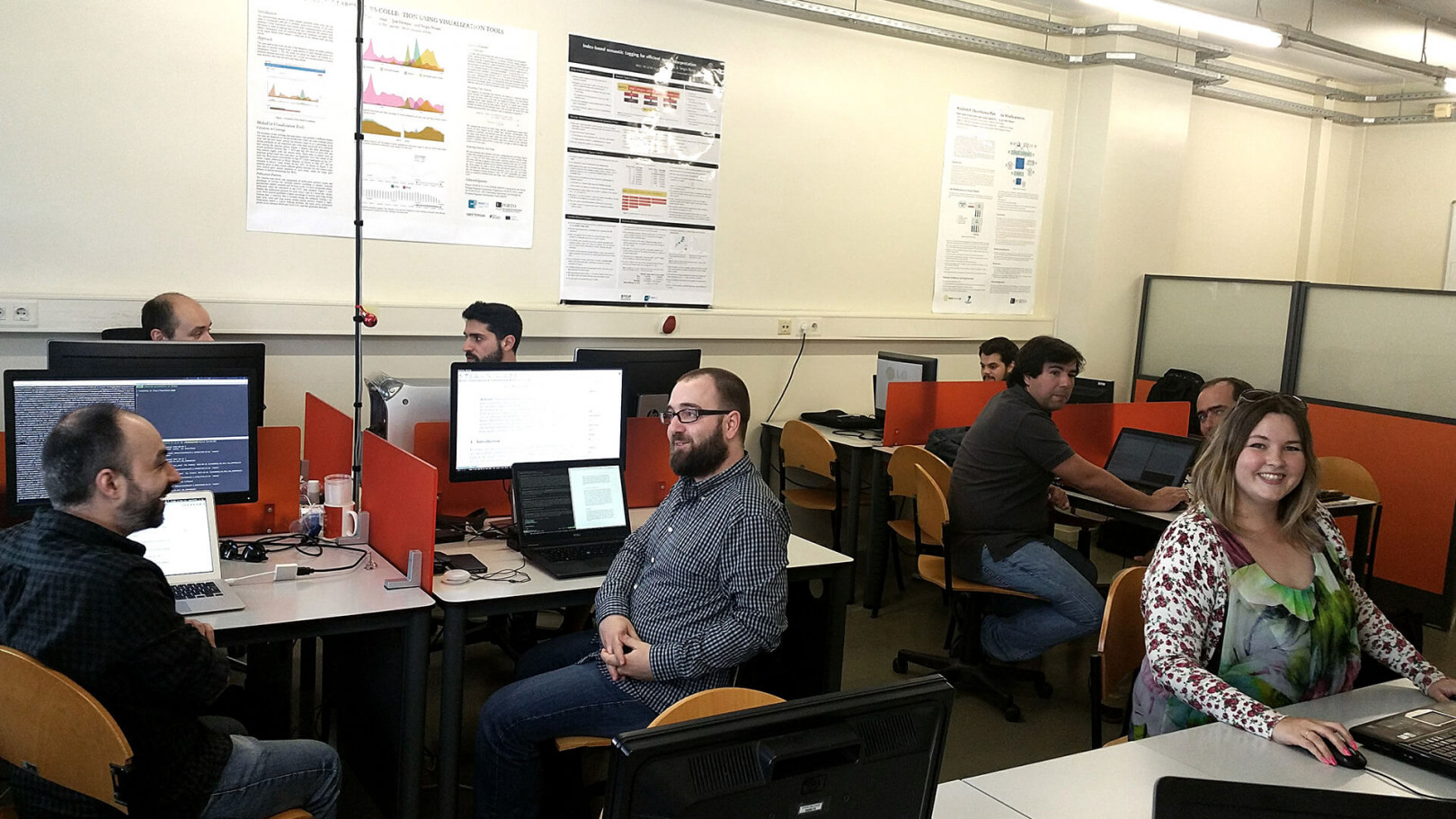
The landscape of Information Systems (IS) has shifted significantly by 2026. While the core principles of data management and systems analysis remain, the environments in which these skills are honed have evolved from simple computer clusters into sophisticated, multi-layered ecosystems. Information systems laboratories are no longer just rooms filled with workstations; they are dynamic hubs where hardware, software, and human ingenuity converge to solve the pressing data challenges of the current era.
The Evolution of Information Systems Laboratories
Historically, information systems laboratories were primarily focused on providing access to expensive hardware and proprietary software that individuals could not afford. In the late 20th century, this meant access to mainframes or high-end desktop PCs and relational database management systems (RDBMS). However, as we stand in 2026, the "laboratory" has become a hybrid entity.
Modern IS labs integrate on-premises hardware with vast cloud-based resources. This shift allows for the simulation of global-scale systems that were previously impossible to replicate in an academic or small-business setting. The role of the lab has expanded from a simple "computer room" to a specialized environment for high-performance computing, cybersecurity sandboxing, and large-scale data visualization. The fundamental shift is from resource provision to capability enablement.
Bridging the Gap Between Theory and Practice
The primary function of an information systems laboratory is to facilitate experiential learning. In a classroom, a student might learn the mathematical foundations of an encryption algorithm or the logical structure of a distributed database. However, it is only within the laboratory that they encounter the "friction" of real-world implementation.
Practical Skill Acquisition
In the lab, users engage with the Software Development Life Cycle (SDLC) in a tangible way. They must manage version control, handle hardware compatibility issues, and debug code in real-time. This environment fosters a deep understanding of how different layers of the OSI model interact or how a slight misconfiguration in a cloud bucket can lead to catastrophic data leaks.
Simulation of Enterprise Environments
For professionals and advanced students, IS labs provide a "sandbox"—a secure, isolated environment where they can mirror the architecture of a major corporation. This allows for the testing of Enterprise Resource Planning (ERP) updates, the simulation of network traffic spikes, and the deployment of patches before they are moved to production. By mimicking the complexities of modern business infrastructure, labs reduce the risk of downtime and data loss in actual enterprise operations.
Supporting Research and Innovation
Information systems laboratories are the engines of academic and industrial research. They provide the computational power and the specialized software tools necessary to push the boundaries of what is possible with data.
Data Analytics and Artificial Intelligence
By 2026, the integration of Artificial Intelligence (AI) and Machine Learning (ML) into information systems has become standard. IS labs provide the necessary GPU clusters and high-speed data pipelines required to train sophisticated models. Researchers use these labs to develop new algorithms for predictive analytics, natural language processing, and autonomous systems, ensuring that models are both accurate and ethically sound through rigorous testing.
Cybersecurity and Threat Hunting
One of the most critical roles of a modern IS lab is in the field of cybersecurity. These labs allow for the creation of "honey pots" and the execution of "red team vs. blue team" exercises. Researchers can safely deploy malware, observe its behavior, and develop countermeasures without the risk of infecting external networks. This active defense research is vital for national security and the protection of global financial systems.
Essential Components of a Modern Information Systems Laboratory
A functional information systems laboratory in 2026 requires a mix of physical infrastructure and software-defined capabilities. The following table outlines the critical components and their respective roles:
| Component | Function | Strategic Value |
|---|---|---|
| Edge Computing Nodes | Processing data near the source (IoT devices). | Reduces latency and simulates localized IS architectures. |
| Virtualization Servers | Running multiple Virtual Machines (VMs) or containers. | Maximizes hardware utility and allows for rapid environment resetting. |
| High-Speed Networking | 100Gbps+ backplanes and SD-WAN capabilities. | Necessary for testing high-concurrency systems and distributed clouds. |
| Big Data Platforms | Clusters running Hadoop, Spark, or similar frameworks. | Enables the processing of petabyte-scale datasets for research. |
| Cybersecurity Sandbox | Isolated network segments for malware analysis. | Provides a safe environment for high-risk security experimentation. |
| Collaboration Tools | Integrated IDEs, Git repositories, and project boards. | Mimics the agile development environments of modern tech firms. |
The Pedagogical Impact of IS Laboratories
In the context of higher education, the information systems laboratory is a vital pedagogical tool that aligns with the "Active Learning" philosophy. It shifts the role of the educator from a lecturer to a facilitator and mentor.
Collaborative Problem Solving
Most labs are designed to encourage teamwork. Information systems are rarely managed by a single individual; they require the coordination of database administrators, network engineers, developers, and security analysts. Laboratory exercises often require students to assume these specific roles, teaching them not only the technical requirements of the job but also the communication and project management skills necessary for success in the workforce.
Portfolio Development
In 2026, the job market for IS professionals is highly competitive. Laboratories provide students with the opportunity to build a tangible portfolio. Whether it is a documented migration of a legacy database to a cloud-native environment or the design of a secure API, the work performed in the lab serves as evidence of competence that goes far beyond a traditional exam score.
Challenges in Maintaining Information Systems Laboratories
While the benefits are clear, managing a state-of-the-art IS laboratory involves significant challenges.
- Technological Obsolescence: The pace of change in IT is relentless. Hardware purchased today may be outdated in three years. Labs must have a sustainable lifecycle management plan and increasingly rely on software-defined infrastructure to stay relevant.
- Security Risks: Because labs often involve testing "vulnerable" systems or analyzing malware, they can become targets themselves. Robust physical and logical security measures are required to ensure the lab environment does not become a gateway for broader network attacks.
- Cost and Funding: High-performance servers, specialized software licenses, and cloud egress fees represent a significant financial burden. Many institutions move toward "Lab-as-a-Service" models or seek partnerships with industry leaders like Amazon, Microsoft, or Google to offset these costs.
Troubleshooting and Optimization in the Lab
For those managing these facilities, maintaining peak performance is a constant task. Common issues include resource contention, where multiple users are competing for limited CPU or RAM, and "configuration drift," where environments become inconsistent over time.
To mitigate these, modern labs utilize Infrastructure as Code (IaC). By defining the lab setup in a script (using tools like Terraform or Ansible), administrators can "tear down" and "rebuild" the entire laboratory environment in minutes. This ensures that every student or researcher starts with a clean, identical setup, eliminating variables that could skew research results or hinder learning.
The Future: Virtual and Augmented Reality in IS Labs
As we look toward the latter half of the decade, the integration of Virtual Reality (VR) and Augmented Reality (AR) is transforming the role of the laboratory once again. In 2026, users can "step inside" a virtual data center to visualize network traffic as physical flows or interact with 3D representations of complex data structures. This spatial computing approach helps in understanding the physical and logical layout of global information systems in a way that two-dimensional screens cannot.
FAQ
What is the primary difference between a computer lab and an IS lab?
A standard computer lab provides general-purpose tools for tasks like word processing or web browsing. An Information Systems lab is a specialized environment designed for the creation, testing, and management of complex systems, featuring server-grade hardware, specialized software (like ERP or BI tools), and network isolation capabilities.
Can information systems laboratories be entirely virtual?
Yes, many modern IS labs are "virtualized" using cloud providers. This allows users to access high-powered computing resources from any location. However, physical labs are still essential for studying hardware-interfacing technologies like IoT, robotics, and physical network infrastructure.
How do IS labs contribute to business intelligence?
IS labs provide the environment to test data warehousing strategies and ETL (Extract, Transform, Load) processes. Businesses use these labs to simulate how data from various departments can be integrated and analyzed to provide actionable insights without disrupting the live data flows of the company.
Who is responsible for the maintenance of an IS lab?
Typically, maintenance is shared between IT systems administrators and academic or research staff. Systems administrators handle the underlying hardware and network, while "lab managers" or instructors manage the specific software configurations and user access required for particular projects or courses.
Are there specific certifications for managing IS labs?
While there is no single "Lab Manager" certification, professionals in this role often hold certifications in virtualization (e.g., VMware), cloud architecture (AWS/Azure), and system administration (CompTIA Server+, Linux+). Familiarity with laboratory safety and ethical hacking (CEH) is also highly valued.
Final Recommendation
For educational institutions and enterprises alike, the information systems laboratory is a non-negotiable asset for innovation. To maximize its value, organizations should prioritize a hybrid approach: maintaining on-premises hardware for latency-sensitive and physical-layer testing, while leveraging the cloud for scalability and remote access. Regular audits of hardware relevance and a commitment to Infrastructure as Code will ensure the lab remains a productive environment for years to come.
Image Gallery