Why Urgent Care in Arkansas Often Makes Sense for You
Urgent care in Arkansas offers a fast, affordable alternative to hospital emergency rooms for non-life-threatening medical conditions. With flexible evening and weekend hours, transparent self-pay rates, widespread coverage by Arkansas...
Urgent care in Arkansas offers a fast, affordable alternative to hospital emergency rooms for non-life-threatening medical conditions. With flexible evening and weekend hours, transparent self-pay rates, widespread coverage by Arkansas Medicaid and private insurance, and on-site diagnostic services like X-rays and blood tests, urgent care centers bridge the gap when your primary care physician is unavailable.
Contents
Disclaimer: This article provides general educational information regarding healthcare navigation in Arkansas and should not replace professional medical advice, diagnosis, or treatment. If you are experiencing a life-threatening medical emergency, call 911 or go to the nearest emergency department immediately.
Navigating Healthcare Access in Arkansas
Accessing timely medical care in Arkansas presents distinct challenges depending on where you live. Many of the state’s 75 counties face severe primary care physician shortages, officially designated as Health Professional Shortage Areas (HPSAs) by the federal Health Resources and Services Administration. In rural regions across the Ozarks, the Delta, and South Arkansas, securing a same-day appointment with a primary care provider (PCP) can be difficult, often forcing patients to wait weeks for routine evaluations.
Even in rapidly growing metropolitan regions like Northwest Arkansas (Bentonville, Rogers, Fayetteville, and Springdale) and Central Arkansas (Little Rock, North Little Rock, and Conway), primary care clinic schedules are frequently booked well in advance. When an unexpected illness or minor injury occurs after standard business hours, patients historically had only one alternative: the hospital emergency room.
Hospital emergency departments (EDs) play a critical role in treating severe, life-threatening traumas and complex medical crises. However, using an emergency room for minor ailments leads to extended wait times and high out-of-pocket costs. Urgent care clinics have established themselves as an essential middle layer within the Arkansas healthcare delivery network, offering immediate medical evaluation and treatment without the financial burden or long wait times associated with emergency departments.
Core Advantages of Urgent Care Clinics in Arkansas
Choosing an urgent care facility provides strategic benefits for individuals and families seeking efficient, high-quality medical treatment. Understanding these benefits helps patients make informed healthcare decisions when minor medical needs arise.
1. Significant Cost Reductions Compared to Emergency Rooms
The financial difference between an urgent care clinic and a hospital emergency room is substantial. Emergency rooms carry immense operational overhead due to the requirement to maintain specialized trauma teams, advanced resuscitation equipment, and surgical suites 24 hours a day. Consequently, hospital emergency visits incur facility fees that can elevate a single visit cost into thousands of dollars.
Urgent care clinics operate under an ambulatory clinic pricing model. For insured patients, co-payments for urgent care typically mirror a standard specialist office visit, generally ranging between $25 and $75, compared to emergency department co-payments that often exceed $250 to $500. For uninsured or self-pay patients in Arkansas, a basic urgent care evaluation usually costs between $100 and $250, whereas an emergency department visit for the same condition can easily surpass $1,500 before diagnostic testing fees.
2. Immediate Walk-In Availability and Extended Hours
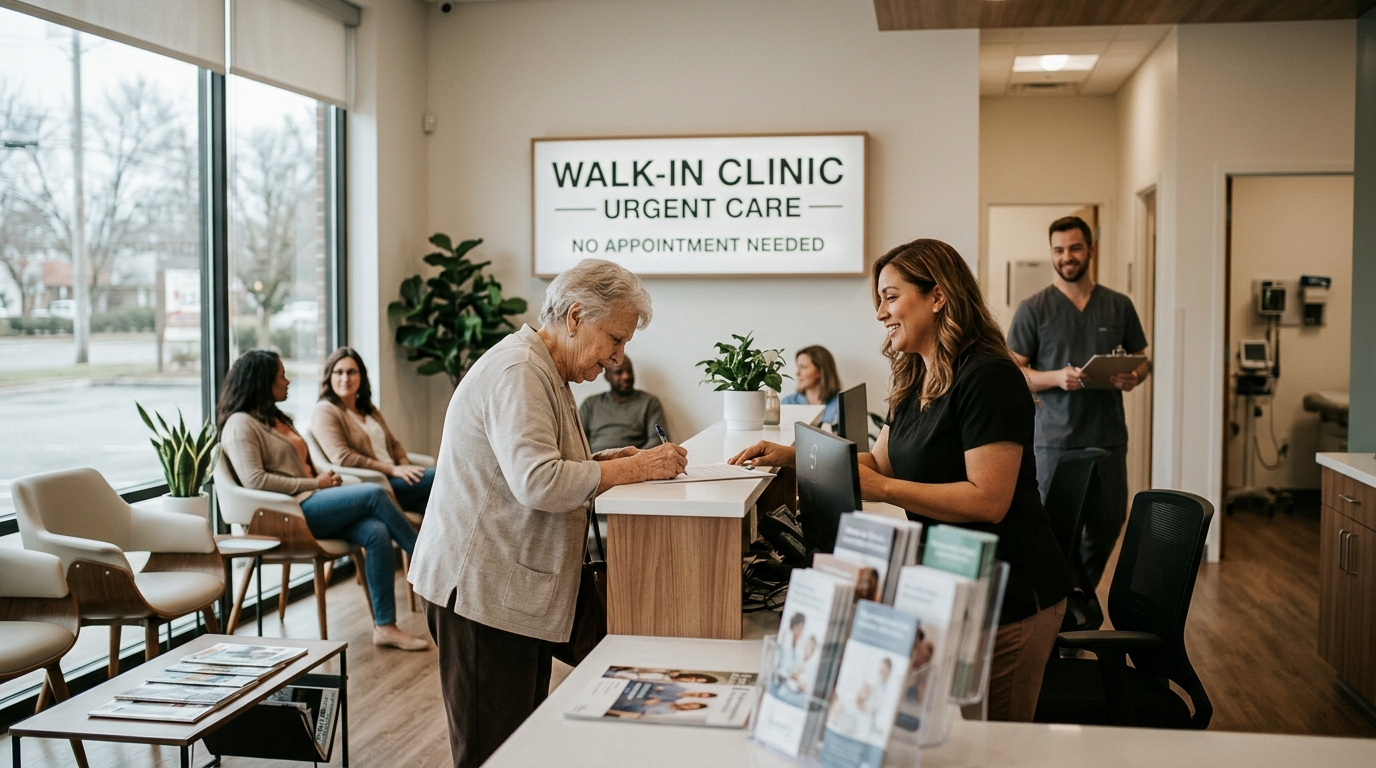
Unlike primary care practices that operate strictly on weekday appointment schedules, urgent care clinics prioritize walk-in access. Most facilities across Arkansas open early in the morning and remain open until 7:00 PM or 8:00 PM on weekdays, while offering dedicated weekend hours. This accessibility allows working adults, school-aged children, and shift workers to receive medical evaluation without missing work or school.
3. Comprehensive On-Site Diagnostic Capabilities
Modern urgent care clinics across Arkansas are equipped with advanced diagnostic equipment. Patients do not need to visit a separate facility for imaging or routine blood panels. Standard urgent care features include:
- Digital X-Ray Systems: Used to evaluate acute bone fractures, joint dislocations, chest conditions like pneumonia, and foreign body retention.
- Point-of-Care Laboratory Testing: Rapid diagnostic tools for influenza, Respiratory Syncytial Virus (RSV), COVID-19, group A streptococcus (strep throat), urinary tract infections (UTIs), and blood glucose monitoring.
- Basic Minor Procedure Suites: Facilities configured for laceration repair (stitches and skin adhesive), abscess drainage, splinting, burn care, and foreign body removal from eyes or skin.
4. Strategic Geographic Expansion Across Arkansas
Urgent care networks have expanded throughout the state. Major health systems and urgent care operators—such as Baptist Health Urgent Care, Mercy Urgent Care, Washington Regional Urgent Care, Sherwood Urgent Care, and UAMS Health—have established clinics along major thoroughfares and in suburban growth corridors. This geographical footprint ensures that a substantial portion of the state's population resides within a short drive of urgent medical care.
Comparing Urgent Care, Emergency Rooms, and Primary Care
Selecting the correct level of care ensures you receive appropriate treatment while preventing unnecessary medical debt and overcrowding in trauma centers.
| Feature / Metric | Primary Care Physician (PCP) | Urgent Care Clinic | Emergency Department (ED) |
|---|---|---|---|
| Primary Intent | Routine health maintenance, chronic disease management, preventive care | Immediate treatment for acute, non-life-threatening illness or injury | Life-threatening medical emergencies, severe trauma, critical stabilization |
| Appointment Model | Scheduled appointments (often booked days or weeks ahead) | Walk-in visits; optional online reservation/check-in | Triage-based priority; life-threatening cases treated immediately |
| Typical Operating Hours | Monday–Friday, 8:00 AM – 5:00 PM | Extended weekday evenings, weekends, and select holidays | 24 hours a day, 7 days a week, 365 days a year |
| Average Wait Time | Minimal upon scheduled appointment time | 15 to 45 minutes | 1 to 4+ hours for non-emergent conditions |
| Relative Out-of-Pocket Cost | Lowest ($15–$50 typical co-pay) | Moderate ($25–$75 typical co-pay) | Highest ($250–$1,000+ co-pay / facility fees) |
| Diagnostic Capabilities | Basic lab draws sent out to reference laboratories | On-site digital X-ray, rapid point-of-care lab testing | Advanced CT scans, MRIs, ultrasound, emergency surgery, inpatient admission |
Triage Guide: Urgent Care vs. Emergency Department
Determining whether your medical condition requires an urgent care clinic or an emergency room depends on the severity and acute nature of your symptoms.
- Is the condition life-threatening, causing severe pain, or creating sudden neurological changes?
- YES: Go to Emergency Room (or call 911 immediately)
- NO: Is the issue acute, needing treatment today, but non-disabling?
- YES: Visit an Urgent Care Clinic
- NO: Schedule with your Primary Care Physician
Conditions Appropriate for Urgent Care
- Sprains, muscle strains, and minor joint injuries
- Simple bone fractures (e.g., fingers, toes, wrist) where the skin is intact and limbs are not visibly deformed
- Minor lacerations and cuts requiring stitches or surgical glue
- Mild to moderate asthma attacks or upper respiratory symptoms
- Earaches, sinus infections, bronchitis, and sore throat
- Urinary tract infections (UTIs)
- Mild skin rashes, insect bites, poison ivy, and minor localized skin infections
- Minor burns (first-degree or small second-degree burns)
- Nausea, vomiting, or diarrhea without signs of severe dehydration
Conditions Requiring Immediate Emergency Department Care
- Chest pain, pressure, or symptoms indicating acute coronary syndrome
- Sudden weakness, numbness, facial drooping, or speech difficulty (signs of stroke)
- Severe shortness of breath or major respiratory distress
- Uncontrolled bleeding or severe arterial hemorrhage
- Major head trauma, loss of consciousness, or sudden severe confusion
- Compound fractures (bone protruding through the skin) or severe limb deformities
- Severe, sudden abdominal pain
- High fever accompanied by a stiff neck, confusion, or non-blanching rash
- Severe allergic reactions involving swelling of the lips, tongue, or airway compromise (anaphylaxis)
Insurance Coverage and Self-Pay Options in Arkansas
Understanding the financial structure of urgent care in Arkansas helps patients avoid unexpected medical bills.
Private Insurance and Managed Care
Most major commercial health insurance plans operating in Arkansas—including Blue Cross Blue Shield of Arkansas, Ambetter, UnitedHealthcare, Aetna, and Humana—include urgent care facilities in their provider networks. When visiting an in-network urgent care facility, insurance policies apply designated urgent care co-payments, which are substantially lower than emergency room co-payments.
Arkansas Medicaid and ARHOME
The state's healthcare expansion program, Arkansas Health and Opportunity for Me (ARHOME), along with traditional Arkansas Medicaid and Medicaid Beneficiary health plans (such as PASSE for individuals with specialized needs), covers urgent care services. Eligible beneficiaries can access urgent care clinics without major out-of-pocket expenses, provided the clinic is enrolled as an active Medicaid provider. Checking provider status beforehand guarantees full coverage of services and point-of-care testing.
Self-Pay Pricing and Federal Price Transparency Rules
For individuals without health insurance coverage, Arkansas urgent care clinics offer straightforward self-pay fee schedules. Under federal price transparency mandates, facilities must provide clear estimates for clinical services. Many urgent care providers post tiered self-pay pricing structures:
- Basic Visit Tier: Covers physician evaluation, physical examination, and basic vital sign checks.
- Intermediate Visit Tier: Includes evaluation plus basic point-of-care rapid testing or simple procedures.
- Advanced Visit Tier: Includes medical evaluation, on-site digital X-ray interpretation, complex laceration repair, or minor surgical intervention.
Step-by-Step: How to Prepare for an Urgent Care Visit
To streamline your experience and reduce clinic wait times, follow these practical steps when visiting an urgent care facility in Arkansas:
- Check Online Queueing and Save a Spot: Many major urgent care networks in Little Rock, Fort Smith, Jonesboro, and NWA offer online check-in features via their websites or mobile apps. Reserving a spot in advance allows you to wait comfortably at home until your scheduled arrival time.
- Gather Required Identification and Insurance Cards: Bring a valid government-issued photo ID (driver's license or state identification card) and your current health insurance, Medicare, or ARHOME Medicaid card.
- Compile a Complete Medication List: Bring a list of all active prescription medications, over-the-counter drugs, supplements, and known medical allergies. This prevents adverse drug interactions if the urgent care provider needs to prescribe new treatments.
- Verify Primary Care Physician Details: Ensure you have the name and location of your primary care doctor. Request that the urgent care provider send a summary of your visit and any prescribed treatments to your primary physician to maintain continuity of care.
- Review Self-Pay Fee Structure (If Uninsured): Ask the front desk staff for the transparent cash-pay pricing schedule before undergoing diagnostic imaging or minor procedures to prevent unexpected financial charges.
Frequently Asked Questions
1. Can urgent care clinics in Arkansas issue prescription medications?
Yes. Licensed physicians, advanced practice registered nurses (APRNs), and physician assistants (PAs) practicing at Arkansas urgent care clinics can prescribe necessary therapeutic medications, such as antibiotics, anti-inflammatories, inhalers, and non-narcotic pain relievers. However, urgent care clinics maintain strict prescription policies and generally do not stock or prescribe controlled substances, long-term pain medications, or opioids.
2. How much does an urgent care visit cost in Arkansas without insurance?
For self-pay patients, a standard urgent care medical consultation in Arkansas typically ranges between $100 and $250 for the clinical examination. If additional procedures, such as digital X-rays, laceration repair, splinting, or specialized blood work, are required, total costs generally range between $200 and $450. This remains significantly lower than an uninsured emergency room visit, which frequently exceeds $1,500.
3. Do urgent care centers in Arkansas accept Medicaid and ARHOME?
Most major urgent care chains and hospital-affiliated urgent care facilities across Arkansas accept traditional Arkansas Medicaid and ARHOME coverage (issued through qualified health plans like Arkansas Blue Cross Blue Shield or Ambetter). Patients should present their active Medicaid ID card at check-in to ensure proper billing.
4. What is the average wait time at an urgent care center compared to an ER?
The average wait time to see a medical provider at an urgent care clinic in Arkansas ranges between 15 and 45 minutes, depending on the time of day and season (e.g., flu season often increases wait times). By comparison, non-emergent visits to hospital emergency departments can involve wait times ranging from 2 to 6 hours, as emergency personnel must prioritize life-threatening medical cases.
5. Can an urgent care clinic perform physicals for school, sports, or employment?
Yes. Most urgent care clinics in Arkansas offer routine physical examinations, including sports physicals for student-athletes, pre-employment physicals, DOT (Department of Transportation) physicals, and basic occupational health screenings. These services are often offered at fixed, low out-of-pocket rates.
Practical Action Plan for Healthcare Readiness
Urgent care centers serve as a dependable, highly accessible bridge between primary care physicians and hospital emergency departments across Arkansas. By delivering rapid diagnostic capabilities, extended operational hours, and lower medical costs, urgent care centers ensure that minor injuries and sudden illnesses do not escalate into financial or physical hardships.
To prepare for unexpected non-emergent health needs, identify 2 to 3 in-network urgent care clinics near your home or workplace in Arkansas today. Save their locations and phone numbers in your phone, and confirm whether they offer online check-in services so you can act quickly when minor medical issues occur.
Image Gallery