Understanding the Forms of Radiant Energy
Radiant energy encompasses all types of energy that travel through space or material mediums in the form of electromagnetic waves or particles. This expansive category includes familiar phenomena like visible light and warmth from the...
Radiant energy encompasses all types of energy that travel through space or material mediums in the form of electromagnetic waves or particles. This expansive category includes familiar phenomena like visible light and warmth from the sun, alongside less visible spectrums such as radio waves, X-rays, and gamma rays. Understanding these diverse forms requires exploring the electromagnetic spectrum, wave-particle duality, and how different frequencies interact with matter across scientific and industrial applications.
Contents
The Core Concept of Radiant Energy
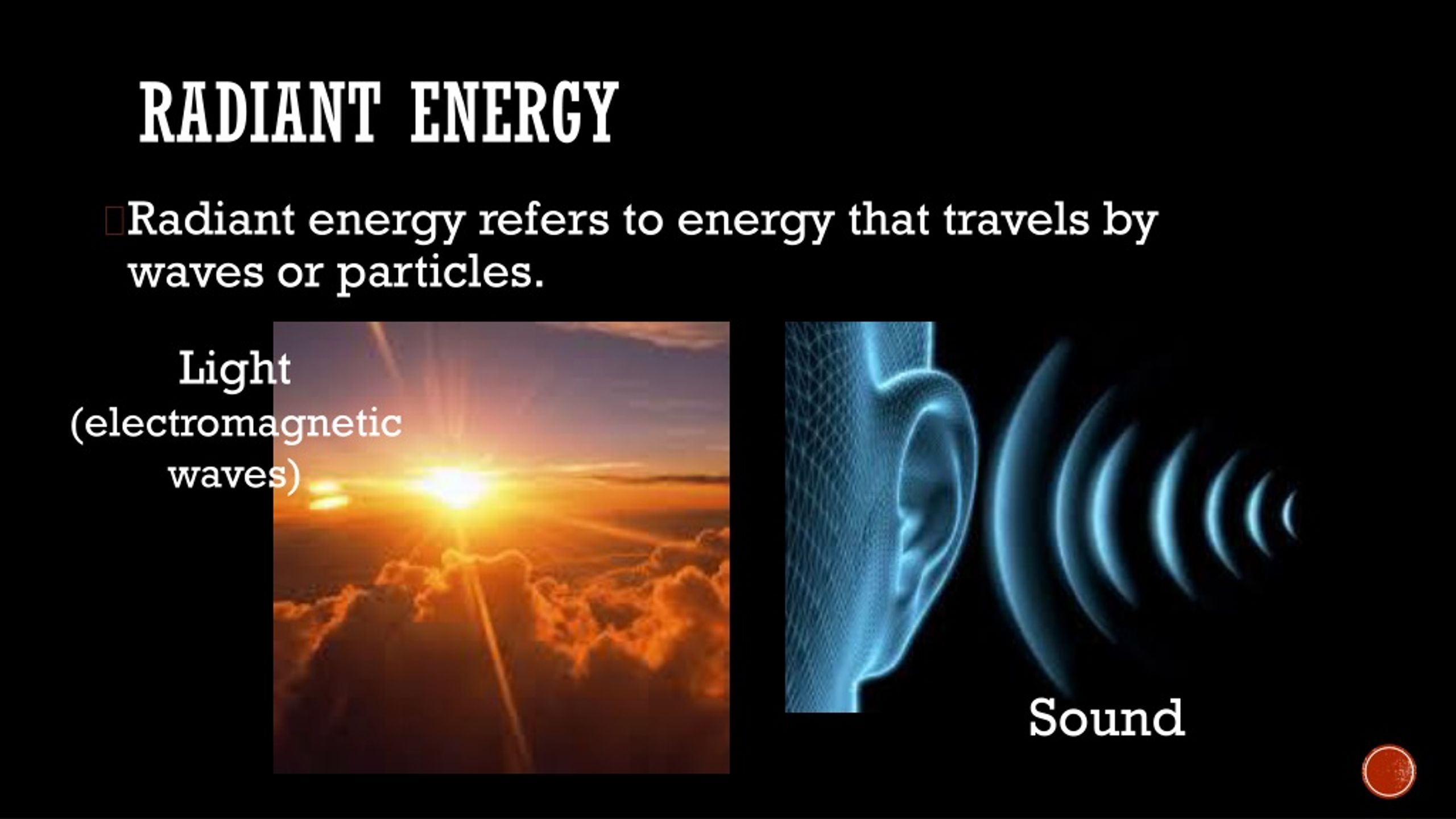
At its most fundamental level, radiant energy is the energy carried by electromagnetic waves. Unlike mechanical forms of energy, which require a physical medium like air, water, or solids to propagate, electromagnetic radiation can travel through the absolute vacuum of space. This characteristic explains how thermal energy and light from the sun reach the Earth across millions of miles of empty space.
The generation of radiant energy typically begins at the atomic level. When electrons transition between different energy levels within an atom, or when charged particles undergo acceleration, they release packets of energy known as photons. These photons possess both wave-like and particle-like properties—a foundational concept in quantum mechanics known as wave-particle duality. The amount of energy a photon carries is directly proportional to its frequency and inversely proportional to its wavelength, a relationship defined by Planck's equation.
To study and utilize these diverse manifestations, physicists organize radiant energy into the electromagnetic spectrum. This continuum ranges from extremely long wavelengths with low frequencies and low energy levels to infinitesimally short wavelengths with exceptionally high frequencies and energy levels.
The Electromagnetic Spectrum: From Radio Waves to Gamma Rays
The electromagnetic spectrum is divided into several distinct bands based on wavelength and frequency. Each band exhibits unique physical properties and interacts with matter in markedly different ways.
| Band Name | Approximate Wavelength | Common Applications |
|---|---|---|
| Radio Waves | > 1 millimeter | Broadcasting, Wi-Fi, Radar |
| Microwaves | 1 mm – 1 micrometer | Cooking, Satellite Telecom |
| Infrared (IR) | 700 nm – 1 mm | Thermal Imaging, Heating |
| Visible Light | 400 nm – 700 nm | Human Vision, Photosynthesis |
| Ultraviolet (UV) | 10 nm – 400 nm | Sterilization, Fluorescence |
| X-Rays | 0.01 nm – 10 nm | Medical Imaging, Security |
| Gamma Rays | < 0.01 nm | Cancer Treatment, Astronomy |
Radio Waves
Occupying the longest wavelengths in the spectrum—ranging from millimeters to hundreds of kilometers—radio waves possess the lowest energy levels. Despite carrying minimal energy per photon, radio waves are easily manipulated and can travel vast distances around obstacles due to their large diffraction capabilities. They are foundational to modern telecommunications, powering AM/FM broadcasting, cellular networks, television signals, and Wi-Fi routers.
Microwaves
Sitting just above radio waves, microwaves have wavelengths ranging from one millimeter to one meter. Their primary characteristic is how they interact with specific polar molecules, particularly water. By exciting water molecules through dielectric heating, microwaves generate thermal energy rapidly, which underpins both consumer microwave ovens and high-speed satellite communications.
Infrared Radiation
Infrared (IR) radiation sits between microwaves and visible light, with wavelengths from approximately 700 nanometers to one millimeter. While invisible to the human eye, human skin perceives infrared radiation as heat. IR technology is widely used in thermal imaging cameras, night-vision equipment, fiber-optic communication, and remote-control devices.
Visible Light
Visible light represents the narrow band of the electromagnetic spectrum that human eyes can detect, spanning wavelengths roughly from 400 to 700 nanometers. This spectrum ranges from lower-energy red light to higher-energy violet light. Beyond enabling human vision, visible light is the primary driver of biological photosynthesis in plants, sustaining nearly all ecosystems on Earth.
Ultraviolet Radiation
Ultraviolet (UV) radiation has shorter wavelengths than visible light, extending from 10 to 400 nanometers. Divided into UVA, UVB, and UVC subclasses, UV radiation carries enough energy to induce chemical reactions and cause fluorescence in certain materials. While vital for vitamin D synthesis in humans, excessive exposure can damage biological tissue and DNA, making UV-C and specialized UV lamps essential tools for microbial sterilization and water purification.
X-Rays
X-rays possess extremely short wavelengths—ranging from 0.01 to 10 nanometers—and high frequencies. Because of their high energy, X-rays can penetrate soft biological tissues while being absorbed denser materials like bone. This differential absorption makes X-rays indispensable in diagnostic medicine, airport security scanning, and materials science for inspecting structural integrity.
Gamma Rays
At the extreme end of the spectrum lie gamma rays, featuring wavelengths shorter than 0.01 nanometers. Generated by radioactive atomic nuclei, cosmic events, and particle annihilation, gamma rays possess the highest energy and frequency of any radiant energy form. They are utilized in targeted cancer radiotherapy to destroy malignant cells and in astrophysical research to study high-energy phenomena in the universe.
Measurement, Propagation, and Interaction with Matter
Quantifying radiant energy requires precise metrics. Radiometry measures electromagnetic radiation across the optical spectrum, utilizing units such as radiant flux (power measured in watts) and irradiance (power per unit area measured in watts per square meter). Photometry, by contrast, adjusts these measurements based on the human eye's relative sensitivity to different wavelengths.
When radiant energy encounters matter, it undergoes four primary interactions:
- Transmission: Waves pass straight through a medium without significant absorption or scattering, as seen with visible light passing through clear glass.
- Absorption: The material captures the photon's energy, typically converting it into thermal energy or inducing electronic transitions within atoms.
- Reflection: Waves bounce off the surface of a medium at an angle equal to the angle of incidence, preserving wave properties.
- Scattering: Waves are deflected in multiple directions as they interact with particles or irregularities within a medium, accounting for phenomena like the blue color of the sky via Rayleigh scattering.
Practical Applications and Industrial Uses
The diverse forms of radiant energy serve as the backbone of modern industrial, medical, and scientific operations. Understanding these forms allows engineers and researchers to design systems tailored to specific frequency responses.
In telecommunications, engineers manipulate radio and microwave frequencies to transmit global data streams with minimal attenuation. In medicine, precise control over X-ray and gamma-ray dosages enables non-invasive diagnostics and advanced oncology treatments. Meanwhile, industrial manufacturing relies on infrared heaters for curing coatings and ultraviolet light for photolithography in semiconductor fabrication.
Safety Considerations and Biological Impacts
Because higher frequencies of radiant energy carry ionizing potential—meaning they possess enough energy to strip electrons from atoms and break chemical bonds—strict safety protocols govern their use. Ionizing radiation (X-rays, gamma rays, and high-frequency UV) requires robust shielding, such as lead aprons and concrete barriers, to prevent cellular mutations and radiation sickness.
Non-ionizing radiation (radio waves, microwaves, and infrared light), while lacking sufficient energy to break chemical bonds directly, can still cause thermal damage if intensity levels are excessively high. Regulatory bodies like the International Commission on Non-Ionizing Radiation Protection (ICNIRP) establish exposure limits to protect workers and the general public from thermal and electromagnetic interference hazards.
Frequently Asked Questions
What is the main difference between ionizing and non-ionizing radiant energy?
Ionizing radiation carries enough photon energy to break chemical bonds and ionize atoms, posing biological risks of cellular and DNA damage. Non-ionizing radiation has lower photon frequencies and energy levels that can agitate molecules or generate heat, but lack the energy required to strip electrons from atoms.
How does radiant energy differ from thermal or mechanical energy?
Mechanical energy requires a physical medium to move through, and thermal energy is the internal kinetic energy of particles within matter. Radiant energy, however, consists of electromagnetic waves or photons that can propagate freely through a vacuum without requiring any physical medium.
Why can humans only see a small portion of the electromagnetic spectrum?
Human vision evolved to detect visible light because it represents the most abundant and stable band of solar radiation penetrating Earth's atmosphere, and because specific ocular proteins (opsins) are chemically tuned to absorb those exact photon wavelengths.
How is radiant energy measured in scientific research?
Scientists measure radiant energy using units of joules for total energy, watts for radiant flux or power, and watts per square meter for irradiance, utilizing specialized instruments such as radiometers, spectrometers, and power meters.
Does all radiant energy travel at the same speed?
Yes. In a vacuum, all forms of electromagnetic radiation—from low-frequency radio waves to high-frequency gamma rays—travel at the speed of light, denoted as $c$ (approximately $3 \times 10^8$ meters per second).
Conclusion and Next Actions
Mastering the mechanics of radiant energy requires acknowledging its wide spectrum, ranging from low-energy radio communications to high-energy medical gamma rays. To deepen your understanding, examine how specific industrial sectors utilize targeted wavelength bands, review safety guidelines for handling high-frequency radiation, or explore the quantum mechanical principles governing photon emission.
Image Gallery