Exploring the Mister Rogers Movie with Tom Hanks: A Beautiful Day in the Neighborhood
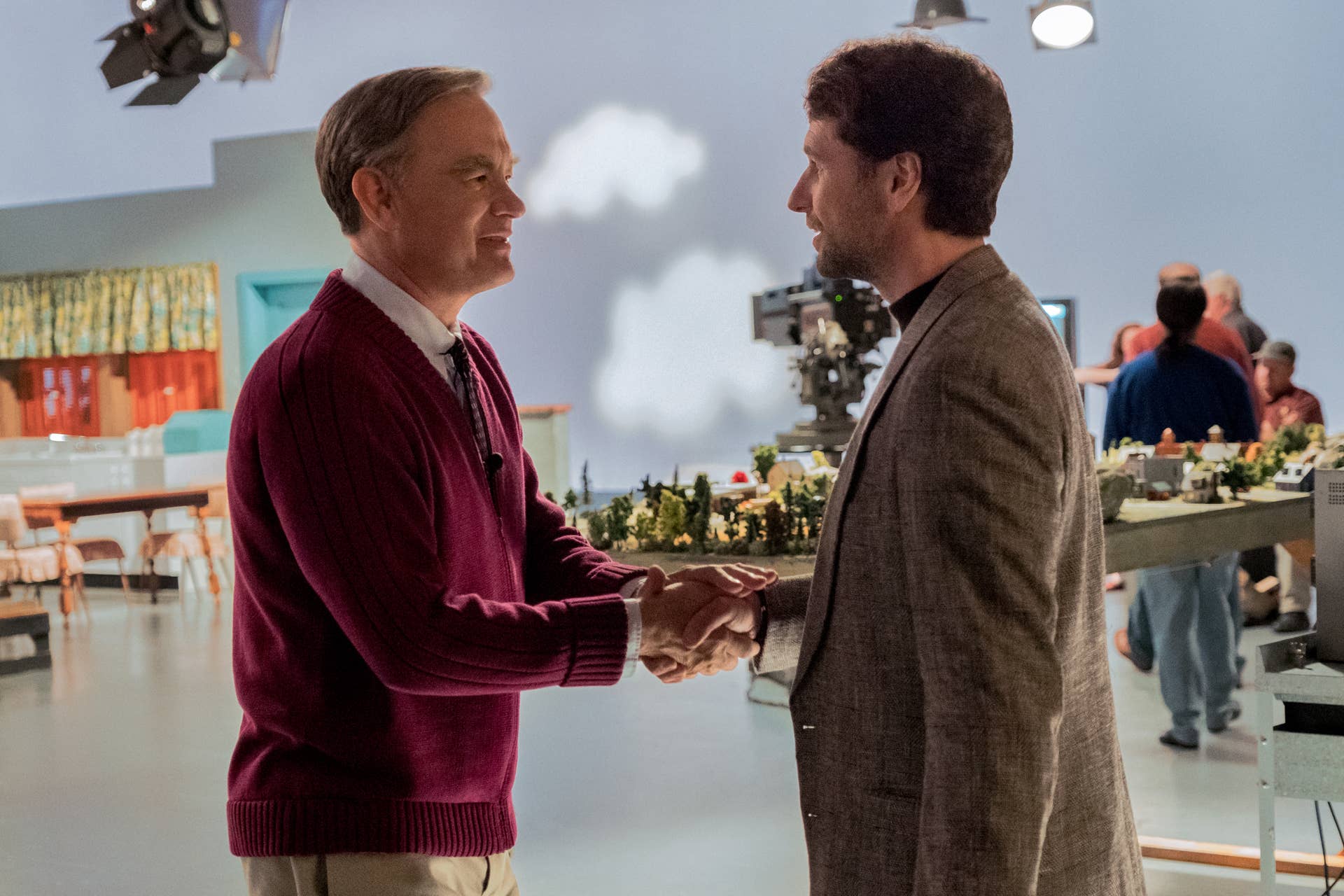
The Mister Rogers movie starring Tom Hanks is titled A Beautiful Day in the Neighborhood, released in 2019. Unlike a standard cradle-to-grave biopic, the film focuses on the real-life friendship between Fred Rogers and journalist Tom J...
The Mister Rogers movie starring Tom Hanks is titled A Beautiful Day in the Neighborhood, released in 2019. Unlike a standard cradle-to-grave biopic, the film focuses on the real-life friendship between Fred Rogers and journalist Tom Junod (renamed Lloyd Vogel in the film), exploring themes of forgiveness, emotional maturity, and the power of kindness.
Contents
The Identity of the Film: A Beautiful Day in the Neighborhood
When people search for the "Mister Rogers movie with Tom Hanks," they are referring to the 2019 biographical drama directed by Marielle Heller. While Fred Rogers is the central figure who drives the emotional narrative, the film is technically an adaptation of the 1998 Esquire article "Can You Say... Hero?" by Tom Junod.
As of 2026, the film has solidified its place as a quintessential piece of American biographical cinema. It is often praised not just for Hanks's performance, but for its unconventional structure. Instead of focusing on Rogers' childhood or the chronological start of his television career, it treats Fred Rogers almost as a secondary protagonist—a catalyst for change in another man’s life. This narrative choice reflects the real-world impact Rogers had on those he met; he was less interested in his own celebrity and more interested in the internal emotional lives of others.
The production was a significant undertaking that aimed for extreme authenticity. Filming took place largely in Pittsburgh, Pennsylvania, the home of Mister Rogers’ Neighborhood. The production team went so far as to use the original WQED studios and even some of the original cameras and broadcast equipment to recreate the "Neighborhood" set, ensuring that the transitions between the film's "real world" and the "television world" felt seamless and evocative of 1990s public broadcasting.
Plot Summary: A Narrative of Forgiveness and Growth
The story follows Lloyd Vogel (Matthew Rhys), a cynical, award-winning journalist for Esquire who is struggling with deep-seated resentment toward his estranged father, Jerry (Chris Cooper). Lloyd’s editor assigns him a profile of Fred Rogers (Tom Hanks) for a series on "heroes." Lloyd is initially dismissive of the assignment, believing that Rogers’ "nice guy" persona must be a facade.
The core of the movie revolves around their interviews. Rather than Lloyd interviewing Fred, Fred effectively interviews Lloyd. Through a series of gentle interactions, Rogers encourages the journalist to confront his anger and the trauma of his past. The film masterfully uses the tropes of the Mister Rogers' Neighborhood television show—including the use of miniatures for transitions and the iconic puppets of the Neighborhood of Make-Believe—as psychological metaphors for Lloyd’s internal journey.
The climax of the film doesn't involve a grand explosion or a high-stakes legal battle, but rather a quiet moment of reconciliation. It demonstrates Rogers’ philosophy that "anything that's human is mentionable, and anything that is mentionable can be more manageable." By the end of the film, Lloyd has begun the difficult process of healing his relationship with his father, proving that the lessons Rogers taught children were equally necessary for adults.
Casting and Performance: Tom Hanks as Fred Rogers
Casting Tom Hanks was a deliberate move by director Marielle Heller. In many ways, Hanks is the contemporary equivalent of Fred Rogers in terms of public perception—widely regarded as one of the "kindest" men in Hollywood. However, Hanks initially turned down the role several times before finally agreeing to the project.
Physical and Vocal Transformation
Hanks did not attempt a perfect mimicry of Rogers. Instead, he captured the "essence" of the man. This included:
- The Cadence of Speech: Rogers spoke with a very specific, slow, and deliberate rhythm, designed to give children time to process his words. Hanks adopted this pace, which creates an almost hypnotic effect in the film.
- Physicality: Hanks studied Rogers' posture and his specific way of moving, including the iconic routine of changing into his cardigan and sneakers.
- The Gaze: One of Rogers' most notable traits was his ability to look at a person and make them feel like they were the only person in the world. Hanks emphasizes this "radical listening" throughout the movie.
The performance earned Tom Hanks an Academy Award nomination for Best Supporting Actor. Critics noted that while Hanks is a larger physical presence than the real Fred Rogers, his ability to project a sense of stillness and genuine empathy made the performance deeply moving.
Fact vs. Fiction: How Much of the Movie is True?
While the emotional core of the film is highly accurate, some narrative elements were fictionalized or condensed for dramatic effect.
- The Journalist: Lloyd Vogel is a fictionalized version of Tom Junod. While Junod was indeed a cynical journalist who became close friends with Rogers, his personal family drama (the specific conflict with his father) was largely invented for the movie to provide a structured character arc.
- The Friendship: In reality, the friendship between Junod and Rogers lasted for years until Rogers’ death in 2003. The movie condenses this timeline into a shorter period to maintain narrative momentum.
- The Subway Scene: One of the most famous scenes involves a subway car full of New Yorkers singing the Mister Rogers’ Neighborhood theme song to Fred. While this specific event is a bit of an "urban legend" composite, Tom Junod has noted that people frequently sang to Rogers in public, and the scene captures the spirit of how the public interacted with him.
- The Minute of Silence: There is a powerful scene where Fred asks Lloyd to take one minute of silence to think about the people who "loved him into being." This was a real practice Fred Rogers used in many of his public speeches, most notably during his 1997 Lifetime Achievement Award acceptance at the Emmys.
Technical Execution and Creative Style
Director Marielle Heller made several bold creative choices that elevate the film from a standard drama to a piece of visual art.
Transitions Using Miniatures
One of the most charming aspects of the film is its use of miniatures for establishing shots. Whenever the characters travel between New York and Pittsburgh, the film uses toy-like models of the cities, mimicking the way the Mister Rogers’ Neighborhood show transitioned between the neighborhood and the "real world." This creates a sense that the entire story is taking place within the universe of Fred’s philosophy.
The 4:3 Aspect Ratio
During scenes that take place "on set" at the WQED studios, the film shifts its aspect ratio to 4:3 and uses the grainy, soft-focus aesthetic of 1990s video cameras. This provides a nostalgic texture that contrasts with the sharper, widescreen cinematography of Lloyd’s "real life."
The Supporting Cast
While Hanks and Rhys carry the film, the supporting performances are vital. Susan Kelechi Watson plays Andrea Vogel, Lloyd’s wife, providing a grounded perspective on the family’s struggle. Chris Cooper’s portrayal of Jerry Vogel offers a complex look at a man seeking redemption for his past mistakes, avoiding the "villain" trope and instead presenting a flawed human being.
Comparison: The Tom Hanks Movie vs. "Won't You Be My Neighbor?"
It is common for viewers to confuse the Tom Hanks movie with the documentary released a year earlier. While both are excellent, they serve different purposes.
| Feature | A Beautiful Day in the Neighborhood (2019) | Won't You Be My Neighbor? (2018) |
|---|---|---|
| Format | Narrative Feature Film (Scripted) | Documentary Film |
| Starring | Tom Hanks, Matthew Rhys | Fred Rogers (Archival Footage) |
| Primary Focus | The relationship between Fred and a journalist | The life, career, and philosophy of Fred Rogers |
| Historical Scope | Focused on the late 1990s | Covers 1928 to 2003 |
| Tone | Dramatic, introspective, restorative | Educational, nostalgic, biographical |
| Core Message | How to apply Fred's lessons as an adult | The evolution of Fred’s mission in public TV |
Where to Watch and Availability in 2026
As of 2026, A Beautiful Day in the Neighborhood is widely available on multiple platforms. Because it is a Sony Pictures (TriStar) production, its streaming home has shifted occasionally due to licensing agreements.
- Streaming Services: The film is frequently available on platforms like Netflix or Hulu depending on current regional contracts.
- Digital Purchase/Rental: It can be found on all major VOD platforms, including Apple TV, Amazon Prime Video, and the Google Play Store.
- Physical Media: For enthusiasts of high-quality home cinema, the 4K Ultra HD Blu-ray release is highly recommended, as it preserves the intentional grain and color grading of the different time periods depicted in the film.
Frequently Asked Questions
Did Fred Rogers actually have a "dark side"?
The movie addresses this through Lloyd’s initial skepticism. While the film (and real life) confirms that Fred Rogers was a deeply disciplined man who dealt with anger and frustration, he did so through healthy outlets like playing the piano and swimming. The movie makes it clear that his "niceness" was not a lack of emotion, but a conscious, daily choice to practice kindness.
Did Tom Hanks wear a wig or prosthetics?
Tom Hanks wore a wig to match Fred Rogers’ iconic hair style, but he did not use significant facial prosthetics. The goal was to rely on acting rather than heavy makeup to convey the character. The costume department did, however, recreate the exact sweaters knitted by Fred’s mother, which were central to his television persona.
Is the movie suitable for children?
While the movie is rated PG, it is primarily an adult drama. The themes of terminal illness, abandonment, and cynicism might be slow or difficult for very young children to follow. However, there is no graphic violence or inappropriate language, making it a safe choice for a family viewing where parents can explain the deeper emotional themes.
Was Tom Junod happy with how he was portrayed?
Tom Junod has been very vocal in his support of the film. Although his character was renamed and his family life was dramatized, he stated that the film accurately captured the "spirit" of his friendship with Fred and the way Rogers challenged him to become a better version of himself.
Practical Recommendation: Why You Should Watch It
If you are looking for a high-stakes thriller or a fast-paced comedy, this is not the film for you. However, if you are looking for a deeply empathetic exploration of what it means to be a "good" person in a cynical world, A Beautiful Day in the Neighborhood is essential viewing.
In the year 2026, where the pace of life and digital interaction continues to accelerate, the film's message of slowing down and truly listening to one another remains more relevant than ever. For the best experience, watch the 2018 documentary Won't You Be My Neighbor? first to get the historical context, then follow it with the Tom Hanks film to see those philosophies put into a dramatic, human context.
Image Gallery