How to Clear a Clogged Toilet Safely: Step-by-Step Plumbing Methods
Clearing a clogged toilet safely requires stopping incoming water, avoiding harsh chemicals or boiling water that can damage porcelain, and applying mechanical leverage or gentle thermal lubrication. Shut off the toilet's water valve,...
Clearing a clogged toilet safely requires stopping incoming water, avoiding harsh chemicals or boiling water that can damage porcelain, and applying mechanical leverage or gentle thermal lubrication. Shut off the toilet's water valve, use a specialized flange plunger or protective closet auger, or apply liquid dish soap with hot tap water to dissolve soft obstructions without risking pipe or fixture damage.
Contents
Disclaimer: The guidance provided below is for general informational and educational purposes. Always wear appropriate personal protective equipment when handling household plumbing. If you suspect main line backup, structural pipe failure, or hazardous chemical exposure, contact a licensed professional plumber.
Immediate Safety Measures: Preventing Water Overflow and Contamination
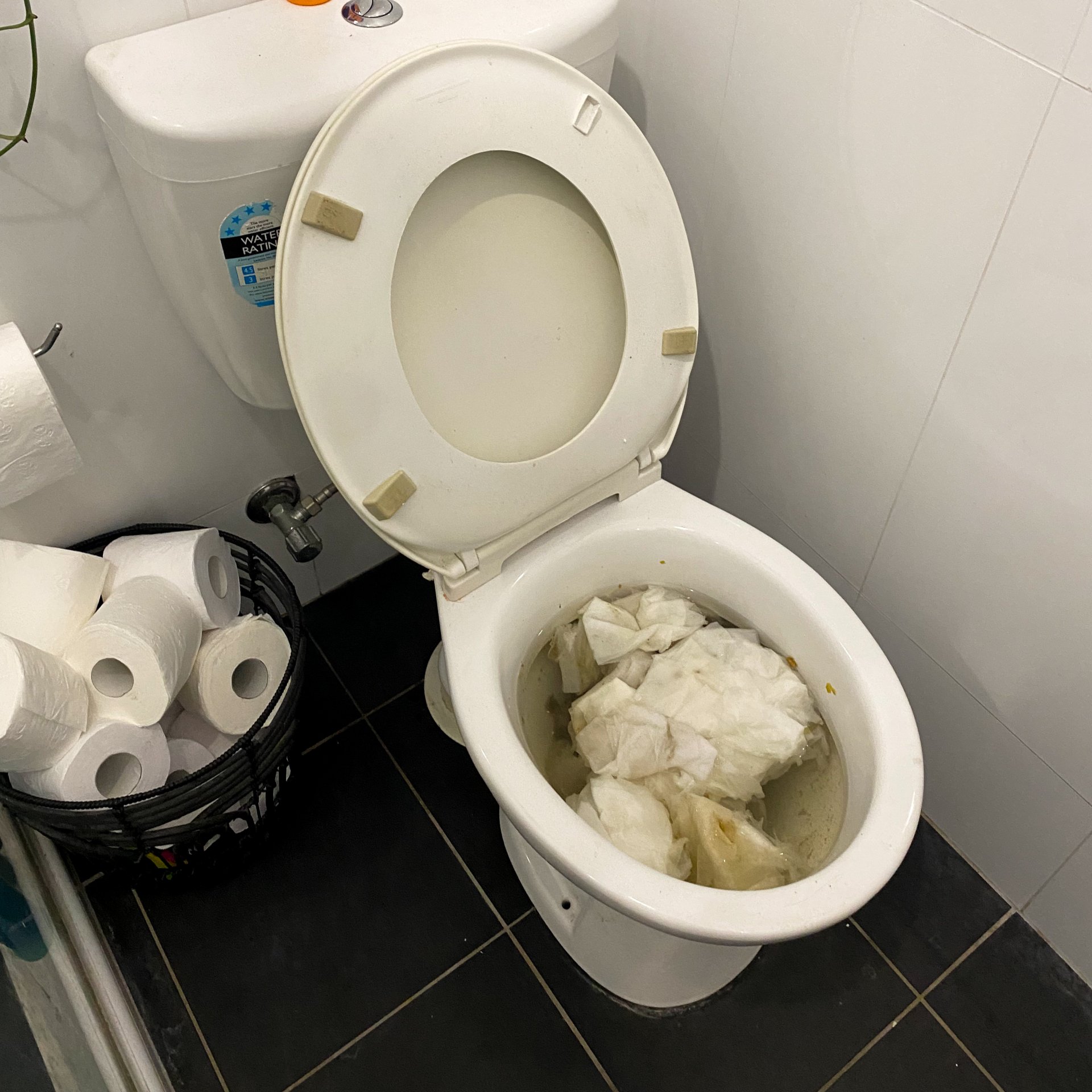
Before attempting to clear any clog, your primary objective is to prevent contaminated wastewater from overflowing onto your bathroom floor. Toilet wastewater can carry biological contaminants and bacteria. Taking quick containment steps saves flooring, subflooring, and drywalls from severe water damage.
IMMEDIATE OVERFLOW PREVENTION STEPS
- Locate the angle stop valve on the wall behind the toilet.
- Turn the valve clockwise until it is fully closed.
- Remove the tank lid and push the flapper down over the drain.
- Put on heavy rubber gloves and safety glasses.
- Lay down absorbent towels or plastic sheets around the base.
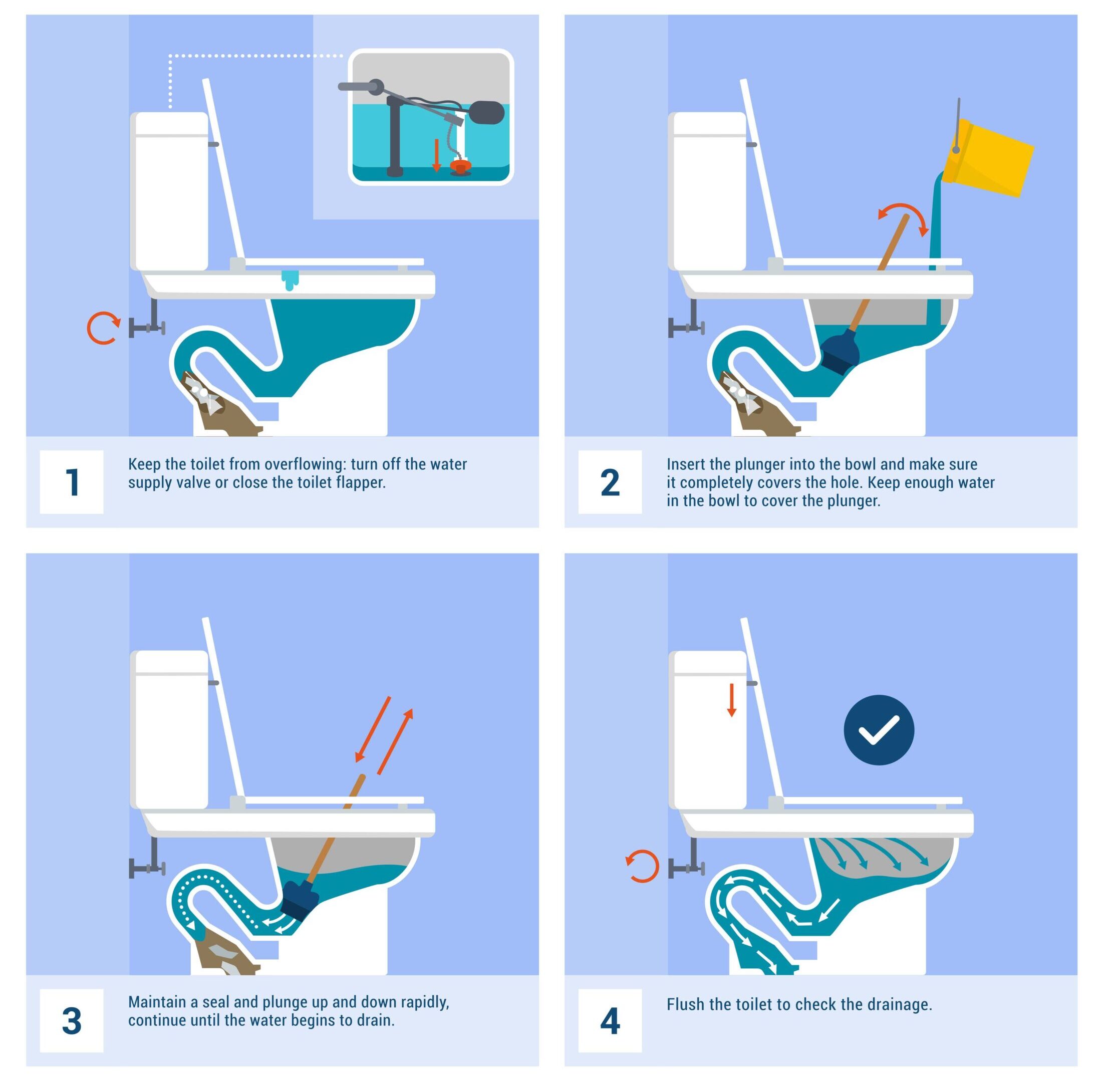
1. Shut Off the Water Supply
Locate the shut-off valve (often called an angle stop) on the wall behind the toilet bowl, near the base. Turn the oval valve handle clockwise until it stops completely. If the valve is stuck or missing, remove the tank lid, reach inside, and manually press down the rubber flapper over the hole at the bottom of the tank to stop new water from entering the bowl. You can also prop up the float arm (the plastic ball or floating cylinder) to trick the fill valve into staying shut.
2. Gear Up with Personal Protective Equipment (PPE)
Always wear thick rubber gloves that extend up your forearms to protect your skin from bacteria and stagnant water. Wear splash-resistant eye protection. Pathogens can enter through mucus membranes if water splashes while plunging or augering.
3. Contain the Work Zone
Place absorbent towels or disposable painter’s plastic sheeting across the floor around the base of the toilet. Keep a bucket nearby to remove excess bowl water if the water level is dangerously close to the rim.
Why Chemical Drain Cleaners Are Dangerous for Toilets
Many homeowners intuitively reach for liquid drain openers when facing a blocked drain. However, standard chemical drain cleaners containing sodium hydroxide (lye), sulfuric acid, or bleach should never be poured into a toilet bowl.
CAUTION: DO NOT USE CAUSTIC DRAIN CLEANERS IN TOILETS
- 💥 Porcelain Damage: Exothermic heat can crack the bowl.
- ☣️ Toxic Fumes: Reacts with trapped waste and other chemicals.
- 🔧 Pipe Erosion: Melts PVC glue and corrodes older metals.
Thermal Shock and Porcelain Cracking
Chemical drain cleaners work through an exothermic reaction—they generate intense heat to dissolve organic matter. Toilet bowls are made of vitreous china (porcelain). Rapid, localized temperature spikes cause thermal shock, causing the porcelain bowl to crack or fracture completely, requiring a full fixture replacement.
Pipe Degradation and Chemical Traps
Because toilet traps hold a significant volume of standing water, liquid chemicals become diluted and sink to the bottom of the S-trap or P-trap without effectively dissolving the obstruction. The standing chemicals can erode wax ring seals, melt PVC pipe cement, or corrode older galvanized iron plumbing over extended contact times.
Chemical Splash and Fume Hazards
If a chemical cleaner fails to clear the clog, you are left with a bowl full of toxic, corrosive liquid. Subsequent plunging efforts risk splashing acid or lye onto your skin and eyes. Additionally, mixing chemical drain products with household bleach or remaining bowl sanitizers generates toxic chlorine gas.
Method 1: The Dish Soap and Hot Water Lubrication Technique
For minor clogs caused by excessive toilet paper or organic waste, a non-invasive mixture of liquid dish soap and hot tap water is often enough to break the obstruction free without mechanical force.
- Combine Liquid Dish Soap and Hot Tap Water (~140°F/60°C)
- Pour into blocked toilet bowl
- Wait 15–20 Mins
- Waste lubricates & slips through trap
Prerequisites and Temperature Safety
- Required Materials: 1/2 cup of liquid dish soap (or concentrated dishwashing detergent) and 1 gallon of hot water.
- Water Temperature Warning: Use hot tap water, never boiling water. Boiling water (212°F / 100°C) risks cracking porcelain due to sudden thermal expansion. Target a water temperature around 130°F–140°F (54°C–60°C)—roughly the maximum temperature produced by a residential water heater.
Step-by-Step Execution
- Squirt roughly 1/2 cup of concentrated dish soap directly into the toilet bowl. The heavy soap sinks to the bottom of the water column and coats the trap porcelain.
- Allow the soap to sit for 5 to 10 minutes to penetrate and coat the organic waste.
- Slowly pour 1 gallon of hot tap water into the bowl from waist height. The elevation creates mild hydraulic head pressure while the hot water softens fats and toilet paper fibers.
- Let the mixture sit for 15 to 20 minutes. If successful, the water level in the bowl will slowly begin to recede.
- Flush once with the water supply valve throttled partially open to test the line.
Method 2: Proper Plunging Mechanics (Using a Flange Plunger)
Plunging is the most effective manual method for clearing toilet clogs, provided you use the correct tool and technique.
- CUP PLUNGER (Sink / Flat Drains)
- Flat Rubber Rim
- ❌ Fails to seal toilet
- FLANGE PLUNGER (Toilet Bowl Drains)
- Fold-out rubber sleeve
- ✅ Creates airtight seal
Choosing the Right Tool: Cup vs. Flange Plunger
- Cup Plungers: Feature a flat, dome-shaped rubber head. They are designed exclusively for flat surfaces like sinks and bathtubs. They fail to form a seal over the contoured drain opening of a toilet.
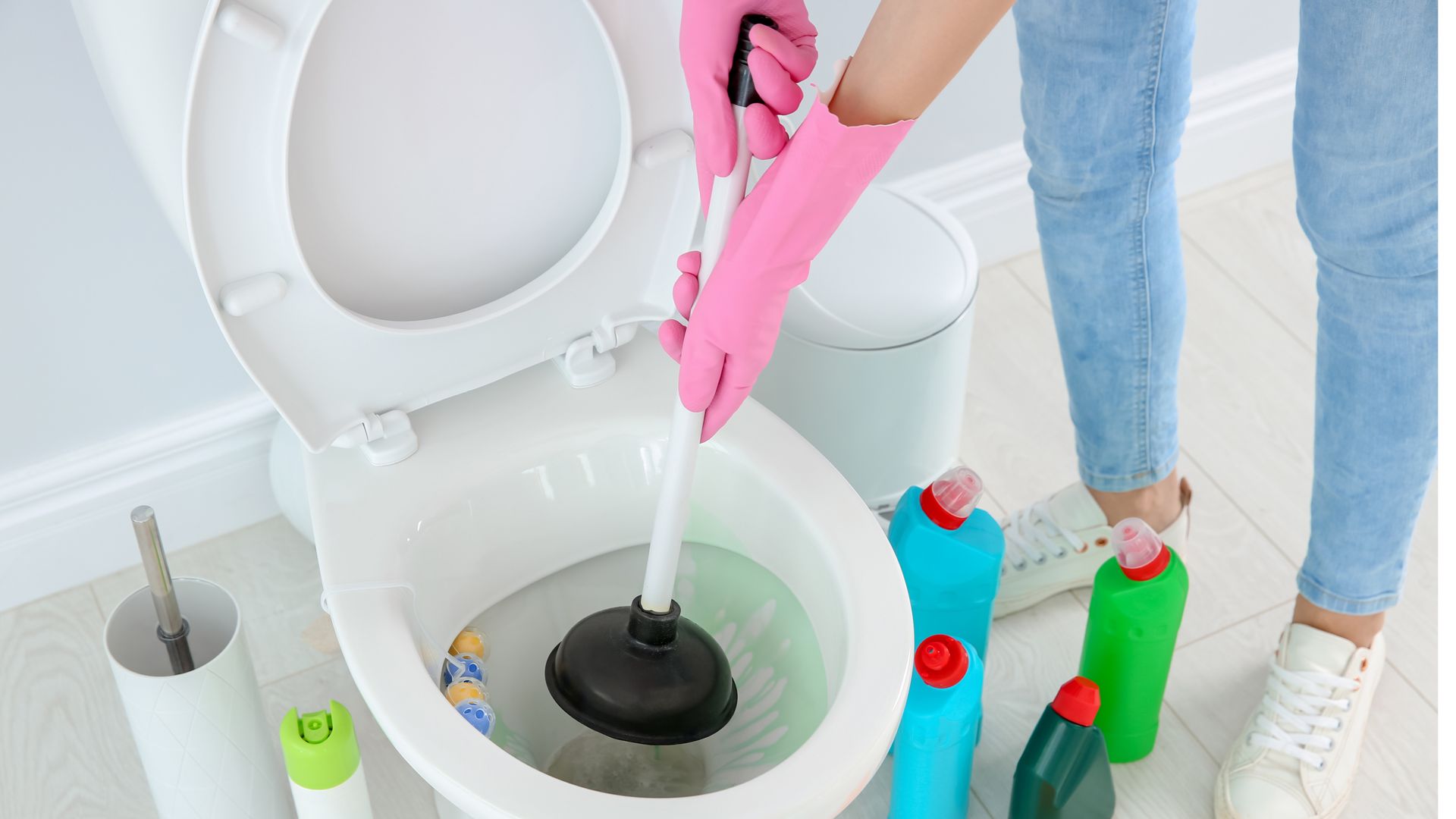
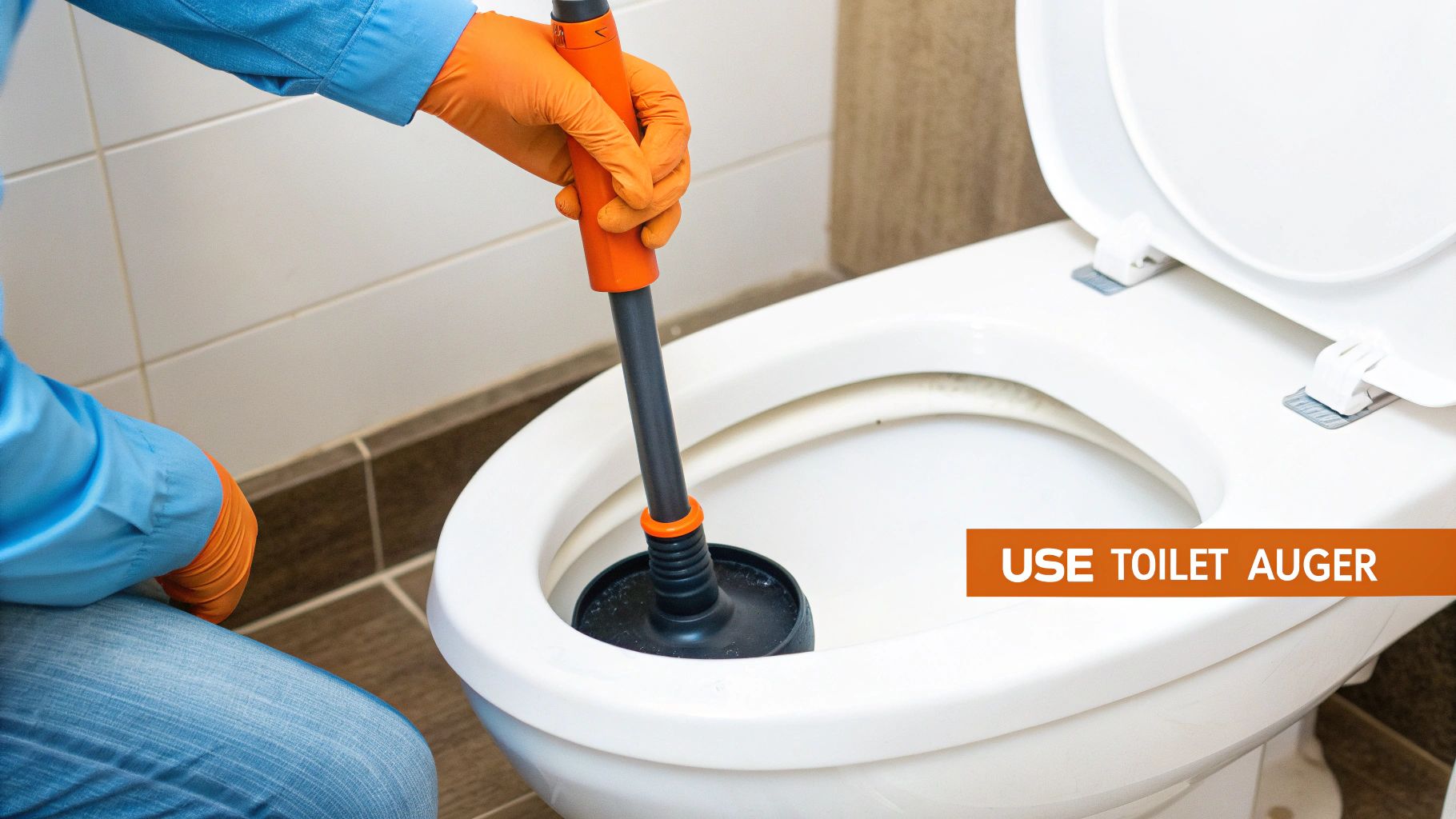
- Flange Plungers (Toilet Plungers): Feature an extended rubber sleeve (flange) hanging below the main dome. This flange inserts directly into the toilet drain hole, forming an airtight, watertight seal.
Correct Plunging Technique Step-by-Step
- Ensure Standing Water: The plunger rubber cup must be completely submerged in water to push hydraulic force, not air. If the bowl is empty, pour in 2–3 inches of tap water.
- Purge Trapped Air: Angle the plunger head as you submerge it so the cup fills with water rather than trapping a pocket of air.
- Form the Seal: Insert the flexible flange into the drain opening at the bottom of the bowl. Press down firmly to create a seal against the porcelain walls.
- Apply Hydraulic Force: Push down gently to establish the seal, then exert firm, fast thrusts up and down while maintaining contact with the porcelain. The pull force is just as critical as the push force—pulling back creates suction that pulls the clog backward, breaking up consolidated waste.
- Repeat Cycles: Perform 15 to 20 vigorous strokes in a steady rhythm. Abruptly break the seal on the final stroke.
- Verify Clearance: If the water drains away completely, turn the shut-off valve back on and perform a test flush.
Method 3: Using a Closet Auger (Plumbing Snake) Safely
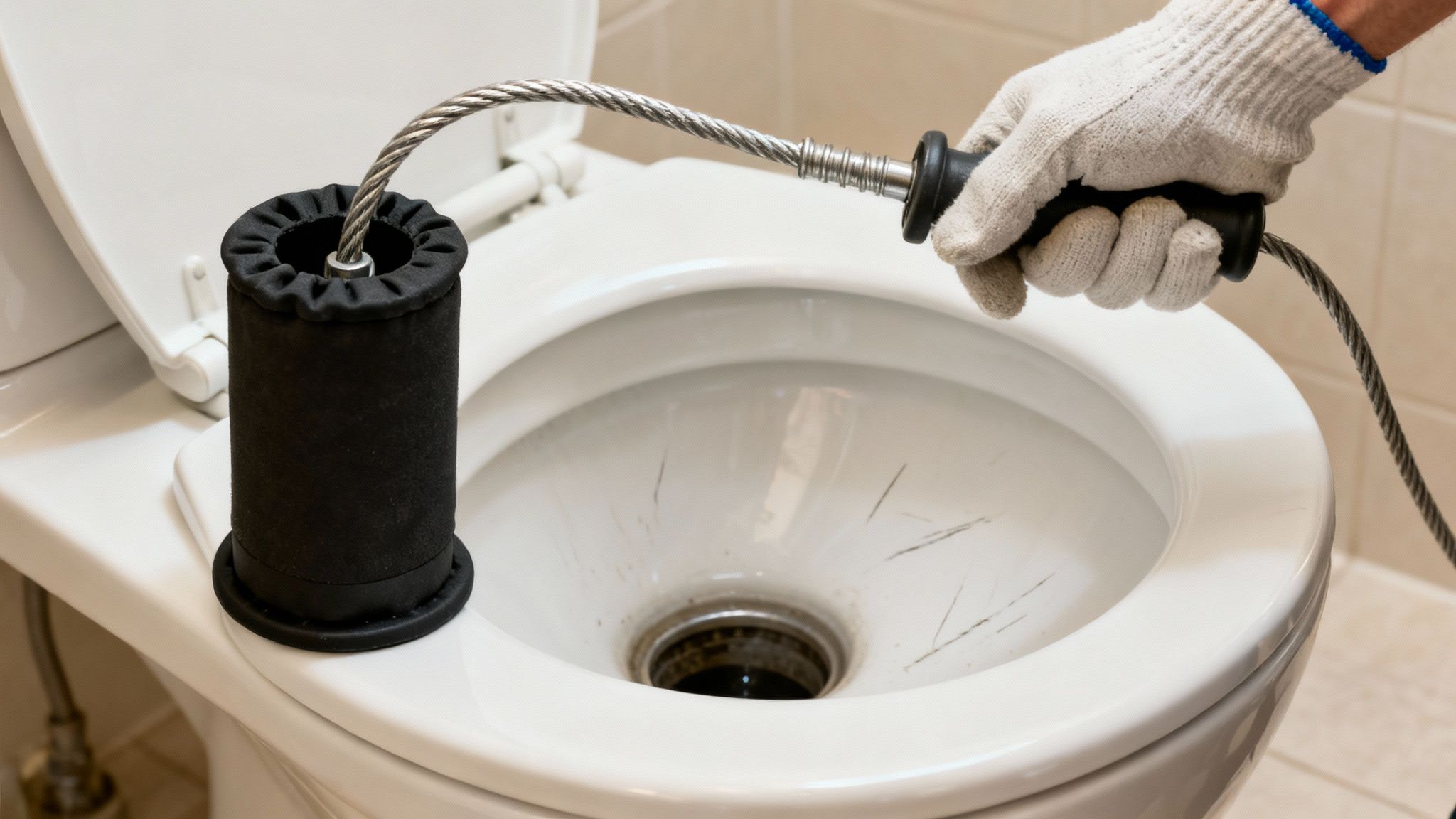
When a plunger fails to dislodge an obstruction located deeper within the integrated S-trap, a closet auger (toilet auger) is the standard professional tool.
- Handle/Crank
- Plastic/Rubber Guard (Protects Porcelain Rim)
- Flexible Steel Shaft
- Bulbous Spring Hook (Retrieves/Breaks Clog)
Standard Drain Snake vs. Closet Auger
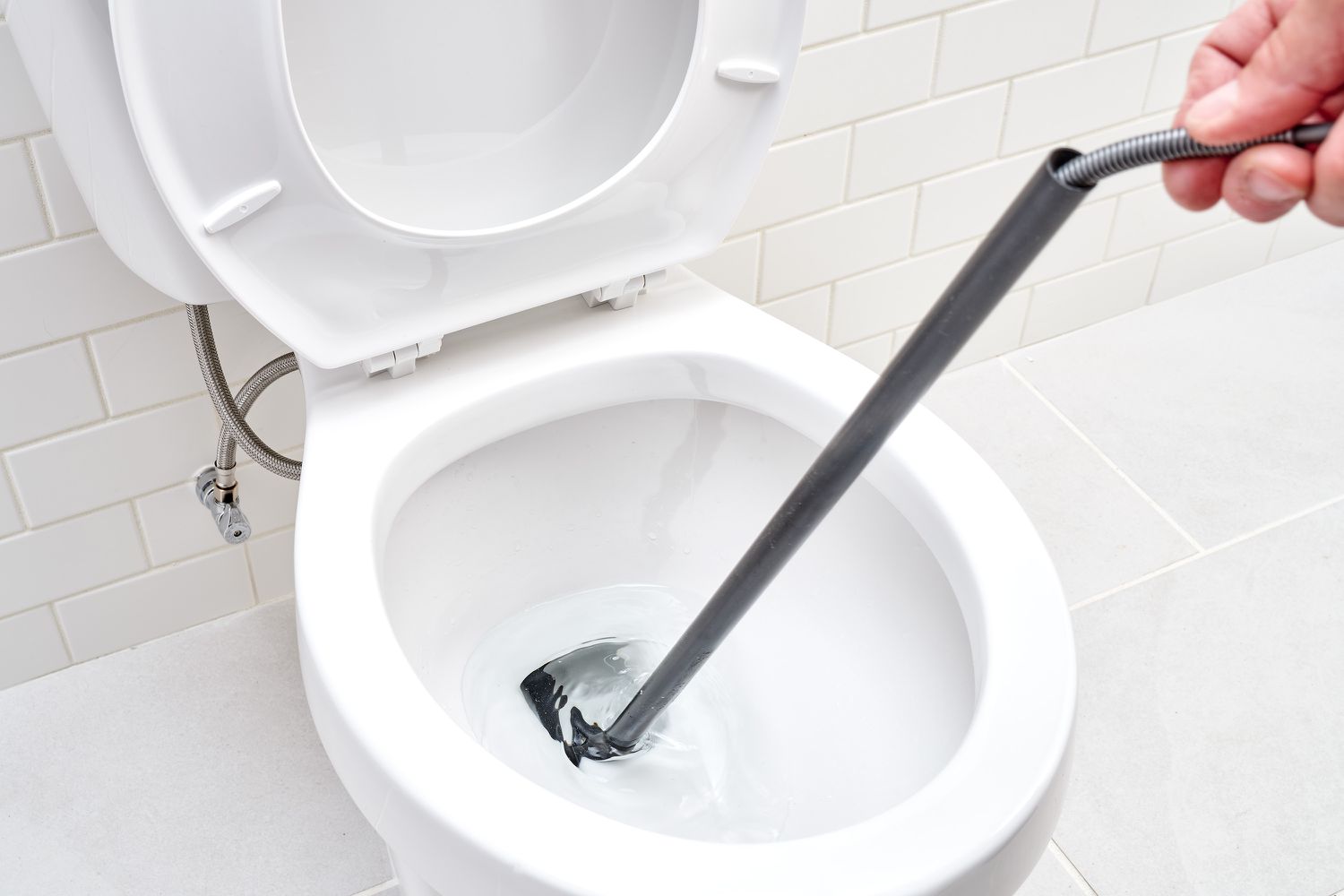
Do not use a standard flat-wire sink snake or open metallic drain cable in a toilet. Standard drain cables lack protective sleeves and will scratch, score, and stain porcelain. A true closet auger features a rigid steel tube covered by a smooth plastic or rubber boot at the bend, designed to protect the visible bowl surfaces from metal contact.
Operating a Closet Auger Safely
- Retract the Cable: Pull the auger handle up so the flexible spring cable is completely retracted inside the metal tube, leaving only the bulb head extending from the rubber boot.
- Position the Guard: Place the curved rubber boot at the very bottom of the toilet bowl drain, pointing upward into the internal trapway. Ensure the metal rod never touches the raw porcelain.
- Feed the Cable: Hold the outer guide tube firmly with one hand. With your other hand, slowly push down on the handle while cranking the handle in a clockwise direction.
- Bypass the Trap Bend: As the cable navigates the initial S-trap curves, you will feel resistance. Keep cranking smoothly to rotate the bulb spring past the internal bends.
- Engage the Clog: When the auger reaches the obstruction, rotate the handle continuously to wind the spring head into the obstruction (for soft clogs or paper) or push it through into the larger soil stack.
- Retract Safely: Slowly pull the cable back out while turning the crank clockwise to keep hold of retrieved material (such as foreign objects or wads of wipes). Pull the cable back into the guide tube before removing the assembly from the bowl.
Method 4: Safe Biological and Household Alternatives
If mechanical methods are unavailable, alternative non-toxic chemical processes can dissolve organic material without risking pipe or fixture damage.
| Method | Mechanism | Best For | Wait Time |
|---|---|---|---|
| Baking Soda & Vinegar | Carbon dioxide effervescent agitation | Minor organic blockages, grease, soap residue | 30 to 60 minutes |
| Enzymatic Drain Cleaner | Biological digestion of organic compounds | Organic build-up, sludgy lines, septic-safe maintenance | 6 to 8 hours (Overnight) |
1. Baking Soda and Vinegar (Effervescent Action)
Combining sodium bicarbonate (baking soda) and acetic acid (vinegar) produces carbon dioxide gas and water. While this effervescent reaction does not generate enough pressure to clear major obstructions, it can break apart loose, organic material.
- Procedure: Pour 1 cup of baking soda into the clogged bowl, letting it settle into the drain opening. Slowly pour 2 cups of white distilled vinegar into the water. The mixture will foam up rapidly. Let the solution work for 30 to 60 minutes, then flush with a gallon of warm tap water.
2. Enzyme-Based Drain Cleaners
Enzymatic cleaners use harmless bacterial cultures and organic enzymes to digest proteins, fats, starches, and cellulose fibers over time.
- Safety Profile: Enzymatic solutions are completely safe for porcelain, PVC pipes, old cast iron, and septic system balances. They generate zero heat and zero dangerous fumes.
- Application: Pour the recommended amount of enzymatic fluid or powder into the toilet bowl before going to bed. Allow the enzymes to work undisturbed for 6 to 8 hours overnight. Flush the toilet in the morning to clear the digested residue.
Method Comparison Table
Use this comparative analysis to select the safest, most effective clearing method based on your situation:
| Method | Safety Rating | Average Execution Time | Best Suited For | Key Risk / Limitations |
|---|---|---|---|---|
| Hot Water & Dish Soap | High | 15–30 Minutes | Minor organic waste & paper | Ineffective against hard non-organic objects |
| Flange Plunger | Very High | 5–10 Minutes | Soft clogs, excess paper | Can splash water if bad seal is formed |
| Closet Auger | High | 10–20 Minutes | Deep trap clogs, thick paper blockages | Scratches porcelain if rubber boot slips |
| Baking Soda & Vinegar | High | 30–60 Minutes | Partial organic clogs, odor | Weak physical clearing force |
| Enzyme Cleaners | Maximum | 6–8 Hours | Slow-draining lines, septic maintenance | Works slowly; unsuitable for quick fixes |
| Chemical Drain Cleaners | DANGEROUS | N/A | Do Not Use in Toilets | Cracks porcelain; toxic fumes; pipe corrosion |
Common DIY Mistakes That Cause Plumbing Damage
Avoid these common mistakes that lead to costly plumbing repairs:
- Using Wire Coat Hangers: Unwrapped metal wire coat hangers scratch and scrape glaze off porcelain. Metal scrapings leave dark gray marks that cannot be washed off and expose the underlying porous ceramic to persistent staining.
- Using Boiling Water: Pouring boiling water directly into a cold porcelain bowl creates severe thermal stress, which can split the bowl open and flood your floor.
- Repeated Flushing Attempts: Modern flush tanks hold between 1.28 to 1.6 gallons of water. Repeatedly pressing the handle when a drain is blocked guarantees an overflow.
- Using a Pressure Washer or Air Blaster Blindly: High-pressure compressed air gadgets designed for sink drains can blow out the rubber wax ring seal under the toilet base, leading to concealed leaks beneath your bathroom subfloor.
When to Call a Licensed Professional Plumber
While most simple blockages yield to plunging or augering, certain symptoms point to deeper main line issues or mechanical problems that require professional diagnosis.
INDICATORS THAT REQUIRE A LICENSED PLUMBER
- 🛁 Water backs up into tub or shower when flushing
- 🫧 Multiple drains gurgle simultaneously
- 🧸 Foreign objects (toys, keys, plastic) flushed down
- 🔁 Frequent, unexplained clogs occurring weekly
Main Sewer Line Obstructions
If flushing your toilet causes water to back up into your shower basin or bathtub, the clog is located in your home's main sewer line rather than the individual fixture trap. Plunging the toilet bowl will not clear a main line obstruction caused by tree root intrusion, broken lateral pipes, or heavy sediment.
Hard Object Trapping
If a hard plastic item, toy, or hygiene container accidentally falls into the toilet and gets flushed, do not force it deeper with a plunger or auger. Mechanical pushing wedges the object tighter inside the internal S-trap bends. A professional plumber will unbolt the toilet from the flange to pull the object out from the bottom opening.
Frequently Asked Questions
Can hot water crack a toilet bowl?
Yes. Boiling water (212°F / 100°C) can cause thermal shock in cold porcelain, cracking the bowl. Always use hot tap water under 140°F (60°C) to safely soften paper and organic waste.
What is the difference between a sink plunger and a toilet plunger?
A sink plunger features a flat, dome-shaped rubber cup designed for flat surfaces. A toilet plunger features an extended rubber sleeve (flange) inside the main dome that fits directly into the toilet drain opening to form an airtight seal.
Is it safe to leave dish soap in a clogged toilet overnight?
Yes. Liquid dish soap is non-caustic, safe for all plumbing pipes, and compatible with septic systems. Leaving soap and warm water in the bowl overnight gives it time to coat and lubricate persistent paper blockages.
Why does my toilet keep clogging repeatedly every few days?
Recurring clogs usually point to partial blockages deeper in the main drain line, mineral build-up inside the toilet's internal siphon jet, a compromised vent stack restricting air flow, or flush volume issues from a damaged toilet tank flapper.
How do I remove metallic gray scratch marks from my toilet bowl?
If a metallic drain snake scratched the porcelain glaze, apply a mild abrasive cleanser such as Bar Keepers Friend or a specialized porcelain polishing paste using a microfiber cloth. Soft rubbing buffing cleans away metallic residue transferred from the snake onto the glaze.
Safe Plumbing Checklist & Next Actions
To resolve your clogged toilet safely right now, follow this simple checklist:
- Stop Incoming Water: Turn the shut-off valve behind the toilet clockwise to prevent overflows.
- Assess the Clog: Determine if the obstruction is standard toilet paper and waste or a dropped foreign hard object.
- Choose the Safe Tool: Use a flange plunger for simple clogs or a closet auger with a rubber guard for deeper trap blockages.
- Avoid Chemical Cleaners: Never pour caustic drain openers, acids, or boiling water into a porcelain toilet.
- Call a Professional: If water backs up into surrounding tubs or sinks, stop working and contact a licensed plumber to inspect your main drain line.
Image Gallery