Comprehensive Guide to Life Insurance Tax Benefit Sections in 2026
Under the Indian Income Tax Act, the primary tax benefit sections for life insurance are Section 80C, which allows for a deduction of up to ₹1.5 lakh on annual premiums, and Section 10(10D), which provides tax exemptions on maturity an...
Under the Indian Income Tax Act, the primary tax benefit sections for life insurance are Section 80C, which allows for a deduction of up to ₹1.5 lakh on annual premiums, and Section 10(10D), which provides tax exemptions on maturity and death benefit proceeds. Additional benefits are available via Section 80D for health-related riders and Section 80CCC for pension-based insurance products.
Contents
Life insurance serves a dual purpose in a financial portfolio: providing a safety net for dependents and offering substantial tax efficiency. As of 2026, navigating the intersection of insurance and taxation requires a clear understanding of the "Old Tax Regime" versus the "New Tax Regime," as the availability of these sections depends heavily on the taxpayer's chosen filing status. While the New Tax Regime has become the default for many, the Old Tax Regime remains the primary vehicle for those seeking to maximize deductions through life insurance products.
Section 80C: The Primary Deduction for Premiums
Section 80C is the most recognized "life insurance tax benefit section." It allows individual taxpayers and Hindu Undivided Families (HUFs) to reduce their taxable income by the amount paid toward life insurance premiums.
Eligibility and Limits
The maximum cumulative deduction allowed under Section 80C (along with 80CCC and 80CCD(1)) is ₹1.5 lakh per financial year. This limit includes not just life insurance but also other instruments like the Public Provident Fund (PPF), Equity Linked Savings Schemes (ELSS), and National Savings Certificates (NSC). To qualify for this deduction, the premium must be paid for a policy covering the life of:
- The taxpayer
- The taxpayer’s spouse
- Any child of the taxpayer (minor or major, married or unmarried)
The 10% Cap Rule
A critical technical nuance of Section 80C is the ratio between the premium and the sum assured. For policies issued on or after April 1, 2012, the tax deduction is restricted to 10% of the actual capital sum assured. If the annual premium exceeds 10% of the sum assured, the deduction is capped at 10% of that sum assured. For example, if a policy has a sum assured of ₹10 lakh and a premium of ₹1.2 lakh, only ₹1 lakh is eligible for deduction under Section 80C.
For policies issued before April 1, 2012, this limit was 20%. For individuals with severe disabilities or specific ailments (defined under Section 80U or 80DDB), policies issued after April 1, 2013, enjoy a relaxed cap of 15% of the sum assured.
Section 10(10D): Tax-Free Maturity and Death Benefits
While Section 80C deals with the "outgo" (premiums), Section 10(10D) governs the "income" (maturity or death benefits). In 2026, this section remains the cornerstone of tax-free wealth accumulation through insurance, provided certain conditions are met.
General Exemption Rules
Under Section 10(10D), any sum received under a life insurance policy—including bonuses—is generally exempt from tax. This applies to both the maturity amount and the death benefit paid to nominees. Unlike Section 80C, there is no upper monetary limit on the exemption for death benefits; the full amount paid upon the demise of the insured is tax-free.
The ₹5 Lakh Aggregate Premium Threshold
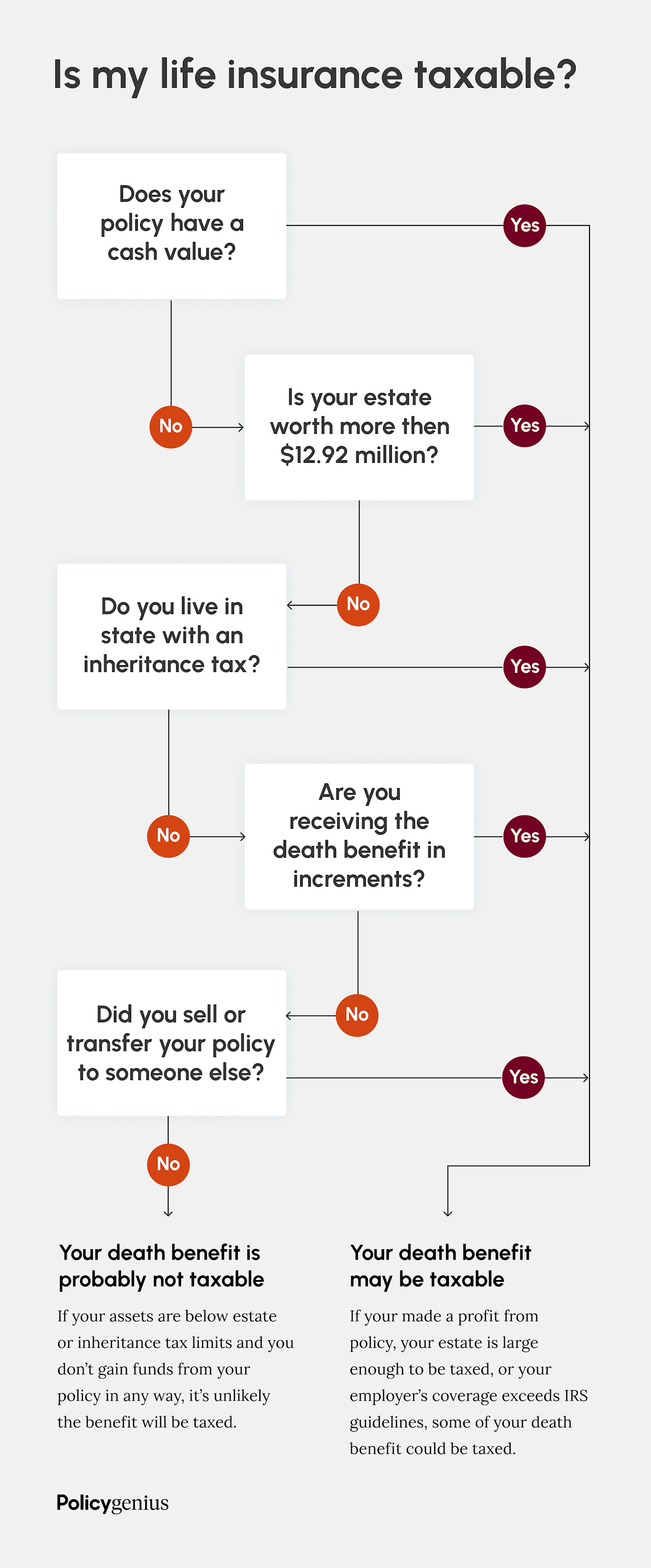
A significant regulatory shift occurred in recent years that taxpayers in 2026 must account for. For "traditional" (non-unit linked) life insurance policies issued on or after April 1, 2023, the maturity proceeds are only exempt under Section 10(10D) if the aggregate annual premium across all such policies does not exceed ₹5 lakh.
If a taxpayer holds multiple policies where the total annual premium exceeds ₹5 lakh, the maturity proceeds from those policies (where the cumulative premium crosses the threshold) become taxable as "Income from Other Sources." It is important to note that this ₹5 lakh cap does not apply to the death benefit; death claims remain tax-exempt regardless of the premium size.
Unit Linked Insurance Plans (ULIPs) and the ₹2.5 Lakh Cap
ULIPs are treated slightly differently. For ULIPs issued after February 1, 2021, the maturity proceeds are tax-exempt only if the annual premium does not exceed ₹2.5 lakh. If the premium exceeds this limit, the proceeds are treated similarly to equity-oriented mutual funds and are subject to Capital Gains Tax.
Section 80D: Benefits for Health-Related Riders
Many life insurance policies include "riders" or add-on covers for critical illness or surgical protection. These riders offer separate tax benefits under Section 80D, which is primarily dedicated to health insurance.
If a policyholder pays a specific, identifiable premium for a critical illness rider within a life insurance plan, that portion of the premium qualifies for a deduction under Section 80D. The limits as of 2026 are:
- ₹25,000 for self, spouse, and dependent children.
- An additional ₹25,000 for parents.
- If the parents are senior citizens (aged 60 or above), the limit for their coverage increases to ₹50,000.
This allows a taxpayer to potentially claim up to ₹75,000 (or ₹1,00,000 if both the taxpayer and parents are over 60) in deductions by combining their health insurance and life insurance riders.
Summary of Life Insurance Tax Benefit Sections
The following table summarizes the key sections and their application for the 2026 assessment year.
| Section | Nature of Benefit | Maximum Limit | Key Conditions |
|---|---|---|---|
| 80C | Deduction on Premiums Paid | ₹1.5 Lakh (Cumulative) | Premium must be ≤ 10% of Sum Assured for policies post-2012. |
| 10(10D) | Exemption on Maturity/Death | No limit (General) | Taxable if annual premium exceeds ₹5 lakh (Traditional) or ₹2.5 lakh (ULIP). |
| 80D | Deduction for Health Riders | ₹25,000 to ₹50,000 | Applicable only to the health/critical illness portion of the premium. |
| 80CCC | Deduction for Pension Plans | Included in 80C limit | Applicable to premiums paid for annuity or pension-providing plans. |
| 10(10A) | Exemption on Pension Commutation | 1/3rd to 1/2 of corpus | Applies when a portion of a pension fund is withdrawn as a lump sum. |
The Impact of the New Tax Regime in 2026
By 2026, the New Tax Regime has become the "default" for most taxpayers due to its lower slab rates. However, it is vital to understand that most "life insurance tax benefit sections"—specifically 80C, 80CCC, and 80D—are not available under the New Tax Regime.
Taxpayers opting for the New Tax Regime do not get any deduction for the premiums they pay. However, the Section 10(10D) exemption still applies. Even under the New Tax Regime, the maturity amount or death benefit received from a life insurance policy remains tax-free, provided the policy meets the premium-to-sum-assured ratios and the ₹5 lakh/₹2.5 lakh premium caps mentioned earlier.
Lock-in Periods and Compliance
To prevent the misuse of tax benefits, the Income Tax Act mandates a minimum holding period for life insurance policies. If a policy is terminated or "surrendered" before a specific period, the tax deductions claimed in previous years under Section 80C are reversed and added back to the taxpayer's income in the year of termination.
- Traditional Plans: Must be active for at least two years of premium payments.
- ULIPs: Must be active for at least five years.
If a taxpayer surrenders a traditional policy after only one year, the 80C deduction claimed in the first year will be taxed as income in the second year. Furthermore, the surrender value itself may be subject to Tax Deducted at Source (TDS) under Section 194DA if the maturity proceeds are not exempt under Section 10(10D).
Common Mistakes to Avoid
- Ignoring the 10% Ratio: Many people buy policies with high premiums and low life cover for "investment" purposes. If the premium is 20% of the sum assured, you lose half the 80C benefit and the entire 10(10D) maturity exemption.
- Exceeding the ₹5 Lakh Aggregate: In 2026, high-net-worth individuals often hold multiple policies. It is essential to calculate the aggregate premium across all insurers. If the total exceeds ₹5 lakh, the "tax-free" nature of the maturity proceeds is lost for the excess policies.
- Mixing Regimes: Claiming 80C deductions while filing under the New Tax Regime is a common error that leads to tax notices and penalties.
- Neglecting TDS: For policies that are taxable (due to high premiums or low sum assured), the insurance company is required to deduct TDS at a rate of 5% on the net income portion (Maturity amount minus total premiums paid) if the amount exceeds ₹1 lakh.
Frequently Asked Questions
Is the death benefit always tax-free regardless of the premium amount?
Yes, the death benefit received by a nominee is exempt from income tax under Section 10(10D) in almost all circumstances. This remains true even if the annual premium exceeded ₹5 lakh or if the premium-to-sum-assured ratio was higher than the 10% limit. The legislative intent is to provide financial relief to the bereaved family without a tax burden.
Can I claim tax benefits for a policy bought for my parents?
You can claim a deduction under Section 80D for health-related riders bought for your parents. However, premiums for a standard life insurance policy (death cover) for your parents are not eligible for deduction under Section 80C. Section 80C only allows deductions for policies covering yourself, your spouse, or your children.
What happens to the tax benefit if I stop paying premiums?
If you stop paying premiums before the mandatory lock-in period (2 years for traditional plans, 5 years for ULIPs), the deductions previously claimed under Section 80C will be considered income in the year the policy lapses or is surrendered. You will then have to pay tax on that amount at your applicable slab rate.
Are GST charges on premiums eligible for Section 80C?
No, the GST (Goods and Services Tax) paid on life insurance premiums is not eligible for deduction under Section 80C. Only the "base premium" amount is considered for the ₹1.5 lakh deduction limit. Insurance companies usually provide a premium receipt that clarifies the split between the base premium and the tax components.
Does Section 10(10D) apply to Keyman Insurance?
No, Section 10(10D) specifically excludes any sum received under a Keyman Insurance Policy. Any maturity or death benefit received from a Keyman policy is generally taxed as business income for the company or as salary/other income for the individual, depending on the structure of the policy.
Recommendation for 2026 Taxpayers
For most taxpayers in 2026, the decision to use life insurance for tax benefits should be secondary to the primary goal of financial protection. If you are under the Old Tax Regime, ensure your total premiums stay within the ₹1.5 lakh limit of Section 80C and that your sum assured is at least 10 times the annual premium to secure the Section 10(10D) exemption.
If you are under the New Tax Regime, you should prioritize Term Insurance for high coverage at a low cost, as you will not receive a premium deduction anyway. Regardless of the regime, always verify that your aggregate annual premiums stay below the ₹5 lakh threshold for traditional plans to ensure that your eventual maturity proceeds remain entirely tax-exempt. For high-value investments, consult a tax advisor to balance ULIPs and traditional plans effectively within the current regulatory framework.
Image Gallery