Avoid Whole Life Insurance If: Key Scenarios, Red Flags, and Better Alternatives
You should avoid whole life insurance if your primary goal is affordable pure income protection, you haven't fully funded tax-advantaged investment options like IRAs or 401(k)s, or you cannot comfortably maintain high monthly premiums...
You should avoid whole life insurance if your primary goal is affordable pure income protection, you haven't fully funded tax-advantaged investment options like IRAs or 401(k)s, or you cannot comfortably maintain high monthly premiums for decades. For most households, purchasing low-cost term life insurance and investing the remaining funds yields higher returns, greater liquidity, and far lower administrative costs.
Contents
Understanding Whole Life Insurance vs. Term Life Insurance
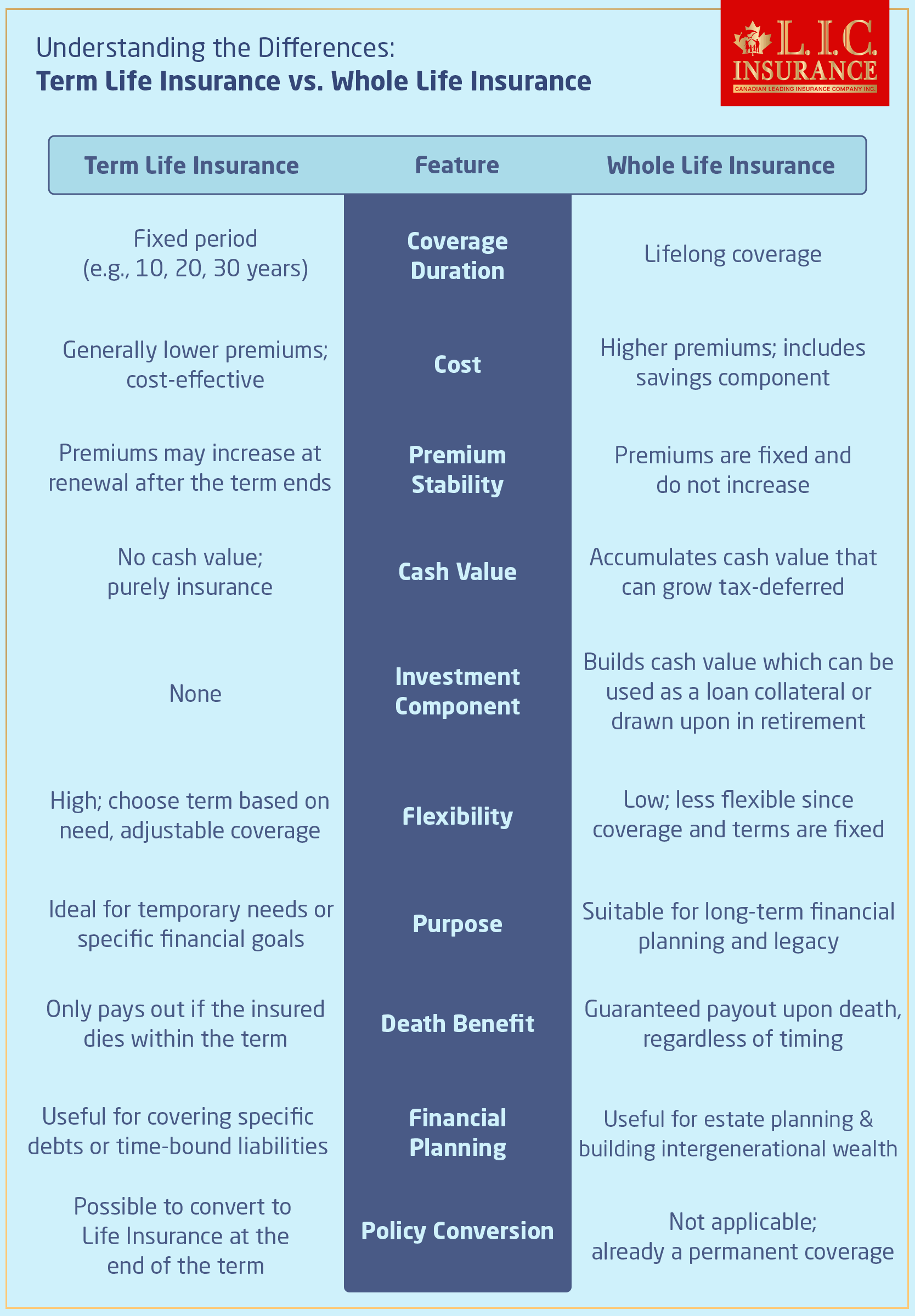
To evaluate whether whole life insurance aligns with your financial strategy, it is critical to understand its structure relative to term life insurance. Life insurance serves one fundamental purpose: transferring financial risk from an individual to an insurer in the event of premature death. However, whole life and term life execute this purpose through drastically different financial mechanisms.
Term life insurance provides pure protection for a specified period, typically 10, 20, or 30 years. If the insured passes away during the term, the policy pays a level death benefit to designated beneficiaries. If the insured outlives the term, the policy simply expires without residual value. Because term insurance carries no savings component and only pays out if death occurs during the window, premiums are remarkably low.
Whole life insurance is a form of permanent life insurance designed to remain in force for the insured's entire lifetime, provided premiums are paid. It combines a death benefit with an internal accumulation element known as cash value. A portion of each premium payment covers the net cost of insurance and administrative overhead, while the remainder is funneled into the cash value account. This cash value grows at a fixed rate determined by the insurer (or through non-guaranteed dividends in participating mutual insurance policies).
Because whole life insurance guarantees a payout at death—regardless of when it occurs—and builds internal cash value, insurers charge premiums that are often 5 to 15 times higher than term life insurance for the exact same initial death benefit amount.
6 Scenarios Where You Should Avoid Whole Life Insurance
While insurance agents frequently market whole life insurance as an ideal dual-purpose vehicle for savings and protection, it is often suboptimal for standard financial planning goals. Below are six specific scenarios where avoiding whole life insurance is financial prudent.
1. You Only Need Temporary Financial Protection
Most families need life insurance for a finite window of time—specifically, the years when dependents rely on their earned income. This window typically includes the period required to pay off a home mortgage, raise children to independence, and build a sufficient retirement nest egg.
If your coverage needs expire once your children are grown and your mortgage is settled, permanent coverage is unnecessary. Buying a 20-year or 30-year term policy provides maximum coverage during your highest-risk years at a fraction of the cost. Paying for permanent coverage when your financial liabilities will naturally decline over time results in overpaying for insurance you will outgrow.
2. Your Primary Goal Is Wealth Accumulation and High Investment Returns
Whole life insurance is often pitched as a conservative investment asset. However, the cash value component inside a whole life policy typically yields low long-term net returns—often ranging between 1.5% and 3.5% annually over several decades, after factoring in all internal fees, sales commissions, and administrative expense charges.
By contrast, historical long-term equity returns—such as those from broad-market index funds tracking the S&P 500—have historically outpaced whole life cash value growth by a wide margin. For long-term wealth accumulation, whole life insurance creates a massive opportunity cost compared to disciplined investing in low-cost index funds or broad ETF portfolios.
3. You Have Not Fully Utilized Qualified Tax-Advantaged Accounts
Sales pitches for whole life insurance place heavy emphasis on tax-deferred cash value growth and tax-free policy loans. While tax advantages exist, they are generally inferior and more expensive than standard qualified retirement plans established under federal law.
Before considering permanent life insurance for tax management, you should fully max out available tax-advantaged accounts, including:
- Employer-sponsored 401(k), 403(b), or 457(b) plans (especially up to any employer match, which represents an immediate 100% return).
- Traditional or Roth IRAs, offering lower expense ratios and flexible investment selections.
- Health Savings Accounts (HSAs), which offer a unique triple-tax advantage for healthcare expenses.
Under guidelines published by the Internal Revenue Service (IRS), tax-deferred growth in standard qualified accounts incurs zero policy fees, zero mortality charges, and zero agent commissions. Using whole life insurance for tax shelter before maximizing retirement accounts adds unnecessary layer fees to your financial plan.
4. The High Monthly Premium Strains Your Monthly Budget
Whole life insurance requires a long-term, high-cost commitment. If unexpected life changes occur—such as job loss, medical emergency, or business downturn—maintaining expensive whole life premiums becomes a major liability.
If you fail to pay whole life premiums, the policy risks lapse. If a policy lapses during the early years, the policyholder often walks away with nothing, losing thousands of dollars paid in premiums. According to data compiled by the National Association of Insurance Commissioners (NAIC), policy lapse rates are highest in the first five years of ownership, primarily driven by premium shock and affordability issues.
[ High Monthly Premiums ] ---> [ Cash Flow Strain ] ---> [ Policy Lapse in Early Years ] ---> [ Total Loss of Capital ]
5. You May Need Access to Your Money in the First 10 to 15 Years
Whole life insurance policies are heavily front-loaded with expenses. During the first several years of a policy, nearly 100% of your premium payments go toward:
- Insurance agent commissions (often 50% to 100% of the first year’s annualized premium).
- Underwriting and medical examination costs.
- Insurer administrative and setup overhead.
Consequently, cash value accumulation in years 1 through 3 is often zero or near zero. Insurers also assess steep surrender charges if you cancel the policy or withdraw cash within the first 10 to 15 years. If you require financial liquidity for emergencies, home purchases, or business opportunities over a short-to-medium timeframe, whole life cash value is an exceptionally inefficient storage vehicle.
6. You Do Not Fully Understand the Policy's Complex Fee Structure
Whole life policies are notoriously opaque. Unlike transparent investment products where expense ratios and management fees are explicitly reported on quarterly statements, whole life fee structures are embedded inside internal actuarial tables.
Key complex mechanics include:
- Cost of Insurance (COI): The underlying cost of mortality increases as you age, drawing more capital away from cash value growth internally.
- Loan Interest Rates: Borrowing your own cash value requires paying loan interest back to the insurance company (often 5% to 8%). If unpaid, loan balances reduce the final death benefit and can cause catastrophic policy tax blowouts.
- Non-Guaranteed Dividends: Dividend illustrations presented during sales pitches are projections, not guarantees. Economic shifts and low interest rate environments can lead insurers to drop dividend scales unexpectedly.
Direct Comparison: "Buy Term and Invest the Difference" vs. Whole Life
The classic personal finance strategy "Buy Term and Invest the Difference" (BTID) involves purchasing affordable term life insurance for peak protection years and systematically investing the saved premium difference into broad-market index funds.
The following matrix illustrates how these strategies compare over a 30-year horizon:
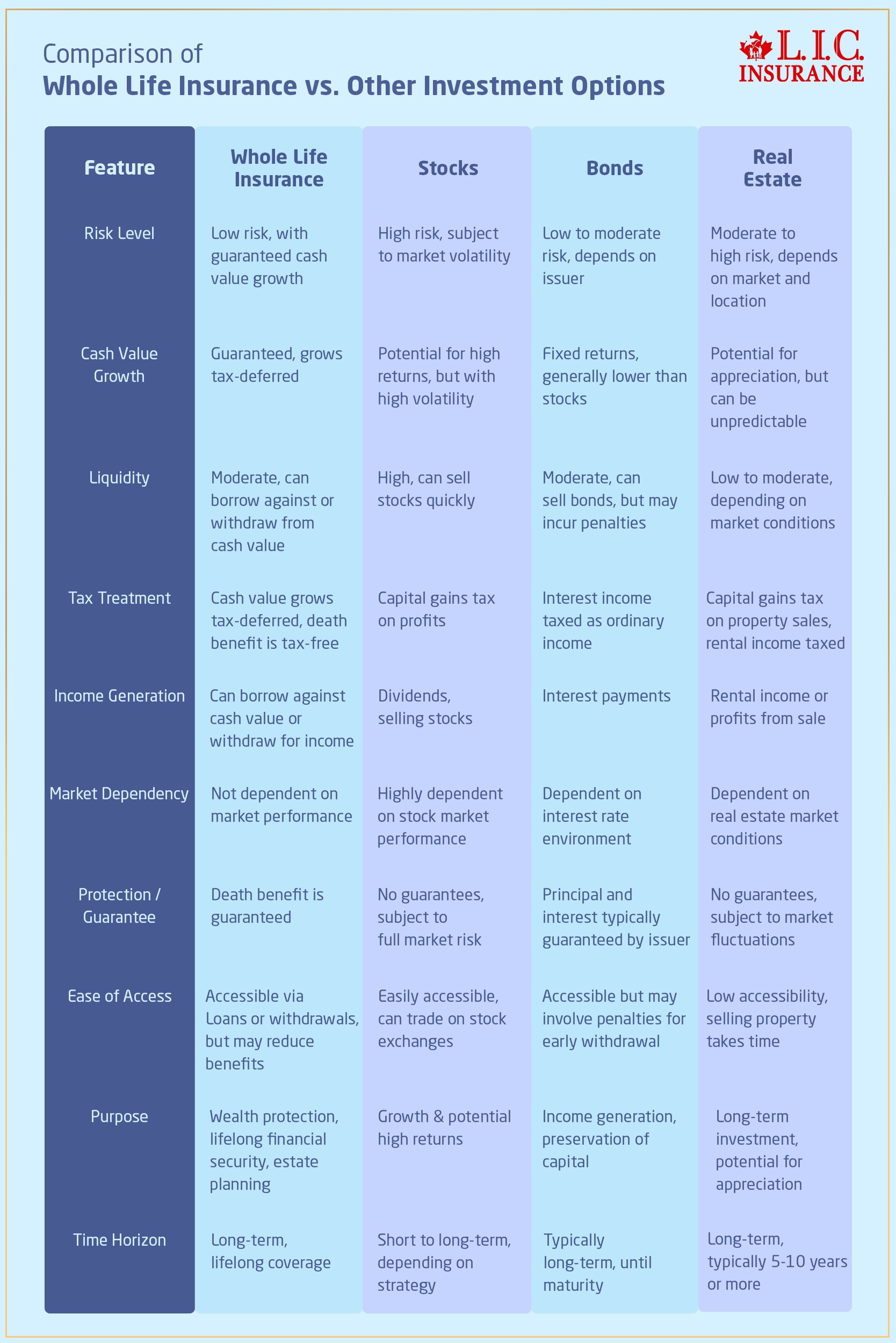
| Feature / Metric | Whole Life Insurance | Buy Term & Invest the Difference (BTID) |
|---|---|---|
| Monthly Premium Cost | Very High (5x to 15x higher) | Very Low (Pure risk protection) |
| Primary Focus | Permanent coverage + Low guaranteed growth | Maximum income protection + Wealth building |
| Capital Liquidity (Years 1–10) | Extremely Low (Surrender fees apply) | High (Invested funds accessible in brokerage) |
| Average Long-Term Returns | Low (Typically 1.5% - 3.5% net IRR) | Moderate-to-High (Historical equity market averages) |
| Transparency | Complex (Internal charges hidden) | High (Clear expense ratios & brokerage statements) |
| Flexibility | Rigid premium structure; lapse risk | High (Can pause or adjust investments anytime) |
| Tax Advantages | Tax-deferred growth, tax-free loans | Tax-advantaged accounts (401k/IRA/HSA) + Capital Gains rates |
| Policy Risk | Policy lapse forfeits cash value & cover | Unrelated investment and coverage mechanics |
When Does Whole Life Insurance Actually Make Sense?
While whole life insurance is inappropriate for typical working households, it plays a legitimate role in specialized wealth and estate management scenarios:
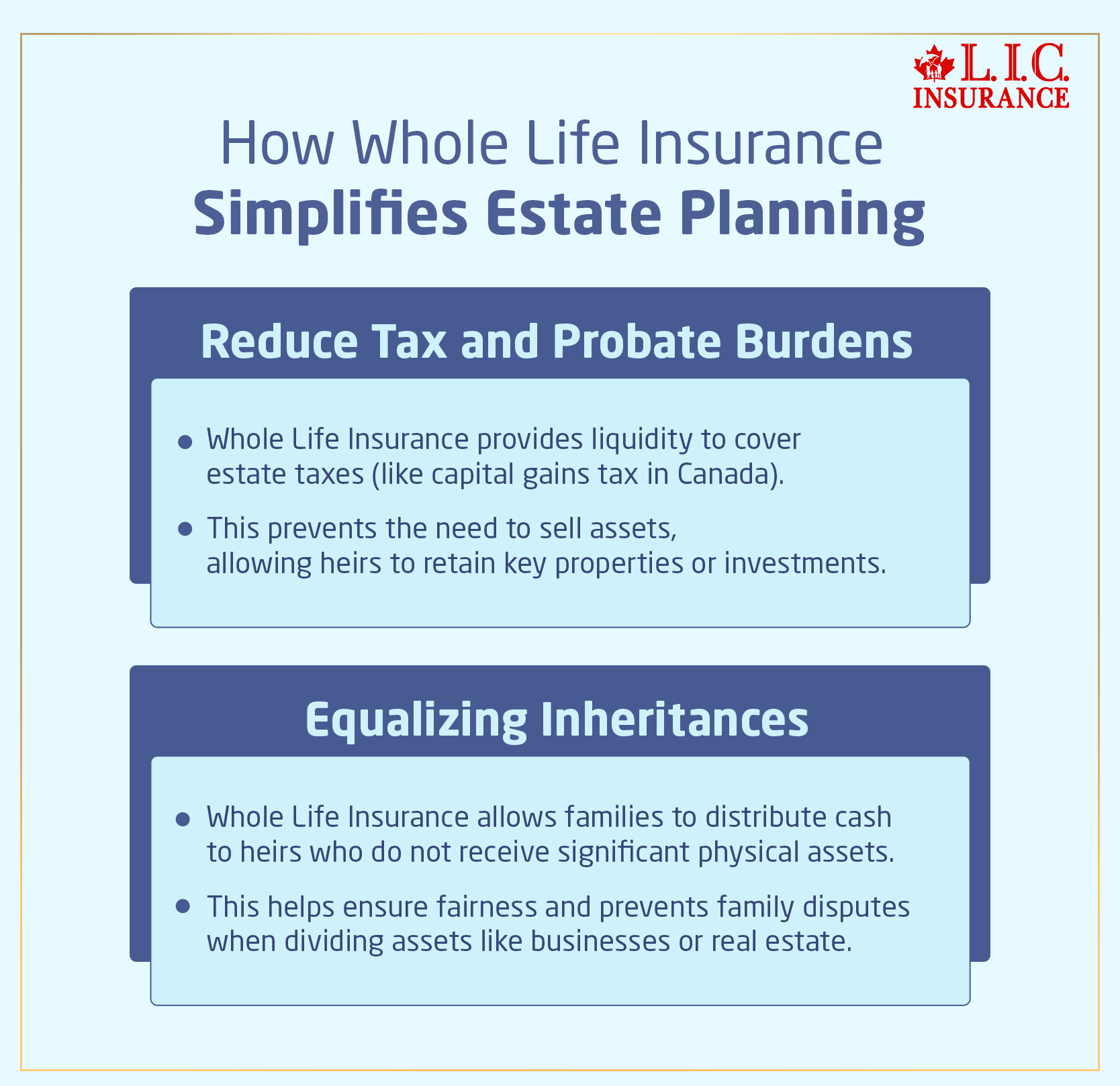
- High-Net-Worth Estate Tax Liquidity: Individuals with estates exceeding federal or state estate tax exemption thresholds can use permanent insurance inside an Irrevocable Life Insurance Trust (ILIT) to fund estate tax liabilities without liquidating real estate or private business assets.
- Lifelong Dependents (Special Needs Planning): Parents of children with special needs who will require financial support long after the parents pass away require permanent coverage that guaranteed term policies cannot extend past advanced ages.
- Illiquid Business Succession Buyouts: Business partners frequently utilize permanent life insurance policies to fund cross-purchase buy-sell agreements, guaranteeing immediate capital to buy out a deceased partner's shares regardless of when death occurs.
If your situation does not fall into one of these specialized categories, permanent coverage is almost certainly unnecessary.
What to Do If You Already Owned a Whole Life Policy
If you currently hold a whole life insurance policy and realize it does not align with your financial goals, avoid reacting impulsively. Taking structured steps ensures you minimize financial loss:
Step 1: Request an In-Force Illustration
Contact your insurance provider and request an in-force illustration. This document projects the policy's future cash value, guaranteed performance, surrender charges, and dividend performance based on current metrics.
Step 2: Secure Replacement Coverage First
Never surrender or cancel an existing life insurance policy until replacement coverage is active. Apply for a low-cost term life policy, complete medical underwriting, and secure formal approval. Canceling your whole life policy prematurely could leave your family completely uninsured if your health status has changed.
Step 3: Evaluate Surrender Options
Once your replacement term policy is fully active, evaluate your exit strategies:
- Full Policy Surrender: Cash out the net cash value (minus surrender charges). If cash value exceeds total premiums paid, the gain is taxable as ordinary income.
- Reduced Paid-Up Insurance: Stop paying premiums and convert the existing cash value into a smaller, fully paid-up permanent death benefit.
- Section 1035 Exchange: Under IRS Code Section 1035, you can execute a tax-free rollover of your whole life cash value into a non-qualified annuity or a hybrid long-term care policy without triggering immediate capital gain taxes.
Frequently Asked Questions
Is whole life insurance a bad investment?
Whole life insurance should not be evaluated as a traditional investment vehicle. It is an insurance policy with an internal savings feature. Because of high commission structures, mortality fees, and surrender charges, its internal net return on equity is far lower than traditional low-cost index investing.
Can I lose money on a whole life insurance policy?
Yes. If you surrender or cancel a whole life insurance policy within the first 5 to 10 years, the surrender fees and agent commission deductions will likely exceed total cash value growth, resulting in a net financial loss on the premiums paid.
What is the "Buy Term and Invest the Difference" strategy?
"Buy Term and Invest the Difference" (BTID) is a strategy where an individual buys affordable term life insurance for pure protection and invests the money saved (compared to high whole life premiums) into low-cost index funds or retirement accounts. Historically, BTID yields substantially higher total net worth over 20 to 30 years.
What happens if I take a loan from my whole life cash value?
When taking a loan against your cash value, you are borrowing from the insurer using your policy cash value as collateral. The insurer charges annual interest on the loan. If the unpaid loan plus interest exceeds the total cash value, the policy will lapse, creating a massive, taxable event on all accumulated policy gains.
How does whole life insurance differ from universal life insurance?
Whole life insurance offers fixed premiums, guaranteed cash value growth rates, and a fixed death benefit. Universal life insurance offers flexible premiums and adjustable death benefits, with cash value growth tied to floating market interest rates, market indexes (Indexed Universal Life), or direct sub-account investment options (Variable Universal Life). Both carry high permanent insurance expense structures.
Final Recommendation
Before purchasing permanent insurance, evaluate your complete financial picture. For the overwhelming majority of individuals, purchasing low-cost term life insurance—and directing all remaining surplus cash flow toward maxing out 401(k)s, Roth IRAs, HSAs, and index funds—is the most effective path toward long-term security and wealth accumulation.
If you are unsure whether your estate requires permanent life insurance, consult a fee-only fiduciary financial advisor who does not collect sales commissions on insurance products to receive an unbiased assessment.
Image Gallery