Guaranteed Acceptance Life Insurance No Medical Questions: A Complete 2026 Guide
Guaranteed acceptance life insurance policies require no medical exams and no health-related questions, meaning approval is legally assured for applicants who meet the age requirements. While this provides accessible coverage for indiv...
Guaranteed acceptance life insurance policies require no medical exams and no health-related questions, meaning approval is legally assured for applicants who meet the age requirements. While this provides accessible coverage for individuals with serious pre-existing conditions, these policies typically feature higher premiums, lower death benefits, and a graded death benefit waiting period for natural causes of death.
Contents
Navigating the landscape of end-of-life financial planning can feel overwhelming, especially for individuals dealing with chronic illnesses, advanced age, or past health complications that make traditional underwriting impossible. For consumers who have been repeatedly denied coverage or priced out by standard insurers, guaranteed acceptance life insurance offers a viable pathway to secure a financial safety net. Understanding how these products operate, what they cost, and where their limitations lie is essential for making an informed decision that protects your beneficiaries without creating unexpected financial strain.
What is Guaranteed Acceptance Life Insurance?
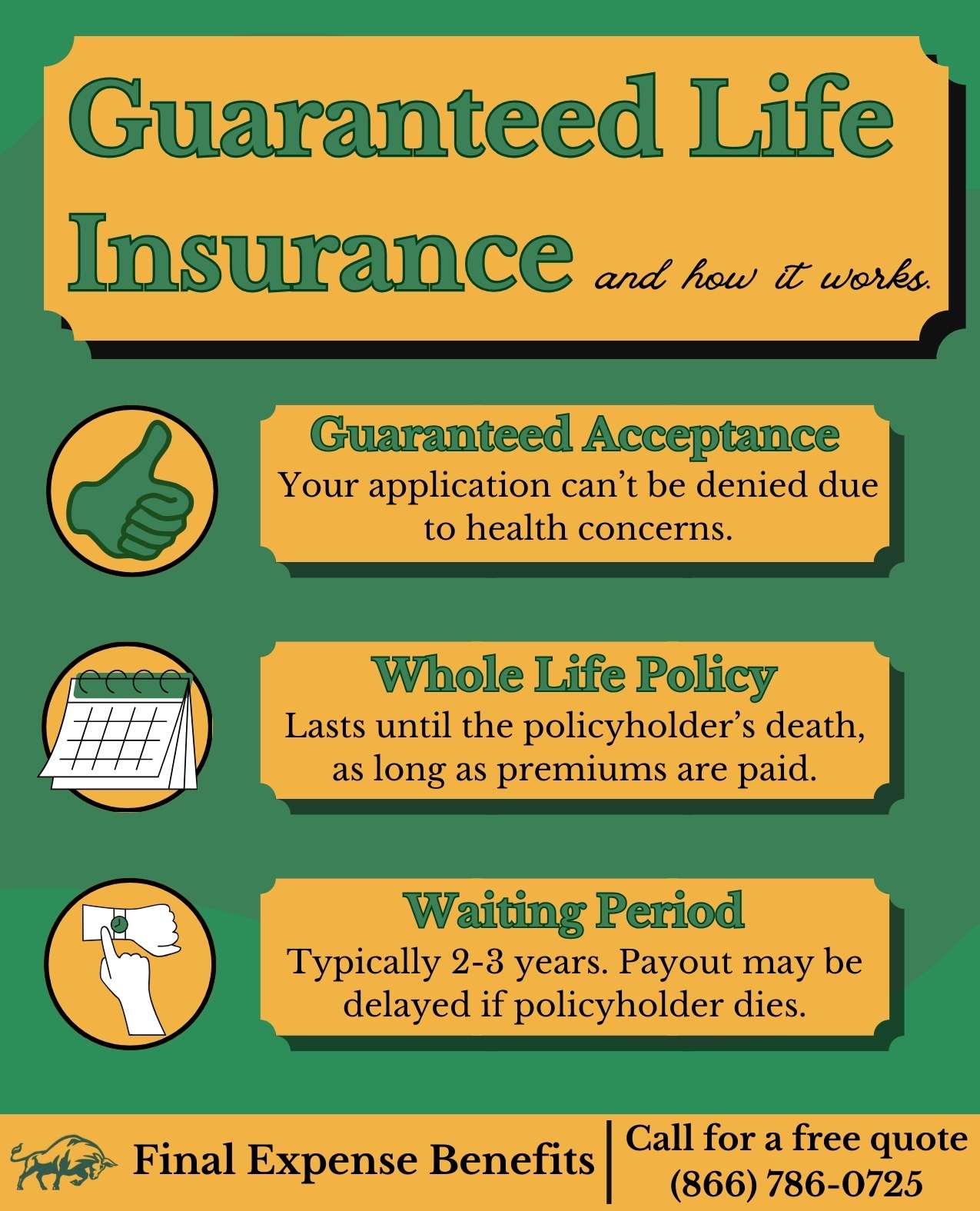
Guaranteed acceptance life insurance is a type of permanent whole life insurance policy where the issuing insurance company cannot turn down an applicant based on their health status. Traditional and simplified issue life insurance policies require applicants to answer health questionnaires or undergo physical examinations, such as blood draws, urine samples, and biometric screenings. In contrast, guaranteed issue policies eliminate these hurdles entirely.
The fundamental premise of this insurance product is accessibility. Insurers assume the risk of insuring individuals with high-risk medical profiles by adjusting other policy features. Because they cannot filter out unhealthy applicants, insurers typically limit the maximum coverage amount, charge higher premium rates per dollar of coverage, and incorporate waiting periods before the full death benefit becomes payable.
It is important to recognize that these products are almost exclusively structured as whole life insurance, meaning they feature fixed premiums that will never increase, a guaranteed death benefit, and the accumulation of a small amount of cash value over time. They are designed primarily to cover end-of-life expenses, such as funeral costs, medical bills, and small remaining debts, rather than to serve as income replacement for a young family.
Eligibility and Application Requirements
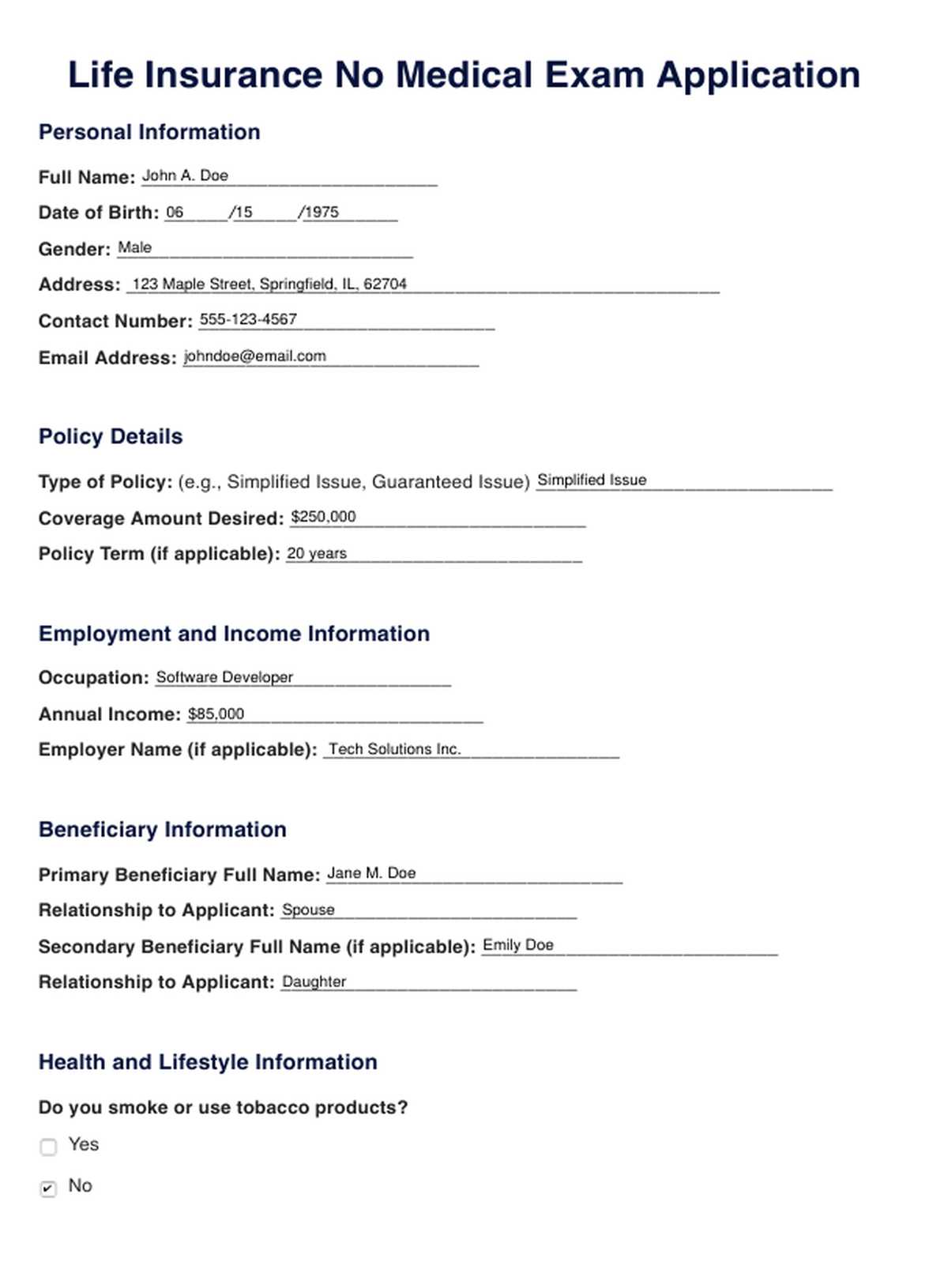
The application process for guaranteed acceptance life insurance is remarkably streamlined compared to traditional underwriting. Because there are no medical questions and no medical exams, the barrier to entry is minimal. However, applicants must still meet specific administrative criteria to qualify.
Age Restrictions
Every guaranteed acceptance policy has strict age boundaries. Typically, these policies are marketed toward seniors, with eligible ages generally ranging from 45 or 50 up to 80 or 85, depending on the specific insurance carrier. Younger individuals with severe health conditions may find themselves outside the target demographic for these specific products, though other specialized options might exist.
Residency and Legal Status
Applicants must be legal residents of the country or state where the policy is issued and possess a valid Social Security Number or Taxpayer Identification Number. Insurers must comply with state insurance regulations, meaning availability and specific policy terms can vary depending on where you live.
The Application Process
The actual application can often be completed in minutes over the phone or online. The steps generally involve:
- Verifying Age and Identity: Providing basic personal information to confirm you fall within the acceptable age bracket.
- Selecting Coverage Amount: Choosing a face value amount, usually capped between $10,000 and $25,000.
- Payment Setup: Providing banking information for automatic monthly or annual premium withdrawals.
- Immediate Approval: Receiving confirmation of coverage, as underwriters do not need to review medical records or consult the Medical Information Bureau (MIB).
How the Graded Death Benefit Works
The most critical operational feature of guaranteed acceptance life insurance—and the one that catches many consumers off guard—is the graded death benefit, sometimes referred to as a waiting period or lien period.
Because insurers take on high-risk individuals without any health screening, they must protect themselves against immediate payouts for terminally ill applicants. Consequently, most guaranteed issue policies stipulate that if the insured dies from natural causes within the first two years (or sometimes three years, depending on the state and carrier) of the policy, the beneficiaries will not receive the full face value of the death benefit.
| Cause of Death | Year 1 of Policy | Year 2 of Policy | Year 3 and Beyond |
|---|---|---|---|
| Natural Causes (Illness, organ failure, old age) | Return of premiums paid + interest (usually 10%) | Return of premiums paid + interest (usually 10%) | 100% of the full death benefit |
| Accidental Death (Car accident, slip and fall) | 100% of the full death benefit | 100% of the full death benefit | 100% of the full death benefit |
If the insured passes away from natural causes during this graded period, the insurance company typically refunds all premiums paid to date, often with a small statutory interest rate (such as 10%). However, if death occurs due to an accident at any point after the policy becomes active, the full face value is paid out immediately. Once the waiting period expires, 100% of the death benefit is paid for any cause of death.
Financial Trade-Offs: Costs, Benefits, and Limits
While guaranteed acceptance life insurance provides a vital service, these benefits come with distinct financial trade-offs that consumers must carefully evaluate.
Higher Cost per Thousand
Because the insurer assumes adverse selection—attracting a higher proportion of unhealthy individuals—the cost per dollar of coverage is significantly higher than standard life insurance. A healthy 60-year-old would pay substantially less for a traditional term or whole life policy than they would for a guaranteed issue policy. Premiums are fixed, but they are expensive relative to the low face values offered.
Low Maximum Coverage Caps
Most carriers cap guaranteed acceptance policies at $25,000, with many limits stopping at $10,000 or $15,000. This amount is generally sufficient to cover average funeral and burial expenses, but it is inadequate for long-term income replacement, paying off a large mortgage, or covering extensive estate taxes.
Fixed Permanent Premiums
A major advantage offsetting the high cost is rate stability. Once your policy is issued, your premium will never increase due to advancing age or deteriorating health. As long as you continue to pay your premiums on time, the policy cannot be canceled by the insurance company.
Comparing Guaranteed Acceptance to Other Life Insurance Types
To determine if a guaranteed issue policy is truly your best option, it helps to compare it against alternative insurance products available on the market.
| Feature | Guaranteed Acceptance Life | Simplified Issue Life | Traditional Whole/Term Life |
|---|---|---|---|
| Medical Exam Required | No | No | Usually Yes (for higher amounts) |
| Health Questions | None | Yes (short questionnaire) | Extensive underwriting |
| Approval Certainty | 100% guaranteed if age eligible | Subject to approval | Subject to underwriting approval |
| Waiting Period | 2-year graded death benefit | None | None |
| Maximum Coverage | Typically $10,000 to $25,000 | Up to $50,000 | Hundreds of thousands to millions |
| Cost | Highest per dollar of coverage | Moderate | Lowest for healthy applicants |
If you are generally healthy or manage a well-controlled chronic condition, a simplified issue or traditional policy will almost always provide higher coverage amounts at a lower cost. Guaranteed acceptance should be viewed as a last resort when all other underwriting avenues are closed.
Common Mistakes to Avoid When Buying Coverage
Navigating specialized insurance products requires vigilance to ensure you get the protection you expect. Avoid these common pitfalls:
- Overlooking the Graded Period: Expecting full coverage on day one for natural causes can leave your family unprepared if passing occurs early in the policy lifecycle. Be fully aware of your carrier's waiting period rules.
- Buying More Than You Need: Because these policies are expensive, purchasing a high face value (if available) can lead to lapsed coverage if monthly premiums become unaffordable. Calculate your actual final expense needs precisely.
- Failing to Shop Around: Not all guaranteed acceptance policies are priced equally, and rider options (such as accidental death riders) vary by carrier. Review quotes from multiple reputable insurers.
- Missing Premium Payments: Permanent whole life policies have a grace period, but if a policy lapses due to non-payment, you lose all accumulated value and your coverage terminates permanently.
Frequently Asked Questions
Can I really be denied guaranteed acceptance life insurance?
No. By definition, a guaranteed acceptance policy does not allow the insurance company to turn down an applicant who falls within the designated age range. As long as you complete the application accurately and pay the initial premium, you will be approved.
What happens if I die during the two-year waiting period?
If death results from natural causes during the graded benefit period, your beneficiaries will receive a refund of all premiums paid, typically plus a small percentage of interest (such as 10%). If death results from an accident, the full face value is paid immediately.
Are the cash values taxable?
The cash value that accumulates inside a whole life insurance policy grows on a tax-deferred basis. If you withdraw cash value during your lifetime, you generally only pay taxes on the amounts that exceed the total premiums you have paid into the policy. Death benefits paid to beneficiaries are typically income tax-free.
Can my rates increase as I get older?
No. Guaranteed acceptance life insurance policies utilize level premiums. Your monthly or annual premium is locked in at the age you purchase the policy and will never increase, regardless of how your health changes or how many years pass.
What is the best age to purchase this type of insurance?
Because these policies are expensive, most financial advisors recommend purchasing them only when traditional or simplified insurance is unavailable due to severe health issues, regardless of whether you are 50 or 80. If you are healthy, standard policies offer vastly superior financial value.
Next Actions and Recommendations
If you have exhausted traditional underwriting options due to serious health concerns, guaranteed acceptance life insurance provides a dependable way to ensure your final expenses do not burden your loved ones.
To take the next step, calculate your anticipated funeral and burial costs to determine the exact coverage amount you require. Next, obtain quotes from multiple established insurance carriers licensed in your state, paying close attention to the length of their graded death benefit periods and monthly premium costs. Consulting with an independent insurance broker who can compare policies across multiple companies can help you identify the most cost-effective option for your specific situation.
Image Gallery