Open Source Business Process Management in the Wild: A Guide to Real-World Implementation
Open source business process management (BPM) in the wild refers to the practical, real-world deployment of open-source process engines to orchestrate complex workflows, integrate disparate systems, and automate business logic. Unlike...
Open source business process management (BPM) in the wild refers to the practical, real-world deployment of open-source process engines to orchestrate complex workflows, integrate disparate systems, and automate business logic. Unlike proprietary "black-box" suites, these solutions offer developers and architects the transparency to customize, scale, and embed process automation directly into modern microservices and cloud-native environments.
Contents
The State of Open Source BPM in 2026
As of 2026, the landscape of Business Process Management has shifted away from monolithic, heavy-duty suites toward "headless" or developer-first orchestration engines. In the wild, organizations are no longer looking for a single platform to handle everything from UI design to database management. Instead, they are leveraging open-source tools as the "central nervous system" of their enterprise architecture.
The current year sees a dominant trend: the convergence of Process Orchestration and Cloud-Native Infrastructure. Open-source engines such as Camunda, Flowable, and Bonita have matured significantly, moving past simple workflow execution to handle high-volume, low-latency requirements across distributed systems. The "wild" today is characterized by Kubernetes clusters, asynchronous messaging, and polyglot microservices where the BPM engine acts as the state manager for long-running processes.
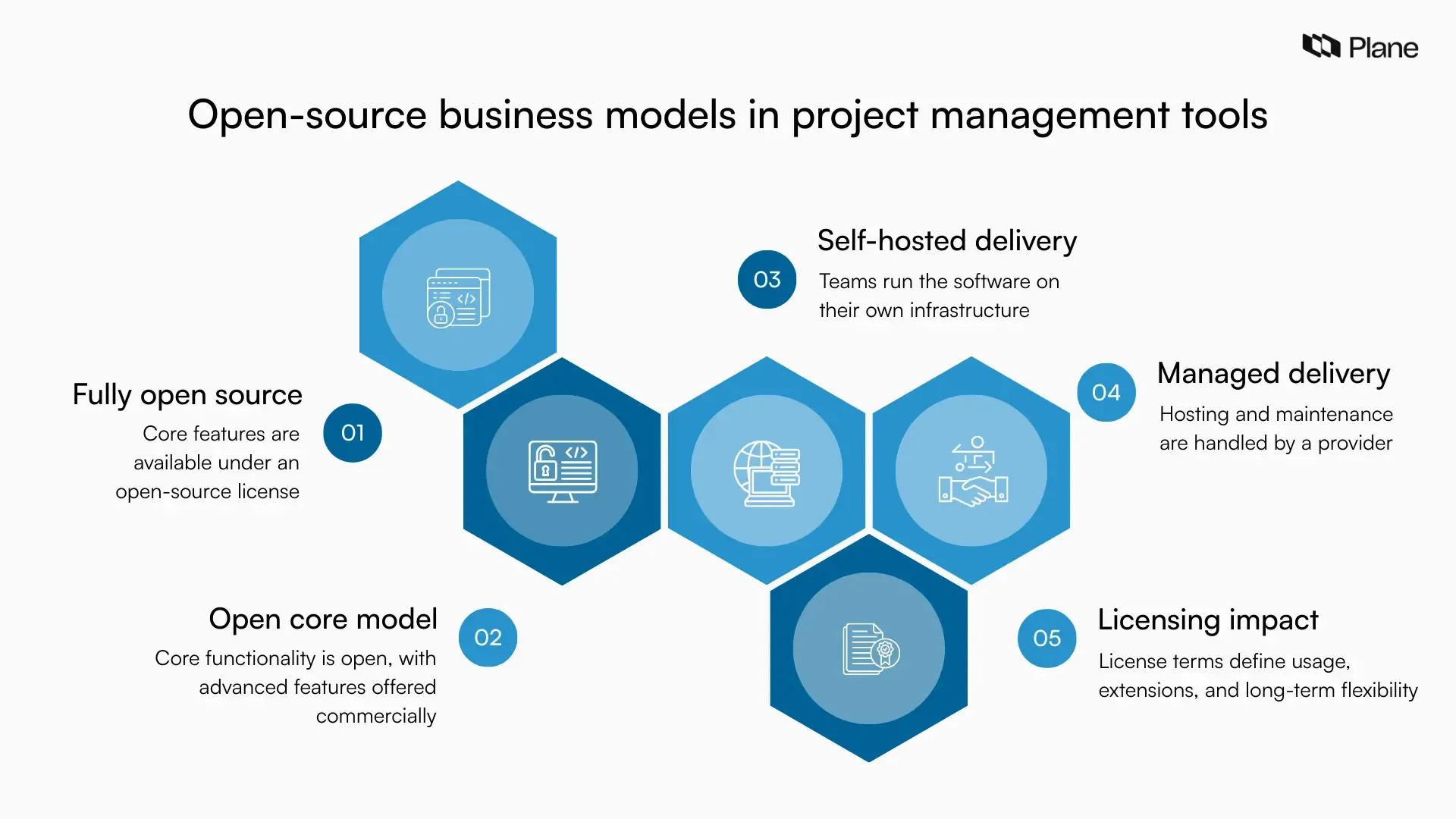
For a technical lead or enterprise architect, "open source" in this context rarely means "free of cost." Rather, it signifies an Open Core model. While the engine and core modeling tools are often available under licenses like Apache 2.0 or BSL (Business Source License), the "wild" deployment usually involves enterprise-grade extensions for monitoring, history audit logs, and advanced security features.
Leading Open Source BPM Platforms in the Wild
To understand how these systems function in production, one must look at the specific players that have survived and thrived in the enterprise ecosystem.
Camunda (Camunda 8 and 7)
Camunda has become the de facto standard for developer-friendly process orchestration. In the wild, Camunda 8 utilizes a cloud-native engine called Zeebe, which is designed to scale horizontally and handle the immense throughput required by modern web-scale applications. Unlike traditional engines that rely on a relational database (which can become a bottleneck), Zeebe uses a distributed log-based architecture. This allows organizations to orchestrate processes that involve thousands of microservices per second.
Flowable
Flowable, born from a fork of Activiti, is frequently found in environments where high-performance Case Management (CMMN) and Decision Management (DMN) are as critical as standard BPMN workflows. Flowable is prized for its lightweight footprint and its ability to be embedded directly into Java applications. In the wild, it is often the choice for financial services where complex, document-heavy processes require strict adherence to regulatory standards and auditability.
Bonita (Bonitasoft)
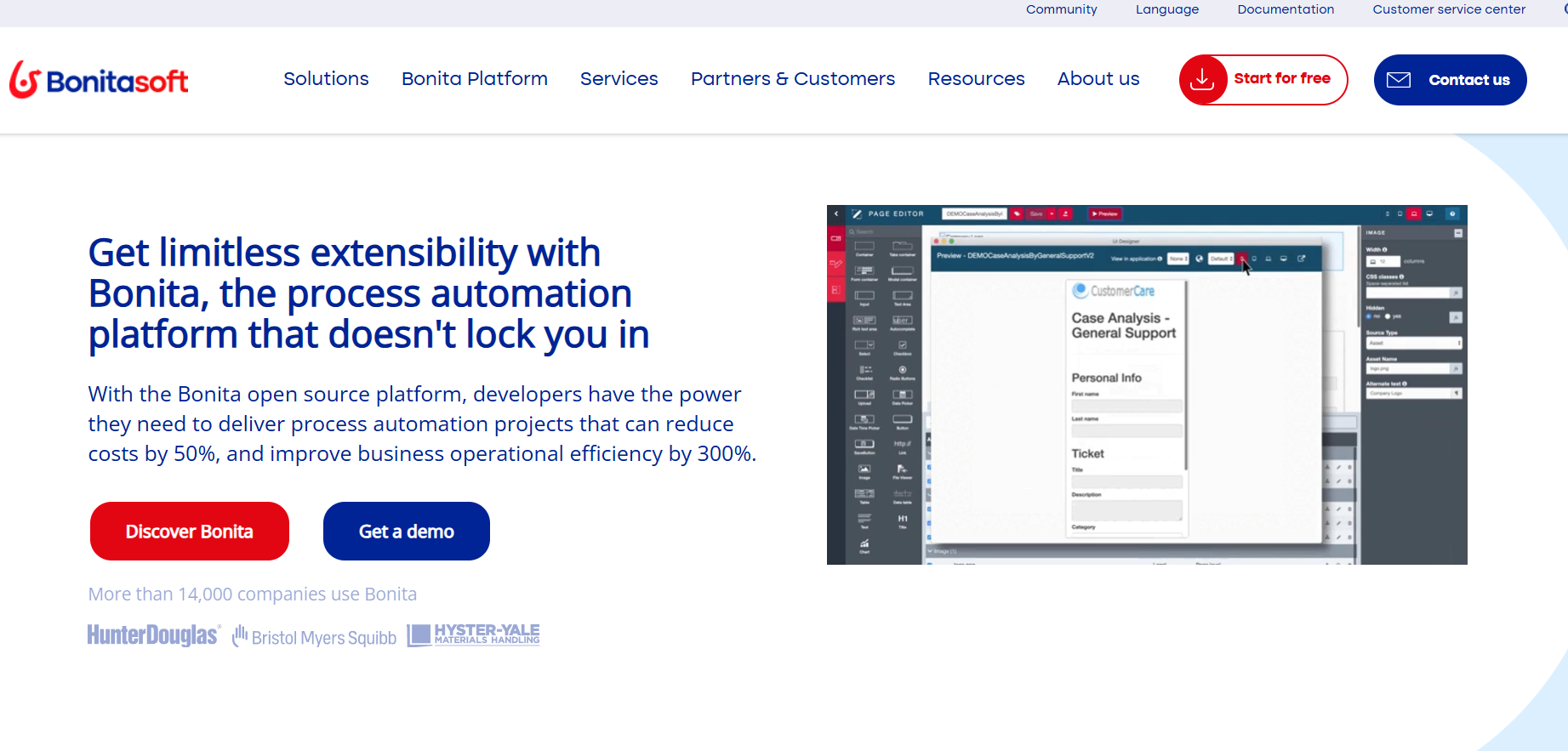
Bonita stands out by offering a stronger "low-code" bridge than some of its more developer-centric counterparts. In the wild, it is used by organizations that want to empower business analysts to design interfaces and data models while still allowing professional developers to write custom connectors. Its strength lies in its integrated portal and its ability to manage the entire application lifecycle, from process modeling to end-user UI.
jBPM and KIE (Red Hat)
While part of the older guard, jBPM (and its association with the KIE group) remains a powerhouse in heavy industrial and governmental sectors. It is deeply integrated with the Drools rule engine, making it an excellent choice for processes that are heavily dependent on complex business rules and logic-heavy decision trees.
Architectural Patterns for Real-World Deployment
Implementing open source BPM in the wild requires moving beyond the "Hello World" workflow. Successful organizations follow specific architectural patterns to ensure stability and scalability.
1. The Headless Orchestrator
In this pattern, the BPM engine has no UI of its own. It exposes a REST or gRPC API. The organization builds its own custom front-ends (using React, Vue, or Angular) that communicate with the engine. This allows for a seamless user experience that matches the company’s branding and functional requirements, avoiding the clunky "inbox" feel of legacy BPM portals.
2. External Task Workers
Instead of the engine "pushing" work to a service (which can lead to timeouts and connection issues), the External Task Pattern allows services to "pull" work when they have capacity. This decouples the engine from the services it orchestrates. If a microservice is down, the engine simply holds the task in the queue until the service recovers. This is a foundational principle for resilience in the wild.
3. Microservices Orchestration vs. Choreography
A common debate in the wild is whether to use orchestration (a central engine tells services what to do) or choreography (services react to events). Most mature 2026 architectures use a hybrid approach. The BPM engine orchestrates the "happy path" and complex error-handling logic, while event-driven choreography handles simple, decoupled updates.
Technical Requirements and Standards
To deploy these systems effectively, a firm grasp of industry standards is mandatory. Open source BPM thrives because it adheres to international specifications managed by the Object Management Group (OMG).
- BPMN 2.0 (Business Process Model and Notation): The universal language for defining process flows. It ensures that the XML generated by a modeler in 2026 can be executed by any compliant engine.
- DMN 1.x (Decision Model and Notation): Used for managing business rules. In the wild, separating rules from the process flow allows for easier updates to logic (e.g., changing a credit score threshold) without re-deploying the entire process.
- CMMN (Case Management Model and Notation): Vital for "unstructured" processes, such as a police investigation or a medical diagnosis, where the sequence of events isn't strictly linear but depends on human judgment.
Comparison of Top Open Source BPM Engines (2026 Status)
| Feature | Camunda 8 | Flowable | Bonita | jBPM |
|---|---|---|---|---|
| Primary Focus | Cloud-native orchestration | Flexibility & Case Management | Low-code/Pro-code bridge | Rule-heavy processes |
| Engine Architecture | Zeebe (Log-stream based) | Relational (PVM-based) | Relational | Relational (KIE) |
| Deployment Mode | SaaS or Self-managed (K8s) | Embedded or Standalone | Standalone / Cluster | Embedded or Server |
| BPMN 2.0 Support | Full | Full | Full | Full |
| DMN Integration | Native | Native | Native | Deep Integration (Drools) |
| Best For | High-scale microservices | Financial/Regulated apps | Rapid App Development | Legacy/Industrial systems |
Challenges of Operating BPM "In the Wild"
Despite the benefits, there are significant hurdles that teams face when running open-source BPM in production.
Versioning and Long-Running Processes
Unlike a standard stateless API, a BPM process can live for months. If you deploy a new version of a process, what happens to the 5,000 instances currently running on the old version? Managing "process migration" is one of the most complex tasks in the wild. Teams must decide whether to let old instances finish on the old logic or write complex migration scripts to move them to the new schema.
Data Management and Bloat
BPM engines store every state change, variable update, and user action for audit purposes. In high-volume environments, the history database can grow to terabytes within months. Without a robust data retention and archiving strategy, the engine's performance will eventually degrade. In 2026, most teams use asynchronous exporters to move history data into ElasticSearch or Snowflake for analysis, keeping the primary execution database lean.
The "Shadow BPM" Trap
Open source allows for quick starts, but it can lead to "Shadow BPM," where different departments spin up their own engines without centralized governance. This leads to fragmented data and inconsistent process standards. Establishing a Center of Excellence (CoE) is critical for maintaining naming conventions, reusable connector libraries, and security protocols across the enterprise.
Frequently Asked Questions
Is open source BPM truly "free" for enterprise use?
While the core engine code is often open source (e.g., under Apache 2.0), most enterprises require features found in the commercial versions, such as advanced monitoring (Camunda Optimize), enterprise security plugins, and 24/7 support. You save on "lock-in" and seat licenses, but you should budget for enterprise subscriptions and specialized engineering talent.
Can I use open source BPM for low-latency, real-time applications?
Standard BPM engines are designed for "stateful" processes, which involve database writes and are generally not suitable for sub-millisecond response times. However, engines like Camunda 8 (Zeebe) are built for high throughput. For true real-time requirements, a process engine is usually used to orchestrate the "after-effects" of a real-time event rather than being in the critical path of the initial transaction.
How does BPM differ from RPA (Robotic Process Automation)?
BPM is about orchestrating the overall flow of work between systems and people. RPA is about "task automation"—mimicking a human clicking buttons on a legacy screen. In the wild, BPM and RPA are often used together: the BPM engine acts as the "brain," and the RPA bots act as the "hands" that interact with systems that don't have APIs.
Which programming languages are best for open source BPM?
Java remains the dominant language because most leading engines (Camunda, Flowable, jBPM) are written in Java. However, with the rise of gRPC and REST-based orchestration, it is now common to write "worker" services in Node.js, Python, C#, or Go, allowing polyglot teams to participate in process automation.
Final Recommendation: How to Get Started
To successfully deploy open source business process management in the wild, avoid the temptation to automate your most complex, messy process first. Start with a high-value, low-complexity process that involves at least two different systems. Focus on establishing your CI/CD pipeline for process models and ensuring your team understands the "External Task" pattern.
By the end of 2026, the competitive advantage in process automation will not come from the software itself, but from the agility of the models you build. Use BPMN 2.0 as a living documentation tool that bridges the gap between your business stakeholders and your technical implementation.
Image Gallery