Social Work Masters Programs in CT: Accredited MSW Options and Career Pathways
Connecticut offers multiple accredited Master of Social Work (MSW) programs designed to prepare students for clinical practice, community organizing, health care social work, and school-based clinical roles. Offered through public univ...
Connecticut offers multiple accredited Master of Social Work (MSW) programs designed to prepare students for clinical practice, community organizing, health care social work, and school-based clinical roles. Offered through public universities like the University of Connecticut and private institutions like Sacred Heart University, these CSWE-accredited degree options provide flexible full-time, part-time, online, and advanced standing pathways to satisfy state licensing standards.
Contents
Navigating MSW Degrees in Connecticut
Pursuing a Master of Social Work (MSW) in Connecticut opens clear professional pathways toward becoming a Licensed Master Social Worker (LMSW) or Licensed Clinical Social Worker (LCSW). The state’s healthcare networks, community mental health centers, school districts, and correctional systems rely heavily on graduate-trained social workers to deliver clinical therapies, manage casework, and lead human services organizations.
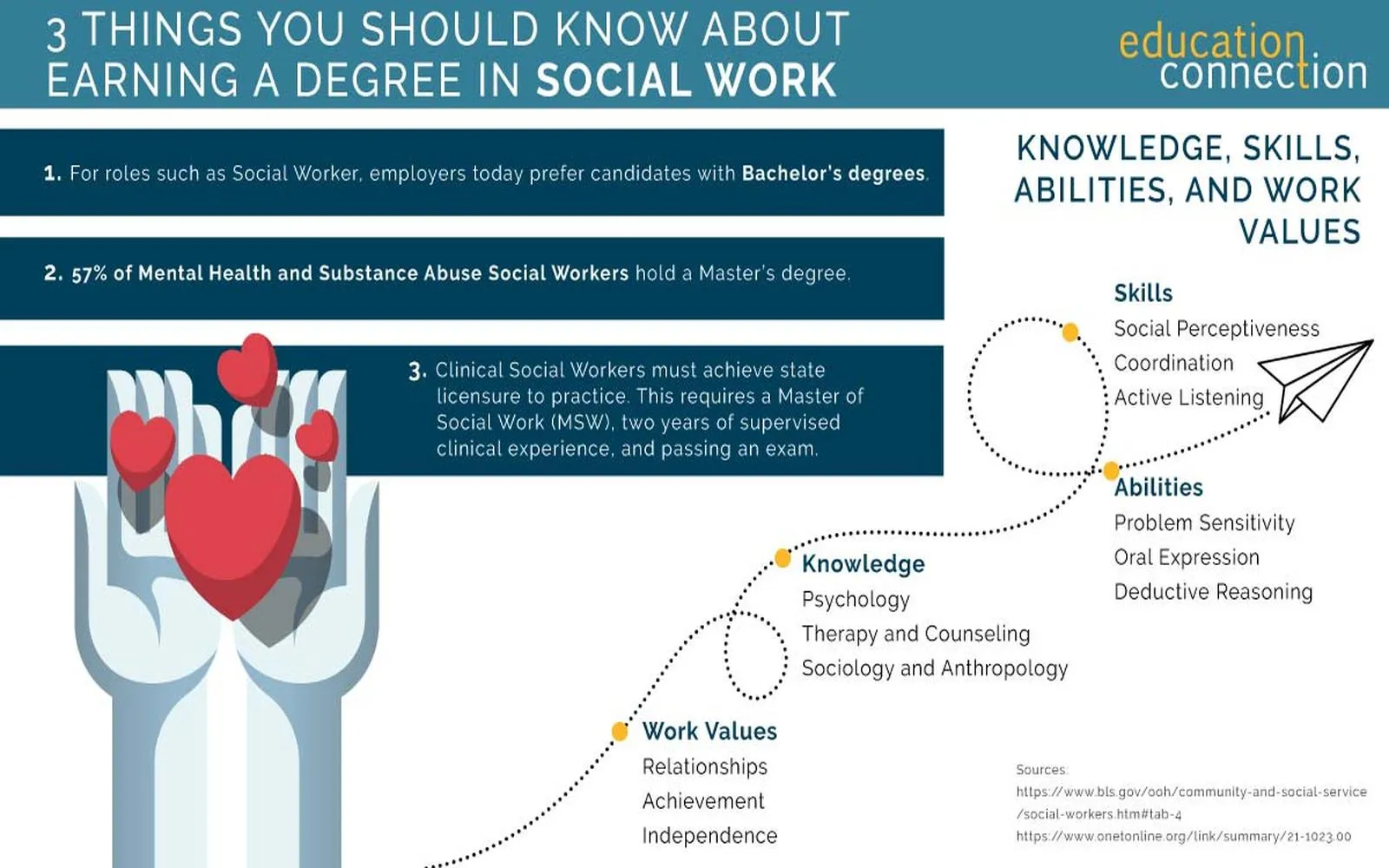
To practice legally at a clinical level in Connecticut, candidates must hold a degree from a program accredited by the Council on Social Work Education (CSWE). Accreditation ensures that the curriculum meets rigorous national standards for competency-based education, covering foundational areas such as human behavior, social welfare policy, field education, and clinical diagnostic techniques.
When choosing a graduate school in Connecticut, prospective students must weigh key factors including programmatic concentration (e.g., micro-clinical practice vs. macro-community leadership), campus setting, delivery format (on-campus, hybrid, or online), field practicum placement support, and total tuition costs.
State Licensing Framework: LMSW vs. LCSW in Connecticut
Understanding Connecticut's credentialing system is essential when selecting a graduate program. The Connecticut Department of Public Health (DPH) oversees professional licensure for social workers under state statutory guidelines.
- MSW Graduation (CSWE Accredited)
- Pass ASWB Master's Exam – Licensed Master Social Worker (LMSW)
- 3,000 Hours Supervised Experience (100+ Hours Direct LCSW Supervision)
- Pass ASWB Clinical Exam – Licensed Clinical Social Worker (LCSW)
Licensed Master Social Worker (LMSW)
The LMSW credential is the initial entry point for graduate social workers in Connecticut. To qualify, applicants must:
- Complete a CSWE-accredited Master of Social Work degree.
- Submit an application and fee to the Connecticut Department of Public Health.
- Pass the Association of Social Work Boards (ASWB) Master's level examination.
LMSWs can provide clinical social work services, provided they operate under the professional supervision of an LCSW, licensed psychologist, or board-certified psychiatrist.
Licensed Clinical Social Worker (LCSW)
The LCSW credential permits independent clinical practice, private practice ownership, and third-party insurance billing. Candidates must fulfill the following:
- Maintain an active LMSW license or fulfill master's degree requirements.
- Accumulate at least 3,000 hours of post-MSW supervised clinical social work experience over no fewer than 104 weeks.
- Complete at least 100 hours of direct, face-to-face supervision by a licensed clinical social worker.
- Pass the ASWB Clinical level examination.
Top CSWE-Accredited MSW Programs in Connecticut
Connecticut hosts several prominent CSWE-accredited institutions offering traditional, advanced standing, and specialized MSW tracks.
1. University of Connecticut (UConn) – School of Social Work
Located primarily at the Hartford campus, the UConn School of Social Work is Connecticut's flagship public MSW provider. Known for high research activity and extensive community partnerships, UConn offers both micro (Individuals, Families, and Groups) and macro (Community Organization, Policy Practice, and Administration) concentrations.
- Program Formats: Full-time (2 years), Part-time (3–4 years), and Advanced Standing (1 year for BSW graduates).
- Specializations: Mental Health and Substance Use, Health, Individuals, Families and Groups, Policy Practice, Community Organizing.
- Key Advantage: Lower in-state tuition costs combined with extensive urban field placement networks throughout the Greater Hartford region.
2. Southern Connecticut State University (SCSU)
Situated in New Haven, Southern Connecticut State University delivers an accessible, clinical-focused MSW degree through its Department of Social Work. SCSU emphasizes social justice, urban community health, and multicultural clinical practice.
- Program Formats: Full-time, Part-time evening, and Advanced Standing options.
- Specializations: Clinical Practice, Children and Families, Substance Use Disorder Services.
- Key Advantage: Strong links to New Haven county hospitals, public schools, and community mental health clinics, providing direct access to diverse field placements.
3. Sacred Heart University (SHU)
Sacred Heart University in Fairfield offers flexible MSW programs in both traditional on-campus and fully online formats. The university focuses on specialized clinical practice and integrated health systems.
- Program Formats: On-campus hybrid, 100% Online MSW, and Advanced Standing tracks.
- Specializations: Direct Clinical Practice, Direct Community Practice.
- Key Advantage: The online MSW format accommodates working professionals across New England, featuring asynchronous coursework paired with regional field placements.
4. Quinnipiac University
Located in Hamden, Quinnipiac University offers an MSW program designed to integrate interprofessional health education. Students collaborate closely with peers in medicine, nursing, and health sciences.
- Program Formats: On-campus full-time and part-time tracks.
- Specializations: Health and Healthcare Social Work, Mental Health and Substance Use.
- Key Advantage: Access to state-of-the-art simulation labs and collaborative clinical training environments.
5. Fairfield University
Fairfield University's MSW program emphasizes holistic, trauma-informed care and community-engaged practice grounded in social justice principles.
- Program Formats: Full-time, part-time, and advanced standing pathways.
- Specializations: Advanced Clinical Social Work with individuals, families, and trauma-informed care settings.
- Key Advantage: Small class sizes, personal faculty mentorship, and deep community connections throughout Fairfield County and New York border communities.
Comparison of Connecticut MSW Programs
The following table compares accredited MSW options across Connecticut based on program structure, location, delivery format, and estimated credit requirements.
| Institution | Location | Delivery Format | Traditional Credits | Advanced Standing Credits | Primary Focus Areas |
|---|---|---|---|---|---|
| University of Connecticut | Hartford, CT | On-Campus / Hybrid | 60 Credits | 35 Credits | Clinical Practice, Policy Practice, Community Organizing |
| Southern Connecticut State University | New Haven, CT | On-Campus / Evening | 60 Credits | 30 Credits | Clinical Social Work, Children & Families, Mental Health |
| Sacred Heart University | Fairfield, CT / Online | Hybrid & 100% Online | 60 Credits | 30 Credits | Direct Clinical Practice, Integrated Healthcare |
| Quinnipiac University | Hamden, CT | On-Campus | 60 Credits | 30 Credits | Interprofessional Healthcare, Mental Health & Substance Use |
| Fairfield University | Fairfield, CT | On-Campus / Hybrid | 60 Credits | 30 Credits | Trauma-Informed Clinical Practice, Health & Wellness |
Program Formats and Entry Pathways
Choosing the right MSW track depends heavily on academic background and schedule flexibility.
Applicants for MSW:
- Traditional Track (60 Credits / 2-4 Years)
- For applicants with any bachelor's degree
- Advanced Standing Track (30-35 Credits / 1 Year)
- For applicants with a CSWE-accredited BSW (within 5-6 yrs)
Traditional MSW Track (60 Credits)
- Target Audience: Candidates holding a bachelor’s degree in any discipline (e.g., psychology, sociology, English, business).
- Duration: Typically 2 years full-time or 3–4 years part-time.
- Structure: The first year covers generalist foundation courses (human behavior, policy, foundational research, basic field practicum). The second year transitions into specialized clinical or macro coursework and advanced field work.
Advanced Standing MSW Track (30–35 Credits)
- Target Audience: Students who have earned a Bachelor of Social Work (BSW) from a CSWE-accredited institution, generally within the past 5 to 6 years, with a competitive GPA (often 3.0 or higher).
- Duration: 1 year full-time or 2 years part-time.
- Structure: Bypasses generalist foundation classes and moves directly into advanced specialization coursework and field placements, saving significant time and tuition costs.
Online vs. Hybrid Formats
- Online Programs: Institutions like Sacred Heart University provide online coursework that allows students to complete lectures remotely while fulfilling mandatory field practicum hours at approved local healthcare or community agencies in Connecticut.
- Hybrid & Evening Options: SCSU and UConn offer evening classes and blended meeting schedules to serve working adults balancing employment with clinical field placement requirements.
Field Education and Practicum Requirements in CT
Field education is the signature pedagogy of social work education. CSWE accreditation rules require MSW candidates to complete real-world clinical and administrative hours under qualified supervision.
Hour Requirements
- Traditional MSW Programs: Require a minimum of 900 to 1,000 total field internship hours split across two academic years (typically 400–450 foundation hours and 500–600 advanced hours).
- Advanced Standing MSW Programs: Require approximately 500 to 600 advanced field hours completed over one academic year.
Local Placement Settings in Connecticut
Connecticut social work students gain practical experience in diverse settings:
- Hospitals & Integrated Health Systems: Yale New Haven Health, Hartford HealthCare, Connecticut Children's Medical Center, and Trinity Health Of New England.
- Mental Health & Behavioral Health Clinics: Community Mental Health Centers (CMHCs), Cornell Scott-Hill Health Center, Wheeler Clinic, and Rushford.
- School Systems: Public school districts across Bridgeport, Hartford, Waterbury, New Haven, and Stamford providing school social work and crisis intervention.
- Government & Advocacy Entities: Connecticut Department of Children and Families (DCF), Department of Mental Health and Addiction Services (DMHAS), and state legislative advocacy non-profits.
Tuition, Financial Aid, and Loan Forgiveness Programs
Funding a Master of Social Work degree involves reviewing tuition costs, institutional scholarships, federal student loans, and state or federal loan repayment assistance programs.
Estimated Tuition Costs
- Public Universities (In-State): In-state tuition at UConn or SCSU ranges approximately between $24,000 and $36,000 total for a full 60-credit degree.
- Public Universities (Out-of-State): Out-of-state tuition can exceed $55,000 for the full program.
- Private Universities: Private institutions (Sacred Heart, Quinnipiac, Fairfield) generally range from $50,000 to $70,000 in total tuition, though institutional grants and graduate assistantships can reduce net costs.
Loan Forgiveness & Repayment Assistance
Social workers in Connecticut frequently qualify for programs designed to relieve student debt:
- Public Service Loan Forgiveness (PSLF): Forgives remaining Direct Loan balances after 120 qualifying monthly payments under an income-driven repayment plan while working full-time for a qualifying 501(c)(3) non-profit or government agency.
- National Health Service Corps (NHSC) Loan Repayment Program: Provides up to $50,000 in loan repayment in exchange for two years of full-time clinical service at approved Health Professional Shortage Area (HPSA) sites in Connecticut.
- Connecticut State Loan Repayment Initiatives: Periodic state-funded grant initiatives target licensed mental health professionals working in underserved urban and rural communities across Connecticut.
Admission Requirements and Application Strategy
Securing admission to a graduate social work program in Connecticut requires a structured application process highlighting relevant experience and commitment to human services.
Core Admission Prerequisites
- Bachelor’s Degree: An earned baccalaureate degree from an accredited college or university.
- Academic GPA: Most programs require an undergraduate GPA of at least 3.0 on a 4.0 scale, though holistic reviews may consider professional experience for applicants with lower GPAs.
- Prerequisite Coursework: A strong foundation in liberal arts, including introductory psychology, sociology, statistics, or human biology.
- Statement of Purpose: A personal essay demonstrating an understanding of social work values, professional ethics, self-awareness, and career objectives.
- Letters of Recommendation: Typically 2–3 letters from academic professors, clinical supervisors, or managers who can vouch for the applicant's academic capacity and interpersonal fitness for practice.
- Resume / CV: Highlighting volunteer work, human services employment, internships, or advocacy experience.
- GRE Scores: Most Connecticut MSW programs do not require standard GRE scores for admission.
Frequently Asked Questions
Do I need a Bachelor of Social Work (BSW) to apply to an MSW program in Connecticut?
No. You can enter a traditional 60-credit MSW program with a bachelor’s degree in any major, such as psychology, sociology, criminal justice, or business. However, if you already hold a BSW from a CSWE-accredited program, you may qualify for Advanced Standing, allowing you to earn your MSW in just 30 to 35 credits.
Can I complete an MSW degree entirely online in Connecticut?
Yes. Sacred Heart University offers a fully online CSWE-accredited MSW program. Additionally, public and private universities offer hybrid options with blended online lectures and weekend or evening campus meetings. All online programs require in-person field placement hours completed at physical healthcare or community service sites within Connecticut.
How long does it take to become an LCSW in Connecticut after earning an MSW?
It typically takes at least two years post-graduation. You must accumulate 3,000 hours of clinical social work experience, including 100 hours of direct LCSW supervision, over a minimum of 104 weeks. Once these hours are logged and verified by the Connecticut Department of Public Health, you must pass the ASWB Clinical Examination.
What is the difference between macro and micro social work concentrations?
Micro social work focuses on direct clinical practice with individuals, couples, families, and small groups, preparing students for psychotherapy and clinical casework. Macro social work emphasizes community organization, social welfare policy analysis, program evaluation, and executive leadership in non-profit and governmental settings.
Are Connecticut MSW degrees recognized in other states?
Yes. Because all major Connecticut MSW programs are accredited by the CSWE, your degree is recognized nationwide. If you move out of state, you can transfer your educational credentials to apply for social work licensure in other jurisdictions, though you must meet the target state's specific exam and supervised practice rules.
Practical Recommendations and Next Actions
- Verify CSWE Accreditation: Ensure every prospective program maintains active CSWE accreditation to guarantee eligibility for LMSW and LCSW licensing in Connecticut.
- Determine Your Specialized Focus: Decide whether your career goal centers on direct psychotherapy and clinical health (Micro) or administration, policy, and community advocacy (Macro).
- Evaluate Schedule & Location: Choose between full-time, part-time, online, or hybrid options depending on your employment commitments and commute feasibility to campus centers in Hartford, New Haven, or Fairfield.
- Prepare Application Materials Early: Request official college transcripts, secure strong recommendations from clinical or academic supervisors, and draft a reflective personal statement focused on social justice and service ethics.
- Connect with University Placement Directors: Speak directly with field education directors at target institutions to understand how local field placements are arranged in your county or city.
Image Gallery