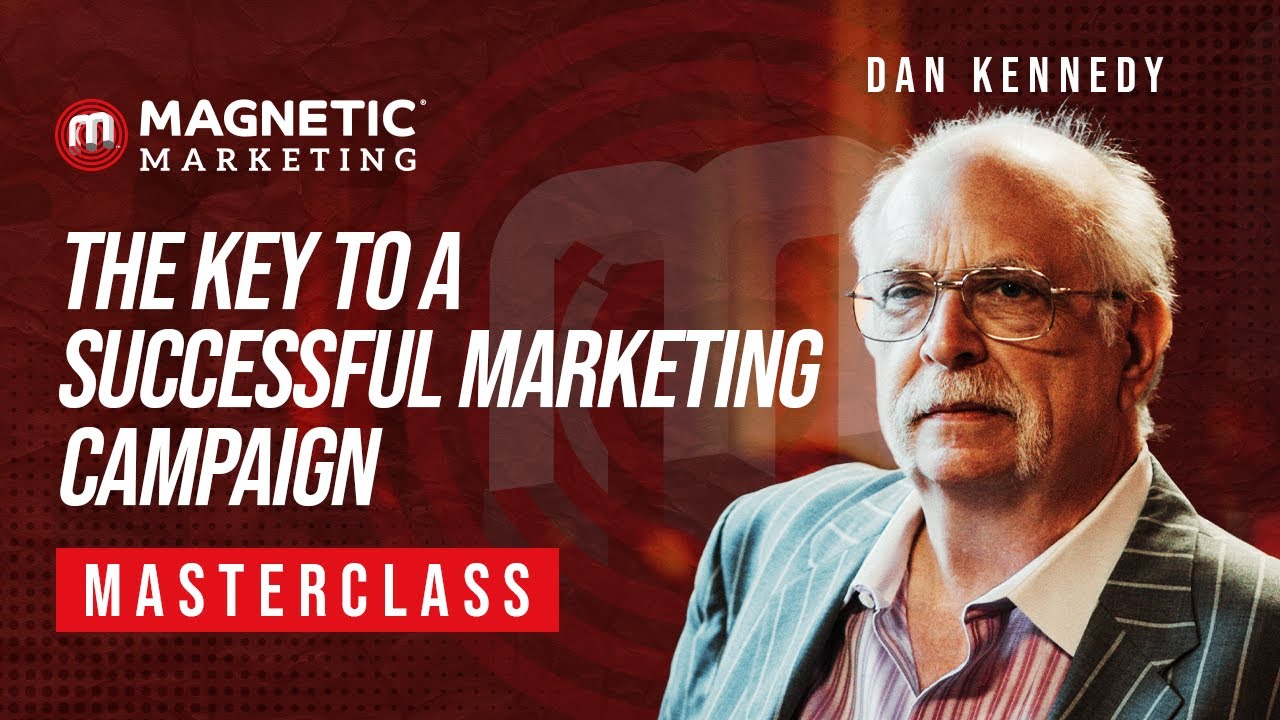
Why Magnetic Marketing by Dan Kennedy Matters in 2026
Magnetic Marketing matters because it provides a reliable, psychological framework for transforming a business from a "cold-calling" hunter into a "welcome guest" that attracts high-value clients. By prioritizing direct-response princi...
Magnetic Marketing matters because it provides a reliable, psychological framework for transforming a business from a "cold-calling" hunter into a "welcome guest" that attracts high-value clients. By prioritizing direct-response principles over vague branding, it ensures every marketing dollar generates measurable leads, sales, and long-term customer retention.
Contents
The Enduring Relevance of Magnetic Marketing
In the landscape of 2026, where artificial intelligence can generate endless streams of content and digital noise is at an all-time high, the principles of Dan Kennedy’s Magnetic Marketing are more critical than ever. Magnetic Marketing is not merely a set of tactics; it is a foundational business philosophy. It centers on the idea of Attraction Marketing—positioning oneself as an authority so that prospects seek you out, rather than you chasing them.
For decades, small to medium-sized enterprises (SMEs) have struggled with "checkbook marketing," where they mimic the "image advertising" of giant corporations like Nike or Coca-Cola. Dan Kennedy argues that this is a fatal mistake. Large corporations have "dumb" money to spend on brand awareness; small businesses need "smart" money that triggers an immediate, trackable response. As we navigate the mid-2020s, the ability to bypass the "noise" and speak directly to a prospect’s pain points remains the only way to maintain healthy margins.
The Core Philosophy: From Manual Labor to Systems
The primary reason Magnetic Marketing matters is its shift from manual prospecting to automated systems. Kennedy famously taught that "the man who can spend the most to acquire a customer wins." However, you cannot spend more to acquire a customer if your marketing doesn't work.
Magnetic Marketing replaces the "hope and pray" method with a Direct Response system. In this model, you do not ask for a sale immediately. Instead, you offer something of value—typically information—in exchange for the prospect’s contact information. This creates a "magnetic" pull. Once a prospect enters your world, you use a multi-step follow-up sequence to build trust and authority before the transaction even occurs.
The Power of the "Unique Selling Proposition" (USP)
A central pillar of the Kennedy framework is the USP. In a crowded 2026 marketplace, being "good" or "reliable" is a commodity. Magnetic Marketing forces business owners to answer the difficult question: "Why should I do business with you versus every other option available to me, including doing nothing?"
Without a strong USP, a business is forced to compete on price. Magnetic Marketing matters because it provides the tools to move away from price-wars and toward Value-Based Positioning. By focusing on a specific niche and solving a specific problem, you become a "category of one."
The Marketing Triangle: Message, Market, and Media
To understand why this system remains the gold standard, one must examine the "Marketing Triangle." Kennedy posits that failure in marketing usually stems from a misalignment of these three elements.
- The Market: This is the "Who." In 2026, data analytics allow for incredible precision, but the principle remains the same: you must target a hungry crowd. Magnetic Marketing emphasizes identifying the "Ideal Customer Profile" (ICP) rather than trying to appeal to everyone.
- The Message: This is the "What." Your message must be "magnetic." It should call out the prospect's fears, frustrations, dreams, and desires. It uses long-form copy and storytelling to bypass the logical brain and speak to the emotional triggers that drive buying decisions.
- The Media: This is the "How." Whether it is direct mail, email, social media, or AI-driven chatbots, the media is simply the vehicle. Kennedy’s brilliance was in teaching that the media is the least important part of the triangle; if the Market and Message are wrong, the most expensive media in the world won't save you.
Why Direct Response Outperforms Brand Advertising
Most modern marketing agencies focus on "clicks," "impressions," and "engagement." Dan Kennedy dismissed these as "vanity metrics." Magnetic Marketing matters because it focuses on Return on Investment (ROI).
Direct response marketing is designed to evoke a specific action: call this number, click this link, or mail this coupon. This allows a business owner to track exactly which advertisements are profitable and which are wasting money. In an era of tightening budgets and increased competition, the "No B.S." approach to accountability in advertising is the difference between bankruptcy and scaling.
The Psychology of the "Welcome Guest"
Kennedy often compared the average salesperson to a "nuisance pest." Someone who interrupts your dinner with a cold call or litters your inbox with unsolicited spam. Magnetic Marketing flips this dynamic. By using education-based marketing—white papers, webinars, books, or "Shock and Awe" packages—the business owner becomes a consultative authority. When the prospect finally speaks to the business, they are already predisposed to buy. This reduces friction in the sales process and allows for higher price points.
Implementation: The Step-by-Step Magnetic System
Implementing Magnetic Marketing in 2026 involves a specific sequence of actions designed to build a "lead generation machine."
- Step 1: Lead Generation Magnet. Create a high-value piece of information (a "Lead Magnet") that solves a small but significant problem for your target market.
- Step 2: Two-Step Lead Generation. Use an ad to offer the Lead Magnet. This filters out the "looky-loos" from the serious prospects.
- Step 3: The Follow-Up Sequence. Once someone requests the information, they are placed in a "drip" sequence. This is not just one email; it is a multi-channel approach (email, physical mail, and retargeting ads) that continues until the prospect buys or "dies" (unsubscribes).
- Step 4: The Irresistible Offer. Unlike a standard pitch, an irresistible offer includes bonuses, guarantees, and scarcity that make it "stupid" for the prospect to say no.
Comparison: Traditional Marketing vs. Magnetic Marketing
The following table illustrates the stark differences between conventional "Brand" marketing and the Kennedy-style "Magnetic" approach.
| Feature | Traditional Brand Marketing | Magnetic Marketing (Direct Response) |
|---|---|---|
| Primary Goal | Brand Awareness / "Mindshare" | Lead Generation and Sales |
| Measurement | Impressions, Likes, Reach | ROI, Cost Per Lead, Lifetime Value |
| Targeting | Broad Demographic (e.g., 18-45) | Hyper-Niche (e.g., Left-handed Golfers) |
| Call to Action | Vague ("Visit our website") | Specific ("Download this free report now") |
| Follow-Up | Non-existent or reactive | Automated and proactive multi-step |
| Cost Basis | Expense / Overhead | Investment / Profit Center |
| Status | Nuisance / Interruption | Welcome Guest / Authority |
Magnetic Marketing in the Digital and AI Age
As we operate in 2026, some might wonder if a system rooted in direct mail and "No B.S." newsletters is still relevant. The answer lies in the permanence of human psychology. While the media has evolved to include AI-personalized videos and algorithmic social feeds, the human brain has not changed in thousands of years.
Kennedy’s principles of scarcity, urgency, social proof, and authority are the "operating system" of persuasion. AI can help you write copy faster, but Magnetic Marketing tells you what to write and why. In fact, the rise of low-quality, AI-generated "slop" has made high-quality, Kennedy-style direct response even more effective. Authentic, personality-driven marketing that takes a stand (another Kennedy hallmark) cuts through the sterile, robotic content that currently saturates the internet.
The "Shock and Awe" Package in 2026
One of the most famous Kennedy concepts is the "Shock and Awe" package—a physical box filled with books, testimonials, samples, and gifts sent to a high-value prospect. In a digital-first 2026, physical mail has actually become more effective because people receive fewer physical items. A well-crafted, physical package delivered via courier carries a level of "lumpy mail" prestige that a PDF link can never match. It signals to the prospect that you are a serious, established authority.
Common Mistakes When Applying Dan Kennedy’s Principles
Despite its power, many fail to see results with Magnetic Marketing because they "dabble" rather than fully commit.
- Giving Up Too Early: Most business owners stop their follow-up after one or two attempts. Kennedy suggests that the majority of sales happen between the 5th and 12th contact.
- Weak Offers: If your offer is just "10% off," it isn't magnetic. An irresistible offer should make the prospect feel like they are getting a 10-to-1 value.
- Being Too "Polite": Kennedy’s style was notoriously abrasive and direct. While you don't have to be "grumpy," you do have to be bold. Magnetic Marketing requires you to repel the wrong people so you can attract the right ones. If you try to please everyone, you please no one.
- Inconsistent Implementation: Magnetic Marketing is a system, not an event. It requires a "marketing calendar" that ensures leads are being generated and nurtured every single day without fail.
Frequently Asked Questions
Is Dan Kennedy’s Magnetic Marketing still relevant with today's AI technology?
Absolutely. AI is a tool for efficiency, but Magnetic Marketing is the strategy for effectiveness. AI can help you segment lists or draft initial copy, but the underlying psychology of the "Marketing Triangle" (Message, Market, Media) is what makes the AI-generated content actually convert into revenue.
What is the "Lead Magnet" concept in Magnetic Marketing?
A Lead Magnet is a specific piece of value offered to a prospect in exchange for their contact information. It is usually "educational" in nature (e.g., "The 7 Mistakes Homeowners Make When Hiring a Roofer"). It positions you as an expert and identifies who is currently interested in your service.
How does "Attraction Marketing" differ from "Inbound Marketing"?
While they are similar, Attraction Marketing (as taught by Kennedy) is more aggressive regarding direct response and authority positioning. Inbound marketing often focuses on "content for content's sake," whereas Attraction Marketing always has a specific, measurable goal of moving the prospect closer to a transaction.
Can Magnetic Marketing work for B2B companies?
It is often even more effective for B2B. Business-to-business sales involve higher price points and longer sales cycles. The "Shock and Awe" packages and multi-step follow-up sequences help build the necessary trust and professional authority required to close complex corporate deals.
Why does Dan Kennedy emphasize "Direct Mail" so much?
Kennedy advocates for direct mail because it has a 100% "open rate" (everyone at least looks at their mail over the trash can) and it allows for a physical connection that digital media lacks. In 2026, using direct mail as part of a multi-channel sequence is a high-level strategy to bypass cluttered digital inboxes.
Final Recommendation: Your Next Action
To leverage the power of Magnetic Marketing, start by identifying your Unique Selling Proposition. Look at your current marketing and ask if it is "Magnetic" (attracting leads with value) or "Generic" (begging for attention). Your immediate next step should be to create one "Lead Magnet" that addresses the single biggest fear or desire of your ideal client. Once that is in place, build a three-step follow-up sequence—via email or mail—to nurture those leads. Remember, in the words of Dan Kennedy, "Success is not a matter of luck; it is a matter of systems."
Image Gallery