What to Do If You Lose Your Auto Insurance Card: A Comprehensive Guide to Replacement
If you lose your auto insurance card, you can obtain a replacement immediately by logging into your provider’s mobile app or website to download a digital version. Most insurance companies also allow you to print a temporary card at ho...
If you lose your auto insurance card, you can obtain a replacement immediately by logging into your provider’s mobile app or website to download a digital version. Most insurance companies also allow you to print a temporary card at home or request a permanent physical copy via mail, which typically arrives within five to seven business days.
Contents
Losing your proof of insurance is a common inconvenience, but in 2026, the process of rectifying this issue is faster and more streamlined than ever before. Whether you misplaced your wallet, accidentally discarded the document during a vehicle cleaning, or simply realized the card in your glovebox has expired, regaining valid proof is a legal necessity for every driver. Operating a vehicle without proof of insurance can lead to significant fines, license suspension, or even vehicle impoundment, regardless of whether your policy is actually active.
Immediate Actions to Secure a Replacement Card
The moment you realize your insurance card is missing, your priority should be obtaining a digital substitute. In 2026, the vast majority of insurance carriers have integrated high-security mobile applications that serve as a primary hub for policy management. These apps usually feature a dedicated "ID Card" or "Proof of Insurance" button on the home screen.
To access this, you will need your login credentials. If you have not yet set up an online account, you will likely need your policy number—which can often be found on your monthly billing statements or the original policy declaration page—and your Social Security number or zip code to verify your identity. Once logged in, you can view a digital version of the card, which is legally recognized in nearly every jurisdiction.
If you prefer not to use a mobile app, the carrier’s web portal offers the same functionality. From a desktop or tablet, you can navigate to your account summary and locate the option to "Print ID Card" or "Email ID Card." Downloading the card as a PDF to your phone’s local storage is a recommended safety measure; this ensures you can access the document even in areas with poor cellular reception, such as remote highways or underground parking garages.
The Legality of Digital Proof of Insurance in 2026
As of 2026, electronic proof of insurance (ePOI) is an established legal standard across the United States and many other regions. Law enforcement officers are trained to accept digital cards displayed on smartphones or tablets during traffic stops. This transition was driven by the Electronic Transactions Act and subsequent state-level legislation that recognized the validity of digital documents in place of traditional paper.
However, it is important to understand the technical and legal nuances of using digital proof. When you present your phone to an officer, you are responsible for the device's functionality. If your battery is dead or your screen is severely cracked to the point of being unreadable, the officer may technically cite you for failure to provide proof of insurance. Furthermore, many insurance apps now include "Privacy Modes" for their digital cards. These modes allow you to display the insurance information while locking the rest of your phone’s functions, ensuring that an officer cannot accidentally or intentionally browse your personal data, photos, or messages while verifying your coverage.
Why You Should Still Keep a Physical Copy
Despite the ubiquity of digital cards, maintaining a physical copy in your vehicle remains a critical backup strategy. Technology is not infallible. Mobile devices can overheat, experience software glitches, or suffer from hardware failure at the most inopportune moments. In the event of a serious accident, your phone might be damaged or thrown out of reach, making it impossible for you—or an attending officer—to verify your insurance status.
A physical card also serves as a quick reference for other drivers if you are involved in a minor collision. Instead of handing over your unlocked phone to a stranger, you can simply allow them to photograph your paper card. Additionally, if you frequently lend your vehicle to friends or family members, a physical card kept in the glovebox ensures that any authorized driver has immediate access to the necessary documentation without needing access to your personal insurance account.
How to Contact Your Insurance Provider for a New Card
If digital options are unavailable to you, or if you simply prefer a professionally printed card from the carrier, you must contact your insurance agent or the company's customer service department. In 2026, most major carriers offer several communication channels:
- Telephone Support: Calling the 1-800 number on your insurance bill is the most direct way to request a mailed replacement. Be prepared to verify your identity through multi-factor authentication (MFA).
- Chatbots and Virtual Assistants: Many insurance websites now use advanced AI assistants that can process a replacement card request in seconds without the need to speak to a human representative.
- Local Agent Offices: If you work with a local independent agent, you can often walk into their office and have a replacement card printed on the spot. This is particularly useful if you need the card immediately for a DMV appointment.
When requesting a mailed card, confirm that your mailing address on file is current. If you have recently moved, you will need to update your policy address first, as the insurance card must reflect the location where the vehicle is primarily garaged to remain valid.
Understanding the Information on Your Insurance Card
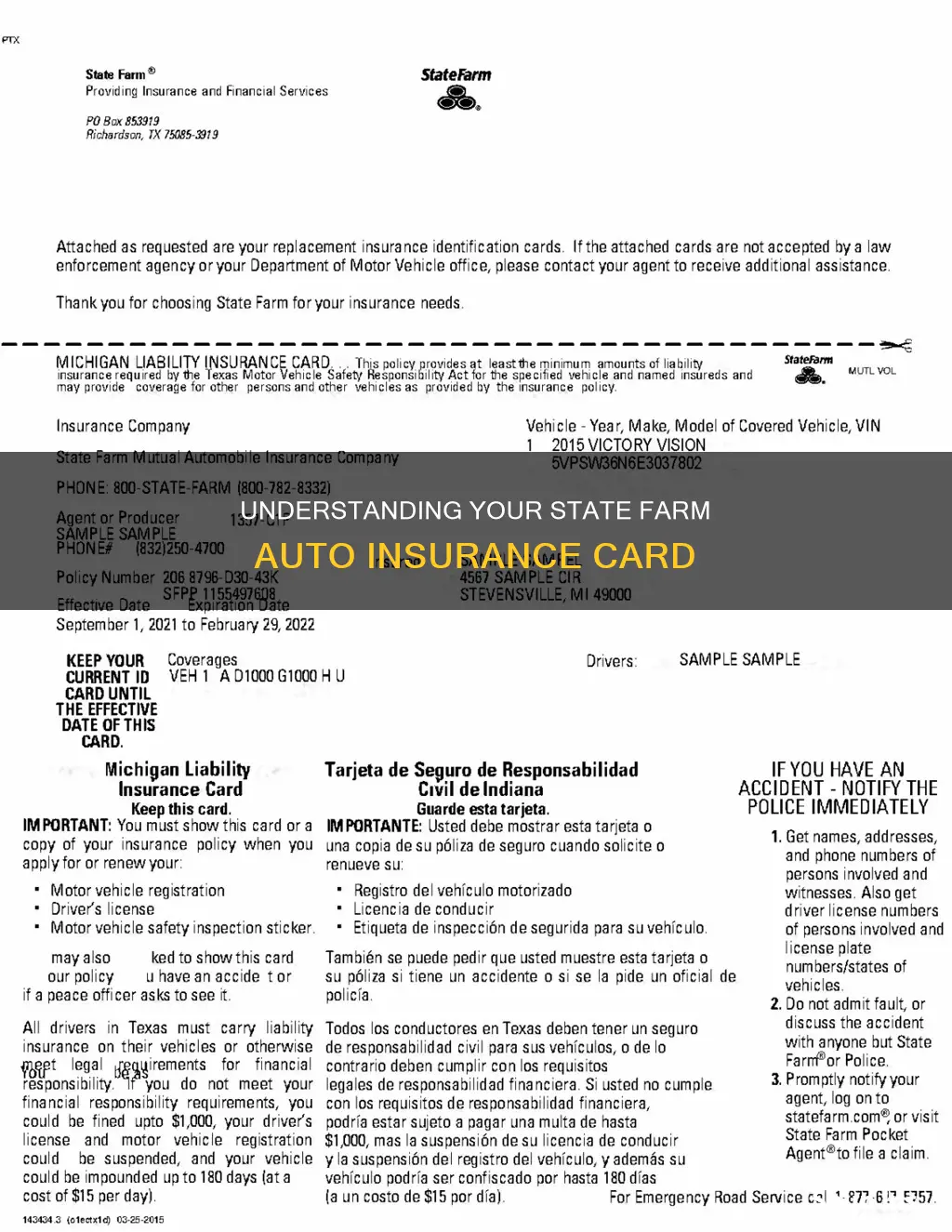
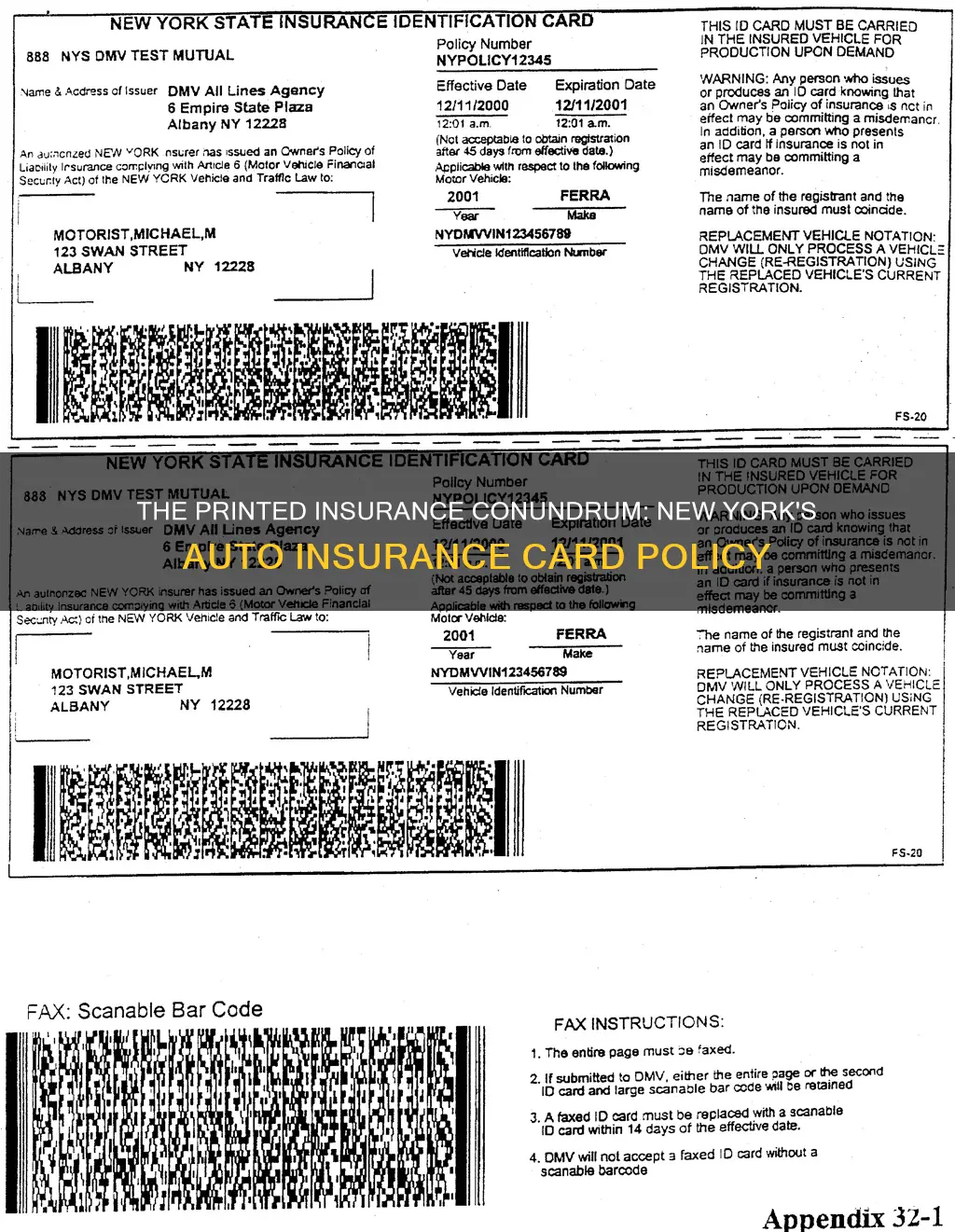
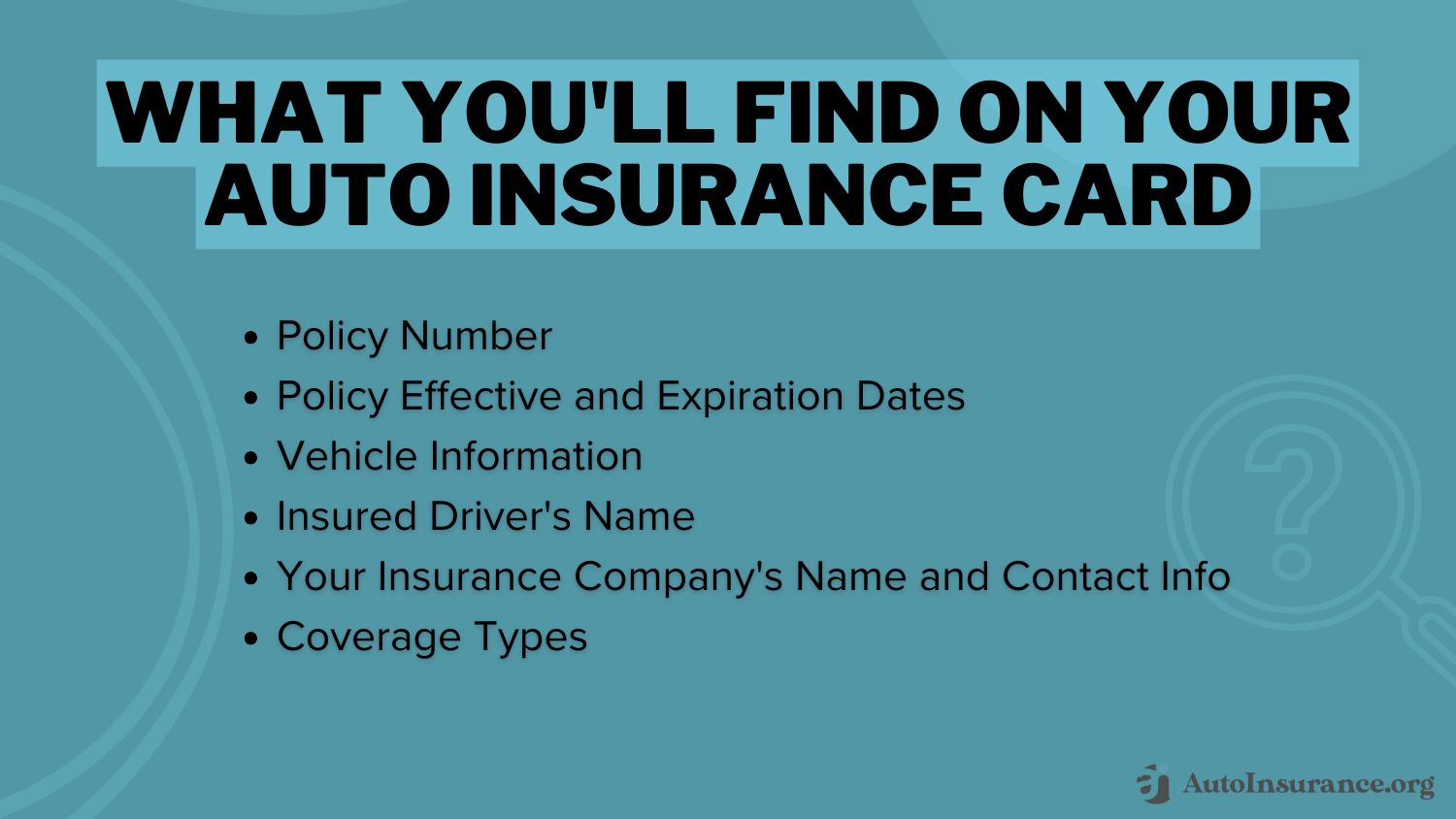
A standard auto insurance card contains specific data points required by state law. Understanding these fields can help you verify that your replacement card is accurate and up to date.
| Data Field | Description | Importance |
|---|---|---|
| Policyholder Name | The name of the primary person insured. | Must match the vehicle registration or an authorized driver list. |
| Policy Number | Your unique account identifier. | Required for filing claims and police reports. |
| Effective Date | The date the current coverage period began. | Proves the policy was active at the time of an incident. |
| Expiration Date | The date the current coverage period ends. | An expired date renders the card legally invalid. |
| Vehicle Year/Make/Model | Detailed description of the insured vehicle. | Ensures the coverage applies to the specific car being driven. |
| VIN (Vehicle Identification Number) | The 17-digit unique code for your car. | The primary way law enforcement and DMVs verify the vehicle's history. |
| NAIC Number | National Association of Insurance Commissioners code. | Identifies the specific underwriting company for regulatory purposes. |
What to Do if You Are Pulled Over Without Your Card
If you are pulled over and realize you do not have your physical or digital insurance card, remain calm. Explain the situation clearly to the law enforcement officer. In 2026, many police cruisers are equipped with integrated systems that can verify insurance status in real-time through state databases (often linked to your license plate).
However, these databases are not always 100% synchronized with private insurance carriers. If the officer cannot verify your insurance electronically, they may issue a "Failure to Produce Evidence of Insurance" citation. In many jurisdictions, this is a "fix-it" ticket. This means that if you can later prove in court (or at the police station) that you were indeed insured at the time of the stop, the fine may be significantly reduced or dismissed entirely, though you may still have to pay an administrative court fee.
Replacing a Lost Card for Vehicle Registration and Renewals
You will often discover a missing insurance card at the most inconvenient time: while standing in line at the Department of Motor Vehicles (DMV) or a similar state agency. Proof of insurance is a prerequisite for renewing your vehicle registration or transferring a title.
Fortunately, most state agencies have modernized their systems by 2026. Many allow you to upload a digital PDF of your insurance card directly to their registration portal. If you are at a physical DMV office, you can often email the digital card to a specific DMV print-service address or show the digital card on your phone to the clerk. Note that some states still require the "Insurance Binder" or a specific "Form SR-22" if you are in a high-risk category, and these documents may have different replacement procedures than a standard ID card.
Frequently Asked Questions
Can I just take a photo of my insurance card and use that?
While a photo is better than nothing, it is not always considered "official" electronic proof. Most laws specify that digital proof must be provided via a secure app or a high-quality PDF from the insurer. A photo can be easily altered, so some officers may scrutinize it more heavily than a secure digital version.
Does it cost money to get a replacement insurance card?
No, insurance companies do not typically charge for replacement cards. Whether you download it, print it, or request it by mail, it is considered a standard part of your policy service.
How long does it take for a mailed card to arrive?
In 2026, standard postal delivery for insurance documents usually takes 5 to 7 business days. If you need it faster and cannot use digital options, ask your insurer if they can provide an expedited shipping service, though this may incur a courier fee.
What if I lose my card while traveling out of state?
Your insurance remains valid across state lines (and usually in Canada). If you lose your card while traveling, use your provider's mobile app to access your digital ID. If you are in a remote area without internet, try to find a local library or business center where you can log in to a computer and print a temporary copy.
If my policy is about to expire, will the replacement card reflect the new dates?
A replacement card will only reflect the dates of your current active policy. If you have already paid for a renewal that hasn't started yet, you may be able to download a "future-dated" card, but you must keep the current one until the new period officially begins.
Final Recommendation
To prevent future stress, the best course of action is to "triple-layer" your proof of insurance. First, ensure the official app of your insurance provider is installed and updated on your smartphone. Second, download a PDF version of your card to your phone's "Files" or "Wallet" app for offline access. Third, print two physical copies: one for your vehicle’s glovebox and one for your home records. By taking these steps now, a lost card becomes a minor technical adjustment rather than a legal or logistical emergency.
Image Gallery