Understanding BA as a Bachelors Degree Abbreviation: Definition, Scope, and Value
When navigating higher education terminology, encountering the acronym BA is practically guaranteed. BA stands for Bachelor of Arts, an undergraduate academic degree awarded by colleges and universities upon the successful completion o...
When navigating higher education terminology, encountering the acronym BA is practically guaranteed. BA stands for Bachelor of Arts, an undergraduate academic degree awarded by colleges and universities upon the successful completion of a program of study typically lasting three to four years, depending on the educational system and country. This credential focuses heavily on the humanities, social sciences, arts, and cultural studies, contrasting with its scientific counterpart, the Bachelor of Science (BS). Understanding what this abbreviation signifies, how it shapes academic pathways, and what career opportunities it unlocks helps prospective students and working professionals make informed choices about their higher education journeys.
Contents
The evolution of academic degree structures has standardized abbreviations to streamline administrative processes, international credit transfers, and employment verification. While an initial glance at the letters "B.A." simply points to a collegiate credential, the underlying curriculum represents a specific philosophy of learning. This educational model prioritizes critical thinking, comprehensive written and verbal communication, and broad-based liberal arts inquiry over specialized technical training. Recognizing these foundational attributes clarifies why the Bachelor of Arts remains one of the most widely conferred undergraduate degrees globally.
The Etymology and Core Meaning of the BA Abbreviation
The abbreviation BA originates from the Latin term Baccalaureus Artium, which translates directly to Bachelor of Arts. Historically, the term "bachelor" designated a person who had attained the lowest rank at a university, standing just below a master or doctor. The "arts" in this context do not refer strictly to painting, sculpture, or music, but rather to the classical liberal arts, which historically included grammar, logic, rhetoric, arithmetic, geometry, music, and astronomy.
Over centuries, universities refined these subjects into modern disciplines. Today, the arts component encompasses an expansive spectrum of subjects that investigate human culture, behavior, history, and language. When an institution grants a Bachelor of Arts, it certifies that the recipient has completed a rigorous program developing analytical reasoning, cultural literacy, and interpretive methodologies.
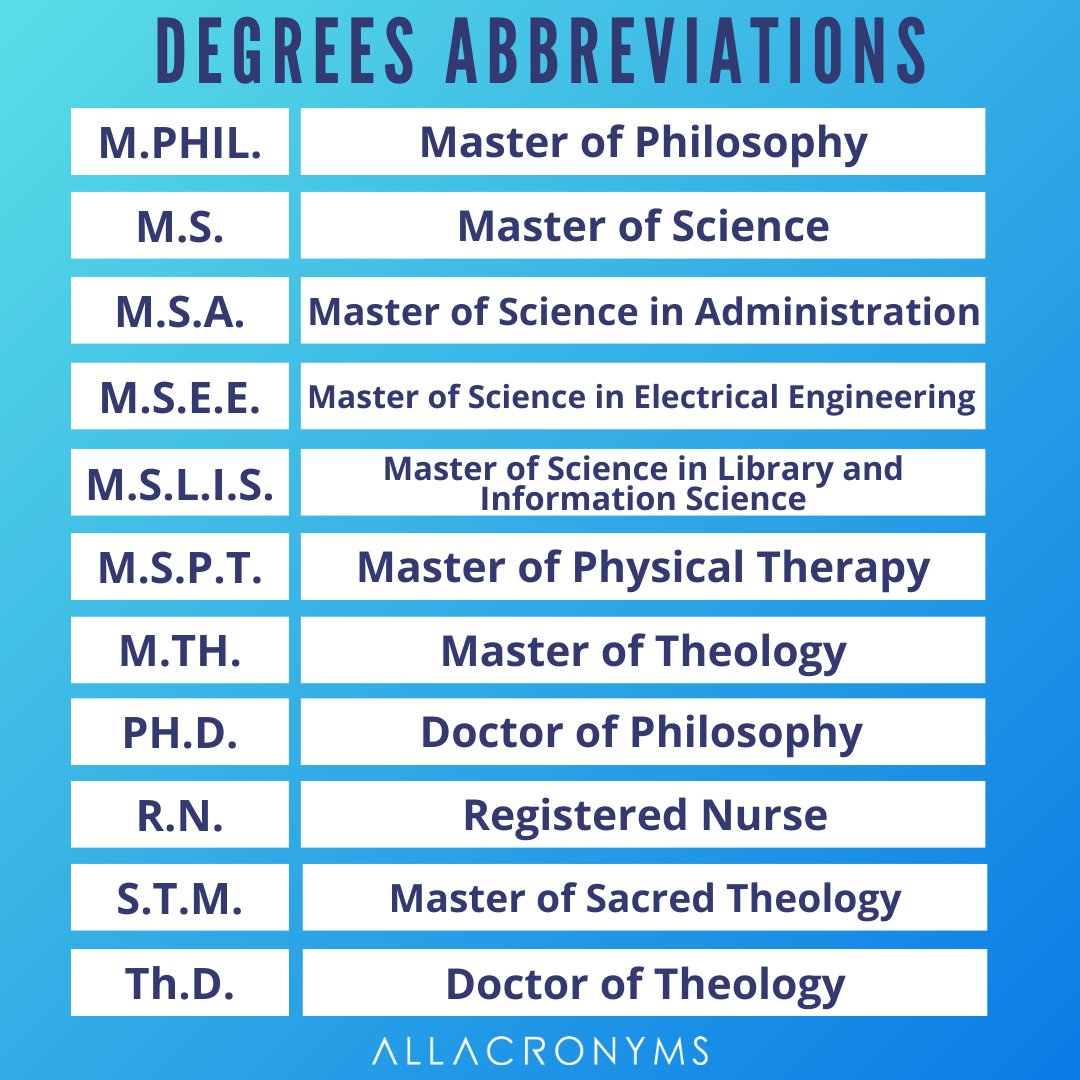
In contemporary academic settings, the abbreviation appears on transcripts, diplomas, resumes, and institutional catalogs. It is frequently written without periods (BA) or with them (B.A.), both of which are widely accepted in professional writing, though style guides may dictate specific preferences. Regardless of punctuation, the designation signals a foundational grounding in qualitative research, critical discourse, and human-centric problem-solving.
Academic Focus and Curriculum Structure
The defining characteristic of a Bachelor of Arts program is its curricular emphasis on liberal arts, humanities, and social sciences. Common majors associated with a BA degree include English literature, history, philosophy, political science, sociology, psychology, foreign languages, communication, and visual or performing arts. While students choose a specific major to concentrate their advanced studies, the degree framework intentionally demands broad exploration across multiple disciplines.
General Education Requirements
A standard BA curriculum features a robust general education core designed to cultivate well-rounded scholarship. Universities typically require students to complete coursework outside their major field. This multidisciplinary approach ensures that a history major, for instance, still engages with mathematics, natural sciences, and foreign language acquisition.
- Humanities and Literature: Encourages textual analysis, ethical reasoning, and historical contextualization.
- Social and Behavioral Sciences: Examines societal structures, human interaction, economic systems, and psychological development.
- Foreign Language Proficiency: Many traditional BA programs require intermediate-level competency in a second language, reflecting the degree's focus on global communication and cultural integration.
- Quantitative Reasoning: Ensures basic mathematical literacy and statistical comprehension, even if the primary focus is qualitative.
Major-Specific Coursework and Electives
Beyond the general education requirements, candidates for a Bachelor of Arts devote roughly one-third to one-half of their total credit hours to their chosen major. These upper-division courses progress from introductory surveys to advanced seminars, research projects, and capstone experiences. Elective credits round out the degree, offering students the flexibility to pursue minor fields of study, professional certifications, or interdisciplinary interests that complement their primary academic goals.
Comparing BA and BS Degrees: Key Differences
A common point of confusion for prospective undergraduates is distinguishing between a BA and a BS (Bachelor of Science) degree. While both represent undergraduate credentials of equal academic weight, their underlying philosophies, methodologies, and course distributions differ significantly. Educational institutions often offer the same subject—such as psychology, economics, or mathematics—as either a BA or a BS, depending on the department's focus.
| Feature | Bachelor of Arts (BA) | Bachelor of Science (BS) |
|---|---|---|
| Primary Focus | Humanities, social sciences, and liberal arts. | Sciences, mathematics, technology, and technical fields. |
| Methodology | Qualitative analysis, critical theory, and narrative interpretation. | Quantitative analysis, empirical research, and laboratory experimentation. |
| Language Requirement | Frequently requires proficiency in a foreign language. | Typically focuses on advanced mathematics or computer science instead of languages. |
| Common Majors | English, History, Art, Philosophy, Communications, Sociology. | Biology, Chemistry, Physics, Computer Science, Engineering. |
| Typical Career Paths | Writing, education, public relations, human resources, law. | Research, data analysis, healthcare, software engineering, finance. |
Choosing between these two pathways depends heavily on a student's career aspirations and natural learning preferences. A student pursuing psychology with the intent to enter clinical therapy or counseling might find a BA program's emphasis on human behavior and communication ideal. Conversely, a psychology student aiming for neuroscience research or quantitative data modeling would benefit more from a BS curriculum that mandates advanced statistics and laboratory sciences.
Career Opportunities and Professional Value
Earning a Bachelor of Arts equips graduates with a versatile skill set that transfers across a wide variety of industries. Employers in the modern workforce consistently rank communication, critical thinking, adaptability, and problem-solving among the most desirable attributes in job candidates. Because BA programs heavily cultivate these competencies, graduates find employment in diverse sectors ranging from corporate business and public administration to non-profit organizations and creative industries.
Common Employment Sectors
- Communications and Media: Journalism, publishing, public relations, and digital content creation leverage the advanced writing and rhetorical skills developed in BA programs.
- Education and Public Service: Teaching, social work, community outreach, and government administration value the strong cultural and societal understanding fostered by liberal arts degrees.
- Corporate Business and Human Resources: Management trainee programs, talent acquisition, customer success, and corporate training frequently recruit BA graduates for their interpersonal and analytical abilities.
- Law and Policy: Pre-law students frequently select BA majors such as political science, philosophy, or English to hone the close reading and argumentative rigor required in legal studies.
Graduate Education and Lifelong Learning
Beyond immediate entry into the workforce, a Bachelor of Arts serves as a solid foundation for advanced academic pursuits. Many professionals use their BA as a stepping stone toward graduate degrees, including Master of Arts (MA), Master of Business Administration (MBA), Juris Doctor (JD) degrees in law, or Master of Social Work (MSW) credentials. Admissions committees for graduate and professional schools look favorably upon the rigorous analytical grounding and comprehensive worldview that a traditional liberal arts education provides.
Frequently Asked Questions
Does a BA degree hold the same value as a BS degree?
Yes, both a Bachelor of Arts and a Bachelor of Science represent standard undergraduate degrees of equal academic rank. Employers and graduate schools view them as equivalent credentials in terms of educational level. The distinction lies in the curriculum's focus—qualitative versus quantitative—rather than the prestige or difficulty of the program.
Can I change my degree path from a BA to a BS mid-program?
Switching between a BA and a BS in the same or a related major is often possible, especially during the first two years of undergraduate study. However, because the general education and core course requirements differ—such as foreign language credits versus advanced mathematics—making the switch later in your academic career may require taking additional courses to satisfy graduation requirements.
Are foreign languages mandatory for all BA programs?
Not all institutions enforce a foreign language requirement for a Bachelor of Arts, though it remains a traditional hallmark of the degree. Requirements vary widely by university and department. Prospective students should review specific institutional catalogs to determine whether language proficiency is a mandatory graduation criterion for their chosen major.
How many credits are typically required to complete a BA?
In most higher education systems, particularly in the United States, earning a Bachelor of Arts requires successfully completing approximately 120 semester credit hours, or roughly 40 distinct college courses. This typically translates to four years of full-time academic study, though accelerated programs, transfer credits, and part-time enrollment can alter this timeline.
Is an online BA degree viewed differently by employers than an on-campus degree?
Accredited online Bachelor of Arts degrees carry the same legal and professional recognition as traditional on-campus credentials, provided the issuing institution is fully accredited by a recognized regional or national accrediting agency. Employers generally focus on the institutional accreditation and the relevance of the coursework rather than the delivery format.
Next Steps and Actionable Recommendations
For individuals considering higher education or seeking to leverage an existing credential, understanding the BA designation simplifies academic planning and professional positioning. Prospective students should thoroughly research institutional accreditation, compare specific course catalogs between BA and BS offerings in their intended major, and evaluate how foreign language or quantitative requirements align with their personal strengths.
Working professionals listing credentials on resumes or professional networks should ensure proper formatting, typically writing out "Bachelor of Arts" or using the clean abbreviation "BA" without unnecessary punctuation. Aligning the skills highlighted in a BA curriculum with target job descriptions ensures that the versatility and intellectual rigor of the degree are effectively communicated to hiring managers.
Image Gallery