The Legacy of Kim Raisner: Navigating Transformation in Modern Pentathlon
Kim Raisner is a central figure in the history of German modern pentathlon, having transitioned from a successful Olympic athlete to a national coach whose career became a catalyst for systemic change. While her athletic achievements a...
Kim Raisner is a central figure in the history of German modern pentathlon, having transitioned from a successful Olympic athlete to a national coach whose career became a catalyst for systemic change. While her athletic achievements are significant, her name is most frequently associated with the 2021 Tokyo Olympics incident that fundamentally altered the structure of the sport, leading to the removal of equestrian jumping from the modern pentathlon curriculum.
Contents
The Athletic Career of Kim Raisner
Long before the controversies of the Tokyo 2020 Games (held in 2021), Kim Raisner was one of Germany's most decorated modern pentathletes. Her career as an athlete spanned the late 1990s and early 2000s, a period when the sport adhered strictly to the five-discipline format established by Baron Pierre de Coubertin: fencing, swimming, equestrian show jumping, and the combined event of pistol shooting and cross-country running.
Raisner competed in the 2004 Athens Olympics, where she secured a fifth-place finish, narrowly missing the podium. Her consistency on the international stage was marked by her victory at the 2005 European Championships, where she took home the gold medal in the individual event. She was also a vital component of the German team that won the World Championship gold in 2005.
Transitioning into coaching after her retirement from active competition, Raisner became a cornerstone of the German Modern Pentathlon Federation (Deutscher Verband für Modernen Fünfkampf - DVMF). As a national coach, she was responsible for training elite athletes and preparing them for the rigors of the Olympic cycle. Her technical expertise in fencing and the combined event was highly regarded within the European sporting community for over a decade.
The Tokyo 2020 Incident: A Turning Point for Global Sports
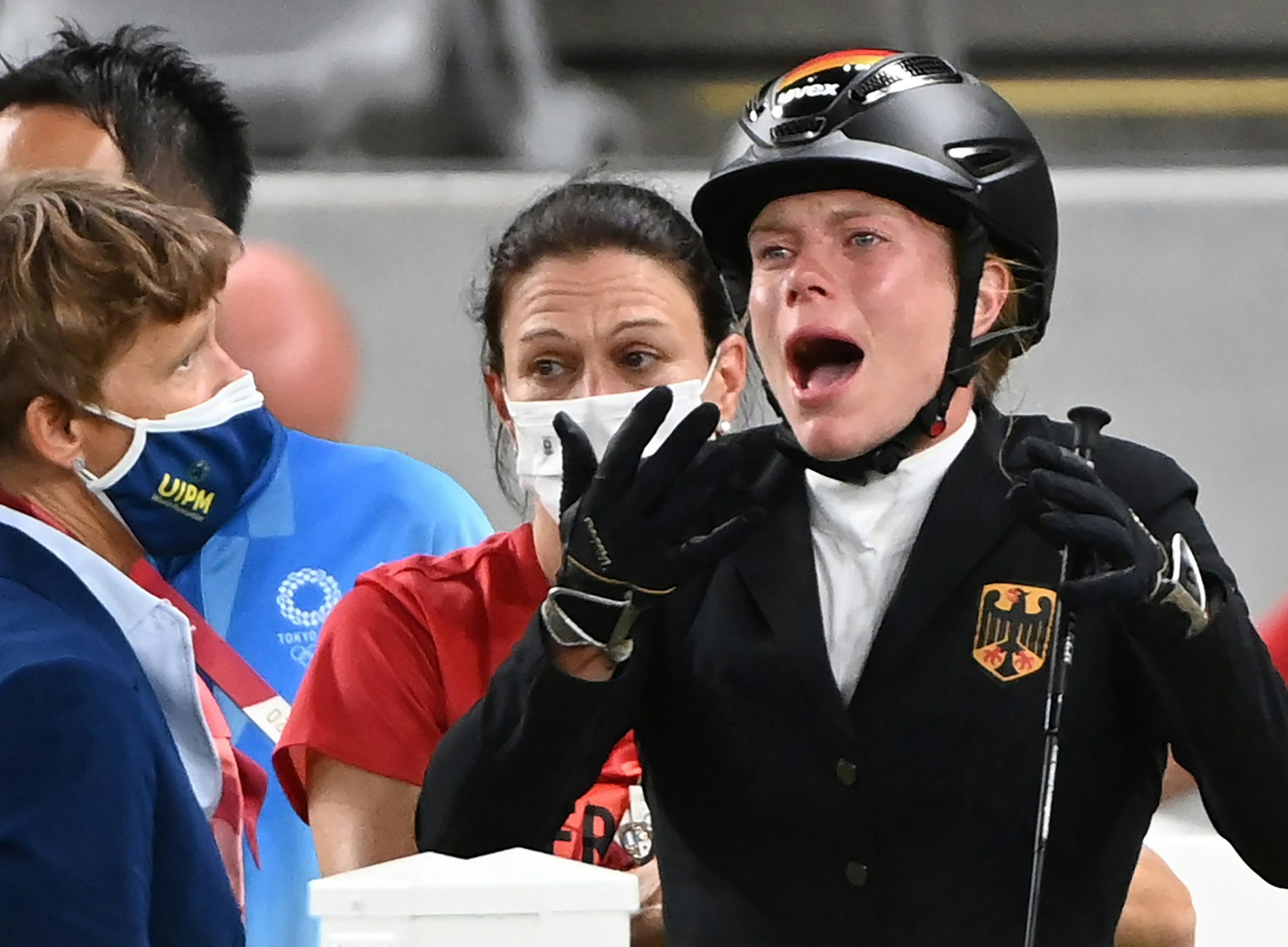
The trajectory of Kim Raisner’s career—and the sport itself—changed during the women’s modern pentathlon event at the Tokyo 2020 Olympics. The incident centered on the horse Saint Boy, assigned to German athlete Annika Schleu. In modern pentathlon, athletes are given only 20 minutes to bond with an unfamiliar horse before the jumping round.
When Saint Boy refused to jump, the situation escalated into a moment of international scrutiny. Raisner was filmed urging Schleu to "really hit" the horse and was subsequently seen punching the horse on its hindquarters. The Union Internationale de Pentathlon Moderne (UIPM) took immediate action, disqualifying Raisner from the remainder of the Games.
This moment sparked a firestorm of debate regarding animal welfare in multi-discipline sports. The fallout was not merely professional for Raisner; it became the focal point for animal rights organizations globally, including PETA, which called for the removal of all equestrian events from the Olympics. The incident highlighted the psychological pressure of the Olympic stage and the inherent risks of the random-draw horse system.
Disciplinary Actions and Professional Repercussions
Following the Tokyo Games, the UIPM and the German Olympic Sports Confederation (DOSB) launched investigations into the conduct of both Raisner and Schleu. The repercussions were multi-layered:
- UIPM Suspension: Raisner received a formal warning and was required to attend a "coach education course" that included modules on animal welfare.
- Legal Inquiries: German prosecutors initially investigated the incident for potential animal cruelty, though the case was eventually closed in 2022 after Raisner paid a fine to a non-profit organization.
- Institutional Changes: The DVMF implemented stricter guidelines for coaching behavior and horse handling, emphasizing the "partner" relationship between the athlete and the animal.
Despite the controversy, Raisner remained involved in the sport in a reduced capacity, focusing on junior development and technical training. However, the "Saint Boy incident" ensured that her name would forever be linked to the end of the traditional pentathlon era.
The Structural Revolution: From Riding to Obstacle Racing
The most profound impact of Kim Raisner’s actions in Tokyo was the acceleration of the New Pentathlon movement. Recognizing that the sport’s inclusion in the Olympic program was at risk due to animal welfare concerns and the high cost of equestrian logistics, the UIPM made the historic decision to replace riding.
Starting after the 2024 Paris Olympics, the equestrian discipline was officially phased out in favor of Obstacle Racing, a format inspired by "Ninja Warrior" style competitions. By 2026, this transition has been fully integrated into the World Cup circuit and the European Championships.
The shift to obstacle racing was designed to:
- Increase Accessibility: Nations without strong equestrian traditions can now compete at the highest levels.
- Enhance Safety: Removing the unpredictability of unfamiliar horses reduces the risk of athlete injury and animal distress.
- Modernize the Brand: The sport now appeals to a younger, more urban demographic interested in functional fitness and obstacle course racing (OCR).
Comparative Evolution of Modern Pentathlon
The following table outlines the differences between the era in which Kim Raisner competed and coached, and the current state of the sport in 2026.
| Feature | Traditional Era (Pre-2021) | Contemporary Era (2026) |
|---|---|---|
| Fifth Discipline | Equestrian Show Jumping | Obstacle Course Racing (OCR) |
| Animal Involvement | High (Unfamiliar horses assigned by draw) | None |
| Main Challenge | Technical riding and animal empathy | Explosive power, grip strength, and agility |
| Olympic Status | Under threat due to welfare concerns | Secured for LA 2028 with new format |
| Coaching Focus | Horsemanship and traditional techniques | High-intensity interval training and OCR mechanics |
| Equipment Costs | Extremely high (Horses, stables, transport) | Low (Static obstacle structures) |
The Ethics of Coaching in Modern Sport
The Raisner case serves as a primary case study in sports ethics and coaching psychology. It forced international governing bodies to re-evaluate the "win at all costs" mentality that can manifest during high-stakes competitions. In 2026, coaching certifications now include extensive mandatory training on emotional regulation and ethical intervention.
The incident also prompted a re-examination of the Athlete-Coach-Animal triad. In the aftermath, many sporting federations adopted the "Social License to Operate" (SLO) framework. This concept posits that sports involving animals must maintain public trust by demonstrating that animal welfare is prioritized over competitive outcomes. Raisner’s actions were viewed as a breach of this social license, making the sport's survival dependent on the total removal of the controversial element.
Looking Ahead: Modern Pentathlon in 2026 and Beyond
As of 2026, the modern pentathlon landscape is unrecognizable from the one Kim Raisner dominated in the early 2000s. The sport has successfully integrated the Obstacle discipline into its permanent structure. The 2026 World Championships have seen record participation numbers, largely credited to the lower barriers to entry provided by the removal of horses.
Raisner’s legacy is complex. She remains one of the most successful female pentathletes in German history, yet her coaching career is defined by a lapse in judgment that triggered the most significant rule change in the sport’s 100-year history. For the athletes of 2026, the "Raisner incident" is a historical footnote that serves as a reminder of why the sport had to evolve to survive.
Frequently Asked Questions
What happened to Kim Raisner after the Tokyo Olympics? After the disqualification in Tokyo, Raisner returned to Germany and faced both internal disciplinary reviews and public criticism. She eventually moved away from the spotlight of the senior national team, though she continued to contribute her technical knowledge in fencing to local clubs and developmental programs.
Is riding still part of the Modern Pentathlon in 2026? No. Following the 2024 Paris Olympics, equestrianism was officially removed from all UIPM-sanctioned modern pentathlon events. It has been replaced by a standardized obstacle course racing (OCR) discipline.
Did Annika Schleu face penalties for the incident? Annika Schleu was not disqualified from future competitions but faced significant backlash. She cooperated with all investigations and eventually retired from the sport to focus on her career outside of professional athletics.
Why was Kim Raisner disqualified if she wasn't the athlete? Under UIPM rules, coaches are subject to the same code of conduct as athletes. Raisner was disqualified for "physical battery" of the horse and for inciting the athlete to use excessive force, which violated the federation’s animal welfare guidelines.
How has the removal of horses affected the sport’s popularity? While traditionalists mourned the loss of the equestrian element, the sport has seen a surge in popularity in 2026, particularly in Asia and Africa. The lower cost of participation and the popularity of obstacle-based reality TV shows have brought a new wave of athletes to the pentathlon.
Practical Recommendation for Future Coaches
The history of Kim Raisner highlights the importance of stress management and ethical leadership. Current and aspiring coaches should prioritize the following:
- Mental Fortitude Training: Developing techniques to remain calm and objective during high-pressure Olympic scenarios.
- Adherence to Welfare Standards: Ensuring that the well-being of all participants—human or animal—is never sacrificed for a medal.
- Adaptability: Staying informed about the rapid changes in sport regulations, such as the transition to obstacle racing, to provide athletes with the best possible guidance.
For further information on the current regulations of the sport, visit the official Union Internationale de Pentathlon Moderne (UIPM) website. Detailed records of Olympic historical incidents can be found through the International Olympic Committee (IOC).
Image Gallery