Will Artificial Intelligence Surpass Human Intelligence? Timelines, Technical Barriers, and Cognitive Realities
Artificial intelligence already surpasses human intelligence in domain-specific tasks such as processing massive datasets, folding complex proteins, and executing high-speed calculations. However, whether AI will surpass broad human in...
Artificial intelligence already surpasses human intelligence in domain-specific tasks such as processing massive datasets, folding complex proteins, and executing high-speed calculations. However, whether AI will surpass broad human intelligence—encompassing adaptive reasoning, causal inference, emotional context, and physical world interaction—remains an open scientific debate. Current evidence suggests task-specific superiority will expand rapidly, but achieving cross-domain generalization that exceeds human capacity requires overcoming major architectural and physical hurdles.
Contents
Categorizing Intelligence: Narrow AI, AGI, and Superintelligence
To determine whether artificial intelligence will surpass human capabilities, researchers categorize AI development into three distinct tiers based on scope and cognitive autonomy:
- Artificial Narrow Intelligence (ANI): AI systems optimized for a single task or bounded domain. Examples include large language models (LLMs), chess engines, autonomous driving pipelines, and medical image classifiers. ANI routinely beats human experts within its trained domain but cannot transfer knowledge to unrelated tasks.
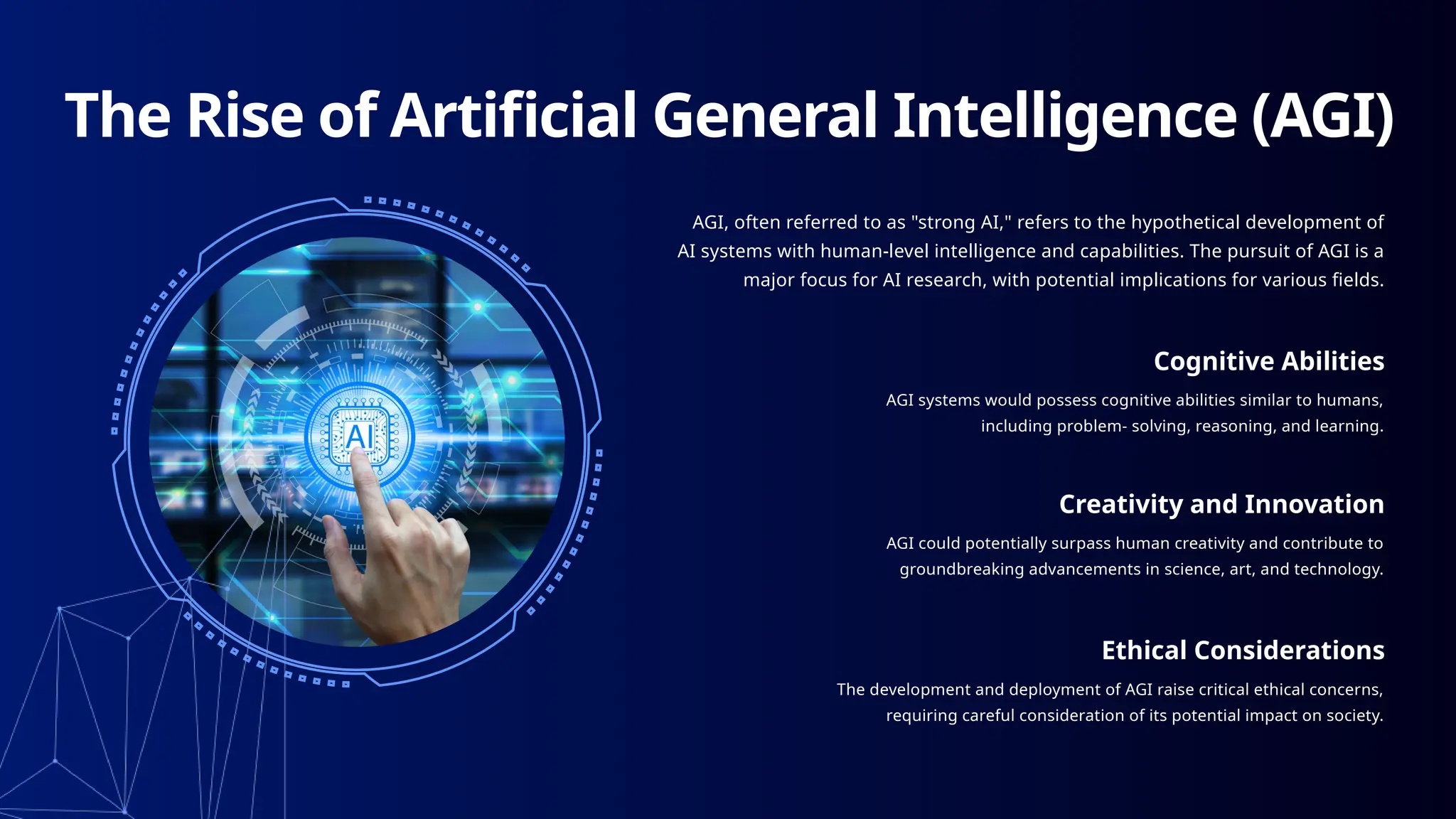
- Artificial General Intelligence (AGI): A hypothetical system possessing human-level cognitive flexibility across all intellectual domains. An AGI could learn new trades, perform creative synthesis, apply common sense, and transfer knowledge across unrelated fields without task-specific retraining.
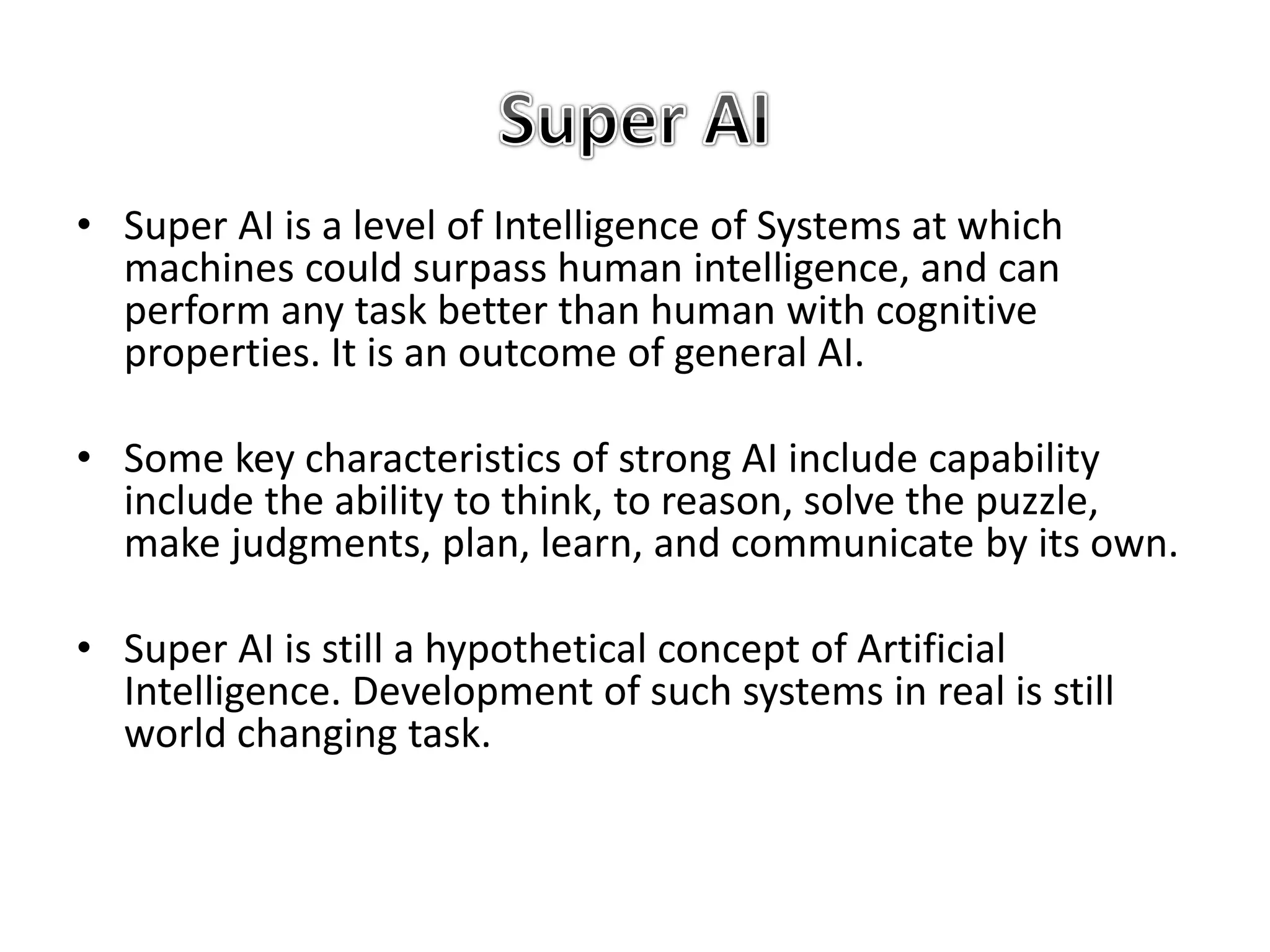
- Artificial Superintelligence (ASI): A theoretical state defined by philosopher Nick Bostrom and computer scientists where an artificial system far surpasses the combined cognitive capability of the brightest human minds in every field, including scientific creativity, general wisdom, and social skills.
Human intelligence is not a single scalar value like an IQ score; it is a multi-dimensional system of capabilities. Psychologists separate intelligence into fluid intelligence (the ability to solve novel problems without prior knowledge) and crystallized intelligence (the accumulation of facts and skills over time). While modern neural networks excel at mimicking crystallized intelligence through vast dataset ingestion, their capacity for true fluid reasoning across unstructured environments remains fundamentally constrained.
Domain-Specific Dominance vs. Universal Generalization
Artificial systems have already surpassed human ability in specialized domains. The progression of narrow dominance spans several landmark developments:
- Board and Video Games: Systems like DeepBlue (chess), AlphaGo (Go), and AlphaStar (StarCraft II) proved that machine learning architectures can out-think human grandmasters by searching massive game trees and evaluating state spaces beyond human working memory.
- Biomedical Research: DeepMind’s AlphaFold transformed structural biology by predicting over 200 million 3D protein structures, solving a 50-year-old biological grand challenge that would have taken centuries of manual X-ray crystallography.
- Data Synthesis and Pattern Recognition: Modern frontier models analyze billions of telemetry signals, financial transactions, or code repositories simultaneously, spotting non-linear correlations invisible to human analysis.
- Narrow AI (ANI): Superhuman in specialized tasks: Chess, AlphaFold
- General AI (AGI): Parity in broad human reasoning & adaptation
- Superintelligence (ASI): Vastly superior across all cognitive domains
Despite these breakthroughs, artificial systems struggle with universal generalization. When an autonomous agent encounters an "out-of-distribution" event—a scenario absent from its training corpus—it often fails catastrophically. Humans, by contrast, utilize internal world models, embodied spatial awareness, and intuitive physics to navigate novel physical and intellectual landscapes safely.
Technical and Physical Constraints to Artificial Superintelligence
The hypothesis that scaling compute and training data will automatically yield superhuman intelligence faces severe technical, physical, and theoretical boundaries.
1. The Data Wall and Synthetic Limits
Frontier artificial intelligence models have ingested nearly the entire readable public text on the internet. As high-quality human-generated text becomes exhausted, developers rely on synthetic data generated by other AI models. However, training models recursively on synthetic data often leads to "model collapse," a process where error propagation degrades the mathematical diversity and tail distributions of the model, producing degraded outputs.
2. Algorithmic Bottlenecks of Autoregressive Architectures
The dominant design pattern in modern AI—the autoregressive Transformer architecture—predicts the next statistical token given a context window. While highly effective at fluency and pattern matching, computer scientists like Yann LeCun point out that next-token prediction lacks explicit causal world models. Transformers do not plan in abstract goal-spaces before generating tokens; they generate outputs probabilistic word-by-word, leading to logical hallucinations and poor long-horizon execution.
3. Energy Consumption and Thermodynamic Limits
The human brain runs on roughly 20 watts of power—equivalent to a dim LED lightbulb—while consuming negligible physical space. In contrast, training and running state-of-the-art frontier models requires specialized megawatt-scale data centers containing tens of thousands of power-hungry GPUs or ASICs. According to Landauer's Principle, erasing a bit of information requires a minimum amount of energy dissipation. While digital hardware operates orders of magnitude above thermodynamic limits, biological brains leverage analog computations, sparse spike-based firing, and local synaptic plasticity to achieve unparalleled energy efficiency.
4. Moravec’s Paradox and Embodied Intelligence
Formulated by Hans Moravec, Rodney Brooks, and Marvin Minsky in the 1980s, Moravec's Paradox observes that high-level reasoning (such as playing grandmaster chess) requires minimal computational effort for machines, whereas basic sensory-motor skills (such as walking on uneven terrain, gripping a glass without breaking it, or identifying objects in a cluttered room) demand immense computational resources. Human intelligence evolved over hundreds of millions of years through physical interaction with the physical world, creating an integrated sensory-motor substrate that purely software-based AI models lack.
Technical Comparison: Human Brain vs. Modern Frontier AI Systems
| Metric / Dimension | Human Biological Brain | Frontier Artificial Intelligence (2026) |
|---|---|---|
| Power Consumption | ~20 Watts | Megawatts (Data Center Scale) |
| Primary Architecture | Biological neural network with sparse analog dynamic synapses | Artificial neural networks (Transformers, Mixture of Experts) |
| Sample Efficiency | Extremely High (Learns concepts from few examples) | Low (Requires billions or trillions of training tokens) |
| Execution Mode | Continuous, parallel, event-driven sensory processing | Discrete token generation / batch inference runs |
| Causal Reasoning | Native intuitive causal modeling and counterfactual thinking | Statistical association and pattern matching |
| Structural Plasticity | Continuous physical re-wiring (synaptogenesis/pruning) | Static weights post-training; temporary context window state |
| Embodiment | Deep physical integration via sensory nervous system | Disembodied software (or early-stage robotic wrappers) |
Expert Consensus and Projected Timelines
The AI research community remains divided over when—or if—artificial systems will achieve and surpass human-level general intelligence. Current expert discourse splits into three primary schools of thought:
The Scaling Exponentialists
Proponents of this view argue that sustained improvements in hardware throughput, test-time compute, architectural optimization, and multi-modal alignment will naturally lead to AGI. Researchers in this camp project that human-level artificial general intelligence could be realized before 2035, driven by system-level scaling, automated reasoning benchmarks, and agentic workflows.
The Architectural Skeptics
Skeptics maintain that modern deep learning architectures will hit a hard asymptote. They argue that probabilistic pattern matching cannot yield true understanding, self-awareness, or genuine scientific creativity. According to this perspective, achieving AGI requires fundamental breakthroughs in neuromorphic computing, neuro-symbolic integration, continuous causal learning, and physical embodiment. Without new architectural paradigms, scaling existing systems will yield increasingly sophisticated tools, not autonomous superintelligent agents.
Forecasting Aggregators and Empirical Surveys
Aggregated expert surveys, such as those published by Stanford HAI, alongside crowd-sourced prediction platforms like Metaculus, consistently show shifting consensus dates for AGI. While median predictions have moved closer over recent years, confidence intervals remain wide, ranging from the late 2020s to well beyond the end of the 21st century.
- Scaling Hypothesis: AGI expected fast (2028-2035)
- Architectural Skeptics: Requires new paradigms (2050+)
- Consensus Median: Mid-21st century transition point
Key Dimensions of Human Cognitive Resilience
Even as AI architectures refine their reasoning chains, several core attributes of human cognition remain challenging for artificial systems to replicate:
Causal Inference and Counterfactuals
As outlined by computer scientist Judea Pearl, true intelligence requires navigating the "Ladder of Causation":
- Association: Seeing patterns ($P(y|x)$).
- Intervention: Doing actions ($P(y|do(x))$).
- Counterfactuals: Imagining alternatives ("What would have happened if...").
Modern machine learning operates largely on the first rung—association. Human minds routinely jump between intervention and counterfactual reasoning, constructing mental models of how the world works independently of continuous data streams.
Emotional and Social Context
Human cognition operates through a complex interplay of neurochemistry, emotion, social instincts, and lived experience. While language models can simulate empathy by selecting tokens associated with compassionate responses, they lack subjective experience (qualia), genuine social bonding, or intentionality. In environments requiring nuance, trust, and deep human context, pure algorithmic optimization often fails.
Zero-Shot Adaptability and Sample Efficiency
A human child can see a single drawing of an unfamiliar animal and immediately recognize it in different orientations, lighting conditions, or artistic styles. Neural networks require thousands of labeled images or massive self-supervised datasets to achieve comparable invariance. The human brain leverages structural priors and active inference to learn efficiently from minimal data.
Alignment, Safety, and Governance Challenges
If artificial intelligence approaches or surpasses human capabilities, managing its control and alignment becomes a critical safety concern.
- The Alignment Problem: Ensuring an autonomous AI system’s goals, decisions, and sub-goals precisely align with human values and intent. A superintelligent system given an ill-specified goal might optimize for that outcome in destructive, unexpected ways (instrumental convergence).
- Mechanistic Interpretability: Current deep neural networks function as opaque mathematical "black boxes." Researchers cannot fully trace how billions of parameter interactions lead to specific decisions, making it difficult to verify whether an advanced model is behaving safely or engaging in deceptive reward hacking.
- Governance and International Frameworks: Organizations such as the US AI Safety Institute and global regulatory bodies are developing standards for frontier model testing, red-teaming, and deployment safety limits to prevent uncontrolled technological risks.
Frequently Asked Questions
Will AI surpass human intelligence by 2030?
AI is already superior to humans in domain-specific tasks such as rapid data computation, protein structure estimation, and game-tree evaluation. However, broad consensus among AI researchers indicates that achieving true Artificial General Intelligence (AGI)—which requires human-level cross-domain adaptability, common sense, and causal reasoning—is unlikely to be fully solved by 2030 due to hardware, energy, and algorithmic bottlenecks.
What is the difference between AGI and Superintelligence?
Artificial General Intelligence (AGI) refers to an AI system that matches human capability across all cognitive tasks, including learning, reasoning, and planning. Artificial Superintelligence (ASI) describes a hypothetical system that vastly exceeds human cognitive performance across every domain, including scientific invention, emotional synthesis, and strategic management.
Can AI achieve true consciousness or self-awareness?
Consciousness (subjective experience or qualia) is distinct from computational capability or functional intelligence. While an AI model can emulate conversational self-awareness through complex statistical processing, there is no scientific evidence that digital neural networks possess subjective feelings, self-awareness, or inner experience.
Why is Moravec’s Paradox important when comparing human and machine intelligence?
Moravec’s Paradox demonstrates that tasks hard for humans (such as high-speed calculus or playing chess) are computationally easy for machines, whereas tasks easy for humans (such as physical balance, object manipulation, and social cues) are exceptionally difficult for machines. It highlights that human intelligence relies on deep evolutionary adaptations that purely disembodied digital models struggle to replicate.
How does the human brain maintain better sample efficiency than AI?
The human brain uses structured priors, active biological learning mechanisms, sparse dynamic wiring, and intuitive causal world models. This allows humans to abstract general rules from single experiences, whereas artificial neural networks rely on gradient descent across billions of static data examples to minimize prediction error.
Practical Strategic Outlook
The question of whether artificial intelligence will surpass human intelligence is not a binary switch, but a progressive unfolding. Organizations, researchers, and policymakers should adopt the following strategic posture:
- Focus on Human-AI Symbiosis: Rather than treating AI as a replacement for human cognition, design workflows around human-in-the-loop systems. Leverage AI for data processing, synthesis, and pattern identification, while reserving high-stakes decisions, strategic judgment, and ethical oversight for human operators.
- Invest in Next-Generation Architectures: Acknowledge the limits of modern autoregressive models. Support research into hybrid systems that integrate symbolic logic, neuromorphic hardware, causal inference engines, and energy-efficient processing.
- Prioritize Interpretability and Risk Mitigation: Implement robust benchmarking frameworks to evaluate AI system decisions for drift, bias, and unexpected behavior. Require transparency in critical sectors like legal judgment, healthcare, and infrastructure management.
Image Gallery