Understanding Impulse Buying Behavior: Psychological Triggers and Retail Dynamics
Impulse buying behavior is an unplanned, decision-driven purchase made immediately before buying, triggered by emotional responses, cognitive biases, and sensory stimuli. Unlike deliberate purchasing, which relies on conscious evaluati...
Impulse buying behavior is an unplanned, decision-driven purchase made immediately before buying, triggered by emotional responses, cognitive biases, and sensory stimuli. Unlike deliberate purchasing, which relies on conscious evaluation and comparison, impulse buying occurs when emotional desire overrides rational risk evaluation, often driven by instant gratification pathways in the human brain.
Contents
Defining Impulse Buying Behavior and Its Core Typologies
Impulse buying refers to any unplanned purchase made without prior intent or deliberate search. In consumer psychology, it represents a breakdown in cognitive self-regulation, where external environmental cues interact with internal psychological states to trigger an immediate transactional decision. Research in consumer behavior distinguishes impulse purchases from standard unplanned buying; while an unplanned purchase might occur because a consumer simply remembered they needed a staple item like salt, an impulse purchase involves a sudden, powerful, and persistent urge to acquire an item accompanied by emotional arousal.
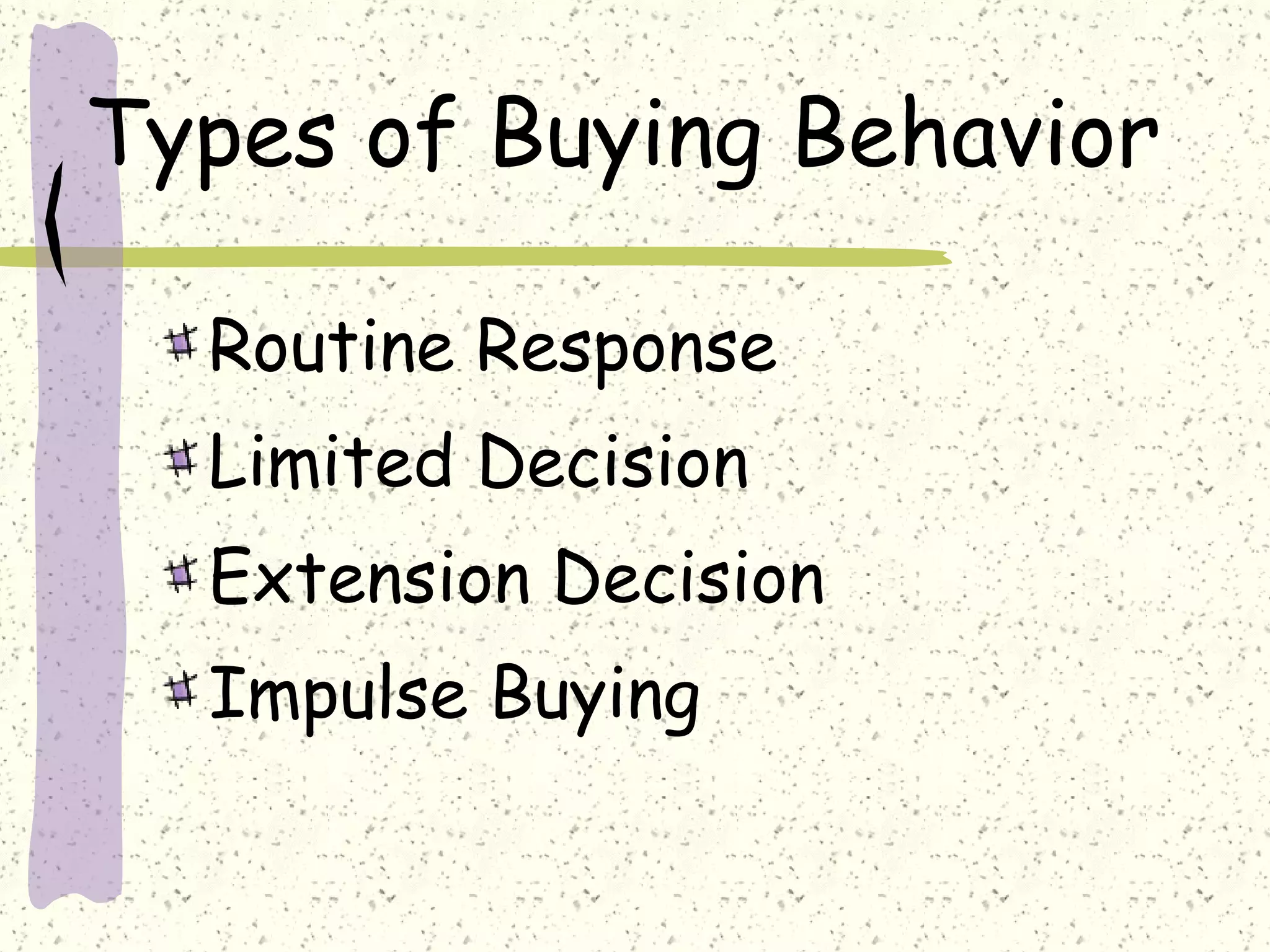
Economist Hawkins Stern established a foundation for studying this phenomenon in 1962 by classifying unplanned purchases into four distinct categories:
- Pure Impulse Buying: A spontaneous purchase that breaks a consumer’s standard shopping pattern. It is driven by novelty, emotional excitement, or aesthetic appeal, with zero prior intent or functional necessity.
- Reminder Impulse Buying: Occurs when seeing an item reminds the consumer of a pre-existing need, an out-of-stock home supply, or a previously seen advertisement. The physical presence of the product acts as the memory trigger.
- Suggestion Impulse Buying: Happens when a consumer encounters a new product for the first time and visualizes its utility without prior knowledge of its existence. The buyer evaluates the product's function instantly at the point of interaction.
- Planned Impulse Buying: Takes place when a consumer enters a retail environment with the intent to purchase specific categories of goods, but relies on price discounts, promotional bundles, or store offers to select the exact products.
Understanding these categories allows retailers to optimize merchandise display and enables consumers to identify the specific cognitive mechanisms influencing their financial choices.
The Psychological Mechanics Behind Unplanned Purchases
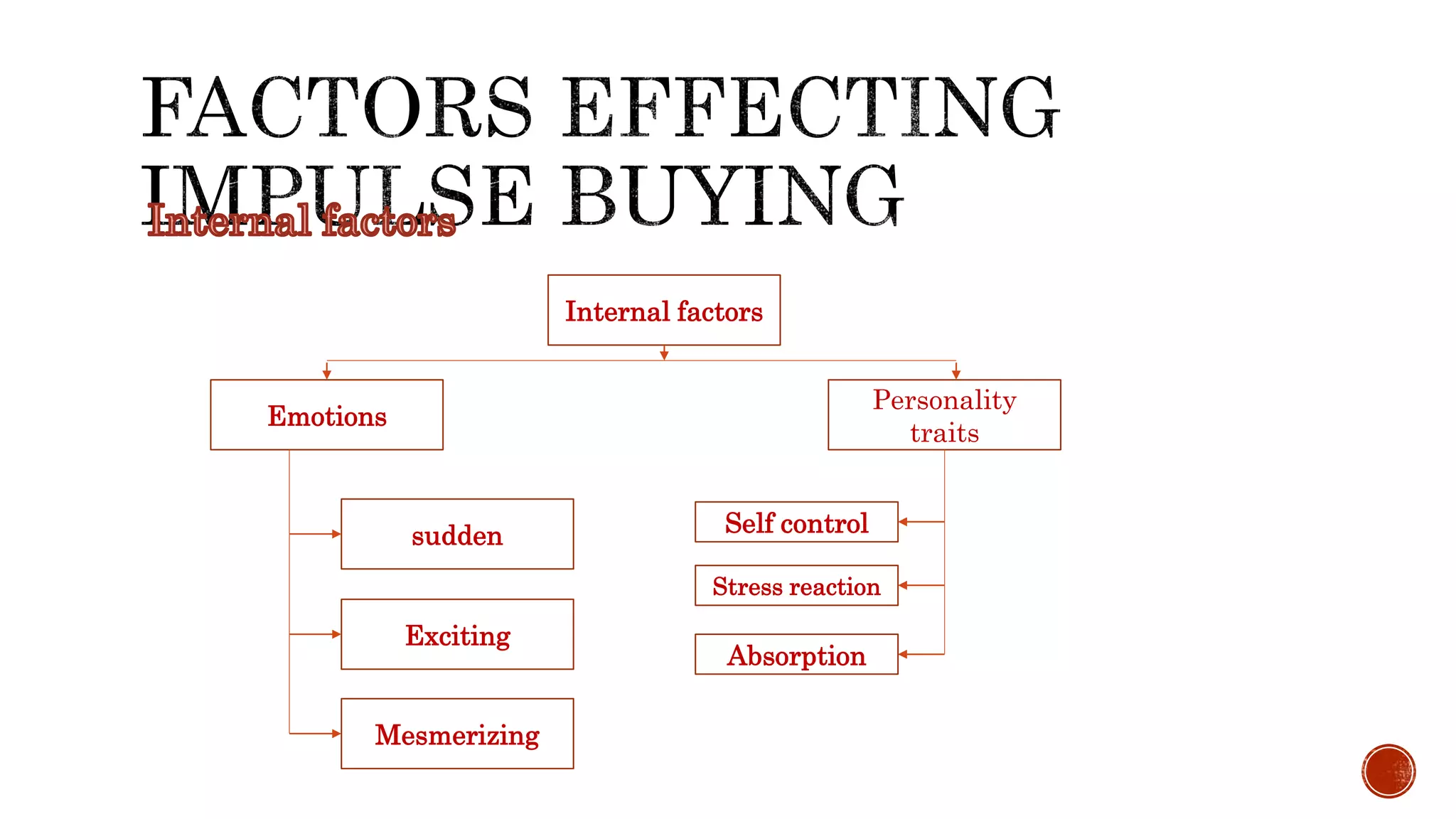
The physiological and neurological foundations of impulse buying center on the conflict between two neurological systems: the brain's limbic system (responsible for emotion and reward) and the prefrontal cortex (responsible for executive functioning, planning, and impulse control).
- External Cue / Product Stimulus
- Limbic System Activation
- Dopamine Surge: High Immediate Reward Anticipation
- Prefrontal Cortex Reaction
- High Mental Energy / Self-Control: Rational Evaluation, Purchase Deferred
- Low Mental Energy / Ego Depletion: Executive Inhibition Fails, Impulse Purchase Completed
1. Dopamine Activation and Gratification Loops
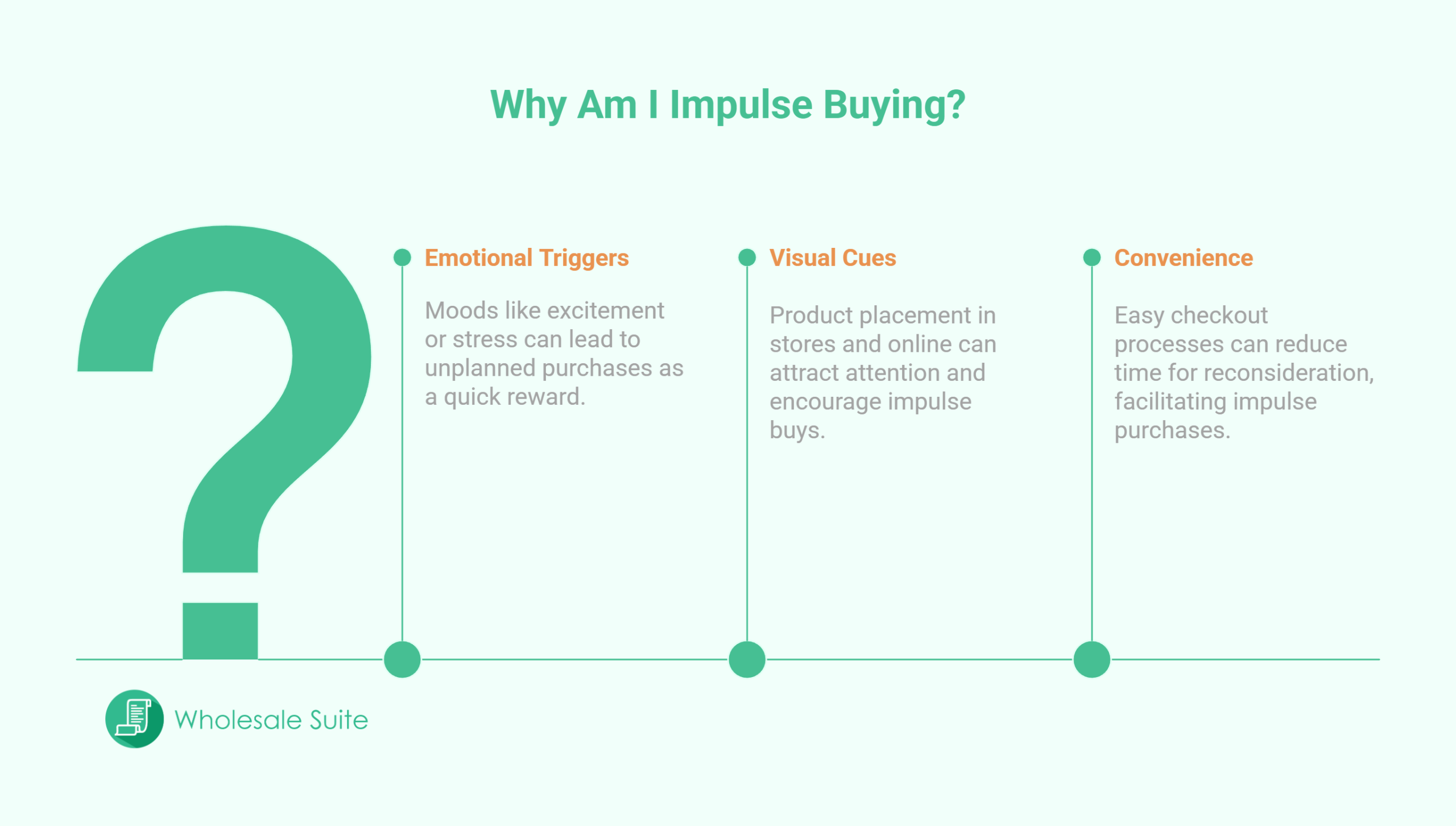
When a consumer encounters an attractive product, the brain releases dopamine—a neurotransmitter associated with reward anticipation rather than the pleasure of ownership itself. This dopamine surge creates an intense drive to complete the transaction to realize the anticipated reward. E-commerce interfaces and retail environments are explicitly designed to maximize these micro-surges through vibrant visual displays, limited-time pop-ups, and frictionless checkout processes.
2. Ego Depletion Theory
First formalized by social psychologist Roy Baumeister, Ego Depletion Theory posits that human self-control and willpower operate on a finite pool of mental energy. Throughout the day, every decision—from selecting work tasks to managing emotional responses—depletes this resource. When willpower is depleted, the prefrontal cortex loses its ability to veto impulsive urges generated by the limbic system. Consequently, consumers are far more susceptible to impulse buying after long workdays, during late-night online shopping sessions, or at the end of exhaustive shopping trips.
3. Cognitive Biases in Retail Contexts
Retailers systematically leverage established cognitive biases to trigger impulsive actions:
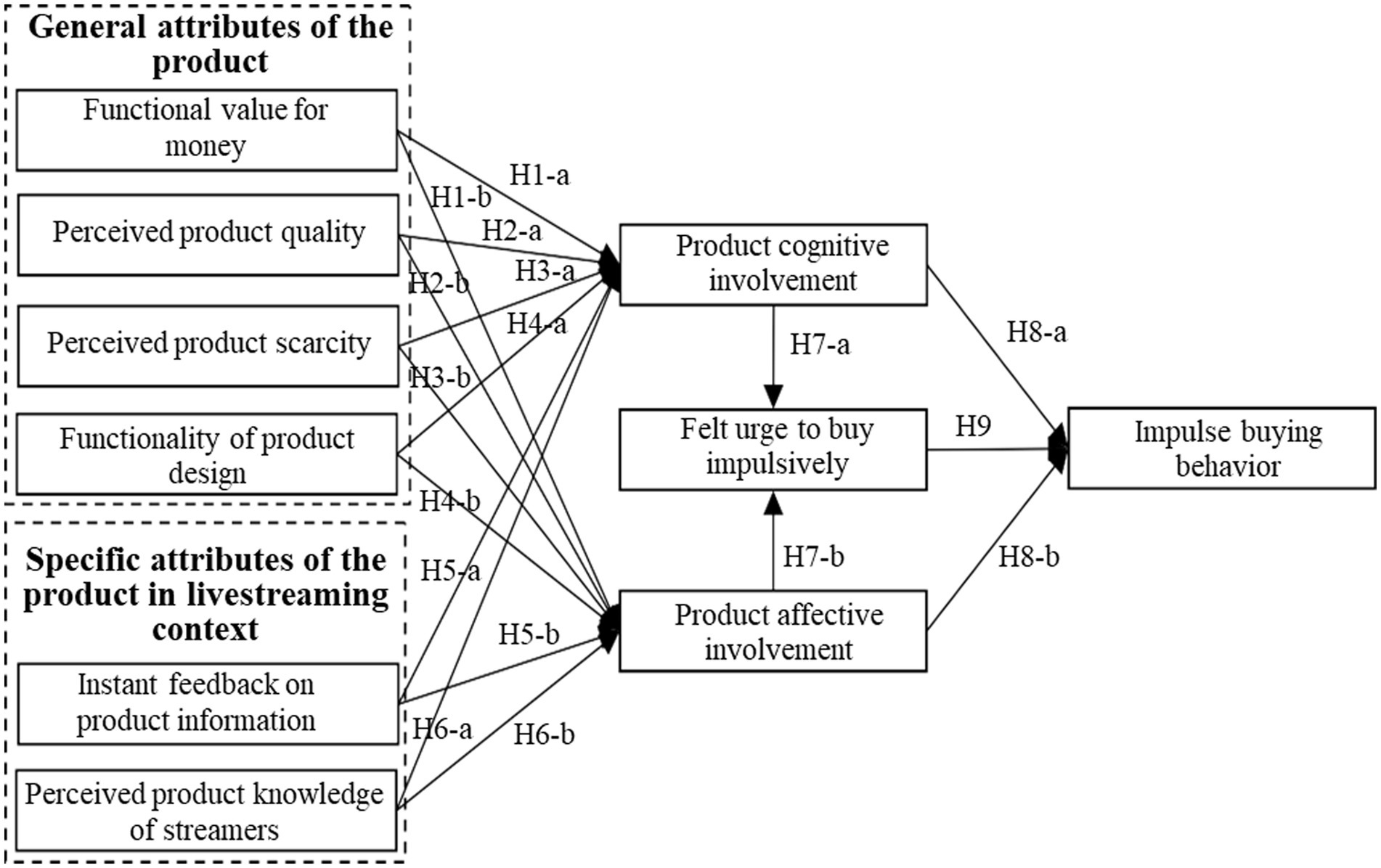
- Scarcity Effect: Claiming limited stock ("Only 2 items left in stock") triggers urgency by creating perceived value through potential loss.
- Fear of Missing Out (FOMO): Counter-based timers and notification widgets ("14 people are viewing this room right now") leverage social proof to bypass rational evaluation.
- Loss Aversion: Framing a transaction around losing a temporary discount ("Save $40 if you order in the next 10 minutes") causes consumers to perceive non-purchase as a financial loss.
Environmental and Digital Triggers in Modern Retail
The physical and digital environments in which consumers browse act as primary accelerants for impulse buying. Retail architects and software developers structure touchpoints to minimize friction and maximize sensory engagement.
Physical Store Design and Atmospheric Cues
Traditional brick-and-mortar stores rely on environmental design parameters known as store atmospherics. Key environmental triggers include:
- Point-of-Sale (POS) Micro-Merchandising: High-margin impulse items (candy, small electronics, travel accessories) line checkout lanes, forcing waiting consumers into prolonged proximity with visual cues when their willpower is already strained.
- Sensory Manipulation: Ambient lighting, targeted scents, and tempo-curated music lower stress and extend store dwell time, directly correlating with higher unplanned spending.
- Deceptive Floor Layouts: Placing essential staple goods (like milk, bread, or pharmacy items) at the far rear of the store forces shoppers to navigate high-density displays of non-essential merchandise.
Digital UX and E-Commerce Architecture
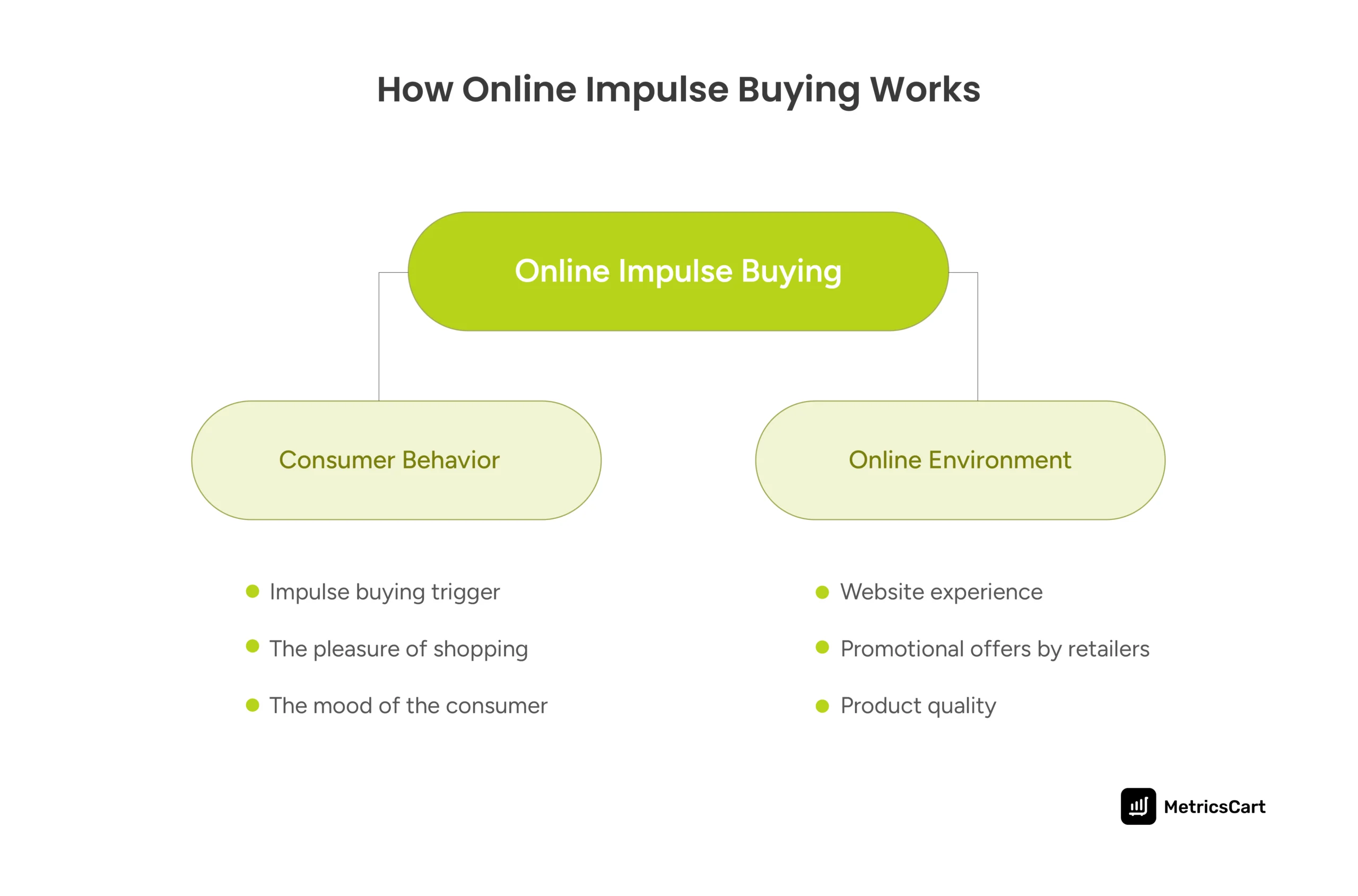
Digital environments eliminate physical friction, making impulse buying instantaneous. Modern digital commerce leverages specific design patterns to convert interest into purchases before reflection can occur:
| UX / Architecture Element | Mechanism of Action | Impact on Purchasing Behavior |
|---|---|---|
| One-Click Checkout | Removes cart review steps and payment input friction. | Eliminates the cognitive pause where rational self-control usually intervenes. |
| Algorithmic Recommendations | Uses predictive machine learning to surface hyper-relevant add-ons ("Frequently Bought Together"). | Converts pure impulse urges into suggestion impulse sales. |
| Push & In-App Notifications | Sends real-time, personalized prompts based on browsing history or geolocation. | Re-activates dormant desire while the consumer is distracted or experiencing high ego depletion. |
| Gamified Loyalty Rewards | Rewards immediate action with progress bars, badges, or instant mystery coupons. | Stimulates dopamine releases prior to product selection. |
Distinguishing Impulse Buying from Compulsive Buying
While impulse buying occurs across almost all demographic groups and is generally benign, it exists on a spectrum of shopping behavior. It is critical to differentiate between occasional impulse buying and clinical compulsive buying disorder (CBD).
- Occasional Impulse Purchase (Spontaneous, Situation-Driven)
- Frequent Unplanned Spending (Habitual, Frictionless E-Commerce)
- Compulsive Buying Disorder (Chronic, Distress-Driven Pathological)
| Behavioral Dimension | Impulse Buying | Compulsive Buying |
|---|---|---|
| Primary Motivation | Driven by novelty, product features, or promotional deals. | Driven by internal distress, anxiety, depression, or low self-esteem. |
| Frequency & Intensity | Episodic and context-dependent. | Chronic, repetitive, and difficult to interrupt voluntarily. |
| Emotional Outcome | Immediate pleasure, followed occasionally by minor regret. | Temporary relief followed by intense guilt, shame, and long-term distress. |
| Financial Impact | Usually contained within manageable discretionary spending limits. | Often leads to extreme personal debt, bankruptcy, or severe financial instability. |
| Post-Purchase State | Product is used, worn, or consumed. | Products are frequently hidden, unboxed, unused, or discarded. |
When impulse buying transitions into an uncontrollable coping mechanism for emotional distress, it moves out of the domain of general consumer behavior and into the realm of behavioral mental health requiring professional intervention.
Strategic Optimization for Businesses: Ethical Nudge Architecture
For commercial enterprises, understanding impulse buying is fundamental to optimizing average order value (AOV) and customer lifetime value (CLV). Modern retail management balances conversion rate optimization with ethical consideration, ensuring short-term impulse sales do not erode long-term customer trust.
Implementing High-Conversion Point-of-Sale Strategies
Retailers can structure physical and digital checkout flows to capture legitimate suggestion and reminder impulse intent:
- Contextual Merchandising: Group accessories directly alongside core products (e.g., showing compatible lens caps or storage pouches alongside camera bodies) rather than pushing unrelated impulse items.
- Tiered Discount Thresholds: Display progress bars showing how close a customer is to free shipping or a gift ("Add $12 more to qualify for free express shipping"). This converts pure impulse buying into structured, value-driven purchasing.
- Low-Friction Bundling: Offer single-click cross-sells at checkout that solve immediate secondary needs without requiring the consumer to navigate away from the primary checkout flow.
Maintaining Ethical Standards
Over-reliance on aggressive "dark patterns"—such as hidden subscriptions, deceptive urgency countdowns, or default cart additions—erodes brand equity and invites legal scrutiny from regulatory bodies such as the U.S. Federal Trade Commission (FTC). Ethical nudge architecture ensures that additions to the cart remain fully transparent, easily removable, and genuinely helpful to the consumer's buying goals.
Consumer Strategies: Managing and Controlling Impulse Spending
For individuals looking to control discretionary spending and improve financial health, neutralizing environmental and psychological triggers requires building deliberate operational friction into everyday financial transactions.
1. Enforcing the 24-Hour Cooling-Off Rule
To bypass dopamine-driven urge spikes, implement a mandatory waiting period for any non-essential purchase above a designated monetary threshold (e.g., $50). By forcing a 24-hour delay between product discovery and payment execution, dopamine levels settle, allowing the prefrontal cortex to objectively evaluate the necessity and long-term financial utility of the item.
2. Eliminating Digital Purchasing Friction
Digital stores spend millions removing friction from the purchasing funnel. Consumers can counteract this by reintroducing manual friction:
- Remove stored credit card details from web browsers and retail platforms.
- Turn off push notifications for shopping apps and unsubscribe from promotional email streams.
- Delete high-temptation shopping applications from mobile devices, forcing browsing to occur on desktop computers.
3. Implementing the "Time-Cost" Mindset
Convert the monetary price of an impulse item into hours of personal labor. To calculate this:
$$\text{Item Real Cost} = \frac{\text{Retail Price}}{\text{Hourly Net Pay}}$$
If an item costs $150 and an individual earns $30 net per hour, the item requires five full hours of dedicated work. Framing purchases in terms of personal time spent alters the psychological framing from immediate pleasure to effort trade-off.
Frequently Asked Questions
What is the main cause of impulse buying behavior?
The primary driver of impulse buying is an emotional reaction triggered by environmental cues (such as visual displays, discounts, or scarcity alerts) occurring during a state of diminished mental self-control (ego depletion). Neurologically, it is propelled by dopamine surges in the brain's reward centers that overpower rational decision-making in the prefrontal cortex.
What are the four main types of impulse buying?
According to Stern’s classic typology, the four categories are: Pure Impulse Buying (spontaneous, emotion-driven purchases), Reminder Impulse Buying (triggered by seeing a product that reminds you of a household need), Suggestion Impulse Buying (buying a product for the first time based on instant utility evaluation), and Planned Impulse Buying (entering a store intending to buy category goods based on available promotions).
How does digital commerce increase impulse purchases?
E-commerce accelerates impulse buying by removing operational friction. Features such as single-click ordering, saved payment methods, personalized algorithmic suggestions, targeted push notifications, and artificially manufactured scarcity indicators (like countdown timers) minimize the time between initial product exposure and payment confirmation.
Is impulse buying always a financial mistake?
Not necessarily. Reminder impulse buying (such as picking up household batteries displayed near a register) and planned impulse buying (such as taking advantage of a major discount on a necessary product category) can save consumers time and money. Impulse buying becomes problematic when it undermines a personal budget, creates unwanted financial liability, or serves as an emotional coping mechanism.
How can consumers tell the difference between healthy spending and compulsive buying?
Healthy impulse purchases are periodic, within overall discretionary budget limits, and result in practical product use. Compulsive buying is a persistent, distress-driven behavior characterized by an inability to stop, chronic guilt post-purchase, hiding transactions from loved ones, and significant financial or emotional harm.
Practical Action Plan for Managing Buying Behaviors
Whether optimizing retail channels ethically or regulating personal finance, managing impulse buying requires understanding the balance between environmental friction and psychological triggers.
- For Retailers and E-Commerce Managers: Audit conversion funnels to ensure cross-selling practices rely on high-relevance suggestion strategies rather than coercive dark patterns. Focus on building long-term customer lifetime value through transparent pricing and complementary product recommendations.
- For Consumers: Audit personal shopping channels today. Clear stored payment profiles from web browsers, disable retail app push notifications, and establish a firm 24-hour cooling-off rule for all unplanned non-essential purchases exceeding your self-selected monetary threshold.
Image Gallery