Mike Shinoda’s Linkin Park Legacy: Why the Band’s Evolution Matters
Mike Shinoda’s legacy in Linkin Park rests on his role as the band’s primary creative anchor, co-lead vocalist, producer, and visual artist. By continually driving the group’s sound beyond its early nu-metal roots into art rock, electr...
Mike Shinoda’s legacy in Linkin Park rests on his role as the band’s primary creative anchor, co-lead vocalist, producer, and visual artist. By continually driving the group’s sound beyond its early nu-metal roots into art rock, electronic, pop, and heavy rock, Shinoda proved that genre fluidity and creative adaptation are essential for long-term artistic survival.
Contents
The Multidisciplinary Architect: Mike Shinoda’s Role in Linkin Park
When Linkin Park broke into global consciousness with their 2000 debut album Hybrid Theory, mainstream rock audiences often fixated on the raw, explosive vocal dynamic between Chester Bennington and Mike Shinoda. However, Shinoda’s contribution extended far beyond delivering rhythmic rap verses. As a trained graphic designer with a degree from ArtCenter College of Design and a self-taught audio producer, Shinoda functioned as the band’s primary creative architect.
While many late-1990s and early-2000s rock groups relied heavily on outside songwriters and producers to define their sound, Shinoda anchored Linkin Park’s internal production team. He worked alongside key co-producers like Rick Rubin during pivotal transition eras, ensuring that every shift in sound maintained the band’s core identity.
Shinoda’s responsibilities within the band included:
- Songwriting and Musical Composition: Structuring melodic frameworks, writing rap passages, and arranging dual-vocal harmonies.
- Audio Production and Engineering: Programming electronic beats, sampling organic instruments, and co-producing studio albums.
- Visual Direction: Designing album covers, merch iconography, and stage visual concepts (including artwork for Hybrid Theory and Reanimation).
- Band Leadership and Public Relations: Serving as the group’s primary spokesperson during media engagements, studio updates, and major transitions.
By unifying visual branding, beat-making, heavy guitar riffs, and pop sensibilities under one roof, Shinoda established a template for modern cross-genre music production that influenced artists across alternative rock, hip-hop, and electronic music.
A Chronological Timeline of Sonic Evolution
Linkin Park’s career is defined by intentional sonic pivots rather than passive stylistic drift. Instead of repeating the commercial formula of their debut album, Shinoda and the band systematically dismantled and rebuilt their sound with almost every major release.
- 2000–2003: Nu-Metal Era
- Hybrid Theory
- Meteora
- 2007–2010: Experimental & Art Rock
- Minutes to Midnight
- A Thousand Suns
- 2012–2014: Synth-Pop to Aggressive Rock
- Living Things
- The Hunting Party
- 2017–Present: Pop Exploration & Rebirth
- One More Light
- From Zero
1. The Nu-Metal Foundation (2000–2003)
Hybrid Theory (2000) and Meteora (2003) defined the turn-of-the-millennium alternative rock boom. Produced alongside Don Gilmore, these albums blended heavy down-tuned guitar riffs, aggressive vocal growls, hip-hop rhythm tracks, and turntable scratches by Joe Hahn. Songs like "In the End" and "Numb" illustrated Shinoda’s precise verse-chorus balance, pairing dark atmospheric hip-hop verses with massive, guitar-driven melodic choruses.
2. The Experimental and Art-Rock Shift (2007–2010)
Recognizing that the nu-metal genre was becoming stagnant, Shinoda and Linkin Park partnered with producer Rick Rubin for Minutes to Midnight (2007) and A Thousand Suns (2010). The band actively stripped away signature elements—reducing distorted guitars, turntable scratches, and rap verses—in favor of organic instrumentation, guitar solos, ambient synths, and political lyrism. A Thousand Suns stood out as a cohesive concept album exploring nuclear anxiety and human vulnerability through industrial beats, spoken-word samples, and avant-garde electronic structures.
3. Electronic Synthesis and Aggressive Returns (2012–2014)
With Living Things (2012), Shinoda merged the high-energy song structures of their early work with advanced electronic synths and folk-rock elements. Two years later, the band executed a sharp left turn with The Hunting Party (2014). Self-produced by Shinoda and guitarist Brad Delson, the album largely abandoned electronic polish in favor of raw, fast, analog hard rock and punk influences, featuring guest appearances from punk and hip-hop icons such as Page Hamilton, Tom Morello, and Rakim.
4. Pop Exploration and Tragedy (2017)
One More Light (2017) represented the band’s most drastic pop departure, focusing on vocal-driven songwriting, tropical house beats, and clean guitar textures. While initially controversial among heavy rock purists, the album gained profound emotional weight following the death of lead vocalist Chester Bennington in July 2017. The title track became a universal anthem for grief and empathy.
5. Rebirth and Continuity with From Zero (2024–2026)
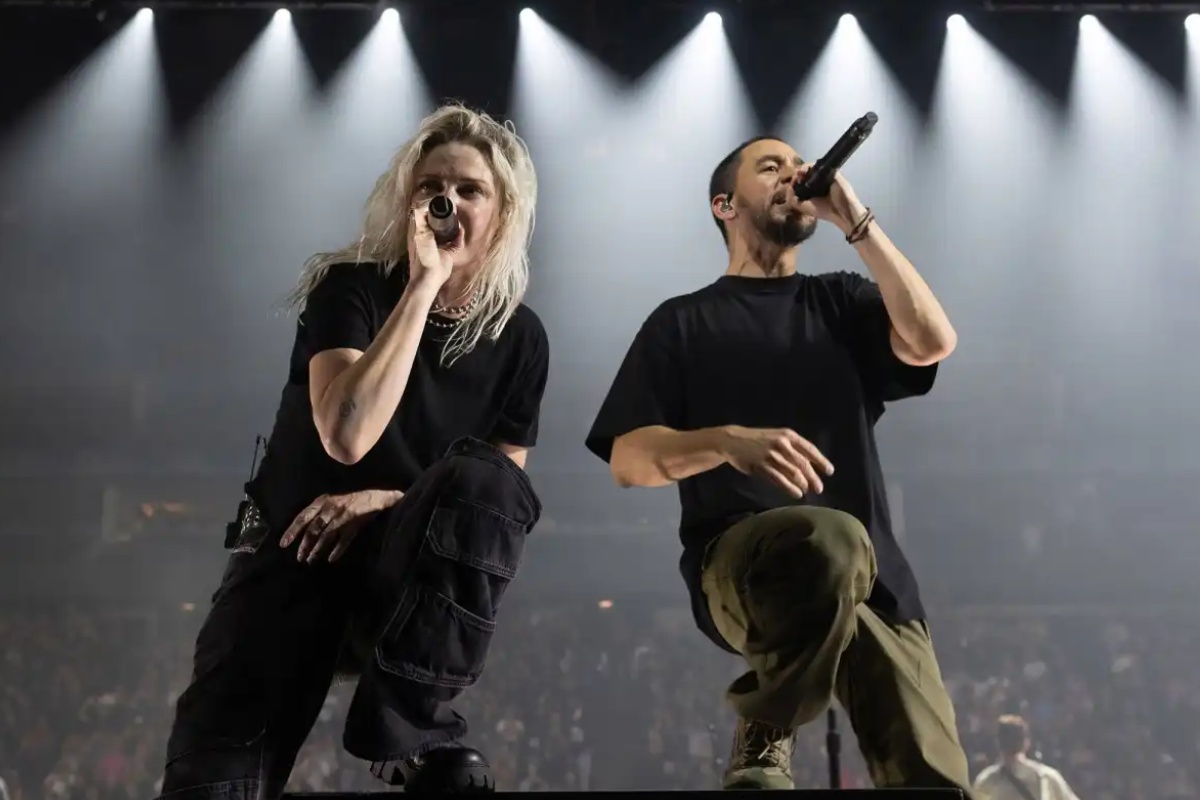
Following a multi-year hiatus—during which Shinoda released his solo album Post Traumatic (2018) and engaged directly with fans through live studio streams—Linkin Park entered a new era with their 2024 album From Zero. Featuring new co-lead vocalist Emily Armstrong and drummer Colin Brittain alongside original members Shinoda, Brad Delson, Joe Hahn, and Dave "Phoenix" Farrell, the release demonstrated Shinoda's commitment to preserving the band's creative spirit while embracing new vocal dynamics and modernized production techniques.
Comparative Overview of Linkin Park’s Eras
| Era / Album | Primary Genres & Styles | Key Creative & Production Direction | Shinoda’s Primary Focus |
|---|---|---|---|
| Nu-Metal Era(Hybrid Theory, Meteora) | Nu-metal, rap rock, alternative metal | Precise verse-chorus structures, heavy down-tuned guitars, turntable sampling | Rap vocals, beat programming, sample arrangement, visual art |
| Art Rock Era(Minutes to Midnight, A Thousand Suns) | Art rock, electronic rock, ambient, industrial | Minimalist instrumentation, concept storytelling, structural experimentation | Singing vocals, rhythm guitar, keyboards, co-production with Rick Rubin |
| Synthesis & Hard Rock(Living Things, The Hunting Party) | Synth-pop, hard rock, punk rock, alternative | High-tempo electronics mixed with raw, self-produced heavy analog guitars | Full co-production, aggressive arrangement, cross-genre collaborations |
| Modern Pop & Rebirth(One More Light, From Zero) | Pop rock, indie pop, alternative rock, hard rock revival | Focus on songwriting melody, modern vocal chops, revitalized dual-vocal dynamics | Co-writing, lead production, guiding band transitions, vocal synthesis |
Why Musical Adaptation Was Essential for Survival
Many rock acts of the early 2000s faded from cultural relevance because they remained tied to a single sound. Shinoda understood early in Linkin Park’s career that repeating a commercial formula leads to creative stagnation.
Avoiding the Nu-Metal Trap
Nu-metal faced a steep commercial and critical decline in the mid-2000s due to over-saturation and repetitive lyrical tropes. By actively abandoning signature nu-metal tropes on Minutes to Midnight, Shinoda protected Linkin Park from becoming a nostalgia act. This willingness to alienate casual fans in the short term guaranteed the band's long-term artistic vitality.
Integrating Hip-Hop and Electronic Production Techniques
Shinoda brought a hip-hop producer's mindset to alternative rock. Rather than recording a live band playing in a room, he used samplers, digital audio workstations (DAWs), and loop-based arrangements to build tracks layer by layer. This approach allowed the band to easily integrate modern pop, hip-hop, and electronic textures as popular music evolved throughout the 2010s and 2020s.
- Hip-Hop Beatmaker Approach (Sampling, Chopping, DAW Loops)
- Rock Band Dynamic (Heavy Guitars, Live Drums, Raw Vocals)
- Hybrid Production Framework (Mike Shinoda)
Shinoda’s Production Philosophy: Technical and Creative Insights
Shinoda’s technical production style relies on specific recording practices and songwriting methods that defined Linkin Park's catalog:
- Dual-Vocal Counterpoint: Shinoda treats two vocal lines as complementary instruments. In early releases, his steady, rhythmic delivery created a rhythmic anchor that allowed Chester Bennington’s melodic and screamed vocals to soar. In the From Zero era, he adapted this technique to complement Emily Armstrong’s versatile dynamic range.
- Chopped Vocal Samples: Long before vocal chop melodies dominated mainstream EDM and pop music, Shinoda manipulated recorded vocal snippets into melodic synth-like hooks (demonstrated clearly on tracks like "Somewhere I Belong" and "Lost").
- Genre Blending Without Gimmicks: Rather than layering rap over rock riffs as isolated elements, Shinoda integrates hip-hop rhythm tracks directly into alternative song structures, ensuring that electronic elements and heavy guitars share the same frequency spectrum seamlessly.
- Iterative Songwriting: Shinoda is known for creating dozens of instrumental demos for every track that reaches a final album. Tracks like "In the End" and "The Catalyst" went through numerous structural revisions before achieving their release forms.
Navigating Grief, Legacy, and Artistic Rebirth
The unexpected loss of Chester Bennington in 2017 forced a fundamental re-examination of Linkin Park's legacy. For many groups, the loss of a iconic lead singer marks the end of their creative output. Shinoda navigated this tragic transition with transparency and careful artistic reverence.
Rather than rushing back into band activities, Shinoda released his 2018 solo album Post Traumatic, documenting his grief, uncertainty, and recovery process in real time. Through extensive live-streaming during the 2020–2022 period, he opened up his production workflow to fans on Twitch, producing tracks for emerging artists and demonstrating how music serves as a tool for healing.
- 2017: Loss of Chester Bennington
- 2018: Solo Processing ("Post Traumatic")
- 2020–2022: Direct Community Engagement & Producer Streams
- 2024–2026: Rebuilding Linkin Park ("From Zero")
When Linkin Park resumed operations for From Zero, Shinoda made it clear that the objective was not to replace Bennington, but to honor the band's original name (Xero) and core ethos: constantly evolving while creating music grounded in emotional honesty.
Lessons for Modern Artists and Creators
Mike Shinoda’s career offers practical lessons for musicians, producers, and creative leaders aiming for long-term career longevity:
- Diversify Creative Skillsets: Do not rely on a single medium. Combining music production, visual artwork, and direct audience engagement creates a resilient artistic brand.
- Prioritize Evolution Over Nostalgia: Relying solely on past successes limits creative growth. Evolving your sound preserves genuine artistic passion, even if it initially challenges existing fans.
- Build Direct Audience Relationships: Shinoda's early adoption of online platforms (from the Linkin Park Underground fan club in 2001 to Twitch streaming and Web3 experiments in the 2020s) built an enduring community that supported the band through long hiatuses and difficult transitions.
- Maintain Ownership of Creative Direction: Controlling internal production and visual art prevents corporate or industry pressures from diluting your artistic vision.
Frequently Asked Questions
What was Mike Shinoda’s main production role in Linkin Park?
Mike Shinoda served as Linkin Park's main internal producer, songwriter, and arranger. While the band collaborated with external producers like Don Gilmore and Rick Rubin on specific albums, Shinoda programmed the electronic beats, composed key instrumental structures, engineered home demos, and co-produced releases like The Hunting Party and From Zero.
How did Linkin Park’s shift away from nu-metal impact their career?
Moving away from nu-metal allowed Linkin Park to avoid the genre crash of the mid-2000s. Releases like Minutes to Midnight and A Thousand Suns broadened their stylistic range, establishing them as an adaptable alternative rock group capable of headlining global festivals for decades.
Why did Linkin Park choose to continue with a new vocalist in 2024?
After seven years of processing grief and pursuing individual projects, the surviving members found a natural creative chemistry with Emily Armstrong and drummer Colin Brittain. Rather than touring purely as a heritage act, Shinoda and the band wanted to write new music, using the title From Zero to reference both their original band name (Xero) and their new chapter.
What side projects influenced Shinoda’s work in Linkin Park?
Shinoda’s hip-hop side project, Fort Minor (famous for the 2005 album The Rising Tied), allowed him to fully explore classic hip-hop production. His 2018 solo album Post Traumatic helped him process personal grief, while his score work for films like The Raid: Redemption deepened his expertise in cinematic sound design.
Did Mike Shinoda create Linkin Park’s visual artwork?
Yes. Shinoda earned a Bachelor of Fine Arts in Graphic Design from ArtCenter College of Design. He designed or co-designed iconic band visual elements, including the hybrid soldier on the cover of Hybrid Theory, the artwork for Reanimation, and various album covers, merchandise designs, and fine art gallery pieces throughout his career.
Recommended Next Actions
To fully understand and apply the principles of Mike Shinoda’s creative approach:
- Listen Chronologically: Play key transition tracks back-to-back—such as "Papercut" (2000), "The Catalyst" (2010), "Guilty All the Same" (2014), and "The Emptiness Machine" (2024)—to hear how rhythm structures, synthesis, and vocal arrangements evolved over time.
- Study Hybrid Production Workflows: Explore digital audio workstations (like Ableton Live or Logic Pro) to practice blending live guitar riffs with chopped vocal samples and digital hip-hop drum kits.
- Explore Official Documentary Material: Watch the making-of documentaries for Meteora, A Thousand Suns, and From Zero to gain firsthand insight into Shinoda’s collaborative studio process and creative philosophy.
Image Gallery