Best Near Infrared Sauna for Home Use: Complete Buying & Technology Guide
Selecting the best near infrared sauna for home use requires evaluating light wavelength emissions, heating efficiency, electromagnetic field (EMF) shielding, and structural material purity. The top home near-infrared saunas deliver ta...
Selecting the best near infrared sauna for home use requires evaluating light wavelength emissions, heating efficiency, electromagnetic field (EMF) shielding, and structural material purity. The top home near-infrared saunas deliver targeted therapeutic wavelengths (700 nm to 1,400 nm) via incandescent lamps or full-spectrum heating panels while maintaining zero-to-low EMF levels and non-toxic, off-gas-free enclosure materials.
Contents
Understanding Near Infrared (NIR) vs. Far Infrared (FIR) Technology
To choose the optimal home sauna, you must first understand how near-infrared light differs from traditional far-infrared and Finnish steam saunas. The infrared light spectrum is divided into three distinct wavebands: Near Infrared (NIR), Mid Infrared (MIR), and Far Infrared (FIR). Each band interacts differently with human biological tissue.
| Near Infrared (NIR) | Mid Infrared (MIR) | Far Infrared (FIR) |
|---|---|---|
| 700 nm – 1,400 nm | 1,400 nm – 3,000 nm | 3,000 nm – 100,000 nm |
Near-infrared light occupies the shortest wavelengths (700 nm to 1,400 nm) directly adjacent to visible red light. Because of its shorter wavelength, NIR light penetrates surface tissue and dermal layers up to several millimeters deep. Research documented by the National Center for Biotechnology Information demonstrates that near-infrared light stimulates mitochondrial chromophores—specifically cytochrome c oxidase—which promotes adenosine triphosphate (ATP) cellular energy production, tissue repair, and collagen synthesis through photobiomodulation.
By contrast, far-infrared light (3,000 nm to 100,000 nm) operates through thermal radiant heating. Water molecules within deep body tissues absorb far-infrared energy directly, raising core body temperature and inducing heavy cardiovascular sweating at relatively mild ambient air temperatures (115°F to 140°F).
While far-infrared saunas excel at systemic sweat induction and cardiovascular conditioning, dedicated near-infrared saunas combine localized thermal warming with light therapy. Many premium modern units now feature full-spectrum technology, integrating NIR light emitters with FIR carbon or ceramic heating elements to provide both cellular light stimulation and deep thermal sweating in a single session.
Core Types of Home Near Infrared Saunas
Home near-infrared saunas generally fall into three distinct structural and technological categories. Identifying which design fits your living space, wellness goals, and budget is the first step in narrowing your selection.
1. Portable Incandescent Lamp Enclosures (Tent Saunas)
Incandescent near-infrared saunas utilize high-output incandescent heat bulbs (typically 250 watts each) encased within a specialized canvas or pop-up thermal enclosure.
- Heating Mechanism: High-intensity incandescent bulbs emit a continuous spectrum of red and near-infrared light (600 nm to 1,000 nm) alongside direct radiant heat.
- Pros: Highly portable, rapid warm-up times (virtually instant heat), compact footprint, and generally lower price points ($800 to $3,000).
- Cons: Concentrated, directional light requires the user to rotate periodically during a session for even body coverage; smaller interior space compared to wooden cabins.
2. Full-Spectrum Wooden Cabinets
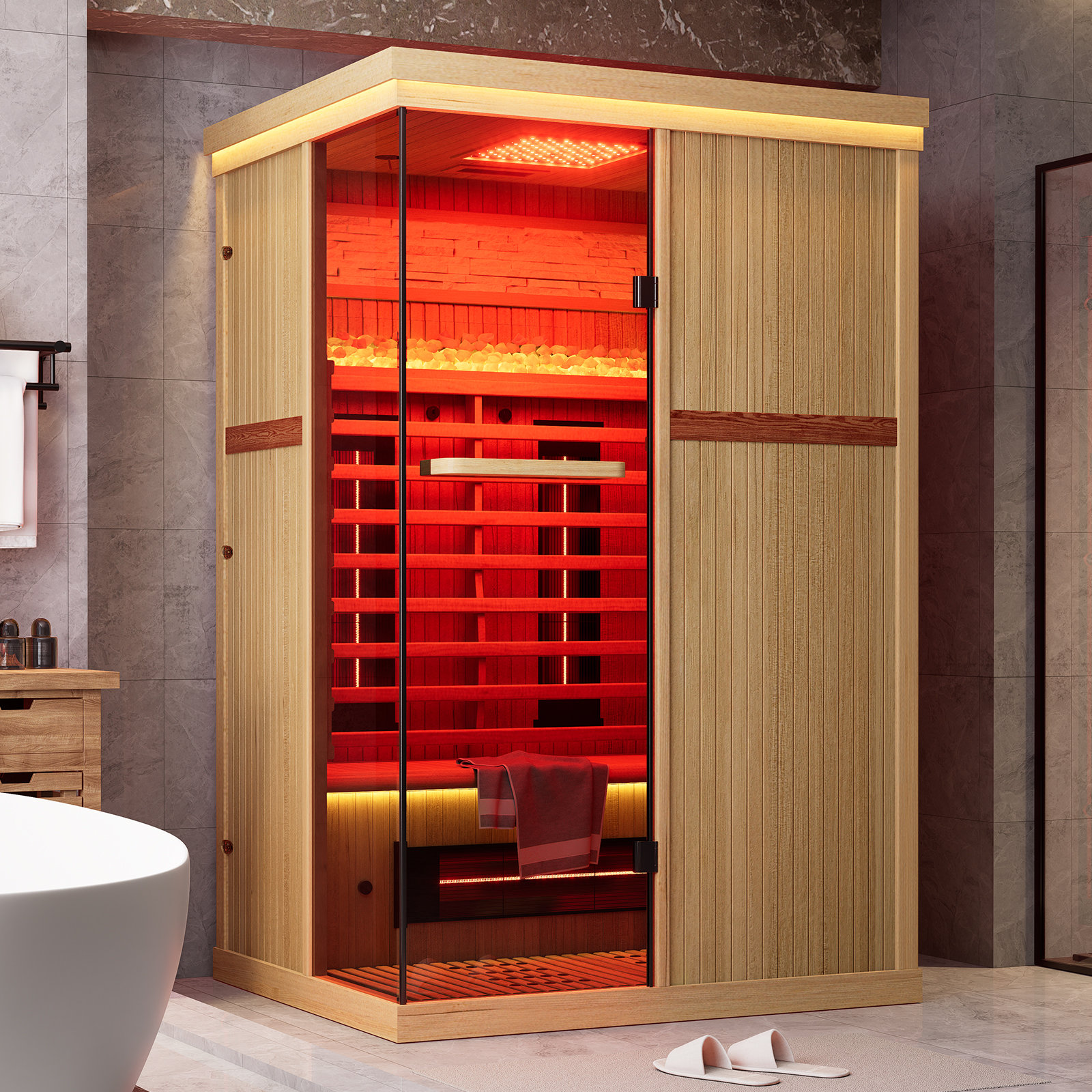
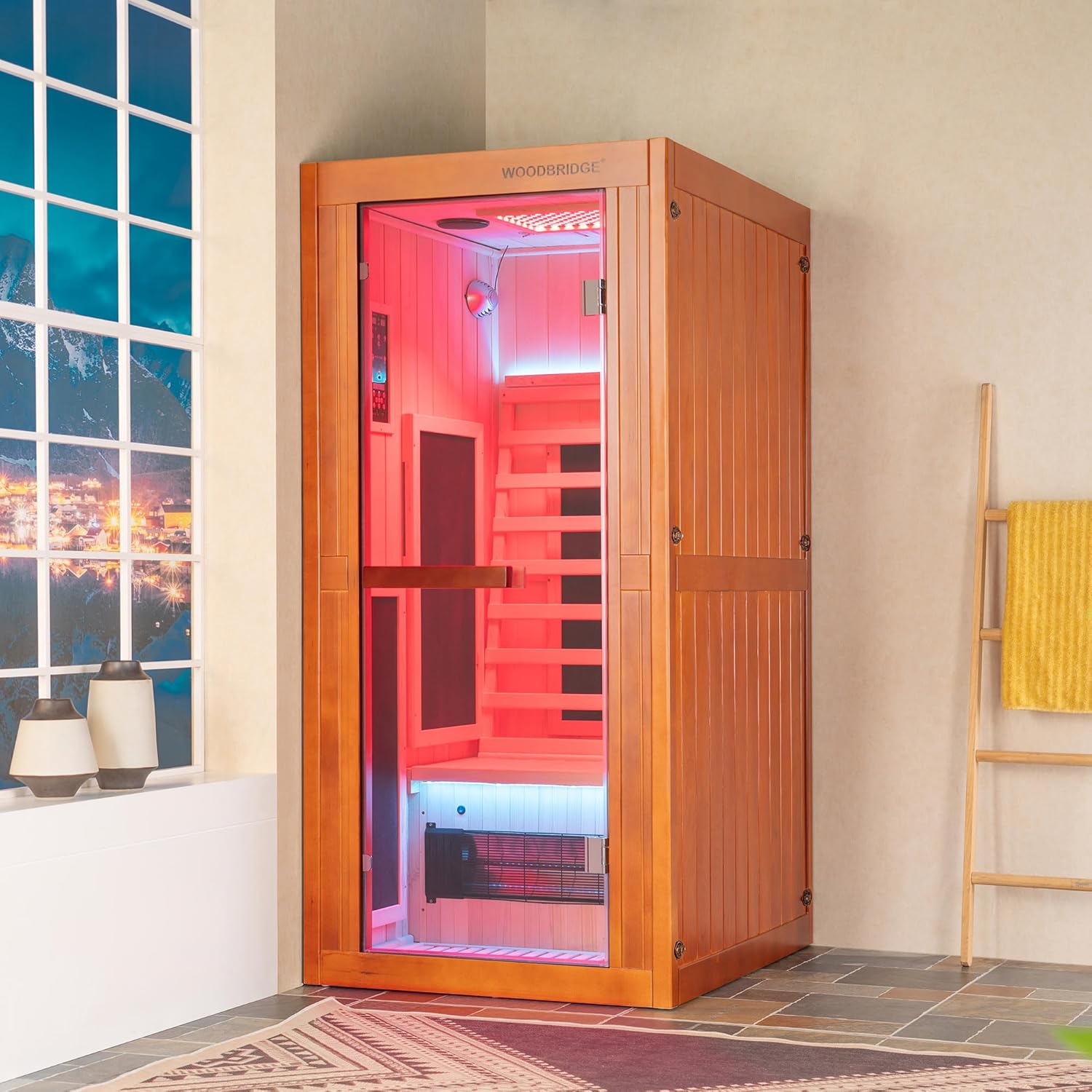
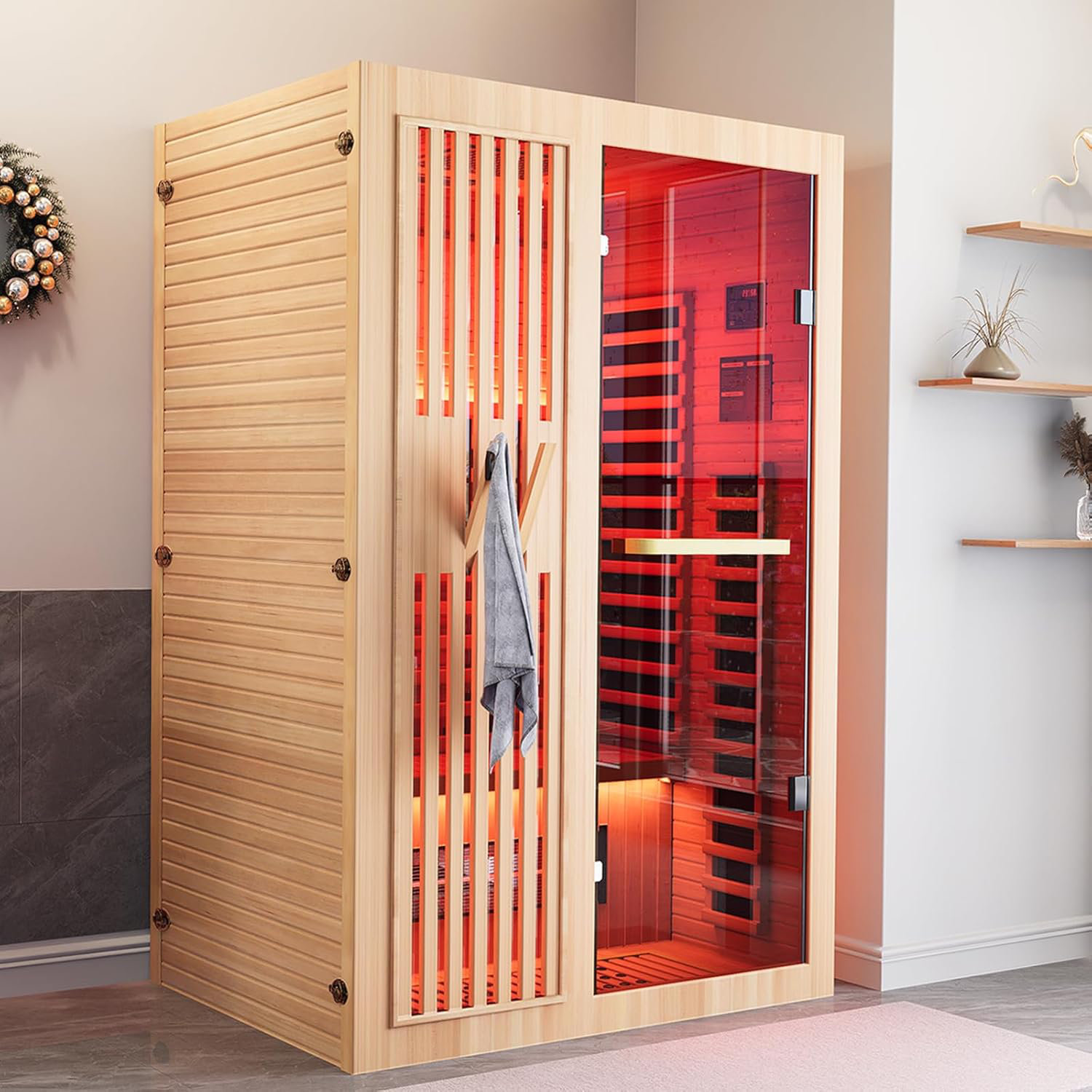
Full-spectrum wooden saunas resemble traditional sauna cabins but incorporate multi-waveband heating assemblies. They combine far-infrared carbon/ceramic wall panels with targeted near-infrared halogen lamps or high-density LED arrays.
- Heating Mechanism: Integrated heater banks where FIR panels handle ambient room preheating and core sweating, while specialized NIR halogen or LED panels target the spine, back, or front body.
- Pros: Complete 360-degree ambient heat, comfortable seating for one to four occupants, high aesthetic value, and comprehensive full-body spectrum coverage.
- Cons: High initial investment ($3,500 to $9,000+), permanent footprint, heavy shipping weight, and higher electrical draw (often requiring 15A or 20A dedicated household circuits).
3. Modular Near Infrared Light Panels
Modular light panels consist of standalone arrays of light-emitting diodes (LEDs) calibrated specifically to 660 nm (red light) and 850 nm (near-infrared) wavelengths.
- Heating Mechanism: Pure light emission with negligible convective heat.
- Pros: Exceptionally low power consumption, space-saving wall mounts, extremely targeted local treatments.
- Cons: Modular light panels do not raise ambient temperatures high enough to induce deep cardiovascular sweating unless paired with an insulated thermal tent or auxiliary room heater.
Comparison Matrix: Top Near Infrared Home Sauna Options
The following table summarizes the technical specifications, heating mechanisms, electrical requirements, and ideal use cases across leading home near-infrared sauna models.
| Sauna Model / Category | Heating Tech | Primary Wavelength Range | EMF / ELF Shielding | Power Requirement | Ideal User & Use Case |
|---|---|---|---|---|---|
| SaunaSpace Faraday / Luminati | 4x Incandescent Heat Bulbs | 600 nm – 1,000 nm (Red + NIR) | Zero EMF / Faraday conductive shielding | Standard 120V / 15A outlet (1,000W) | Users prioritizing EMF sensitivity, portability, and targeted photobiomodulation. |
| Sunlighten mPulse Series | Full-Spectrum (Smart Carbon + NIR LEDs) | 750 nm – 850 nm (NIR) + Mid/Far | Low EMF / Shielded wiring harness | Dedicated 120V/20A or 240V (model dependent) | Buyers seeking custom biofeedback tracking, high-end wooden cabinetry, and precise spectrum controls. |
| Clearlight Sanctuary Full Spectrum | True Wave II™ Full-Spectrum (Carbon/Ceramic + Halogen) | 700 nm – 1,400 nm (NIR) + Mid/Far | Ultra-low EMF (< 1 mG) & Low ELF | Dedicated 120V/15A or 20A circuit | Individuals wanting ergonomic cedar/basswood cabins with balanced full-body thermal distribution. |
| Therasage Thera360 PLUS | Tri-Lite NIR LEDs + FIR Carbon Panels | 600 nm – 980 nm (NIR) + Far IR | Advanced Shielded Low EMF/ELF | Standard 120V outlet | Space-constrained users needing a foldable, budget-friendly full-spectrum thermal sweat. |
Key Evaluation Criteria for Choosing a Home Near Infrared Sauna
Evaluating home near-infrared saunas requires looking beyond marketing claims. Pay close attention to four crucial engineering and safety standards when comparing models.
- Evaluation Checklist
- Spectral Output (700nm – 1,400nm targeted emission)
- Electromagnetic Field (EMF < 1-2 mG) & ELF Mitigation
- Non-Toxic Material Certification (Unvarnished wood / Organic textiles)
- Electrical Requirements (120V standard vs. 20A dedicated circuit)
1. Wavelength Peak and Emission Accuracy
Not all infrared heaters produce effective near-infrared energy. To trigger therapeutic photobiomodulation, the heater or light engine must generate significant spectral output between 700 nm and 1,400 nm, with clinical peaks often centered around 810 nm, 830 nm, and 850 nm.
- Incandescent Bulbs: Natural incandescent heat lamps deliver a smooth, continuous curve spanning visible red through near-infrared and shortwave mid-infrared. They yield high radiant warmth alongside therapeutic light.
- LED Arrays: High-powered LEDs provide narrow, targeted spectral peaks (such as exactly 830 nm or 850 nm) with high irradiance (mW/cm²), but generate minimal ambient heat.
- Ceramic/Halogen Panels: High-temperature halogen heaters encased in red filtering glass convert thermal energy into broad-spectrum near-infrared and mid-infrared rays.
Verify that manufacturers provide independent spectrometer test reports confirming peak output within the near-infrared spectrum rather than unverified generic claims.
2. EMF and ELF Shielding Verification
Electromagnetic fields (EMF) and Extremely Low Frequency (ELF) electric fields are generated by electric currents running through sauna heating elements and internal wiring. Because users spend 20 to 45 minutes in close proximity to these components, rigorous shielding is essential.
- Magnetic Fields (EMF): Look for units tested to remain under 2.0 milligauss (mG)—and ideally below 1.0 mG—at the normal seating position. High-end saunas utilize reverse-phase double-wired heaters where magnetic fields cancel each other out.
- Electric Fields (ELF): Electrical wiring should be enclosed in grounded steel conduits, and fabric tents should incorporate grounded conductive fabric (such as silver or stainless-steel mesh) to drain ambient electric fields to ground.
3. Material Purity and VOC Off-Gassing Protection
High temperatures inside a enclosed sauna accelerate the off-gassing of synthetic adhesives, varnishes, and chemical flame retardants. Inhaling volatile organic compounds (VOCs) negates the health benefits of sauna therapy.
- Wooden Cabinets: Prioritize certified non-toxic, unvarnished solid woods such as Western Red Cedar, Canadian Hemlock, or Hypoallergenic Basswood. The wood should be kiln-dried and assembled using non-toxic, heat-resistant food-grade glues rather than solvent-based industrial adhesives.
- Portable Enclosures: Canvas tents should use untreated, unbleached organic cotton, hemp, or double-shielded non-toxic synthetic fabrics verified free of PVC, phthalates, and chemical water-repellents.
4. Spatial, Electrical, and Structural Prerequisites
Before purchasing, assess your physical living environment against the unit's technical footprint.
- Electrical Infrastructure: Portable units (like 4-bulb incandescent light saunas or portable folding tents) typically draw 800 to 1,200 watts and plug directly into standard 120-volt household wall outlets. However, two-person or larger full-spectrum wooden cabins often require a dedicated 120V / 20-Amp circuit or a 240V connection fitted with a NEMA 5-20R outlet.
- Floor Loading and Clearance: Wooden cabinets weigh between 350 lbs and 900 lbs. Ensure your subfloor supports the weight and allow at least 2 to 4 inches of ventilation clearance between exterior sauna walls and adjacent room drywall.
Installation, Electrical Requirements, and Daily Maintenance
Proper installation and routine maintenance preserve equipment lifespan and ensure user safety.
Installation and Circuit Setup
- Dedicated Outlets: If installing a multi-person cabinet, hire a licensed electrician to verify panel capacity and run a dedicated line if required by the manufacturer specs. Avoid using generic household extension cords, which can cause voltage drops, overheating, and fire risks.
- Surface Leveling: Install wooden saunas on tile, concrete, engineered hardwood, or heavy-duty vinyl flooring. Avoid thick pile carpeting directly beneath heavy sauna frames to ensure proper airflow through bottom intake vents.
- Ventilation: Ensure the surrounding room has adequate airflow or an exhaust fan to absorb ambient heat and humidity during extended sauna sessions.
Maintenance Protocols
- Wooden Cabinets: Wipe down wooden benches and backrests after every session using a clean, damp microfiber cloth. Apply specialized non-toxic wood cleaners monthly to remove body oils and sweat salts. Avoid applying harsh chemical disinfectants or chlorine bleach, which will sink into porous wood grain.
- Incandescent Bulb Care: Keep incandescent heat bulbs clean of dust and finger oils. Turn off and fully unplug the unit prior to inspecting or wiping down lamp guards. Handle cool bulbs with clean cotton gloves to avoid hot spots caused by residual surface skin oils.
- Fabric Enclosures: Spot-clean fabric interiors with mild organic soap and water. Removable bamboo or cotton floor pads should be washed weekly.
Health Safety, Operational Guidelines, and Limitations
While near-infrared saunas offer substantial wellness benefits, safe operation requires following established exposure guidelines.
Safe Usage Protocol
- Hydration: Drink 16–24 oz water pre- and post-session.
- Session Length: Begin at 10–15 minutes; build up to 20–30 minutes max.
- Distance: Maintain recommended clearance (12–18 inches for lamps).
- Protection: Avoid looking directly into high-intensity NIR emitters.
Session Duration and Frequency: Beginners should start with 10- to 15-minute sessions at moderate intensity, gradually extending to 20 to 30 minutes as thermal tolerance improves. Limit sessions to once per day.
Hydration and Electrolyte Replenishment: Profuse sweating depletes body fluids and essential minerals (sodium, potassium, magnesium). Drink 16 to 24 ounces of water mixed with electrolytes before and after every session.
Eye Safety: Never stare directly into high-output near-infrared light bulbs or intense NIR LED panels at close range. Infrared light passes through the cornea and can heat the eye lens over extended periods. Wear light-blocking safety goggles or look away from direct lamp heads during operation.
Contraindications: Individuals with cardiovascular conditions, implanted medical devices (such as pacemakers), acute joint injuries, multiple sclerosis, or those who are pregnant should consult a qualified physician before using any thermal sauna system.
Frequently Asked Questions
What is the primary difference between near infrared and far infrared saunas?
Near-infrared (NIR) light has shorter wavelengths (700 nm – 1,400 nm) that penetrate surface tissues to stimulate mitochondrial energy production (ATP) via photobiomodulation. Far-infrared (FIR) light has longer wavelengths (3,000 nm – 100,000 nm) that heat body water molecules directly, creating systemic warmth and heavy cardiovascular sweating. Full-spectrum saunas combine both light spectrums.
Can I install a near infrared sauna in an apartment or small space?
Yes. Portable incandescent lamp saunas (tent saunas) and single-person folding NIR units feature compact footprints (typically 3 feet by 3 feet or smaller), require no permanent structural modifications, and plug into standard 120V household outlets, making them ideal for apartment living.
Are near infrared incandescent heat bulbs safe for home use?
Incandescent near-infrared heat lamps are safe when used inside purpose-built fixtures equipped with protective steel wire guards, robust heat-resistant sockets, and stable frames. Maintain a safe physical distance (at least 12 to 18 inches) from the bulb surface to prevent skin burns, and avoid staring directly into the lit bulbs.
How do I verify that a sauna has low EMF output?
Review third-party magnetic field testing documentation provided by the manufacturer. Independent test reports should confirm that magnetic field exposure measures below 2.0 milligauss (mG)—and preferably under 1.0 mG—at normal user seating distances. You can also verify levels using a calibrated home Gaussmeter.
How often should I use a near infrared home sauna?
Most health guidelines recommend using a near-infrared sauna 3 to 5 times per week for optimal benefits. Beginners should start with shorter 10- to 15-minute sessions to assess thermal tolerance, slowly building up to 20- to 30-minute sessions over several weeks.
Summary and Next Actions
Finding the best near infrared sauna for home use depends on balancing your spatial constraints, EMF tolerance, budget, and wellness goals.
- For sensitive users prioritizing ultra-low EMF, portability, and targeted light absorption: Choose a dedicated four-bulb incandescent light enclosure (such as a SaunaSpace tent system).
- For users wanting a traditional luxury cabin experience with multi-waveband heating: Invest in a full-spectrum wooden sauna cabinet (such as a Sunlighten mPulse or Clearlight Sanctuary unit) built from unvarnished, non-toxic timber.
Measure your available room dimensions, verify your home's circuit breaker capacity, and request independent EMF and volatile organic compound (VOC) testing certificates from manufacturers before finalizing your purchase.
Image Gallery