The Career of Carlos Peña in Baseball: Power Hitter and Defensive Excellence
Carlos Peña enjoyed a remarkable 14-year Major League Baseball career defined by immense raw power, exceptional defensive mastery at first base, and a deeply analytical approach to hitting that preceded the modern launch-angle revoluti...
Carlos Peña enjoyed a remarkable 14-year Major League Baseball career defined by immense raw power, exceptional defensive mastery at first base, and a deeply analytical approach to hitting that preceded the modern launch-angle revolution. Rising from humble beginnings in the Dominican Republic and Massachusetts to become an American League All-Star, Gold Glove winner, and Comeback Player of the Year, Peña carved out a legacy as one of the game's most feared left-handed sluggers during his peak years with the Tampa Bay Rays.
Contents
Early Life, Amateur Background, and Draft Selection
Carlos Peña’s journey to Major League Baseball began outside the traditional developmental pipelines of the era. Born in Santo Domingo, Dominican Republic, his family moved to Haverhill, Massachusetts, when he was a teenager. Adjusting to a new culture and climate while learning baseball in New England shaped a rigorous work ethic that would define his entire athletic life.
Peña attended Northeastern University, where he established himself as a standout collegiate prospect in the America East Conference. His performance on the diamond caught the attention of professional scouts who coveted his rare combination of raw left-handed power and advanced plate discipline. In the 1998 Major League Baseball Draft, the Texas Rangers selected Peña in the first round (10th overall pick). This selection placed him on the fast track to professional baseball, signaling that major league front offices viewed him as a cornerstone middle-of-the-order bat of the future.
Major League Debut and Early Journeys
Entering the professional ranks, Peña climbed rapidly through the Texas Rangers' minor league system. However, organizations often face logistical logjams when multiple elite prospects occupy the same positional pipeline. Consequently, Peña’s early professional years were characterized by frequent franchise movement as teams traded for his high-ceiling potential.
- Texas Rangers (2001): Peña made his major league debut on September 5, 2001, flashing the raw power that made him a high draft pick.
- Oakland Athletics (2002): Traded to Oakland prior to the 2002 season, Peña played a crucial role for the "Moneyball" Athletics, demonstrating high on-base skills and defensive proficiency before another mid-season trade.
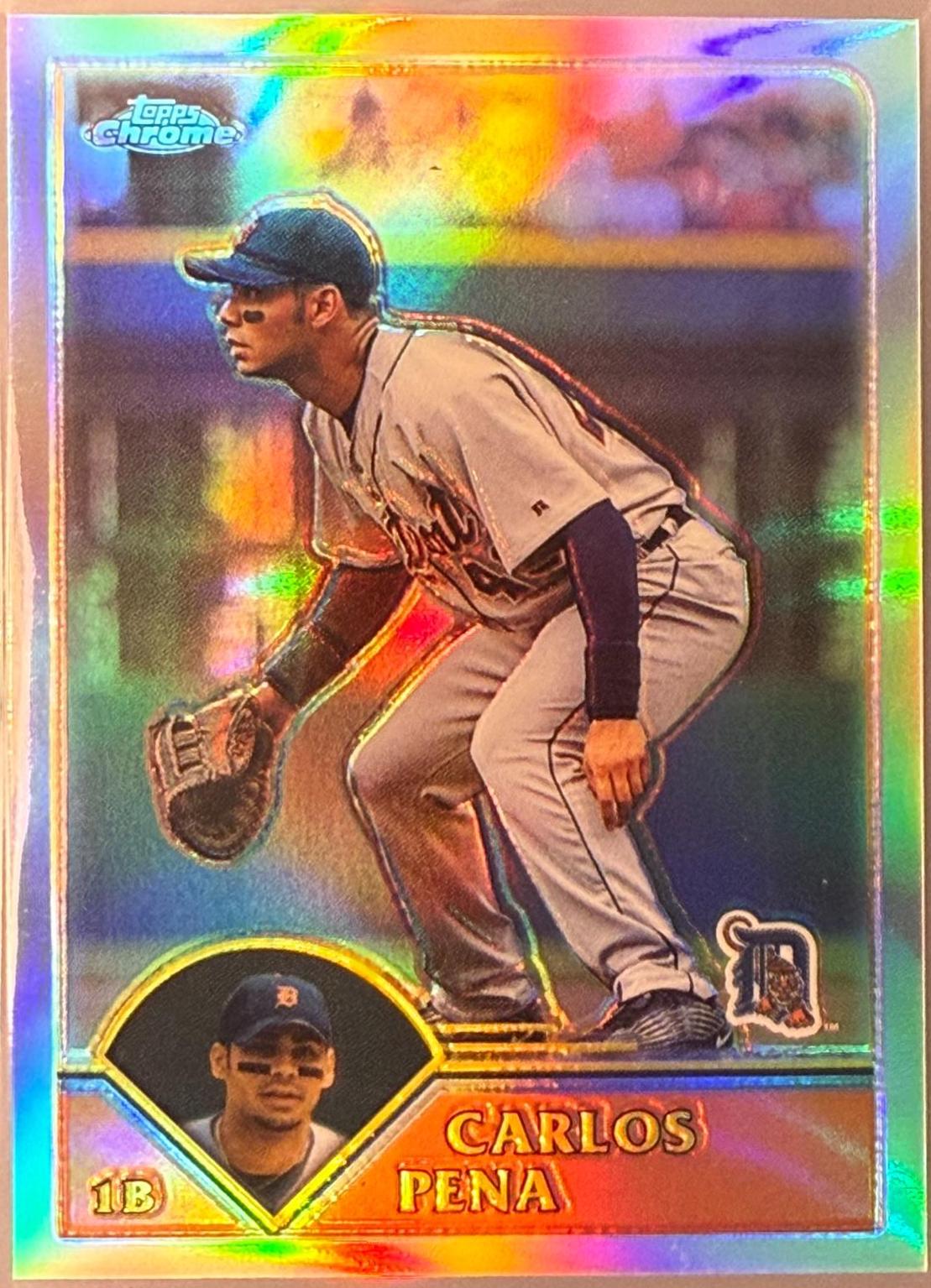
- Detroit Tigers (2002–2005): Arriving in Detroit during a tumultuous rebuilding era, Peña secured his first extended look as an everyday major league first baseman. He hit 27 home runs in 2003 and 25 home runs in 2004, anchoring the Tigers' lineup despite team-wide struggles.
During these initial formative seasons, Peña established the offensive profile that would define his career: a three-true-outcomes hitter capable of drawing walks, striking out at a high rate, and launching tape-measure home runs. Pitchers quickly learned that mistakes over the plate carried severe consequences.
The Tampa Bay Rays Breakout (2007–2010)
After brief stints with the Boston Red Sox and Cincinnati Reds that yielded limited playing time, Peña signed a minor league contract with the Tampa Bay Devil Rays prior to the 2007 season. This transaction proved to be one of the most consequential signings in franchise history.
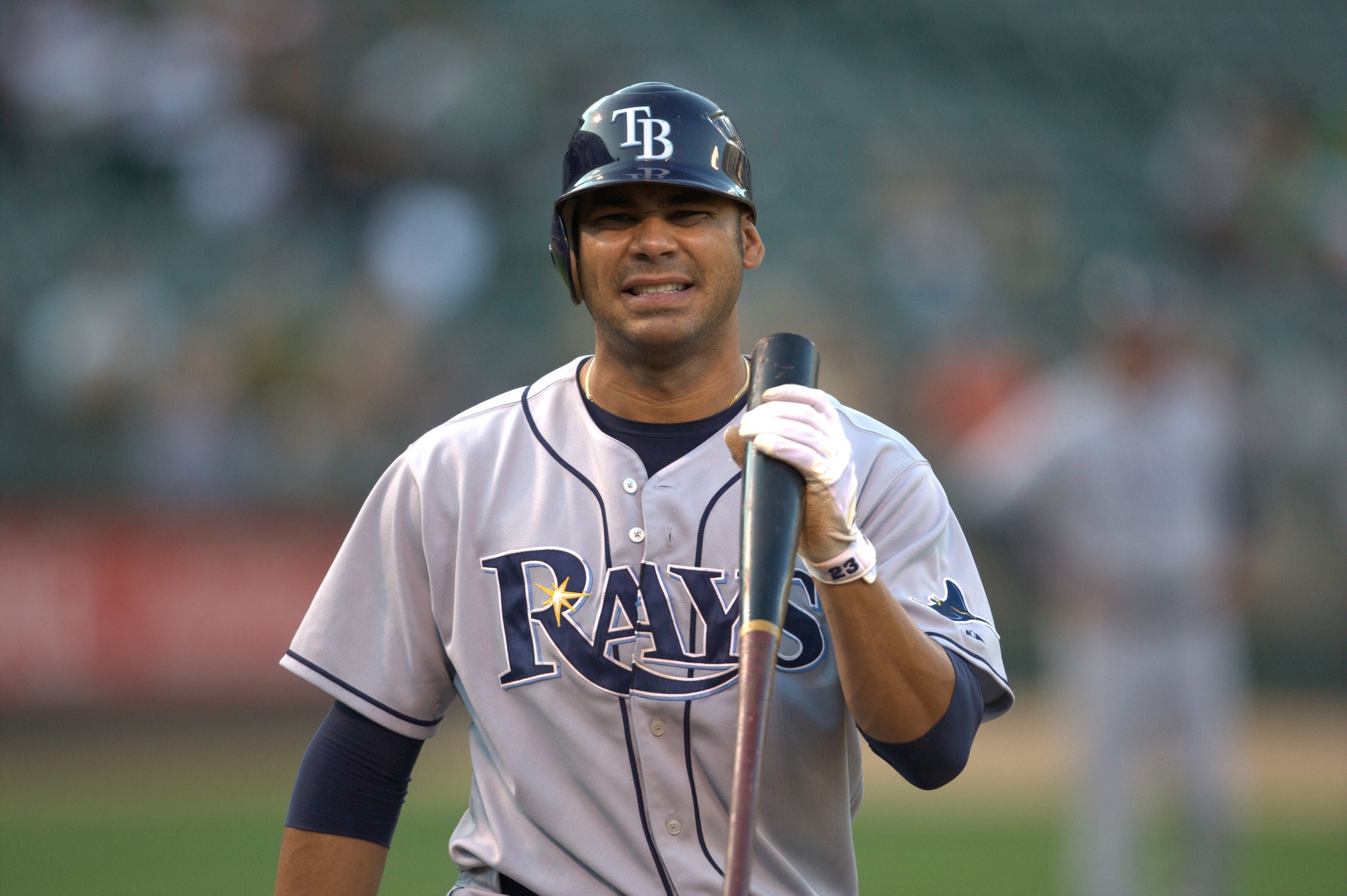
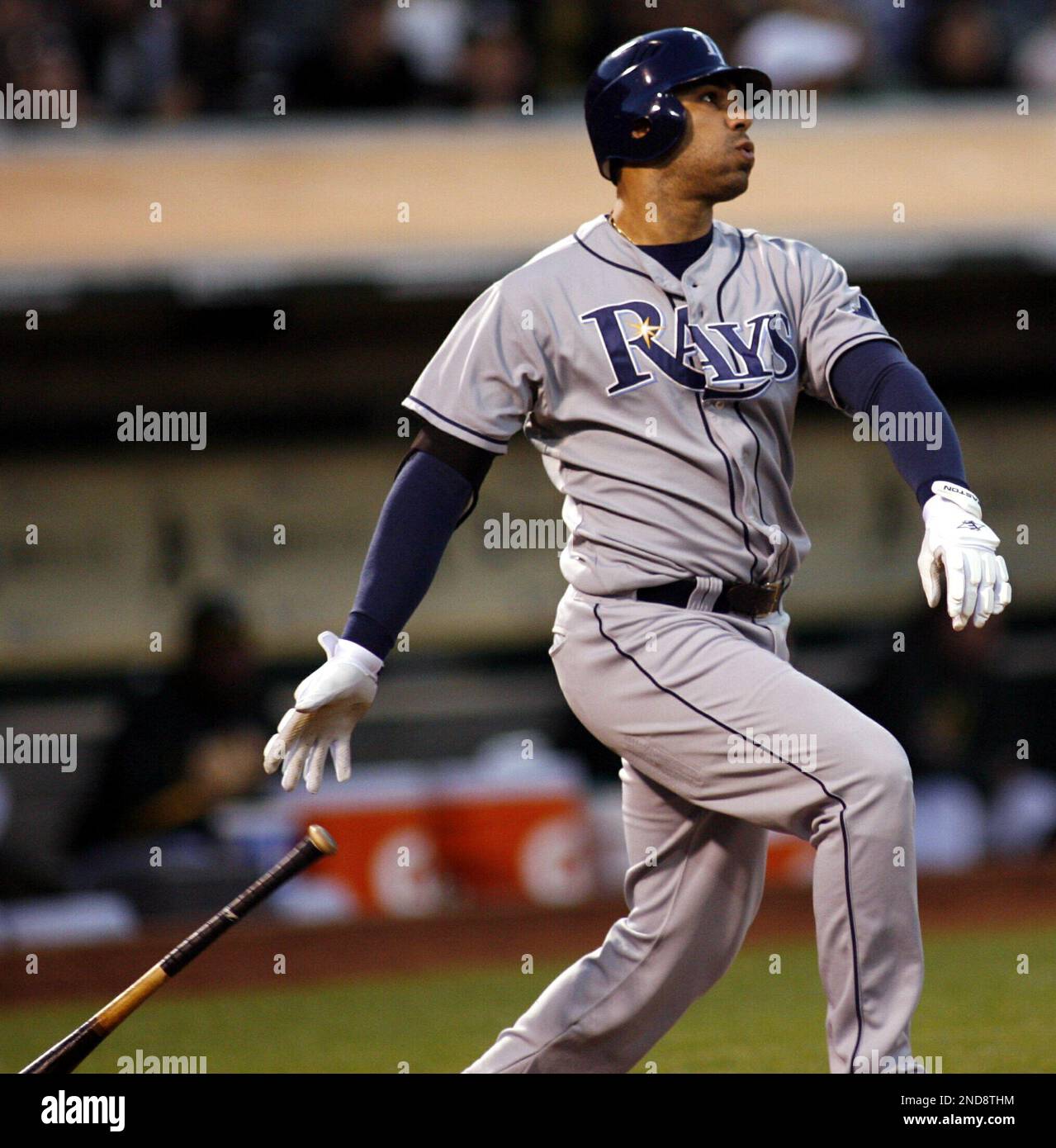
Inserting himself firmly into the starting lineup, Peña unlocked his absolute peak. In 2007, he delivered a historic campaign, smashing 46 home runs—setting a then-franchise record—while driving in 121 runs and posting an impressive .988 OPS. His offensive explosion earned him the American League Comeback Player of the Year Award and a rare distinction of receiving American League Most Valuable Player votes.
| Year | Team | Home Runs | RBIs | OPS | WAR |
|---|---|---|---|---|---|
| 2007 | Tampa Bay | 46 | 121 | .988 | 6.9 |
| 2008 | Tampa Bay | 31 | 102 | .857 | 4.6 |
| 2009 | Tampa Bay | 39 | 100 | .899 | 4.3 |
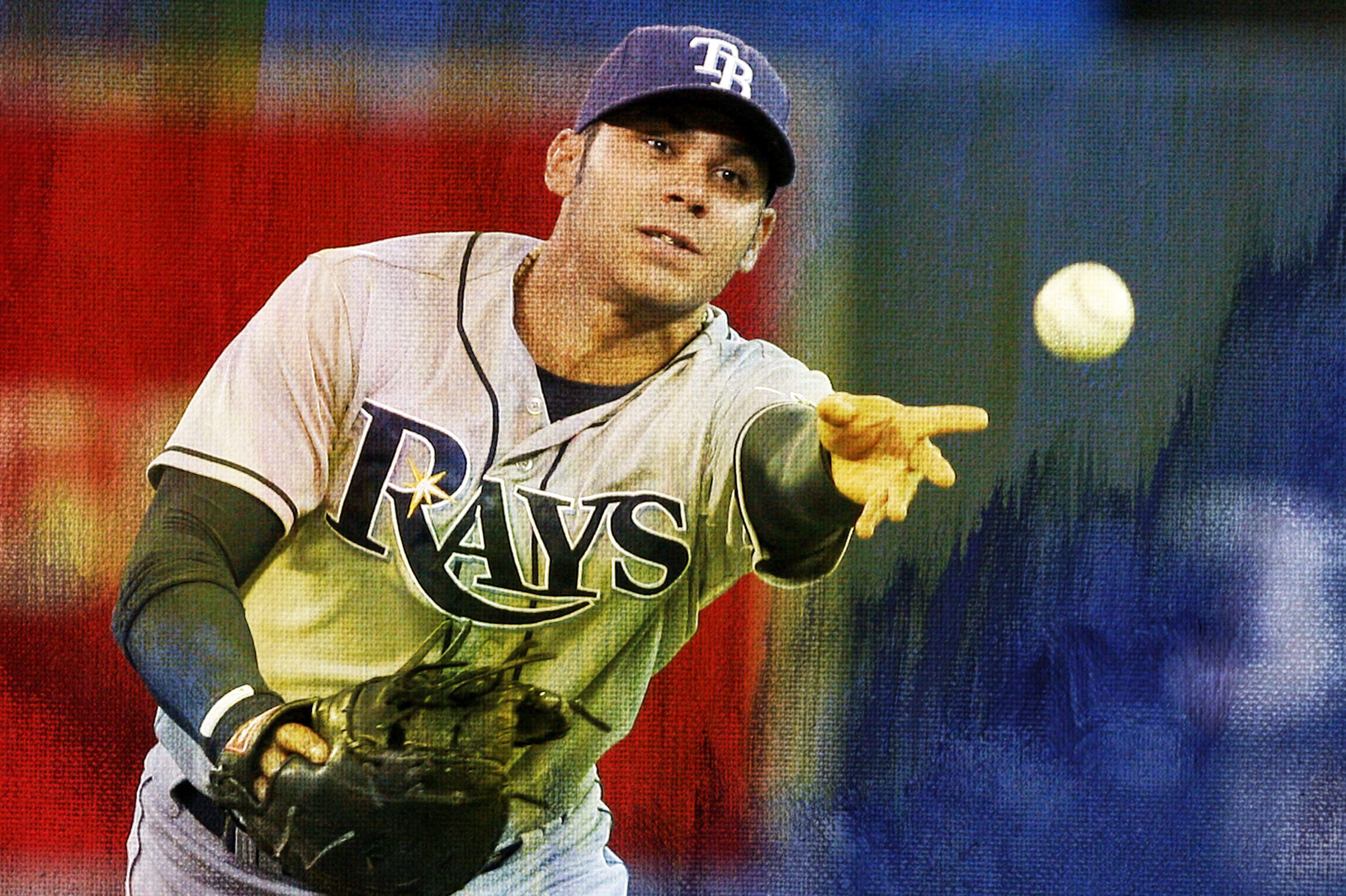
Peña was not merely a designated hitter or a one-dimensional slugger; his defensive excellence at first base was foundational to the Tampa Bay Rays' historic rise from perennial cellar-dwellers to American League champions. In 2008, he earned his first Rawlings Gold Glove Award, anchoring a stellar infield defense that propelled the newly rebranded Rays to the World Series. His left-handed power returned 39 home runs in 2009, earning him his first and only American League All-Star selection.
Defensive Mastery and Analytical Approach
While casual fans often remembered Peña for his towering home runs and high strikeout totals, baseball insiders and modern analysts deeply appreciated his defensive contributions and intellectual approach to hitting.
At first base, Peña possessed exceptional footwork, an expansive catching radius, and an innate ability to pick errant throws from his infielders. His high baseball IQ allowed him to position himself perfectly against shifting pull hitters long before defensive shifts became an algorithmic standard across the league. Winning the Gold Glove Award in 2008 validated his defensive reputation.
Offensively, Peña was an early adopter of the launch-angle philosophy. Rather than focusing solely on batting average or trying to slap ground balls through the infield, Peña understood the mathematical value of elevating the baseball. By prioritizing walks and fly balls, he maximized his run-production potential, serving as a prototype for the modern power hitter.
Later Career, Return to Tampa, and Retirement
Following his stellar tenure with the Rays, Peña embarked on a nomadic final chapter, lending his veteran presence and elite defensive skills to several other franchises:
- Chicago Cubs (2011): Signed a one-year deal with the Cubs, where he hit 28 home runs and won his second Gold Glove Award, showcasing his defensive excellence in the National League.
- Tampa Bay Rays (2012): Returned to Tampa Bay for a final encore, providing veteran leadership to a competitive ballclub.
- Houston Astros and Kansas City Royals (2013): Split his final major league season between Houston and Kansas City, wrapping up a 14-year career in the major leagues.
In January 2015, Peña officially announced his retirement from professional baseball, signing a symbolic one-day contract with the Tampa Bay Rays to retire with the organization where he achieved his greatest individual and team success.
Post-Playing Career and Legacy in Baseball
Upon hanging up his cleats, Peña transitioned seamlessly into sports broadcasting. He joined the MLB Network as an analyst, where his articulate breakdown of hitting mechanics, defensive positioning, and analytical concepts made him a fan favorite. His ability to explain the nuances of modern hitting helped bridge the gap between traditional scouting and advanced analytics for television viewers.
Carlos Peña finished his 14-year career with 286 home runs, 818 RBIs, and a reputation as one of the ultimate professionals of his era. Beyond the statistics, his legacy remains tied to the 2008 Tampa Bay Rays team that changed the culture of a franchise and captured the American League pennant.
Frequently Asked Questions
What teams did Carlos Peña play for during his MLB career?
Carlos Peña played for the Texas Rangers, Oakland Athletics, Detroit Tigers, Boston Red Sox, Cincinnati Reds, Tampa Bay Rays, Chicago Cubs, Houston Astros, and Kansas City Royals across 14 major league seasons.
When did Carlos Peña win a Gold Glove Award?
Peña won two American League Gold Glove Awards at first base: his first came with the Tampa Bay Rays in 2008, and his second came with the Chicago Cubs in 2011.
How many home runs did Carlos Peña hit in his best season?
Peña hit a career-high 46 home runs during the 2007 Major League Baseball season while playing for the Tampa Bay Rays, setting a then-franchise record for home runs in a single year.
Did Carlos Peña make an All-Star team?
Yes, Carlos Peña was selected to the American League All-Star team in 2009. That same year, he participated in the Home Run Derby, demonstrating his status as one of the game's premier power hitters.
What is Carlos Peña doing now?
Following his retirement from Major League Baseball, Peña transitioned into sports media, working prominently as an analyst and studio host for the MLB Network.
Next Action
To further explore the statistical impact of Carlos Peña, consult official historical databases such as Baseball-Reference or MLB.com to review his complete seasonal splits, advanced defensive metrics, and career transaction history.
Image Gallery