Understanding Why There Are Wild Goldfish in Some Ponds
Wild goldfish appear in local ponds primarily because irresponsible pet owners release unwanted domestic goldfish into natural waterways, where these hardy fish survive, reproduce, and adapt to harsh environmental conditions over multi...
Wild goldfish appear in local ponds primarily because irresponsible pet owners release unwanted domestic goldfish into natural waterways, where these hardy fish survive, reproduce, and adapt to harsh environmental conditions over multiple generations.
Contents
The presence of goldfish (Carassius auratus) in wild or semi-wild ecosystems often catches park visitors and amateur naturalists by surprise. Many assume these ornamental, brightly colored fish are strictly indoor aquarium inhabitants or fragile backyard water-garden features. However, when wild goldfish populations establish themselves in public ponds, stormwater retention basins, and natural lakes, they can transform from cute pets into invasive ecological disruptors. Understanding how domestic goldfish transition into wild populations requires examining their biology, human behavior, and the dynamics of urban and suburban aquatic ecosystems.
The Origins of Wild Goldfish Populations
Goldfish are not native to North America, Europe, or most regions where wild populations now thrive. They originated in ancient China over a thousand years ago, where selectively bred Prussian carp (Carassius gibelio) yielded the first metallic and brightly colored variants. Over centuries of selective breeding, humans developed dozens of distinct fancy goldfish varieties with double tails, bubble eyes, and delicate fins.
Despite centuries of domestication, goldfish retain many of the robust survival traits of their wild carp ancestors. When an unwanted pet goldfish is released into an open body of water, it does not necessarily face immediate death. Instead, it enters an environment where its natural resilience can kick in. Over generations, wild-born descendants of released pets often undergo a physical reversion. They lose their bright orange, yellow, or calico coloration, transitioning back to a drab olive-green, brown, or bronze hue that provides natural camouflage against predators like herons, cormorants, and predatory fish.
Human Behavior and the Release Phenomenon
The single most common pathway for goldfish to enter local ponds is deliberate release by humans. This phenomenon typically happens in a few recurring scenarios:
- Growing Too Large: Pet owners frequently buy tiny feeder goldfish or small fancy varieties for indoor bowls or small aquariums. Within a year, a healthy goldfish can easily outgrow its enclosure, prompting owners to look for a permanent home.
- Pond Maintenance Closures: Homeowners moving out of a house with a backyard water feature or individuals shutting down neglected garden ponds sometimes dump the remaining fish into nearby public parks or stormwater ponds.
- Misguided Compassion: Rather than humanely euthanizing a sick, injured, or unwanted fish, well-meaning individuals often believe they are doing a good deed by "setting the fish free" in a natural habitat.
- Cultural or Religious Releases: In certain cultural traditions, releasing captive animals into the wild is practiced as a gesture of merit or good fortune, occasionally involving freshwater fish purchased from pet stores or live markets.
Unfortunately, what owners perceive as a merciful act often spells trouble for the local ecosystem. While some released fish fall victim to predators within hours, enough survive to create self-sustaining breeding populations in temperate climates.
Biological Adaptations for Survival
Goldfish possess an extraordinary array of physiological adaptations that allow them to thrive in environments where other fish species struggle. These capabilities explain how a domesticated pet can successfully transition to a wild lifestyle.
Extreme Temperature Tolerance
Goldfish are ectothermic animals capable of tolerating a wide thermal range. They thrive in warm summer water temperatures and can survive freezing winters by entering a state of metabolic slowdown near the bottom of deep ponds. Even if the surface of a pond freezes solid, goldfish can survive beneath the ice as long as dissolved oxygen levels do not drop to absolute zero.
Low-Oxygen Resilience
Many urban ponds suffer from low dissolved oxygen levels, especially during hot summer months or when excess algae decay. Goldfish can survive in severely hypoxic (low-oxygen) water by utilizing anaerobic metabolic pathways, shifting part of their energy production to processes that do not require oxygen.
Omnivorous Diet
As opportunistic omnivores, wild goldfish consume almost anything available. Their diet includes aquatic plants, microscopic algae, insect larvae, small crustaceans, snails, and fish eggs. This lack of dietary specialization ensures they rarely starve, even in degraded or highly urbanized aquatic habitats.
Ecological Impacts of Invasive Goldfish
Once goldfish establish a foothold in a natural or semi-natural pond, they can exert significant pressure on the native ecology. Because they are members of the carp family, their behavioral habits directly alter water quality and habitat structure.
| Ecological Impact | Mechanism | Result |
|---|---|---|
| Habitat Destabilization | Continuous foraging and rooting in bottom sediments (benthivory). | Re-suspension of silt, increased water turbidity, and destruction of aquatic plant roots. |
| Nutrient Cycling Alteration | Excretion of metabolic waste and stirring of nutrient-rich bottom muck. | Internal loading of phosphorus and nitrogen, frequently triggering severe cyanobacterial (blue-green algae) blooms. |
| Resource Competition | Direct competition with native fish and amphibians for food, shelter, and breeding sites. | Reduction in populations of native minnows, darters, and amphibian larvae. |
| Pathogen Introduction | Carriage of parasites and viral diseases acquired in captivity or transport. | Spread of diseases to vulnerable wild fish populations, causing localized die-offs. |
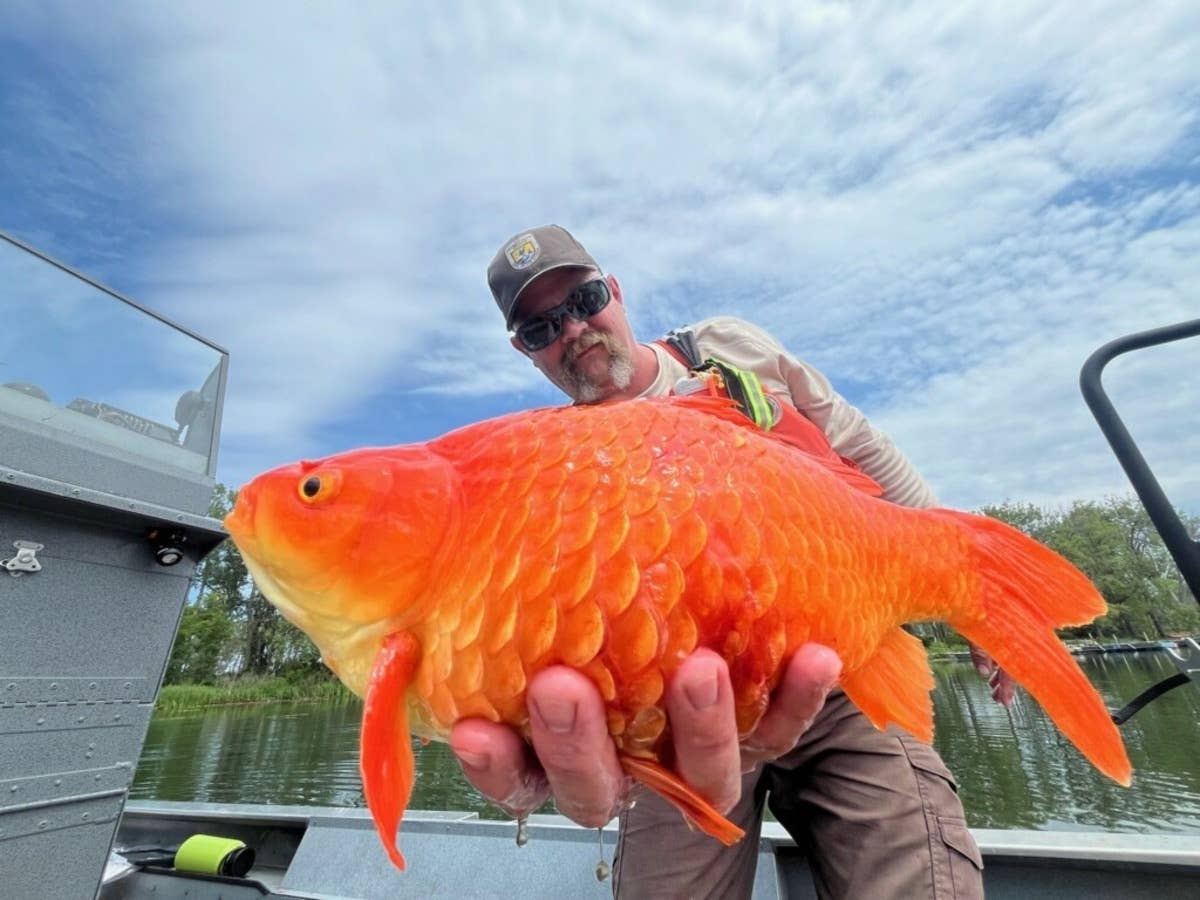
Furthermore, goldfish grow much larger in the wild than they typically do in home aquariums. While an indoor goldfish might max out at a few inches due to spatial constraints, wild goldfish frequently reach lengths of 12 to 16 inches and weigh several pounds, resembling small carp.
Management and Eradication Challenges
Controlling or eradicating wild goldfish populations once they establish in a pond is notoriously difficult. Their high reproductive capacity—females can release tens of thousands of eggs in a single spawning season—allows populations to rebound quickly even after significant culling efforts.
Conservation agencies and municipal park departments employ several methods to manage invasive goldfish populations:
- Electrofishing: Using specialized boat- or backpack-mounted electrical equipment to temporarily stun fish for safe removal. This method is effective in shallow, accessible water bodies.
- Rotenone Treatments: Applying a naturally occurring plant-derived piscicide (rotenone) that disrupts cellular respiration in fish gills. This is typically reserved for enclosed ponds where complete eradication is necessary before restocking native species.
- Physical Removal and Netting: Using seines and hoop nets, though this rarely catches every individual and requires ongoing maintenance.
- Public Education Campaigns: Posting signage around municipal ponds and running educational programs to deter illegal dumping of unwanted pets.
Comparison of Domestic vs. Wild Goldfish Traits
To understand how these fish change after release, it is helpful to compare their domestic and wild states across key biological and physical parameters.
| Trait | Domestic Aquarium Goldfish | Established Wild Goldfish |
|---|---|---|
| Coloration | Bright orange, white, red, black, calico, or variegated patterns. | Drab olive-green, bronze, or brown camouflage. |
| Body Shape | Often deep-bodied, rounded, or modified with fancy fins and double tails. | Streamlined, torpedo-shaped, resembling ancestral Prussian carp. |
| Average Size | 2 to 6 inches depending on tank size and breed. | 8 to 16 inches in mature, nutrient-rich environments. |
| Lifespan | 5 to 15 years with proper indoor care. | 10 to 25+ years in open, resource-rich waters. |
| Diet | Commercial flakes, pellets, and supplemental vegetables. | Foraged benthic invertebrates, vegetation, detritus, and eggs. |
Frequently Asked Questions
Can goldfish survive the winter in outdoor ponds?
Yes. Goldfish are cold-water fish capable of surviving freezing winter temperatures. As water temperatures drop below 50°F (10°C), their metabolism slows down, and they move to the deepest part of the pond, entering a semi-dormant state until spring arrives.
Do wild goldfish turn back into carp?
No. Goldfish do not turn into common carp (Cyprinus carpio), as they are distinct species within the same family (Cyprinidae). However, wild goldfish do revert in coloration from bright orange to natural drab green or brown, and their body shape often becomes more streamlined over generations.
Are wild goldfish safe to eat?
While technically edible, eating wild goldfish from urban or municipal ponds is generally discouraged. These fish often accumulate heavy metals, agricultural runoff pollutants, and bacterial pathogens from stormwater retention basins and urban drainage systems.
What should I do with a pet goldfish I can no longer keep?
Never release a pet goldfish into local waterways or public ponds. Instead, contact a local aquarium society, pet rescue organization, or pet store to see if they can rehome the fish. As a last resort, consult a veterinarian or local animal shelter regarding humane euthanasia options.
Responsible Ownership and Conservation Actions
Preventing the spread of invasive goldfish starts with responsible pet ownership. Before acquiring an aquarium or backyard pond, individuals must evaluate their long-term capacity to care for growing fish over their entire lifespan. If you observe unauthorized fish dumping in public parks, report the activity to local wildlife or conservation authorities, as many jurisdictions enforce strict fines for releasing non-native aquatic species into natural ecosystems.
Image Gallery