Understanding the Taxation of Life Insurance When Given as a Gift or Benefit
Life insurance proceeds are generally received income tax-free by beneficiaries under Internal Revenue Code Section 101(a). However, if a policy is "given" through a transfer of ownership during the insured's lifetime, it may trigger g...
Life insurance proceeds are generally received income tax-free by beneficiaries under Internal Revenue Code Section 101(a). However, if a policy is "given" through a transfer of ownership during the insured's lifetime, it may trigger gift taxes, and the proceeds could be subject to estate taxes if the donor dies within three years.
Contents
The taxation of life insurance is a multi-layered subject that depends heavily on how the policy is "given"—whether as a death benefit payout to a loved one or as a lifetime transfer of the policy itself. As we navigate the financial landscape of 2026, understanding these distinctions is more critical than ever, especially given the recent shifts in federal estate tax exemptions. This guide explores the income, gift, and estate tax consequences of life insurance transfers to ensure donors and recipients remain compliant while minimizing tax exposure.
The General Rule: Income Tax Exclusion for Beneficiaries
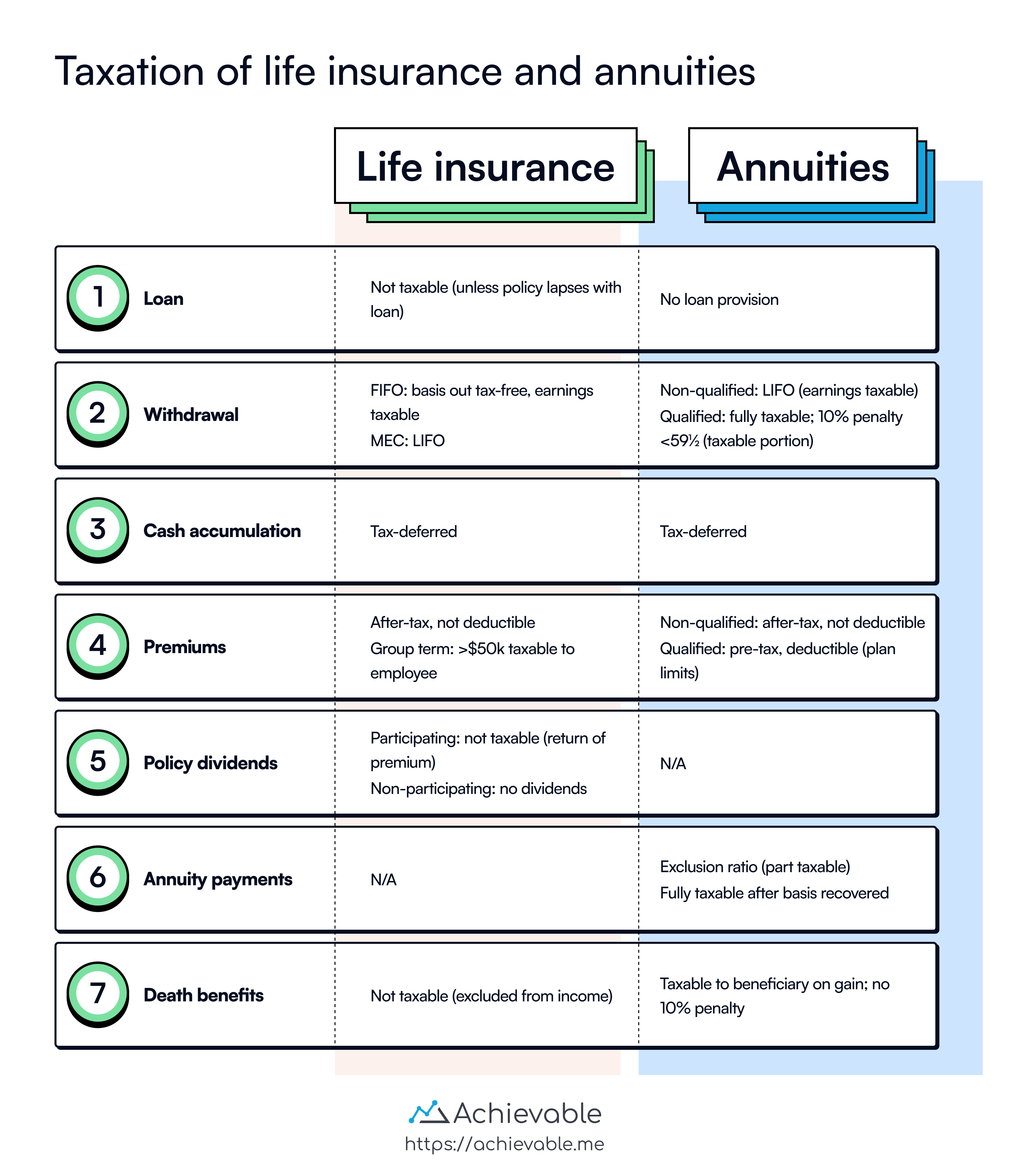
The most common way life insurance is "given" is through the payment of a death benefit. Under U.S. federal law, death benefits paid to a named beneficiary are typically not considered gross income. This means the recipient does not need to report the proceeds on their Form 1040. The logic behind this exclusion is that life insurance is intended to replace the economic value of a human life and provide for dependents, rather than serve as a traditional investment gain.
However, this tax-free status applies only to the face amount of the policy. If the insurance company delays payment and the death benefit earns interest while held by the insurer, that accrued interest is taxable as ordinary income. The beneficiary will receive a Form 1099-INT for the portion of the payment representing interest earnings.
The "Transfer-for-Value" Trap
A significant exception to the tax-free rule is the Transfer-for-Value Rule. If a life insurance policy is "given" or transferred to another party in exchange for something of value (money, property, or even a release of debt), the death benefit may lose its tax-exempt status. In such cases, the amount excluded from income is limited to the value paid for the policy plus any subsequent premiums paid by the new owner.
For example, if an individual sells their $500,000 policy to a third party for $50,000, and the new owner pays $10,000 in premiums before the insured dies, only $60,000 of the death benefit is tax-free. The remaining $440,000 is taxed as ordinary income. Transfers to the insured, a partner of the insured, or a corporation in which the insured is an officer are generally exempt from this trap.
Gifting a Life Insurance Policy During Your Lifetime
When a policyholder decides to "give" a life insurance policy to someone else—such as a child or a trust—they are making a gift of an intangible asset. This action triggers Federal Gift Tax considerations. Changing the ownership of a policy is a taxable event if the value of the policy exceeds the annual gift tax exclusion.
Determining the Gift’s Value
You cannot simply use the death benefit amount to value a gift made while the insured is still alive. The IRS requires specific valuation methods based on the type of policy:
- New Policies: The value is the gross premium paid to the insurer.
- Paid-up Policies: The value is the "replacement cost" (what the insurer would charge for a single-premium policy of the same amount for someone of the insured's current age).
- Existing Whole Life Policies: The value is usually the Interpolated Terminal Reserve (ITR) plus any unearned premiums already paid. This is roughly equivalent to the cash value but involves a more precise actuarial calculation provided by the insurance company via Form 712.
The Annual Exclusion and 2026 Limits
In 2026, the annual gift tax exclusion allows individuals to give a certain amount (adjusted for inflation) to as many people as they want without filing a gift tax return. If the value of the "given" policy falls below this threshold, no tax is due, and no lifetime exemption is used. If the value exceeds this, the donor must file Form 709, and the excess amount will reduce their unified lifetime gift and estate tax exemption.
Estate Tax Implications and the Three-Year Rule
Even if a policy is successfully "given" to a beneficiary or a trust, it may still be pulled back into the donor's taxable estate for federal estate tax purposes. This occurs under Internal Revenue Code Section 2035, commonly known as the Three-Year Lookback Rule.
If the insured owns "incidents of ownership" (the right to change beneficiaries, borrow against cash value, or cancel the policy) and transfers those rights within three years of their death, the entire death benefit is included in their gross estate. This can be a devastating tax hit for large estates, as the death benefit is added to the value of other assets to determine if estate taxes are owed.
The 2026 Sunset and Estate Planning
The year 2026 marks a pivotal moment in estate planning. The high exemptions established by the Tax Cuts and Jobs Act (TCJA) have sunset, reverting to pre-2018 levels (adjusted for inflation). With the federal estate tax exemption now significantly lower—roughly half of what it was in 2025—more families are finding that their life insurance proceeds might push their total estate value over the taxable threshold. Strategic "giving" through an Irrevocable Life Insurance Trust (ILIT) has become a primary tool to circumvent this issue, as it removes the proceeds from the estate entirely, provided the three-year rule is satisfied.
Summary of Tax Treatment for Life Insurance Transfers
The following table summarizes how different scenarios of "giving" life insurance are treated under current 2026 tax laws.
| Scenario | Income Tax Status | Gift/Estate Tax Status | Key Condition |
|---|---|---|---|
| Death Benefit to Individual | Usually Tax-Free | Part of Gross Estate if owned by Insured | Beneficiary pays no income tax on principal. |
| Gifting Policy Ownership | No Immediate Income Tax | Subject to Gift Tax Valuation | Use Form 712 for Interpolated Terminal Reserve. |
| Transfer to an ILIT | Tax-Free Payout | Excluded from Estate after 3 Years | Insured must relinquish all "incidents of ownership." |
| Corporate Policy Transfer | Potential Ordinary Income | Varies by Structure | Must comply with IRC Section 101(j). |
| Sale of Policy (Life Settlement) | Taxable as Ordinary Income/Cap Gains | Not Applicable | "Transfer-for-value" rules apply. |
Taxation of "Living" Gifts: Cash Value and Accelerated Benefits
Sometimes, life insurance is "given" to the policyholder themselves or a family member while the insured is still alive, often through cash value withdrawals or accelerated death benefits.
Cash Value Withdrawals and Loans
If a permanent life insurance policy has accumulated cash value, the owner can "give" themselves these funds. Withdrawals are generally tax-free up to the "basis" (the total amount of premiums paid). Any amount withdrawn above the basis is taxed as ordinary income. Policy loans are typically not taxable as long as the policy remains in force. However, if a policy with an outstanding loan is surrendered or lapses, the loan balance is treated as a distribution and may be taxable.
Accelerated Death Benefits
In 2026, many policies include "living benefits" or accelerated death benefit riders. These allow a terminally or chronically ill insured person to receive a portion of the death benefit while still alive. Under IRC Section 101(g), these payments are generally treated as paid by reason of death and are therefore income tax-free, provided the insured meets the medical definitions of terminal or chronic illness as certified by a physician.
Frequently Asked Questions
Is the payout from a "given" life insurance policy considered an inheritance?
While life insurance proceeds function like an inheritance, they are legally different because they pass via contract rather than a will or probate. For tax purposes, they are generally not subject to federal income tax, but they are included in the deceased's "gross estate" for estate tax purposes if the deceased owned the policy at the time of death.
What happens if I give my life insurance policy to a charity?
Gifting a policy to a qualified 501(c)(3) organization can provide an immediate income tax deduction. The deduction is usually equal to the lesser of the policy's fair market value or your cost basis (premiums paid). Additionally, the death benefit will be removed from your taxable estate, and the charity will receive the proceeds tax-free.
Does the recipient of a gifted policy have to pay taxes on the premiums I continue to pay?
If you transfer ownership of a policy to another person but continue to pay the premiums, those premium payments are considered "gifts of a present interest." They qualify for the annual gift tax exclusion ($18,000+ depending on inflation adjustments in 2026). As long as the annual premiums are below this limit, the recipient owes no tax, and you do not need to file a gift tax return.
Can the IRS tax a life insurance payout if the estate is insolvent?
Life insurance beneficiaries generally receive proceeds free from the claims of the deceased's creditors, including the IRS, unless the estate itself was the named beneficiary or the policy was pledged as collateral for a debt. However, if the estate owes estate taxes and has no other assets, the IRS may, in rare circumstances, seek "transferee liability" from the beneficiaries.
Is there a difference in taxation between term and whole life insurance when given?
The income tax treatment of the death benefit is the same for both. However, "giving" a whole life policy during your lifetime is more complex because it has a cash value (Interpolated Terminal Reserve) that must be valued for gift tax purposes. A term life policy usually has no cash value, so its gift value is typically just the amount of the unearned premium.
Strategic Recommendation for 2026
Given the reduced estate tax exemptions in 2026, individuals with significant life insurance coverage should review their policy ownership immediately. If your total estate (including the face value of all life insurance policies) exceeds $7 million, you should consider transferring ownership of your policies to an Irrevocable Life Insurance Trust (ILIT). Doing so starts the "three-year clock" required to remove the proceeds from your taxable estate.
Consulting with a tax professional or estate attorney is essential to ensure that the transfer does not violate the transfer-for-value rule and that the gift is valued correctly for IRS reporting. Proactive planning today can prevent a 40% federal estate tax from diminishing the legacy you intended for your beneficiaries.
Image Gallery