Why the Patterson-Gimlin Film Enhanced Matters for Cryptozoology
The Patterson-Gimlin Film (PGF) remains the most scrutinized piece of footage in the history of cryptozoology. By applying modern digital restoration and stabilization—often referred to as "enhanced" versions—researchers and skeptics a...
The Patterson-Gimlin Film (PGF) remains the most scrutinized piece of footage in the history of cryptozoology. By applying modern digital restoration and stabilization—often referred to as "enhanced" versions—researchers and skeptics alike seek to strip away the limitations of 1967 technology. These enhanced versions are vital because they allow for granular anatomical and biomechanical analysis, transforming a grainy historical artifact into a data-rich subject for contemporary scientific scrutiny.
Contents
The Genesis of the Patterson-Gimlin Film
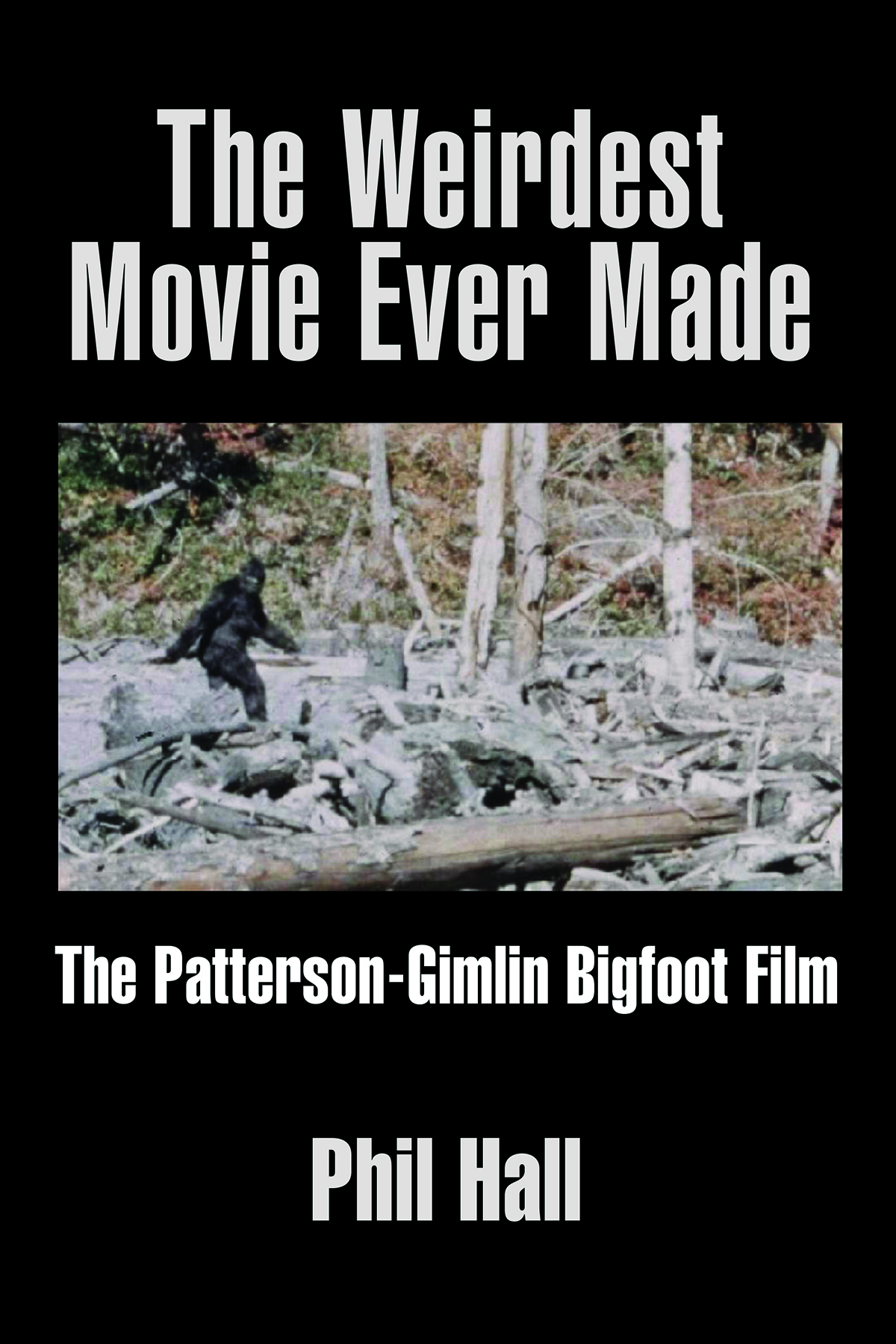
On October 20, 1967, Roger Patterson and Bob Gimlin filmed a creature in Bluff Creek, California, that they claimed was a Sasquatch. The footage, shot on 16mm Kodachrome film, shows a bipedal, hair-covered subject walking across a sandy creek bed before disappearing into the forest.
For decades, the footage served as the foundational "primary source" for Bigfoot research. However, the original film suffered from motion blur, camera shake, and the inherent grain of mid-20th-century cinematography. These factors acted as a barrier to objective analysis, leaving significant room for speculation regarding the creature's musculature, gait, and the possibility of a suit-based hoax. The advent of high-resolution digital scanning and frame-by-frame stabilization has fundamentally changed the nature of this debate.
Technical Barriers to Historical Analysis
In the late 1960s, scientific assessment of the PGF was limited by the equipment available to the public. To understand why enhancement is necessary, one must look at the technical shortcomings of the original medium:
- Camera Shake: Patterson was using a handheld camera while moving, creating significant vertical and horizontal displacement between frames.
- Film Grain: Kodachrome, while excellent for color, possesses a grain structure that masks fine details when viewed on lower-resolution monitors or magnified prints.
- Motion Blur: The shutter speed of the 16mm camera was not high enough to freeze the motion of the subject or the swaying of the forest background.
- Temporal Resolution: The film was shot at approximately 18–24 frames per second. At this speed, certain movements appear fluid, but subtle muscular shifts are difficult to isolate without digital temporal smoothing.
"Enhanced" versions, produced by utilizing modern software such as motion tracking, deconvolution, and AI-driven upscaling, attempt to rectify these issues by aligning frames pixel-by-pixel. This process effectively "locks" the background, making the subject the only variable moving through the frame.
Anatomical Insights from Enhanced Footage
The primary value of enhanced PGF footage lies in the ability to conduct biomechanical studies. When the subject is stabilized, researchers can map the movement of joints and muscle groups.
Gait Analysis
One of the most frequent arguments regarding the film’s authenticity is the "gait analysis." Skeptics argue the subject exhibits human-like movement, while proponents suggest the joint articulation is non-human, specifically noting a "compliant gait" where the knees remain flexed throughout the stride—a hallmark of great apes. Enhanced footage provides a clearer view of the hip and knee kinematics, allowing researchers to compare the subject's walk to that of professional primate researchers or modern motion-capture actors.
Musculature and Dermal Features
In the original, lower-quality prints, the creature appears as a dark, monolithic shape. In stabilized and enhanced versions, subtle variations in light and shadow become visible, suggesting the presence of subcutaneous musculature and fur movement that reacts to the environment. This data is critical for those investigating the "suit" hypothesis; if the enhancement reveals seamless integration of fabric or rigid mask edges, the hoax argument gains weight. Conversely, if it reveals fluid muscle contractions under the skin, it complicates the hoax narrative.
Comparative Framework: Original vs. Enhanced Analysis
| Metric | Original 16mm Film (1967) | Modern Enhanced/Stabilized |
|---|---|---|
| Stability | Significant handheld shake | Pixel-locked for steady tracking |
| Clarity | Limited by grain structure | Denoised for edge detection |
| Frame Rates | Native 18-24 fps | Interpolated for fluid motion |
| Focus | Fixed at recording | Post-processing focus enhancement |
| Scientific Utility | Subjective visual review | Objective biomechanical mapping |
Limitations and Risks of Enhancement
It is critical to acknowledge that "enhanced" does not inherently mean "more accurate." The process of digital restoration involves algorithmic interpretation. When software attempts to "fill in" missing pixels or sharpen edges, it can introduce artifacts—errors that look like features but are actually products of the software’s attempt to interpolate data.
In the context of cryptozoology, this presents a significant risk of confirmation bias. Researchers hoping to prove the film's authenticity might over-interpret a blurred cluster of pixels as a muscle, while those wishing to debunk it might see the same pixels as a zipper or seam. Scientific rigor requires that any enhanced footage used as evidence be accompanied by a disclosure of the processing techniques applied. Without raw data transparency, enhanced versions are illustrative rather than evidentiary.
The Role of PGF in Modern Cryptozoology
Cryptozoology is often categorized as a fringe science because it lacks reproducible, high-quality, physical specimens. The PGF acts as a unique anomaly—a permanent record of an event that cannot be repeated. Consequently, the focus shifts from finding new evidence to refining the analysis of existing evidence.
Enhanced versions of the PGF serve as a gatekeeping mechanism for the field. They raise the standard for what is considered acceptable evidence. In 2026, the scientific community is less likely to accept anecdotal reports of Sasquatch sightings without corroborating physical or high-definition visual evidence. By attempting to squeeze every iota of objective data from the 1967 film, cryptozoologists are attempting to move the field from speculative storytelling toward forensic investigation.
Frequently Asked Questions
Is the enhanced Patterson-Gimlin film considered proof of Bigfoot?
No. While enhanced footage allows for more detailed analysis, it remains an observational study of a 60-year-old film. It does not constitute a biological specimen or direct evidence capable of meeting the burden of proof required by mainstream zoology.
Why do some people claim the enhancement creates fake details?
Digital enhancement software often uses "edge sharpening" or "AI upscaling." These tools guess the missing information between pixels. If not calibrated correctly, these algorithms can generate "hallucinations" or visual artifacts that appear to be anatomical features but do not actually exist on the original negative.
Does the film show a person in a suit?
This is the central point of contention. Skeptics point to the gait and the potential for late-1960s Hollywood-grade costume technology. Proponents point to the muscle movement and the difficulty of fabricating a convincing suit that maintains such fluid motion under 16mm scrutiny. Enhancement provides more data for both sides but has yet to provide a consensus.
How does frame stabilization help researchers?
Stabilization creates a fixed coordinate system. Once the camera movement is subtracted from the image, researchers can plot the subject’s speed, stride length, and cadence with mathematical precision, rather than relying on visual estimations.
Are there versions of the film that are scientifically peer-reviewed?
There have been various published analyses by individuals in fields like anthropology and forensics; however, the PGF as a whole has never been formally accepted by an accredited biological institution as proof of a new species. Most academic reviews focus on the methodology of the analysis rather than the reality of the creature itself.
Next Steps for Independent Analysis
If you are interested in examining the PGF for yourself, start by accessing the raw, high-resolution scans available through public archives. Avoid relying solely on YouTube-compressed versions, as the compression algorithms destroy the very details that researchers try to enhance. When reviewing, maintain a focus on objective mechanics—such as the rhythm of the gait and the proportionality of the limbs—rather than interpreting low-resolution shadows as facial expressions. Use established, open-source image analysis tools to perform your own stabilization if you wish to see how different parameters affect the final outcome. The film is a historical document; the goal should be to preserve its integrity while applying modern scrutiny to its contents.
Image Gallery