Why You Should Name a Primary Beneficiary for Life Insurance
Naming a primary beneficiary ensures your life insurance death benefit is paid directly and efficiently to the intended recipient, bypassing the costly and time-consuming probate process. Without a clear designation, proceeds typically...
Naming a primary beneficiary ensures your life insurance death benefit is paid directly and efficiently to the intended recipient, bypassing the costly and time-consuming probate process. Without a clear designation, proceeds typically default to your estate, where they become subject to creditor claims, legal delays, and potential taxation before reaching your loved ones.
Contents
Selecting a primary beneficiary is perhaps the most critical step in managing a life insurance policy. While the act of purchasing a policy provides the potential for financial security, it is the beneficiary designation that transforms that potential into a functional safety net. As we navigate the financial landscape of 2026, the complexity of estate laws and the speed of digital financial transfers make precise designations more important than ever.
Understanding the Role of a Primary Beneficiary
A primary beneficiary is the person, entity, or institution first in line to receive the death benefit of a life insurance policy upon the insured's passing. This designation is a legal instruction to the insurance company that supersedes instructions left in a will. This "contractual" nature of life insurance is what makes the beneficiary designation so powerful.
When you name a specific individual or organization, you are creating a direct path for the capital. The insurance company’s primary obligation is to fulfill the terms of the contract, which includes paying the person named in the policy documents. This clarity prevents ambiguity and ensures that your intentions are honored without the need for external interpretation by a court.
In contrast, if a policy lacks a primary beneficiary—or if the named beneficiary is deceased and no contingent beneficiary was named—the insurance company often has no choice but to pay the proceeds to the "estate of the insured." This simple administrative default triggers a series of legal and financial hurdles that can significantly diminish the value of the policy.
The Financial Benefits of Bypassing Probate
The most compelling reason to name a primary beneficiary is the avoidance of probate. Probate is the legal process through which a deceased person’s assets are accounted for, debts are paid, and the remaining property is distributed to heirs.
In 2026, probate remains a notoriously slow and expensive process in many jurisdictions. Depending on the complexity of the estate and the state of residence, probate can take anywhere from six months to two years. During this time, assets held within the estate are often frozen or restricted. By naming a primary beneficiary, the life insurance death benefit is classified as a "non-probate asset." It moves outside of the court's jurisdiction, allowing the insurance company to process the claim and issue payment—often within 30 to 60 days of receiving a death certificate.
Furthermore, probate costs can be substantial. Legal fees, executor compensation, and court filing fees typically range from 3% to 7% of the total estate value. If a $500,000 life insurance benefit is paid to an estate rather than a named beneficiary, it could lose tens of thousands of dollars to administrative overhead before a single cent reaches the family.
Protection Against Creditor Claims
Life insurance is frequently intended to provide a financial floor for survivors, covering mortgages, tuition, and daily living expenses. One of the most significant risks of failing to name a primary beneficiary is exposing those funds to the deceased’s creditors.
In most U.S. states and many international jurisdictions, life insurance proceeds paid to a named beneficiary are legally protected from the creditors of the deceased. This means that even if the insured died with significant credit card debt, medical bills, or personal loans, those creditors cannot seize the life insurance money intended for a spouse or child.
However, once the money is paid to an estate (because no beneficiary was named), it becomes an asset of the estate. Under standard probate priority rules, an estate must satisfy all valid debts and taxes before distributing the remaining funds to heirs. In a situation where the deceased's debts outweigh their assets, a life insurance policy paid to the estate could be entirely consumed by creditors, leaving the intended heirs with nothing.
Ensuring Immediate Liquidity for Survivors
The period immediately following a death is often a time of acute financial pressure. Funeral costs, which in 2026 can easily exceed $10,000 to $15,000, are often due shortly after the service. Additionally, the sudden loss of an income-earner can make mortgage payments or utility bills difficult to manage.
By naming a primary beneficiary, you provide your loved ones with "liquidity"—cash that is available almost immediately. Because the beneficiary can file a claim directly with the insurer using a certified copy of the death certificate, they do not have to wait for a judge to grant them access to funds. This immediate influx of capital can prevent a family from taking on high-interest debt or facing foreclosure during an already traumatic time.
The Risks of Designating Minors as Beneficiaries
While naming a primary beneficiary is essential, the type of beneficiary named requires careful technical consideration. A common mistake is naming a minor child as a primary beneficiary.
Legally, life insurance companies cannot pay large sums of money directly to a minor. If a minor is named as the primary beneficiary and the insured passes away, the court will typically have to appoint a legal guardian or "conservator" to manage the funds until the child reaches the age of majority (usually 18 or 21). This court intervention reintroduces the very delays and costs that naming a beneficiary is supposed to avoid.
For those wishing to provide for children, it is often more effective to name a living trust or a testamentary trust as the primary beneficiary. The trust documents can then specify how the money is to be managed and distributed, ensuring the funds are used for the child’s education and welfare without unnecessary court oversight.
Comparing Beneficiary Designations
To understand the impact of your choices, it is helpful to compare how different designations affect the distribution of funds.
| Designation Type | Probate Requirement | Creditor Protection | Payout Speed | Control Over Distribution |
|---|---|---|---|---|
| Named Individual | No | High (Usually exempt) | Fast (30-60 days) | Direct to individual |
| Revocable Trust | No | High (If structured correctly) | Moderate to Fast | High (Specific terms) |
| The Estate | Yes | Low (Subject to debts) | Slow (Months to Years) | Per Will or State Law |
| Charity/Non-Profit | No | High | Fast | Direct to organization |
| Minor Child | Possible | Moderate | Slow (Court process) | Restricted by law |
Technical Specifics: Per Stirpes vs. Per Capita
When naming multiple primary beneficiaries, such as three children, you must decide how the funds should be distributed if one of those children predeceases you. This is where the technical terms Per Stirpes and Per Capita become vital.
- Per Stirpes: This translates to "by the branch." If you name your children as beneficiaries "per stirpes" and one child passes away before you, that child's share will go to their children (your grandchildren). It keeps the money within that specific branch of the family tree.
- Per Capita: This translates to "by the head." If you name your children "per capita" and one child predeceases you, their share is typically divided equally among the remaining living children named in the policy.
Specifying these terms in your designation prevents family disputes and ensures that your legacy follows your specific genealogical preferences.
The Necessity of Contingent Beneficiaries
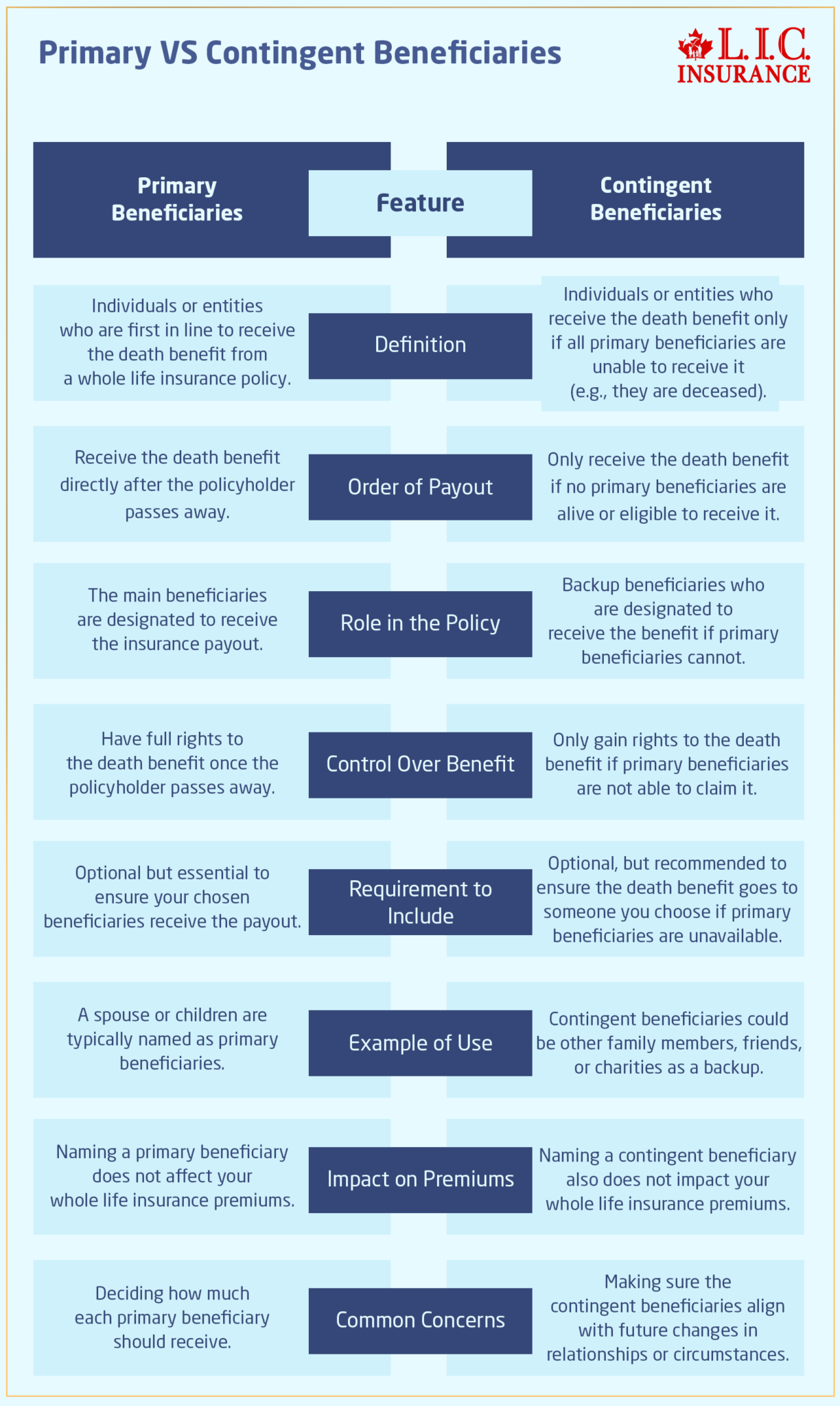
Naming a primary beneficiary is only half of the equation; you should also name a contingent (or secondary) beneficiary. The contingent beneficiary receives the death benefit only if the primary beneficiary is deceased at the time of the insured’s passing.
If you name only a primary beneficiary and that person dies before you—and you fail to update your policy—the policy effectively has no beneficiary. As established, this leads the proceeds directly back into the estate and the probate system. In 2026, most insurance applications allow for at least two levels of beneficiaries, and utilizing both is a fundamental best practice in estate planning.
Maintaining and Updating Your Designations
A primary beneficiary designation is not a "set it and forget it" task. Life events can render an old designation obsolete or even harmful. Common triggers for updating a beneficiary include:
- Marriage or Divorce: In many jurisdictions, a divorce does not automatically revoke a beneficiary designation. If you forget to remove an ex-spouse, they may still legally receive the death benefit, regardless of what your current will says.
- Birth or Adoption: New family members should be integrated into your financial plan to ensure they are not inadvertently disinherited.
- Death of a Beneficiary: If your primary beneficiary passes away, your contingent beneficiary becomes the new primary, but you should then name a new contingent.
- Changes in Tax Law: While life insurance death benefits are generally income tax-free under IRS Internal Revenue Code Section 101(a), changes in estate tax thresholds (which are subject to legislative updates in 2026) may necessitate moving a policy into an Irrevocable Life Insurance Trust (ILIT).
Frequently Asked Questions
Can I name more than one primary beneficiary?
Yes. You can name multiple individuals or entities as primary beneficiaries and specify the percentage of the death benefit each should receive. For example, you could designate a spouse to receive 70% and a favorite charity to receive 30%. It is important to ensure the total adds up to exactly 100% to avoid administrative confusion.
Can my will override my life insurance beneficiary?
In almost all cases, no. A life insurance policy is a legal contract, and the beneficiary designation on file with the insurance company takes precedence over instructions in a will. This is a common source of legal disputes, but the "contractual beneficiary" remains the standard for payout.
What information do I need to provide for a beneficiary?
To ensure a smooth payout, you should provide the beneficiary’s full legal name, their relationship to you, their Social Security Number or Tax Identification Number, their date of birth, and their current address. Providing this data helps the insurance company locate the beneficiary and verify their identity quickly.
Does a primary beneficiary have to pay taxes on the death benefit?
Generally, no. Life insurance death benefits paid to a named beneficiary are typically not considered taxable income by the IRS. However, if the proceeds are paid to an estate, they may be subject to federal or state estate taxes if the total estate value exceeds certain thresholds. Additionally, if the beneficiary chooses to leave the proceeds with the insurer to earn interest, the interest earned is taxable.
What is an "irrevocable" beneficiary?
A revocable beneficiary (the most common type) can be changed by the policy owner at any time. An irrevocable beneficiary cannot be changed without that beneficiary’s written consent. Irrevocable designations are sometimes used in divorce settlements or business agreements to ensure a specific person or entity remains protected.
Recommendation for Policy Holders
To protect your financial legacy in 2026, you should review your life insurance beneficiary designations immediately. Ensure that you have named at least one primary beneficiary and one contingent beneficiary. Use specific legal names rather than generic terms like "my children" to prevent ambiguity. If you have complex family dynamics or significant assets, consult with an estate planning attorney to determine if a trust should be named as your primary beneficiary. This simple administrative check is the only way to guarantee that your life insurance policy performs the exact function for which it was purchased.
Image Gallery