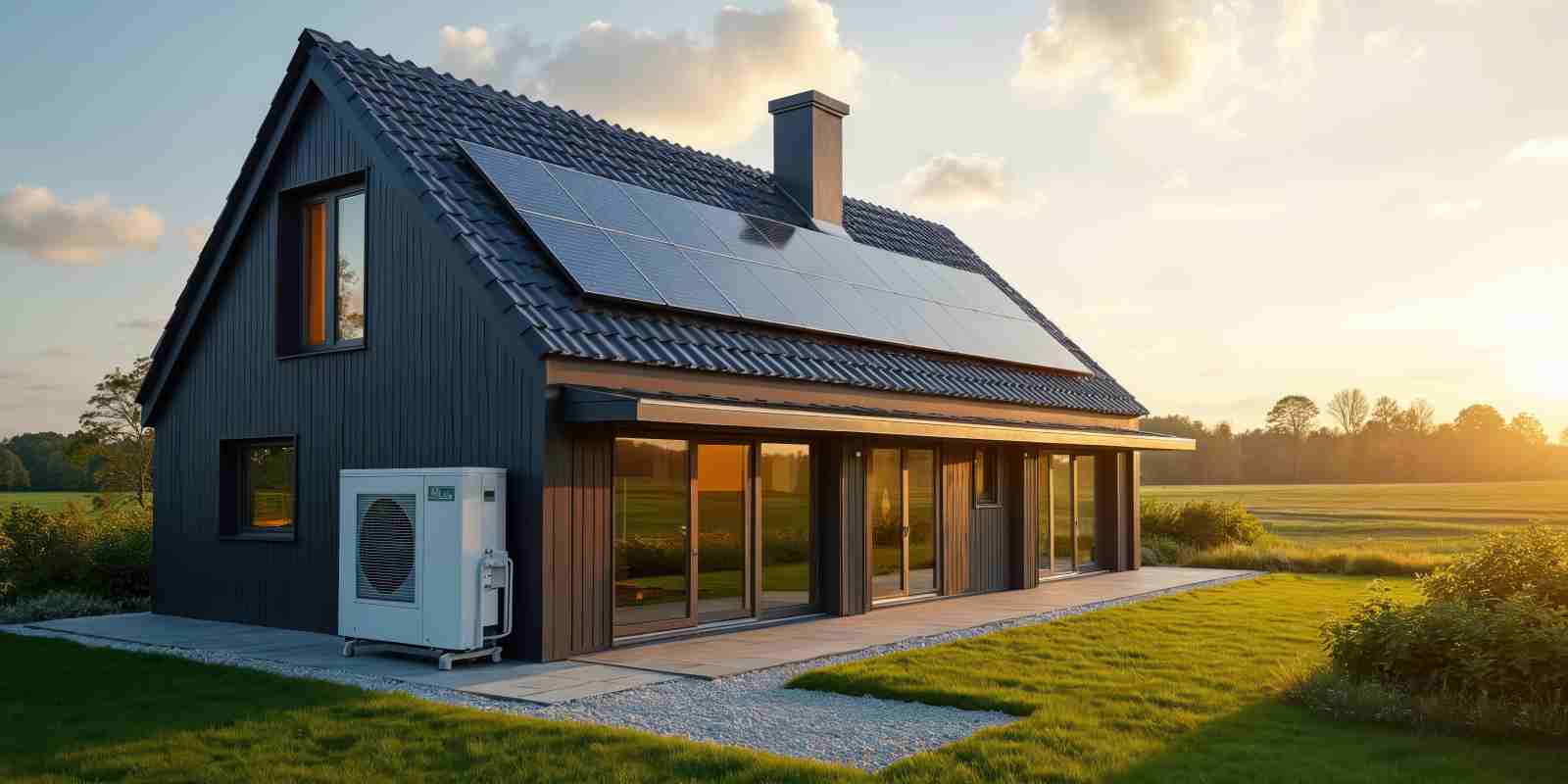
Cost for Solar Panel Installation in Maryland: 2026 Price & Incentive Guide
In Maryland, the average cost for residential solar panel installation ranges between $17,000 and $32,000 before incentives, or approximately $2.85 to $3.20 per watt. After applying the 30% Federal Residential Clean Energy Credit and s...
In Maryland, the average cost for residential solar panel installation ranges between $17,000 and $32,000 before incentives, or approximately $2.85 to $3.20 per watt. After applying the 30% Federal Residential Clean Energy Credit and state-level incentives, the typical net cost for a standard home solar power system drops to between $12,000 and $22,400, yielding a full investment payback period of 6 to 8 years.
Contents
Overview of Solar Panel Costs in Maryland
Solar energy system costs in Maryland depend heavily on home size, historical kilowatt-hour (kWh) consumption, roof layout, and equipment specifications. While total system prices vary, examining costs on a per-watt basis allows property owners to evaluate quotes accurately regardless of overall system capacity.
For a standard residential setup, installation pricing in Maryland aligns closely with national averages, though local labor rates, municipal permitting fees, and electric utility interconnection standards influence final invoices.
- Gross Cost (System Size x Price per Watt)
- Subtract 30% Federal Residential Clean Energy Credit (ITC)
- Subtract Maryland State & Local Incentives
- Subtract Net Metering / SREC Returns over Time
- Net Realized Cost & Financial Payback
Key Pricing Metrics
- Average Cost per Watt: $2.85 – $3.20 (gross price before tax credits).
- Average System Capacity: 8 kW to 10 kW (designed to offset a 1,000–1,400 kWh monthly utility bill).
- Average Gross System Price: $22,800 – $30,000.
- Average Net System Price (After 30% Federal ITC): $15,960 – $21,000.
The state of Maryland experiences above-average retail electricity rates compared to the national baseline. Because utility electricity prices from providers like Baltimore Gas and Electric (BGE), Pepco, Delmarva Power, and Potomac Edison remain substantial, the offset value of self-generated solar energy makes residential systems particularly cost-effective in the Mid-Atlantic region.
Detailed Maryland Solar Cost Breakdown by System Size
The following table provides realistic pricing estimates across various residential solar system sizes in Maryland. Calculations assume an average gross cost of $2.95 per watt and include the 30% federal tax credit reduction.
| System Size (kW) | Annual Energy Output (Est.) | Average Gross Cost | 30% Federal Tax Credit | Estimated Net System Cost |
|---|---|---|---|---|
| 4 kW | 5,200 – 5,800 kWh | $11,800 | -$3,540 | $8,260 |
| 6 kW | 7,800 – 8,700 kWh | $17,700 | -$5,310 | $12,390 |
| 8 kW | 10,400 – 11,600 kWh | $23,600 | -$7,080 | $16,520 |
| 10 kW | 13,000 – 14,500 kWh | $29,500 | -$8,850 | $20,650 |
| 12 kW | 15,600 – 17,400 kWh | $35,400 | -$10,620 | $24,780 |
| 14 kW | 18,200 – 20,300 kWh | $41,300 | -$12,390 | $28,910 |
Note: Estimates do not include additional local battery storage, main electrical panel upgrades, or roof structural modifications. Actual generation varies depending on roof tilt, direct solar exposure, and geographic location within Maryland.
Federal, State, and Local Solar Incentives in Maryland
Maryland offers a favorable regulatory environment for residential solar adoption. Combining federal tax relief, state tax exemptions, and market-based renewable incentives reduces the true net expense of system ownership.
1. Federal Residential Clean Energy Credit (ITC)
Under federal tax policy, homeowners who purchase their solar energy system outright or finance it through a personal or solar loan qualify for the 30% Federal Residential Clean Energy Credit.
- How it Works: The credit provides a dollar-for-dollar reduction in federal income tax liability equal to 30% of the total installation cost (including hardware, labor, and permitting).
- Eligibility: Must own the solar system (leased systems do not qualify for the property owner).
- Carry-Forward: If your tax liability in the installation year is lower than your total credit, the remaining balance can be rolled over to subsequent tax years.
2. Maryland Solar Renewable Energy Certificates (SRECs)
Maryland operates under a Renewable Portfolio Standard (RPS) that requires energy suppliers to procure a portion of their electricity from solar sources. To meet these targets, utility companies purchase Solar Renewable Energy Certificates (SRECs) from home and commercial solar owners.
- Generation Rate: One SREC is earned every time your solar system generates 1,000 kWh (1 MWh) of electricity.
- Market Value: Maryland SREC values fluctuate based on market supply and demand, historically trading between $55 and $80 per certificate.
- Annual Revenue Example: An 8 kW system producing 11,000 kWh per year earns 11 SRECs annually. At an average price of $65 per SREC, the system generates approximately $715 per year in passive cash income, separate from electricity bill savings.
3. Maryland Sales and Property Tax Exemptions
To lower friction for residential renewable projects, Maryland state law protects homeowners from extra taxation linked to solar equipment:
- State Sales Tax Exemption: Solar energy equipment is completely exempt from Maryland's 6% state sales and use tax, keeping initial equipment procurement costs lower.
- Property Tax Exemption: Installing solar panels increases your home's overall valuation, but under Maryland Tax-Property Code Ann. § 7-242, the added assessment value from a residential solar system is 100% exempt from local property taxes.
4. Maryland Net Metering Policy
Net energy metering (NEM) is mandated across Maryland by the Maryland Public Service Commission. Net metering allows solar system owners to send excess solar electricity back into the municipal grid in exchange for utility bill credits.
- Full Retail Rate Compensation: Maryland utility companies (BGE, Pepco, Delmarva Power, Potomac Edison) credit solar generation at full retail electricity rates.
- Seasonal Rollover: Credits generated during sun-heavy summer months carry over month-to-month to offset higher grid energy reliance during winter.
- Annual True-Up: At the end of the 12-month net metering cycle, any accumulated surplus credits are paid out by the utility at the generation rate.
Core Factors Influencing Solar Installation Costs in Maryland
Two homes in Maryland with identical square footage may receive vastly different installation quotes. Contractors calculate customized pricing based on structural, electrical, and hardware factors.
- Total Installation Cost
- Base Hardware (Panels, Inverters, Racking)
- Roof Structural Prep & Tilt Dynamics
- Electrical Infrastructure (Service Panel / Heavy-Up)
- Optional Battery Storage Systems
- Local Permitting & Utility Interconnection Fees
Roof Condition, Tilt, and Pitch
Solar arrays achieve maximum annual yield on south-facing roofs angled between 30 and 45 degrees. If your roof features complex architectural dormers, steep slopes, or requires structural framing reinforcement, labor and racking costs increase. Furthermore, installing panels on an aging asphalt shingle roof (older than 15 years) is discouraged; replacing the roof prior to panel installation avoids paying $2,500 to $4,000 later to un-mount and re-mount the solar array during a roof repair.
Main Electrical Panel Upgrades ("Heavy-Ups")
Modern residential solar inverters require sufficient busbar capacity in your home's main breaker box. If your property uses an older 100-amp electrical panel, your installer may require an electrical panel upgrade ("heavy-up") to a 200-amp service box before connecting the inverter.
- Average Cost of Panel Upgrade: $1,500 to $3,500.
Equipment Quality: Tier-1 Panels and Inverters
Hardware selection dictates system efficiency, longevity, and upfront cost:
- Solar Panels: Monocrystalline panels (e.g., REC, Panasonic, Qcells) offer higher efficiency (20%–23%) and lower degradation rates than polycrystalline alternatives, carrying a 5% to 15% price premium.
- Inverter Systems: String inverters with micro-optimizers (e.g., SolarEdge) or individual microinverters (e.g., Enphase) cost more upfront than basic central string inverters, but they optimize energy harvesting on roofs affected by partial shading and eliminate single-point system failures.
Battery Storage Systems (Energy Storage)
Integrating a solar battery storage unit (such as a Tesla Powerwall, Enphase IQ Battery, or SolarEdge Energy Bank) allows your home to maintain emergency backup power during grid blackouts caused by coastal storms or winter freezes.
- Average Battery Addition Cost: $10,000 – $16,000 installed.
- Maryland Energy Storage Tax Credit: Maryland periodically offers state-level income tax credits for energy storage system installations. Additionally, battery hardware installed alongside solar equipment qualifies for the 30% federal tax credit.
Solar Financing Options: Cash, Loans, vs. Leases / PPAs
How you choose to finance your solar installation impacts your net return on investment (ROI), tax credit eligibility, and overall long-term financial yield.
FINANCING MODEL COMPARISON:
| Feature | Cash Purchase | Solar Loan | Solar Lease / PPA |
|---|---|---|---|
| Upfront Cost | High ($15k-$25k) | Low / $0 Down | $0 Down |
| System Ownership | Yes | Yes | No (Third Party) |
| 30% Tax Credit | Claimed by You | Claimed by You | Retained by Solar |
| SREC Revenue | Kept by You | Kept by You | Retained by Solar |
| 25-Year Net ROI | Highest | Moderate to High | Lowest |
1. Cash Purchase
Paying upfront yields the absolute highest return on investment. You avoid interest charges, retain immediate system ownership, and directly claim the 30% federal tax credit, Maryland SREC revenues, and property value equity gains.
2. Solar Loans (Secured and Unsecured)
Solar loans allow homeowners to achieve $0-down installation while retaining system ownership.
- Secured Loans (HELOC / Home Equity Loans): Offer lower interest rates because the home secures the debt; interest payments may be tax-deductible depending on your financial situation.
- Unsecured Solar Loans: Offered through specialized green banks and installation partners. They feature streamlined approval processes, though higher interest rates or upfront origination dealer fees (which can range from 10% to 25% of the loan principal) may inflate the overall financing cost.
3. Solar Leases and Power Purchase Agreements (PPAs)
Under a lease or PPA, a third-party solar provider owns, installs, and maintains the equipment on your roof. You pay a monthly fee to use the hardware or buy the electricity generated at a fixed rate per kWh.
- Drawbacks: The third-party owner collects the 30% federal tax credit and keeps all MD SREC revenues. While leases eliminate upfront capital requirements, they yield lower overall long-term savings and can complicate home resale transactions if buyers refuse to assume the lease agreement.
Financial Payback Period and Long-Term Savings Example
To illustrate the long-term economics of installing solar panels in Maryland, consider an 8 kW system installed on a single-family home serviced by Baltimore Gas and Electric (BGE).
Step-by-Step Financial Model:
- Gross Installation Price (8 kW @ $2.95/watt): $23,600
- Less 30% Federal ITC: -$7,080
- Net Out-of-Pocket Cost: $16,520
Annual Financial Offsets:
- Electricity Bill Savings: An 8 kW system produces roughly 10,800 kWh per year. At a BGE electricity rate of $0.17 per kWh, annual bill savings equal $1,836.
- SREC Income: 10.8 SRECs generated per year @ $65/SREC = $702.
- Total Year 1 Financial Benefit: $1,836 + $702 = $2,538.
Payback Calculation:
$$\text{Payback Period} = \frac{\text{Net System Cost}}{\text{Annual Year 1 Benefit}} = \frac{$16,520}{$2,538} \approx \text{\textbf{6.5 Years}}$$
Over a standard 25-year manufacturer warranty lifespan—assuming a conservative 2.5% annual utility rate escalation—the net cumulative savings generated by the system routinely exceeds $45,000 to $60,000.
Frequently Asked Questions
How much does an 8 kW solar panel system cost in Maryland?
An 8 kW solar panel system in Maryland costs approximately $23,600 gross. After applying the 30% federal tax credit, the net cost drops to around $16,520. Actual costs vary depending on installer pricing, equipment selection, and roof design.
Does Maryland offer state grants for residential solar panel installations?
Maryland historically offered direct energy grants through the Maryland Energy Administration (MEA) Clean Energy Grant Program. While state grant funding programs change periodically based on legislative budgets, Maryland primarily supports solar adoption through robust SREC market trading, 100% sales and property tax exemptions, and retail-rate net metering.
Will installing solar panels increase my property taxes in Maryland?
No. Under Maryland law (Tax-Property Code Ann. § 7-242), solar energy systems installed on residential properties are fully exempt from local property tax assessments. Even though solar panels increase your home's market value, your local county tax bill will not rise as a result of the installation.
How does net metering work with Maryland utility companies like BGE or Pepco?
Maryland mandates full retail net energy metering. When your solar panels generate more electricity than your home consumes, excess power flows back to the utility grid. Your electric company credits your bill at the full retail price per kWh. Surplus credits roll over month-to-month to offset periods of higher energy consumption or lower solar generation.
How long do solar panels take to pay for themselves in Maryland?
The typical payback period for a residential solar investment in Maryland ranges from 6 to 8 years. Payback speed depends on your initial system cost, loan interest rates, electric utility rates, household consumption patterns, and local SREC market prices.
Next Steps: How to Plan Your Maryland Solar Project
To secure the best overall value on a residential solar system in Maryland, follow a structured planning process:
- Gather Utility Bills: Collect 12 full months of electric bills to calculate your home's annual kilowatt-hour consumption. Installers use this baseline to design a correctly sized array.
- Evaluate Roof Health: Have a qualified roofing contractor assess your roof’s structural integrity. If your roof requires replacement within the next 5 years, complete roof work prior to solar array installation.
- Request Multiple Local Quotes: Obtain detailed bids from at least three licensed Maryland solar contractors (NABCEP-certified). Compare pricing based on cost per watt, equipment efficiency metrics, labor warranties, and mounting hardware specifications.
- Verify Licensing and Interconnection Support: Ensure your installer handles all local county permits, Maryland Public Service Commission compliance steps, and utility net-metering interconnection paperwork on your behalf.
Disclaimer: Solar tax credits, utility net metering policies, local rebate structures, and financial regulations change periodically. Consult a certified financial planner or tax professional to confirm your eligibility for federal and state tax credits based on your individual tax situation.
Image Gallery