Best Life Insurance for a Healthy 56-Year-Old Woman in 2026
For a healthy 56-year-old woman in 2026, the best life insurance option is typically a 10-year or 15-year term life policy for income replacement, or a Guaranteed Universal Life (GUL) policy for lifelong protection. Because "Preferred...
For a healthy 56-year-old woman in 2026, the best life insurance option is typically a 10-year or 15-year term life policy for income replacement, or a Guaranteed Universal Life (GUL) policy for lifelong protection. Because "Preferred Plus" health status significantly lowers premiums, focusing on carriers with favorable underwriting for mature women—such as Banner Life or Prudential—can ensure the most cost-effective coverage.
Contents
Life insurance at age 56 occupies a unique strategic space. Most women in this demographic are approaching the peak of their earning years while simultaneously planning for a retirement that may still be a decade away. Whether the goal is to protect a spouse, cover a remaining mortgage, or provide an inheritance, the "best" policy is one that balances high death benefits with the reality of increasing age-related premiums.
Determining the Best Policy Type: Term vs. Permanent
At 56, the primary decision revolves around the duration of the need. Unlike younger applicants who might reflexively choose 30-year terms, a 56-year-old must look at the specific "risk window" remaining in her financial life.
Term Life Insurance
For most healthy women, Term Life Insurance remains the most efficient tool. In 2026, a 10-year term is ideal for someone planning to retire at 66, ensuring that if they pass away during their highest-earning years, their family is not left with a massive income gap. A 15-year or 20-year term may be more appropriate if there is a significant mortgage balance or if a child is still finishing advanced education. The advantage of term insurance at this age is its simplicity and lower cost, though it provides no payout if the insured outlives the term.
Guaranteed Universal Life (GUL)
Many 56-year-olds find that they want "permanent" coverage but do not want the high price tag of a traditional Whole Life policy. Guaranteed Universal Life functions like a "term to age 90 or 100." It does not focus on building cash value; instead, it provides a guaranteed death benefit for a fixed premium that lasts the rest of your life. This is often the best choice for estate planning or ensuring funds are available for final expenses without the volatility of other universal life products.
Whole Life Insurance
While expensive, Whole Life insurance offers a cash value component and guaranteed growth. For a healthy 56-year-old woman with a high net worth, this can serve as a conservative asset class and a tool for tax-advantaged wealth transfer. However, for pure protection, the premiums are often five to ten times higher than term insurance.
The Financial Impact of Being "Healthy" at 56
In the eyes of an insurance underwriter in 2026, "healthy" is a technical term defined by specific biometric markers. Being classified as Preferred Plus—the highest possible health tier—can save a woman over 50 up to 30% on her annual premiums compared to a "Standard" rating.
Underwriters typically look for the following to grant the best rates:
- Blood Pressure: Generally under 130/80 without medication, though some carriers allow higher levels if successfully managed.
- Cholesterol: A total ratio (Total/HDL) of 4.5 or lower.
- Body Mass Index (BMI): Carriers in 2026 have become slightly more flexible with BMI for women over 50, but a range between 18.5 and 27 usually yields the best rates.
- Family History: No history of parents or siblings dying from cardiovascular disease or cancer before age 65.
- Tobacco Use: No nicotine use (including vaping or patches) for at least 3 to 5 years.
For women in their mid-50s, hormonal changes associated with the menopause transition can sometimes impact blood pressure or cholesterol readings. It is often beneficial to work with an independent agent who knows which carriers (like Prudential or Mutual of Omaha) are "older-age friendly" and offer more lenient underwriting for minor age-related fluctuations.
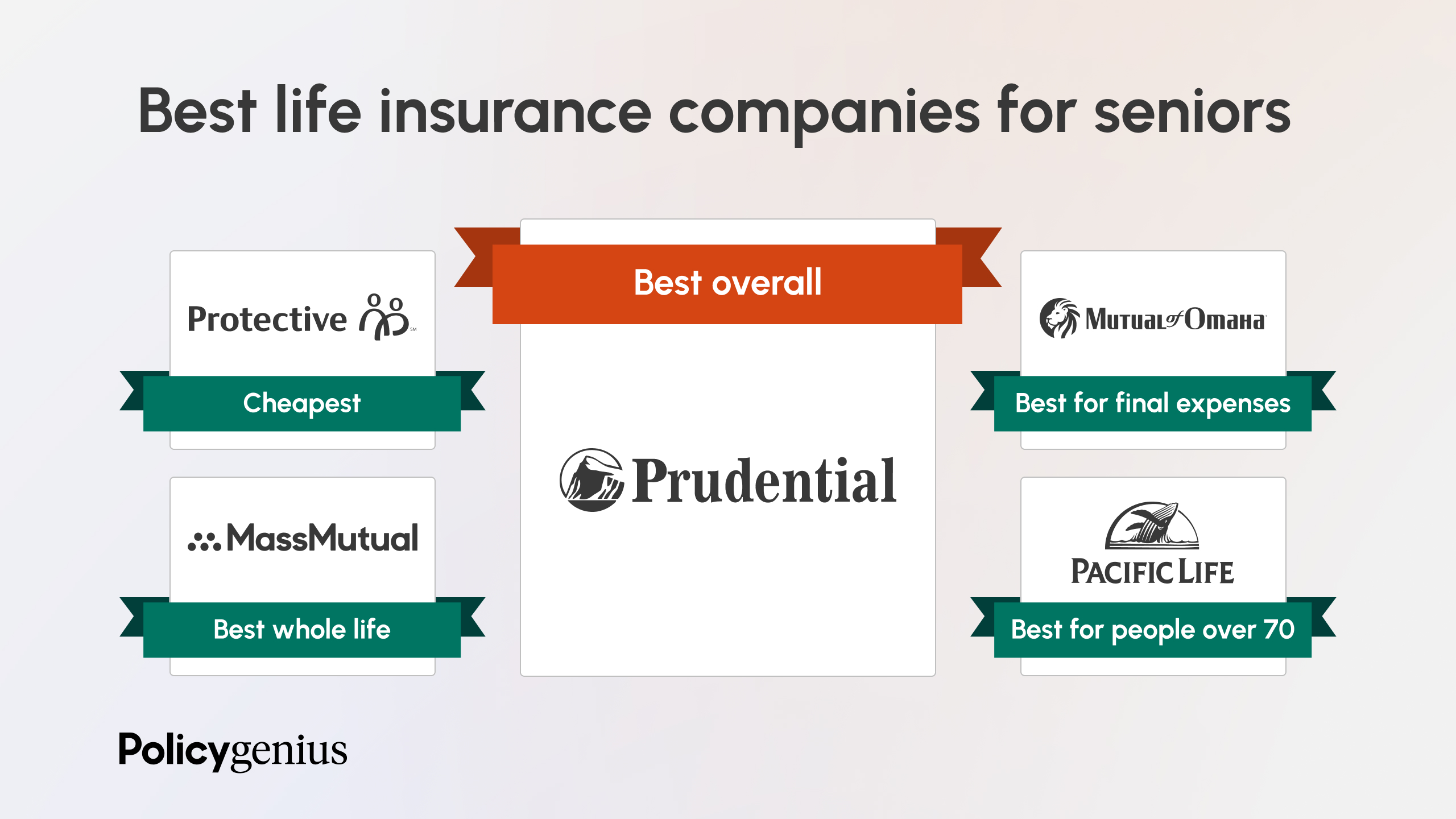
Top-Rated Life Insurance Carriers for Women Over 50
When evaluating the "best" carriers in 2026, financial stability and claims-paying ability are paramount. You should prioritize companies with high ratings from A.M. Best and the Better Business Bureau.
- Banner Life (Legal & General America): Known for having some of the most competitive rates for term insurance. They are often the go-to for healthy applicants looking for the lowest price.
- Prudential: Historically more lenient with "lifestyle" health issues. If a 56-year-old woman is healthy but takes a mild blood pressure medication, Prudential might still offer a "Preferred" rate when others move her to "Standard."
- Northwestern Mutual: A top choice for those looking for permanent Whole Life policies due to their consistent dividend history and high financial strength.
- Pacific Life: Excellent for Guaranteed Universal Life products, providing flexibility in how long the guarantee lasts (e.g., to age 90, 95, or 121).
Comparing Costs: $500,000 Coverage Analysis
The following table provides estimated monthly premiums for a healthy 56-year-old woman (Non-Tobacco, Preferred Plus rating) as of 2026. Note: Actual rates are subject to individual medical underwriting.
| Policy Type | Coverage Amount | Term Length | Est. Monthly Premium |
|---|---|---|---|
| Term Life | $500,000 | 10 Years | $65 – $85 |
| Term Life | $500,000 | 15 Years | $90 – $115 |
| Term Life | $500,000 | 20 Years | $135 – $170 |
| Guaranteed Universal Life | $500,000 | To Age 100 | $320 – $390 |
| Whole Life | $500,000 | Lifetime | $850 – $1,200 |
Essential Riders and Add-ons for 2026
At 56, life insurance is no longer just about a death benefit; it is increasingly about living benefits. Modern policies in 2026 often include riders that allow the policyholder to access funds while still alive under specific circumstances.
- Accelerated Death Benefit (ADB): This is often included at no extra cost. It allows you to receive a portion of the death benefit if you are diagnosed with a terminal illness.
- Chronic Illness Rider: For a woman in her late 50s, this is a critical consideration. It allows access to the death benefit if you are unable to perform at least two "Activities of Daily Living" (ADLs), such as bathing or eating. This can act as a "lite" version of long-term care insurance.
- Conversion Rider: Most term policies include this, allowing you to convert your term coverage into a permanent policy without a new medical exam. This is vital if your health declines toward the end of your term.
Navigating the Underwriting Process in 2026
The underwriting process for a healthy 56-year-old has become more streamlined in 2026 due to the use of electronic health records (EHR).
Accelerated Underwriting
Many healthy women may qualify for "fluidless" underwriting. If you have had a recent physical with your primary care physician and your records show stable vitals, carriers may waive the traditional paramedical exam (the blood draw and urine sample). This can shorten the approval time from weeks to just a few days.
The Traditional Exam
If an exam is required, it will typically involve a blood pressure check, height/weight measurement, and a blood panel. To ensure the best results:
- Avoid caffeine and high-sugar foods 24 hours before the exam.
- Schedule the exam for first thing in the morning.
- Fast for at least 8 hours if a blood draw is required to ensure accurate cholesterol and glucose readings.
Common Pitfalls to Avoid
Buying life insurance at 56 requires more precision than buying it at 26. Avoid these frequent mistakes:
- Over-Insuring for Too Long: Buying a 30-year term at 56 means you are paying for coverage until age 86. The cost at this age is prohibitive. Assess when your major financial obligations (mortgage, kids' college) end and match the term to that date.
- Ignoring the "Laddering" Strategy: Instead of one $1 million policy, consider buying one $500,000 10-year term and one $500,000 20-year term. This "ladders" your coverage, providing the most protection when you need it and dropping the cost as your liabilities decrease.
- Focusing Only on Price: While premiums matter, the carrier's reputation for paying claims and their "conversion" options are equally important. A slightly more expensive policy from a top-tier carrier may be better than the cheapest policy from a firm with poor customer service.
Frequently Asked Questions
Can I get life insurance at 56 without a medical exam?
Yes, in 2026, many carriers offer "No-Exam" or "Simplified Issue" policies for healthy applicants. These policies use your medical history, prescription drug databases, and motor vehicle records to assess risk. While convenient, they may have slightly higher premiums than "fully underwritten" policies where you undergo a medical exam to prove your "Preferred Plus" status.
How does menopause affect my life insurance rates?
Menopause itself is not a rating factor. However, the side effects—such as temporary increases in blood pressure, cholesterol, or bone density changes—can be. If you are a "healthy" 56-year-old, underwriters look for stability. Being on Hormone Replacement Therapy (HRT) generally does not negatively impact your rates as long as your vitals remain within healthy ranges.
Is term insurance better than whole life for a 56-year-old?
For the majority of people, yes. Term insurance provides the highest death benefit for the lowest cost during the years you are most likely to need it (before retirement). Whole life is generally reserved for those with specific estate tax issues or those who have already maximized their other retirement vehicles like 401(k)s and IRAs.
What happens if I outlive my 10-year term policy?
If you outlive the term, the coverage simply ends. However, most policies in 2026 offer a "Conversion Privilege." This allows you to switch to a permanent policy without taking a new medical exam. This is a crucial safety net if you develop a health condition during those 10 years and find you still need coverage after the term expires.
Should I buy life insurance through my employer?
While convenient, employer-sponsored life insurance is usually limited (often 1x or 2x your salary) and typically ends if you leave the job. At 56, relying solely on work-based insurance is risky, as you may not be able to get an affordable individual policy if you leave your job at 60 and your health has changed. An individual policy provides portability and control.
Final Recommendation
If you are a healthy 56-year-old woman, your first step should be to secure a 10- or 15-year term policy that covers your remaining mortgage and provides income replacement for your spouse until retirement. If you also want to ensure your funeral costs and final expenses are covered regardless of how long you live, consider a smaller Guaranteed Universal Life (GUL) policy alongside your term coverage. Always work with an independent broker who can compare multiple 2026 rate tables to find the carrier that views your specific health profile most favorably.
Image Gallery