How to Use a Thesaurus to Present Ideas Effectively
Using a thesaurus to present ideas requires more than just swapping common words for complex synonyms; it involves a strategic selection of vocabulary based on nuance, register, and context. By aligning your word choice with your inten...
Using a thesaurus to present ideas requires more than just swapping common words for complex synonyms; it involves a strategic selection of vocabulary based on nuance, register, and context. By aligning your word choice with your intended emotional impact and the expectations of your audience, you can clarify complex concepts and improve the flow of your communication without sacrificing precision.
Contents
The primary goal of a thesaurus is to expand your linguistic toolkit, allowing you to move beyond the limitations of your first-impulse vocabulary. In 2026, where digital communication is increasingly influenced by algorithmic clarity and high-speed information consumption, the ability to select the precise word—rather than the "nearly right" one—is a critical skill for any professional, student, or creative writer.
Understanding the Difference Between Synonyms and Substitutes
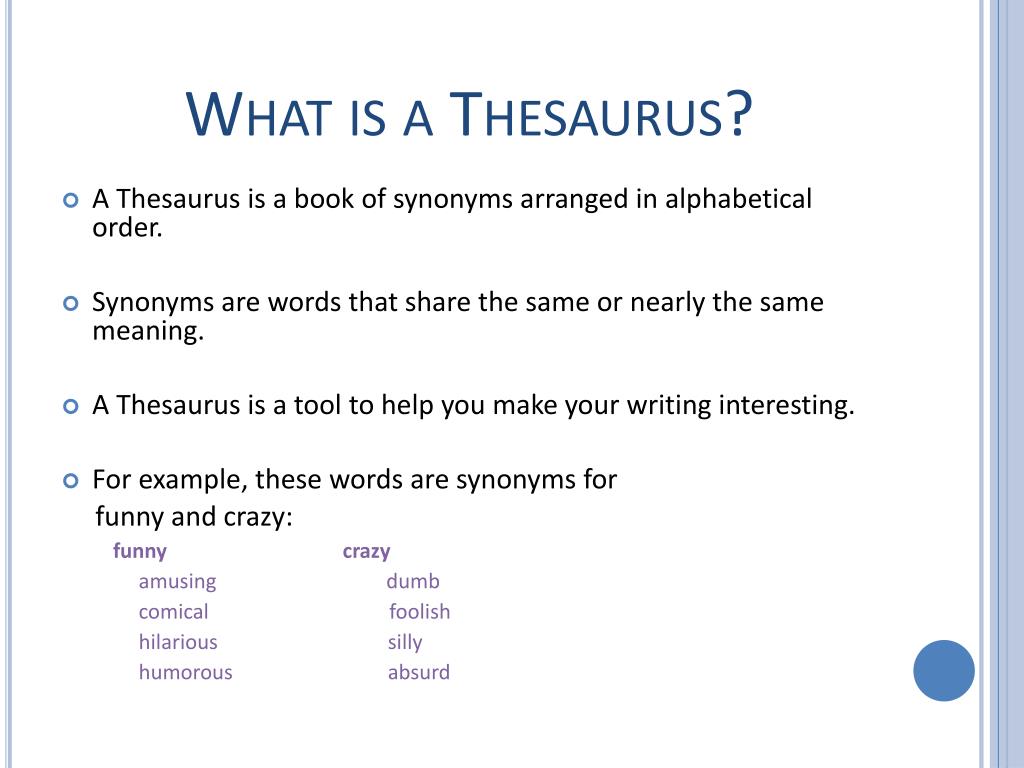
The most common mistake when using a thesaurus is treating synonyms as interchangeable units. In the English language, true synonyms—words that mean exactly the same thing in every context—are rare. Most words categorized as synonyms share a general meaning but diverge in their connotation, intensity, and usage.
To present ideas effectively, you must distinguish between the "denotation" (the literal dictionary definition) and the "connotation" (the emotional or cultural baggage) of a word. For example, if you are presenting a new business strategy, calling it "bold" suggests courage and innovation. Calling it "audacious" might imply that it is reckless or overly ambitious. Both words mean "daring," but they present the idea in vastly different lights.
When you look up a word to replace a repetitive phrase, your first step should be to analyze why the current word is insufficient. Is it too vague? Is it too informal for the setting? Or is it simply used too many times in the preceding paragraph? Identifying the specific deficiency allows you to navigate the thesaurus results with a targeted objective, rather than just picking the longest word in the list.
Strategic Steps for Word Selection
Effective communication relies on a concept called semantic precision. This is the practice of choosing the word that carries the exact weight required for the idea to land as intended. To achieve this using a thesaurus, follow this systematic approach:
1. Identify the Core Concept and Required Intensity
Before opening your thesaurus or digital reference tool, define the intensity of the idea you are trying to convey. If you are describing a "problem," determines if it is a minor "hitch," a significant "obstacle," or a catastrophic "debacle." The intensity must match the reality of the situation to maintain your credibility as a writer or speaker.
2. Evaluate the "Register" or Tone
The register refers to the level of formality in your language. A thesaurus often lists formal, informal, and archaic words side-by-side.
- Formal: Use words like "facilitate" or "implement" in academic papers or executive summaries.
- Neutral: Use "help" or "start" in most standard professional correspondence.
- Informal: Use "kick off" or "pitch in" for casual team chats or creative blog posts. Mixing these registers in a single presentation of an idea can confuse the reader and make the writing feel disjointed.
3. Check for Collocations
A "collocation" is a pair or group of words that are habitually used together. Even if a word is a perfect synonym by definition, it may not "fit" the words around it. For instance, you can have a "strong argument," but you rarely have a "powerful argument," even though "strong" and "powerful" are synonyms. Using a thesaurus to find a word that violates common collocations will make your writing sound "off" or like it was generated by a machine rather than a human.
Avoiding "Thesaurus Syndrome"
One of the most significant risks when using a thesaurus to present ideas is falling into "Thesaurus Syndrome"—the tendency to use overly complex, obscure, or "impressive" words to appear more intelligent. This almost always backfires. Using a word like "utilize" when "use" would suffice, or "pulchritudinous" instead of "beautiful," adds unnecessary cognitive load to the reader.
Cognitive load is the amount of mental effort required to process information. When you use rare or unnecessarily complex words, the reader’s brain has to stop and "translate" the word, which breaks the flow of your argument. To present ideas effectively, your vocabulary should be a transparent window through which the reader sees your concepts, not a stained-glass window that draws attention to the words themselves.
The Goldilocks Rule of Vocabulary
When selecting a word from a thesaurus, aim for the "Goldilocks" word:
- Not too simple: Avoid words that are so vague they lose meaning (e.g., "thing," "good," "bad").
- Not too complex: Avoid words that are so obscure they require a dictionary (e.g., "sesquipedalian," "tergiversate").
- Just right: Choose the word that is specific enough to be clear but common enough to be understood instantly.
Leveraging Modern Thesaurus Tools in 2026
In 2026, the traditional printed thesaurus has largely been supplanted by sophisticated digital tools that integrate semantic AI. These tools provide more than just a list of words; they offer contextual examples and visual maps of how words relate to one another.
| Tool Type | Best Used For | Key Advantage |
|---|---|---|
| Traditional Thesaurus | Finding quick synonyms | Reliable, straightforward, and avoids "over-thinking." |
| Visual Thesaurus | Brainstorming and mapping | Shows the "distance" between meanings and links to related concepts. |
| Reverse Thesaurus | Solving "tip-of-the-tongue" syndrome | Allows you to type a definition or phrase to find the exact word. |
| Contextual/AI Thesaurus | Tone and register adjustment | Analyzes the surrounding text to suggest words that fit the current flow. |
| Specialized/Niche Thesauri | Technical or creative writing | Provides jargon-specific or industry-specific alternatives (e.g., legal or medical). |
When using these tools, particularly AI-driven ones, it is vital to verify the suggestion. Many digital tools suggest words based on statistical probability rather than nuanced understanding. Always double-check a word's definition in a standard dictionary like the Merriam-Webster Dictionary or the Oxford English Dictionary before finalizing your choice.
Practical Application: Presenting Ideas in Different Formats
The way you use a thesaurus depends heavily on the medium through which you are presenting your ideas.
Academic and Technical Writing
In these fields, the goal is total clarity and the removal of ambiguity. A thesaurus should be used to find the most technically accurate term. If you are writing a research paper, "significant" has a specific statistical meaning. If you simply mean "important," you should use a thesaurus to find a more appropriate word to avoid misleading your audience about your data's statistical power.
Business and Professional Presentations
In a corporate environment, time is at a premium. Use a thesaurus to replace passive or weak verbs with active, punchy alternatives. Instead of saying "Our team handled the project," you might use "Our team orchestrated the project" or "Our team executed the project." These choices convey a sense of agency and leadership.
Creative Writing and Storytelling
For creative writers, the thesaurus is an instrument for evocation. Here, you are looking for words that appeal to the senses or create a specific mood. Instead of "the red sky," a thesaurus might lead you to "crimson," "vermilion," or "blood-shot." Each of these paints a different picture in the reader's mind, allowing you to present the atmosphere of your story with greater texture.
Improving Reader Retention Through Variety
Repetitive language is a signal to the reader’s brain that it can "tune out." When the same word appears multiple times in a single paragraph, the brain recognizes a pattern and begins to skip over it. This is known as semantic satiation.
To keep your audience engaged, use a thesaurus to provide variety. However, this variety must be purposeful. Do not change a word just for the sake of change; change it because the second mention of the idea requires a slightly different focus. For example, in the first sentence, you might introduce a "strategy." In the next sentence, you might refer to it as the "framework," and later as the "initiative." This progression shows the reader that the idea is evolving and being applied in different ways.
Common Pitfalls and How to Troubleshoot Them
Even with the best intentions, using a thesaurus can lead to errors. One common issue is malapropism—using a word that sounds similar to the intended one but has a completely different meaning (e.g., "epitaph" instead of "epithet").
Another issue is the loss of voice. Every writer has a unique voice that is defined by their natural vocabulary and sentence structure. If you rely too heavily on a thesaurus, your writing can become "Frankensteinian"—a collection of words that don't quite belong to you. To troubleshoot this, read your work aloud. If a word feels awkward in your mouth or sounds like something you would never say, it is probably the wrong choice for your voice, even if it is technically a correct synonym.
FAQs
Can a thesaurus help if I don't know the word I'm looking for?
Yes, this is where a reverse thesaurus is most useful. Instead of looking up a word to find its synonyms, you input a description of the idea. For example, searching "a person who is overly concerned with minor details" would lead you to "pedant" or "perfectionist." This is an excellent way to present specific personality traits or technical concepts accurately.
Is it better to use a physical thesaurus or a digital one?
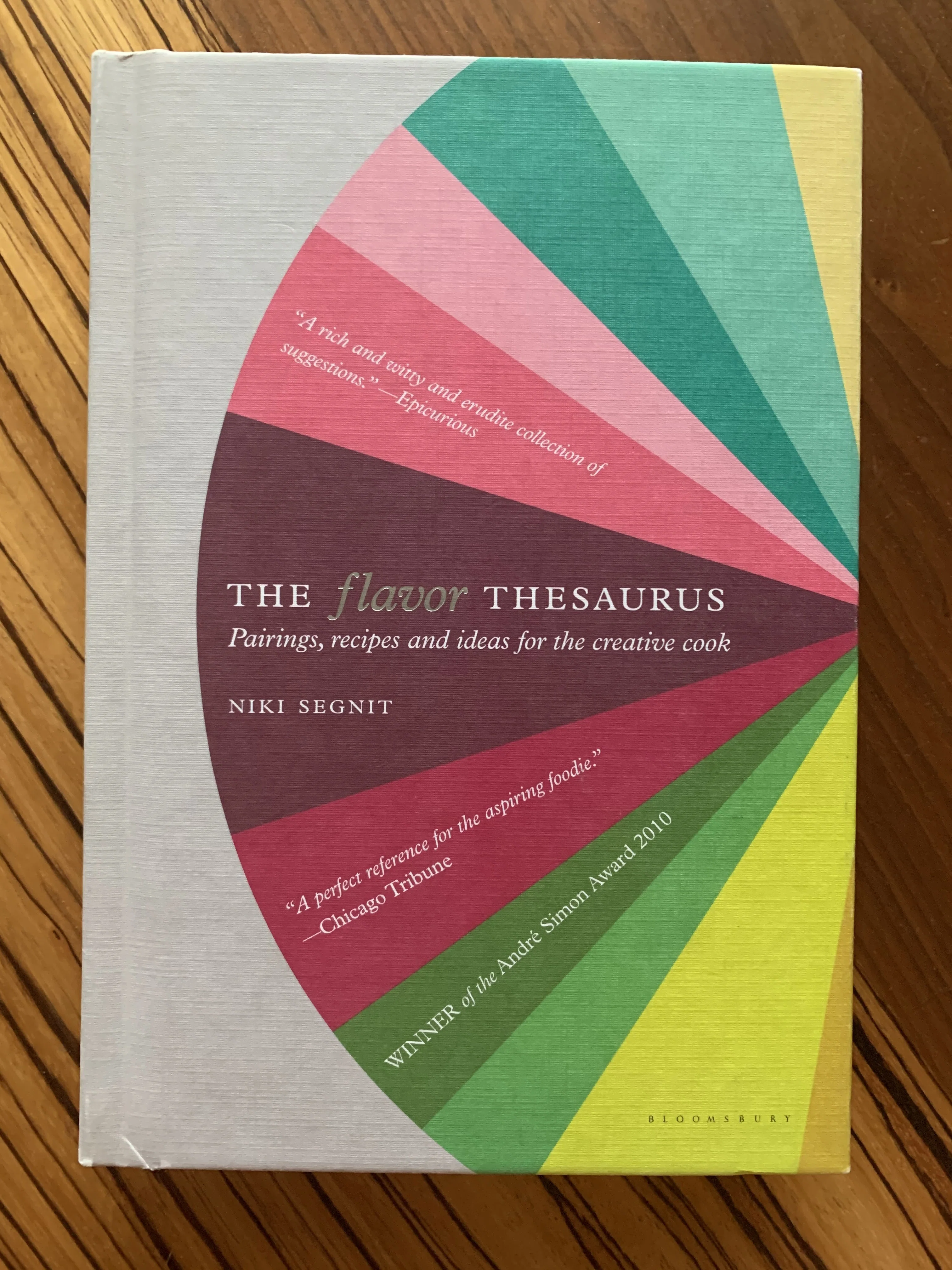
In 2026, digital thesauri are generally superior because they are updated in real-time with modern usage and offer integrated definitions. However, physical thesauri, such as Roget's International Thesaurus, can be better for deep brainstorming because their thematic arrangement encourages you to explore related categories of thought rather than just alphabetical lists.
How do I know if a synonym is "too much"?
The best test is the audience check. If your audience is the general public, any word outside the top 5,000 most common English words might be "too much" unless it is specifically defined. If your audience is a peer group of experts, specialized terminology found in a thesaurus can actually increase your credibility.
Should I use a thesaurus for every "boring" word?
No. Common words like "said," "went," and "had" are often invisible to the reader and help the prose move quickly. If you replace every "said" with words like "exclaimed," "retorted," or "queried," the writing becomes exhausting to read. Save the thesaurus for words that carry the core meaning of your ideas.
Can a thesaurus help with SEO and digital discoverability?
Yes, particularly in 2026. Search engines now use Latent Semantic Indexing (LSI) to understand the topic of a page. By using a thesaurus to find related terms and synonyms for your primary keywords, you help search engines understand the breadth and depth of your content, which can improve your ranking for a wider variety of search queries.
Final Recommendation
To truly master the use of a thesaurus for presenting ideas, treat it as a tool for discovery rather than a tool for replacement. Use it to explore the boundaries of a concept and to find the exact "temperature" of a word. Always prioritize clarity over decoration. Before you finalize a word choice, ask yourself: "Does this word make my idea easier to understand, or does it just make me feel more sophisticated?" If the answer is the latter, stick with the simpler term. The most powerful ideas are those presented with such precision that the words themselves become secondary to the message.
Image Gallery