Why the Non-Workers' Compensation Notice Matters for Texas Employers
In Texas, providing a non-workers' compensation notice is a mandatory legal requirement for "non-subscriber" employers who opt out of the state’s voluntary workers' compensation system. Failure to post Notice 5 and file DWC Form 005 ex...
In Texas, providing a non-workers' compensation notice is a mandatory legal requirement for "non-subscriber" employers who opt out of the state’s voluntary workers' compensation system. Failure to post Notice 5 and file DWC Form 005 exposes businesses to significant administrative fines, increased litigation risk, and the loss of critical legal defenses in workplace injury lawsuits.
Contents
Texas occupies a unique position in the United States regarding labor laws. As of 2026, it remains the only state where private employers can choose whether or not to carry workers' compensation insurance. While this "non-subscriber" status offers flexibility in managing costs and claims, it comes with a rigorous set of notification requirements. For these employers, the "Non-Workers' Compensation Notice" is not merely a piece of paperwork; it is a foundational compliance obligation that dictates their legal standing in the event of an employee injury.
Understanding the Texas Non-Subscriber System
To understand why the notice matters, one must first understand the environment of Texas workers' compensation. Most states mandate coverage, providing an "exclusive remedy" that prevents employees from suing their employers for personal injury in exchange for guaranteed medical and income benefits. Texas allows employers to opt out, but doing so strips them of several common-law defenses.
When an employer chooses to be a non-subscriber, they are essentially self-insuring or using a private occupational injury plan. However, the Texas Labor Code requires that the state and the employees be informed of this status. This transparency is designed to ensure employees understand they are not covered by the state-regulated system and to allow the Texas Department of Insurance, Division of Workers' Compensation (TDI-DWC) to monitor workplace safety and insurance trends.
The Role of the Texas Department of Insurance (TDI)
The TDI-DWC oversees the system. Even if an employer does not participate in workers' compensation, they still fall under the DWC's regulatory umbrella regarding reporting. The DWC uses these notices to maintain a public database of who is and is not covered, which is frequently used by attorneys, medical providers, and the employees themselves.
What is the Non-Workers' Compensation Notice?
There are two distinct components that Texas employers often conflate, both of which are essential for compliance: Notice 5 and DWC Form 005.
Notice 5: The Employee Poster
Notice 5 is the physical poster that must be displayed in the workplace. It explicitly states that the employer does not have workers' compensation insurance coverage. The language is standardized by the state; employers cannot draft their own version or omit specific warnings. As of 2026, the DWC requires this notice to be posted in English, Spanish, and any other language that is common to at least 5% of the employer's workforce.
DWC Form 005: The State Filing
While Notice 5 informs the employees, DWC Form 005 informs the State of Texas. This form must be filed electronically with the DWC. It acts as an official declaration that the employer has elected not to be covered by the Texas Workers' Compensation Act. This filing must be renewed annually. Forgetting to renew this form is one of the most common compliance failures among Texas small businesses.
The Legal Importance of Notice Compliance
The primary reason this notice matters is legal protection—or rather, the mitigation of legal vulnerability. In Texas, if an injured employee sues a non-subscriber employer for negligence, the employer is prohibited from using three powerful common-law defenses:
- Contributory Negligence: Arguing that the employee’s own actions caused the injury.
- Assumption of Risk: Arguing that the employee knew the job was dangerous.
- Fellow Servant Rule: Arguing that the injury was caused by another employee's negligence.
If an employer fails to provide the required notices, their legal position becomes even more precarious. Courts have historically looked unfavorably upon employers who hide their non-subscriber status.
Administrative Penalties and Fines
The TDI-DWC has the authority to levy administrative penalties against employers who fail to post the required notices or fail to file Form 005. These fines can reach up to $25,000 per day, per violation, depending on the severity and history of non-compliance. While maximum fines are typically reserved for egregious or repeated offenses, even a standard audit can result in thousands of dollars in penalties for a simple missing poster.
Evidence in Litigation
In the event of a workplace injury lawsuit, one of the first discovery requests from a plaintiff’s attorney will be for proof of the employer’s compliance with notice requirements. If the employer cannot prove that the injured worker was notified of the lack of coverage at the time of hire and via posters, it can be used to demonstrate a pattern of regulatory negligence.
Detailed Requirements for Posting and Notification
Compliance is not a "set it and forget it" task. It requires ongoing attention to detail regarding where the notice is placed and how new employees are onboarded.
Physical Placement Standards
Notice 5 must be posted in a "conspicuous" location. In a 2026 workplace environment, this typically means:
- Common breakrooms or kitchens.
- Near time-clock stations.
- In HR offices where employee orientations occur.
- On centralized digital bulletin boards (though physical posters are still generally required for on-site staff).
The notice must be unobstructed and legible. If a business has multiple locations, each site must have its own notice displayed.
New Hire Notification
The law requires that an employer notify each employee in writing when they are hired. This is usually handled by including a "Notice to New Employees" in the onboarding packet. To protect the business, it is vital to have the employee sign an acknowledgment form confirming they received this notice. This signature serves as the employer's "Receipt of Notice" and is the single most important piece of evidence if an employee later claims they were unaware of the lack of coverage.
Language and Accessibility
Texas is linguistically diverse. If your workforce includes a significant number of people who speak a language other than English (the 5% threshold), you are legally obligated to provide the notice in that language. Failure to do so renders the notice ineffective for those employees, potentially opening the door for claims that the notice requirement was not met.
Summary of Notice Requirements for Texas Employers
The following table outlines the differences between the two primary notice requirements for non-subscribers in 2026.
| Requirement | Recipient | Frequency | Format | Purpose |
|---|---|---|---|---|
| Notice 5 | Employees | Continuous | Physical Poster | To inform staff of the lack of state-regulated insurance. |
| DWC Form 005 | TDI-DWC (State) | Annual | Electronic Filing | Official registration of non-subscriber status with the state. |
| New Hire Notice | Individual Employee | Upon Hire | Written/Signed | To ensure individual awareness of coverage status at start of employment. |
| DWC Form 007 | TDI-DWC (State) | Per Incident | Electronic Filing | To report on-the-job injuries/illnesses (required even for non-subscribers). |
Common Mistakes Texas Employers Make
Despite the seemingly straightforward nature of these rules, many employers find themselves in hot water due to oversight.
- Failing to Renew Form 005 Annually: Many business owners believe that once they file their non-subscription status, it stays that way forever. In reality, Form 005 must be filed every year by the anniversary of the original filing. If you miss the deadline, you are technically in violation of the Texas Labor Code for every day the filing is lapsed.
- Using Outdated Poster Versions: The DWC occasionally updates the required language for Notice 5. Using a version from five or ten years ago may not meet current 2026 standards. Always ensure you are using the most recent version available on the TDI website.
- Incomplete Onboarding Documentation: While many employers post the Notice 5 poster, they often forget to get a signed acknowledgment from new hires. In a courtroom, a poster on a wall is harder to prove than a signed document in a personnel file.
- Misunderstanding Remote Worker Requirements: With the rise of remote work, many Texas employers assume that if an employee works from home, they don't need to see the poster. However, if the employee is based in Texas, the employer still owes them notification. Companies should provide digital versions of Notice 5 to all remote staff.
Steps to Ensure Compliance in 2026
To avoid the pitfalls associated with non-subscription, Texas employers should implement a rigorous compliance audit.
Step 1: Verification of Status
Confirm whether your company is a subscriber or a non-subscriber. Some companies mistakenly believe they are non-subscribers because they have a private "Occupational Accident Plan," but they may still have a workers' comp policy they are unaware of, or vice versa.
Step 2: Poster Audit
Walk through every physical location of your business. Ensure Notice 5 is posted in both English and Spanish (and any other required languages). Ensure the posters are not faded, torn, or covered by other memos.
Step 3: Calendar the DWC Form 005 Filing
Treat the Form 005 filing like a tax deadline. Set digital reminders for 30 days and 15 days before the annual filing date. The filing is done through the TDI’s online portal.
Step 4: Update Onboarding Procedures
Review your new hire packets. Ensure the "Notice to Employees Concerning Workers' Compensation in Texas" is included and that there is a dedicated signature line for the employee to acknowledge receipt. Store these acknowledgments in a secure, easily accessible digital or physical file.
Step 5: Report Injuries (Form 007)
Remember that being a non-subscriber does not exempt you from reporting injuries. If an employee is absent for more than one day due to a work-related injury, non-subscribers must file DWC Form 007. Failure to report injuries is a separate but equally serious compliance violation.
Frequently Asked Questions
Does a very small business (e.g., 2 employees) still have to post the notice?
Yes. The Texas Labor Code does not provide a "small business" exemption for notice requirements. If you have at least one employee and you do not have workers' compensation insurance, you must post Notice 5 and file Form 005.
What if I have workers' compensation insurance? Do I still use Notice 5?
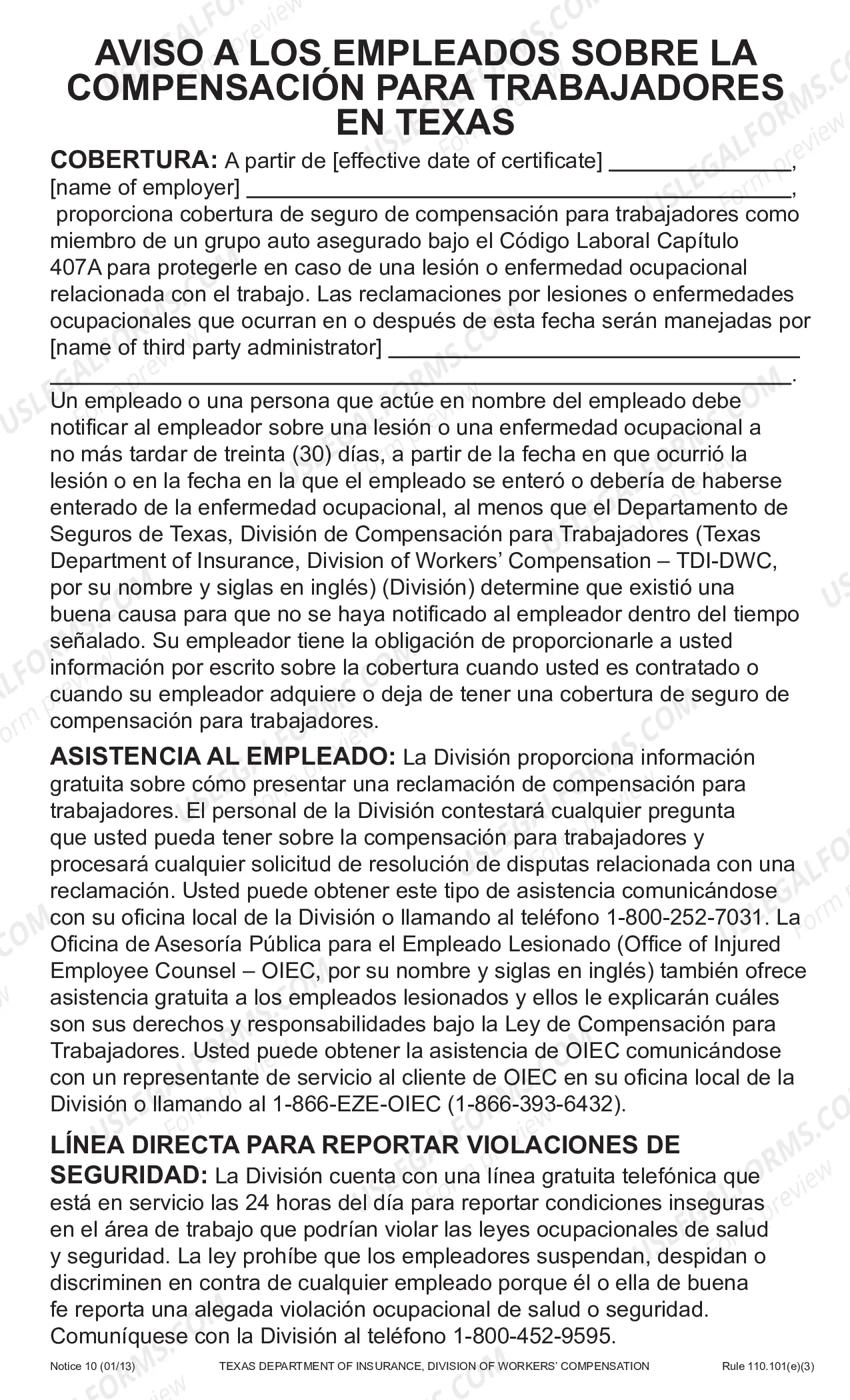
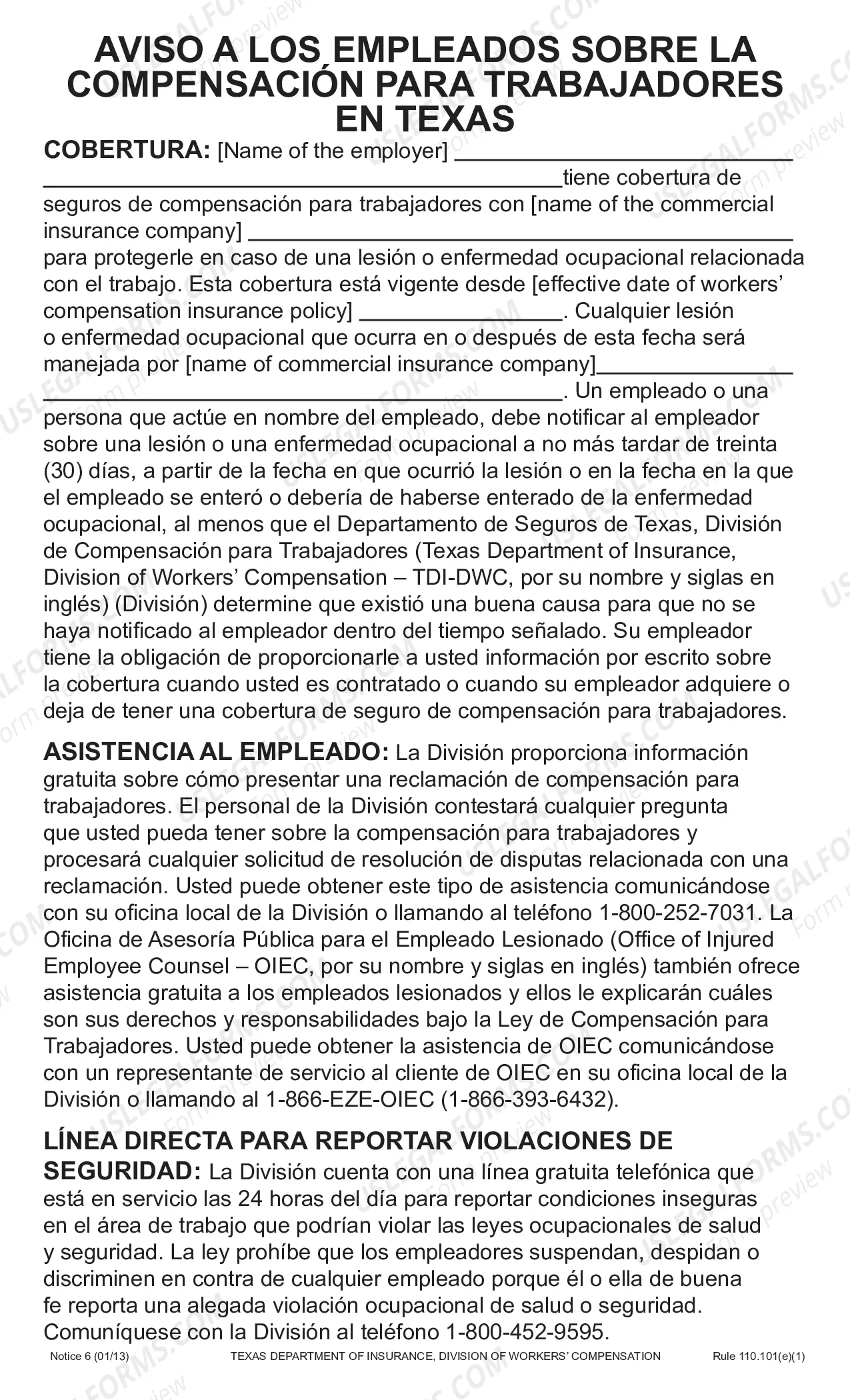
No. If you do have workers' compensation insurance, you must post Notice 6. Notice 5 is strictly for those who have opted out (non-subscribers). Posting the wrong notice can lead to confusion and potential legal issues regarding your "exclusive remedy" protections.
Can an employee sue me if I have the notice posted?
If you are a non-subscriber, an employee can almost always sue you for negligence if they are injured on the job, regardless of your posters. The purpose of the notice is not to prevent the lawsuit, but to satisfy administrative laws and ensure you don't face additional penalties or weakened legal standing during that lawsuit.
Are digital posters enough for compliance in 2026?
While digital notices are highly recommended for remote workers and modern office environments, the DWC generally still requires physical posters in locations where employees "regularly congregate." A hybrid approach—physical posters in the office and digital copies in the employee handbook—is the safest path to compliance.
What is the deadline for filing Form 005?
For new businesses, the form must be filed within 30 days of the date you hire your first employee. For existing non-subscribers, it must be filed annually by the anniversary date of your initial filing.
Final Recommendation for Texas Employers
The "Non-Workers' Compensation Notice" is a critical component of risk management for any Texas business operating outside the traditional insurance system. To maintain a defensible position, employers must go beyond the bare minimum. Beyond simply posting Notice 5, you should maintain a "Compliance Folder" that contains copies of your annual Form 005 filings and every signed employee acknowledgment. In the litigious environment of 2026, these documents are your primary shield against administrative overreach and high-stakes workplace injury claims. If you are unsure of your current status, contact the Texas Department of Insurance or a qualified labor attorney immediately to rectify any lapses.
Image Gallery