Comprehensive Overview of The Wharton School of the University of Pennsylvania
The Wharton School of the University of Pennsylvania is the world’s first collegiate business school, established in 1881 through a donation from industrialist Joseph Wharton. As of 2026, it remains a global leader in business educatio...
The Wharton School of the University of Pennsylvania is the world’s first collegiate business school, established in 1881 through a donation from industrialist Joseph Wharton. As of 2026, it remains a global leader in business education, recognized for its rigorous quantitative focus, expansive alumni network, and consistent top-tier rankings across undergraduate, MBA, and executive programs.
Contents
A Legacy of Innovation in Business Education
Founded on the principle that business management should be taught as a formal science, The Wharton School transformed the landscape of higher education. Before its inception, business skills were largely acquired through apprenticeships. Joseph Wharton’s vision was to create a "science of management" that combined liberal arts education with practical economic training.
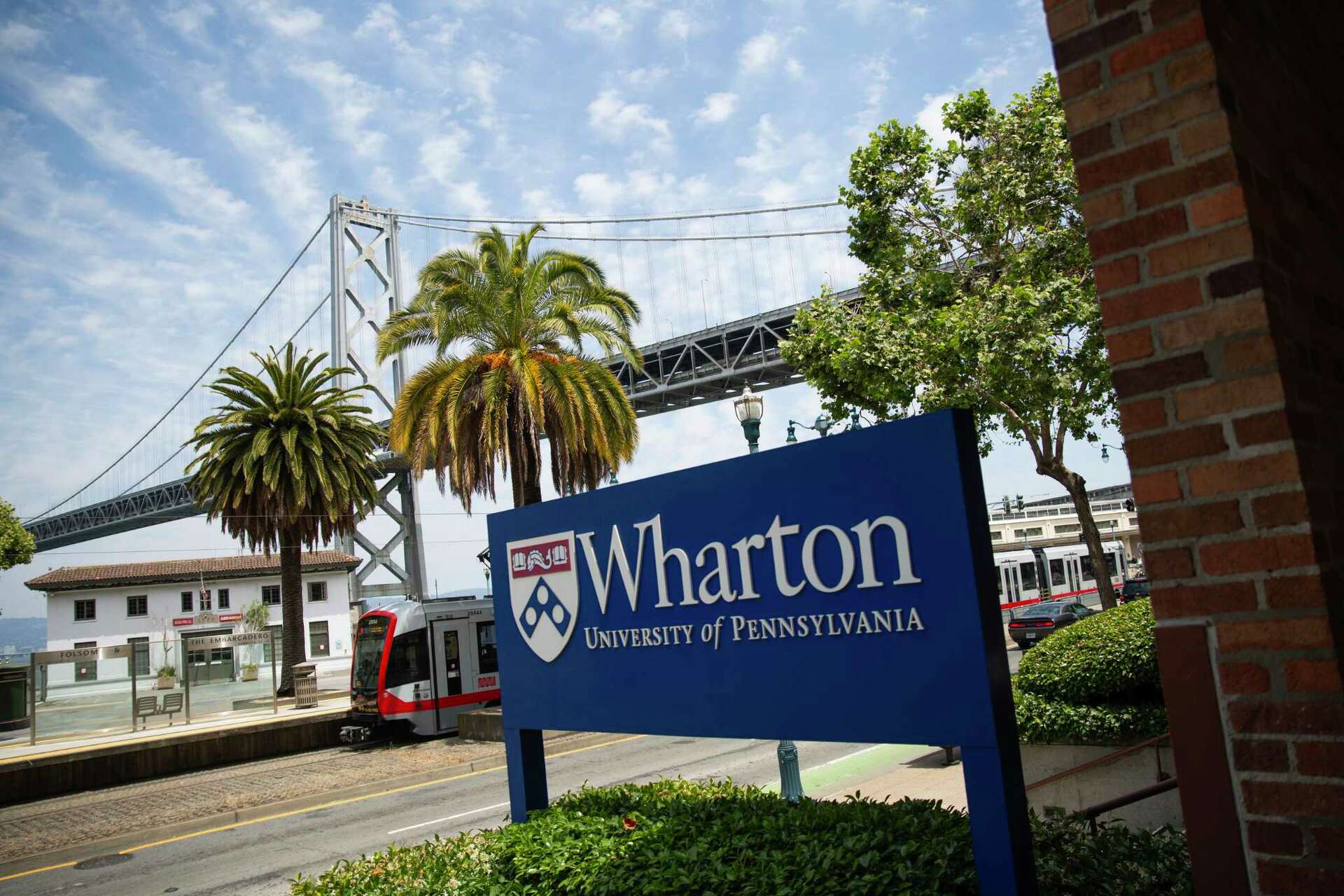
Today, Wharton operates as one of the four undergraduate and 12 graduate schools of the University of Pennsylvania (Penn), an Ivy League institution located in Philadelphia. While it is synonymous with finance, the school has evolved into a comprehensive institution covering every facet of the global economy, from healthcare management to data analytics and social impact. Its dual-campus model—with the primary hub in Philadelphia and a specialized campus in San Francisco—allows it to maintain deep ties with both the traditional financial centers of the East Coast and the technological innovation of the West Coast.
Academic Excellence: The Wharton Undergraduate Program
The undergraduate program at Wharton is distinct from many other business schools because it awards a Bachelor of Science in Economics. This degree reflects the school’s commitment to a rigorous analytical foundation. Students do not merely study "business"; they study the underlying economic principles that drive markets and organizational behavior.
The Curriculum Structure
The undergraduate curriculum is designed to be highly flexible, allowing students to take approximately one-third of their classes across Penn’s other schools, such as the College of Arts and Sciences or the School of Engineering and Applied Science. This interdisciplinary approach ensures that graduates are well-rounded leaders rather than narrow specialists.
- The Core: All students complete a business core that includes accounting, finance, management, marketing, and operations.
- Concentrations: Students choose from over 20 concentrations, ranging from Actuarial Science and Business Analytics to Retailing and Environmental, Social, and Governance (ESG) Factors for Business.
- Global Opportunities: In 2026, Wharton continues to emphasize global modular courses and semester-abroad programs, ensuring students understand international market dynamics firsthand.
The Wharton MBA: Global Leadership and Quantitative Rigor
The Wharton MBA is perhaps the school’s most famous offering. It is characterized by its "flexible core," which allows students to waive certain introductory requirements based on their prior experience and dive immediately into specialized electives.
Majors and Specializations
Unlike many MBA programs that offer a general management degree, Wharton requires students to choose a major. While Finance remains the most popular, the school has seen a significant surge in interest in Technology Management and Entrepreneurship. In the 2026 academic year, new interdisciplinary majors focusing on Artificial Intelligence in Business and Climate Adaptation Finance have become central to the curriculum, reflecting the shifting needs of the global economy.
Dual-Degree Programs
Wharton is a pioneer in dual-degree education. The Lauder Institute offers a joint MBA/MA in International Studies, preparing students for senior leadership in multinational corporations. Other notable pairings include the MBA/MD with the Perelman School of Medicine and the MBA/JD with Penn Carey Law. These programs are highly competitive and designed for individuals who intend to operate at the intersection of business and other complex professional fields.
Executive Education and Doctoral Research
Beyond traditional degrees, Wharton is a powerhouse in knowledge creation and professional development.
The PhD Program
The Wharton PhD program is one of the most productive research engines in the world. With nine different areas of study, including Ethics and Legal Studies and Statistics, doctoral candidates work alongside world-renowned faculty to publish groundbreaking research. This research often forms the basis for the "Wharton Way" of teaching, where the curriculum is driven by data rather than anecdotes.
Executive Education
For mid-career and senior professionals, Wharton Executive Education offers non-degree programs that range from a few days to several months. These programs are available both on-campus and through sophisticated digital platforms. In 2026, the focus has shifted toward Digital Transformation and Strategic Crisis Management, helping leaders navigate an increasingly volatile geopolitical and technological landscape.
Admission Requirements and Selection Criteria
Gaining admission to Wharton is a formidable challenge, with acceptance rates for the MBA program typically hovering between 12% and 15%, and undergraduate rates often reaching into the single digits.
What Admissions Committees Look For
The school seeks "impact-oriented" individuals. This means they are not just looking for high test scores, but for evidence of leadership, collaboration, and a track record of solving complex problems.
- Academic Excellence: High GPA and competitive GMAT Focus Edition or GRE scores are foundational. For the 2026 intake, the average GMAT score for the MBA program remains in the 720–740 range (or equivalent percentiles on the Focus Edition).
- Professional Experience: MBA applicants typically have 5–6 years of work experience, though the "Moelis Advance Access" program allows undergraduates to apply and defer their enrollment for two to four years.
- Team-Based Discussion (TBD): A unique element of the Wharton MBA application is the TBD, where a group of applicants must collaborate on a prompt while being observed by the admissions team. This highlights the school’s emphasis on teamwork over individual competition.
Financial Investment: Tuition and Costs for 2026
Attending Wharton is a significant financial commitment. The costs listed below are estimates for the 2026-2027 academic year, reflecting the total cost of attendance including tuition, fees, and living expenses in Philadelphia.
| Expense Category | Undergraduate (Annual) | MBA (Annual) |
|---|---|---|
| Tuition & Fees | $72,500 | $89,500 |
| Room & Board | $21,000 | $26,000 |
| Books & Supplies | $1,500 | $2,000 |
| Health Insurance | $4,500 | $4,500 |
| Personal/Misc. | $3,500 | $6,000 |
| Estimated Total | $103,000 | $128,000 |
Note: These figures are projections based on historical inflationary trends and official University of Pennsylvania data.
Despite the high cost, Wharton offers robust financial aid. The school practices need-blind admission for domestic undergraduates and provides numerous merit-based fellowships for MBA students.
Comparing Wharton to Other M7 Business Schools
Wharton is a member of the "M7"—an elite group of seven business schools (including Harvard, Stanford, Booth, Columbia, Kellogg, and MIT Sloan) that regularly share information and maintain the highest standards of business education.
| Feature | Wharton School | Harvard Business School | Stanford GSB |
|---|---|---|---|
| Primary Strength | Finance & Quantitative Analysis | General Management & Leadership | Entrepreneurship & Innovation |
| Teaching Method | Lecture & Case Study Hybrid | 100% Case Study | Small Seminar & Experiential |
| Location | Philadelphia, PA | Boston, MA | Stanford, CA |
| Class Size | Large (~850+ MBA students) | Large (~900+ MBA students) | Small (~400+ MBA students) |
| Core Philosophy | Data-driven decision making | Leadership through case analysis | Personal transformation/Change |
Global Impact and the Alumni Network
One of Wharton's greatest assets is its alumni network, which exceeds 100,000 members across more than 150 countries. This network is often described as the "Wharton Mafia" due to its presence in the highest echelons of global finance, government, and technology.
Notable alumni include:
- Elon Musk: CEO of Tesla and SpaceX (Undergraduate)
- Sundar Pichai: CEO of Alphabet and Google (MBA)
- Alex Gorsky: Former Executive Chairman of Johnson & Johnson (MBA)
- Mary Meeker: General Partner at Bond Capital (MBA)
The alumni network provides a lifetime of career services, mentoring, and regional clubs that allow graduates to maintain professional connections long after they leave Philadelphia.
Frequently Asked Questions
Is Wharton only good for students pursuing careers in finance?
No. While Wharton is arguably the best finance school in the world, it is also a leader in marketing, healthcare management, and real estate. Its data-driven approach is applicable to any industry where quantitative analysis and strategic thinking are required.
What is the difference between Wharton and the University of Pennsylvania?
The Wharton School is one of the constituent schools of the University of Pennsylvania. When you are a student at Wharton, you are also a student at Penn. You have access to all of Penn’s resources, including its libraries, athletics, and interdisciplinary research centers.
Does Wharton require the GMAT for the MBA program?
Yes, either the GMAT (specifically the GMAT Focus Edition) or the GRE is required for all MBA applicants. There are very few exceptions, and the school uses these scores to gauge quantitative readiness for their rigorous curriculum.
Can undergraduate students at Penn take classes at Wharton?
Yes. Many Penn students outside of Wharton choose to pursue a "Wharton Minor" or take individual electives in subjects like accounting or management to supplement their primary degree.
Where do Wharton graduates go after graduation?
For the MBA Class of 2025/2026, the primary destinations remain Financial Services (approx. 35%), Consulting (approx. 25%), and Technology (approx. 15%). However, there is a growing segment entering private equity, venture capital, and social impact roles.
Practical Recommendations for Prospective Students
If you are considering applying to The Wharton School in 2026, focus on three pillars: quantitative readiness, leadership evidence, and specific fit.
- Quantitative Readiness: If your undergraduate background was in the liberal arts, consider taking supplemental courses in calculus or statistics to prove you can handle the Wharton math.
- Leadership Evidence: Wharton does not just want to see your title; they want to see what you built, changed, or saved. Quantify your professional achievements in your resume and essays.
- Engage with the Community: Before applying, attend virtual coffee chats or information sessions. Understanding the "culture of contribution" at Wharton will help you write a more compelling application that resonates with the admissions committee.
Image Gallery