Orgel Wealth: Navigating Shifts in Global Asset Distribution in 2026
Orgel Wealth Management navigates shifts in global asset distribution by utilizing a disciplined, evidence-based investment philosophy that prioritizes long-term purchasing power over short-term market speculation. In 2026, their appro...
Orgel Wealth Management navigates shifts in global asset distribution by utilizing a disciplined, evidence-based investment philosophy that prioritizes long-term purchasing power over short-term market speculation. In 2026, their approach emphasizes broad geographic diversification, systematic rebalancing across evolving international markets, and the integration of alternative asset classes to mitigate the risks of localized economic volatility.
Contents
The global financial landscape of 2026 is defined by a departure from the US-centric dominance of the previous decade. As emerging economies mature and interest rate environments stabilize globally, the distribution of wealth and investment capital has migrated toward a more fragmented, multi-polar model. For firms like Orgel Wealth Management, staying ahead of these shifts requires more than just passive index tracking; it demands a sophisticated understanding of how geopolitical trends, demographic changes, and technological disruptions alter the intrinsic value of asset classes.
The Evolving Landscape of Global Assets in 2026
In 2026, the concept of "global asset distribution" has transitioned from a focus on developed Western markets to a more inclusive model that accounts for the "Global South" and the rapid digitalization of financial infrastructure. Several key factors are driving these shifts:
- The Great Wealth Transfer: trillions of dollars are continuing to move from the Baby Boomer generation to Gen X and Millennials. This demographic shift has fundamentally changed investment priorities, with a higher demand for transparency, sustainability, and digital-first advisory services.
- Deglobalization and Near-Shoring: The reorganization of global supply chains has led to localized booms in regions like Mexico, Southeast Asia, and Eastern Europe. Investors must now account for "regionalization" rather than broad-stroke "globalization."
- Real Interest Rate Normalization: Following the inflationary shocks of the early 2020s, 2026 represents a period of stabilized, yet higher, real interest rates. This has restored the importance of fixed income as a primary component of asset distribution, ending the "There Is No Alternative" (TINA) era for stocks.
Orgel Wealth addresses these complexities by adhering to a fiduciary standard, ensuring that every shift in a client’s portfolio is grounded in data rather than reactionary sentiment.
Orgel Wealth’s Philosophy on Asset Allocation
At the core of Orgel Wealth's strategy is the belief that markets are generally efficient, but investor behavior is often not. Navigating shifts in asset distribution requires a commitment to a repeatable process. The firm focuses on "controllables"—costs, taxes, and risk exposure—while letting the market provide the "uncontrollable" returns.
Strategic vs. Tactical Allocation
Orgel Wealth distinguishes between strategic asset allocation (the long-term "blueprint") and tactical adjustments (short-term responses to market dislocations). In 2026, tactical shifts are increasingly driven by the divergence in central bank policies across the globe. While the U.S. Federal Reserve may maintain a specific trajectory, the European Central Bank or the Reserve Bank of India may move in the opposite direction. Orgel’s team monitors these divergences to identify where global capital is likely to flow next.
Independence and Fiduciary Duty
As an independent, SEC-registered investment advisor (RIA), Orgel Wealth is not beholden to proprietary products or parent companies. This independence is critical when navigating global shifts, as it allows the firm to select the most efficient investment vehicles—whether they are low-cost ETFs, institutional-class mutual funds, or direct private placements—without the conflict of interest inherent in traditional brokerage models.
Key Shifts in Geographic Distribution: Beyond the U.S.
For much of the 2010s and early 2020s, U.S. equity markets significantly outperformed their international counterparts. However, by 2026, the valuation gap has narrowed, and the distribution of assets has shifted toward a more balanced international profile.
The Rise of Emerging Markets (EM)
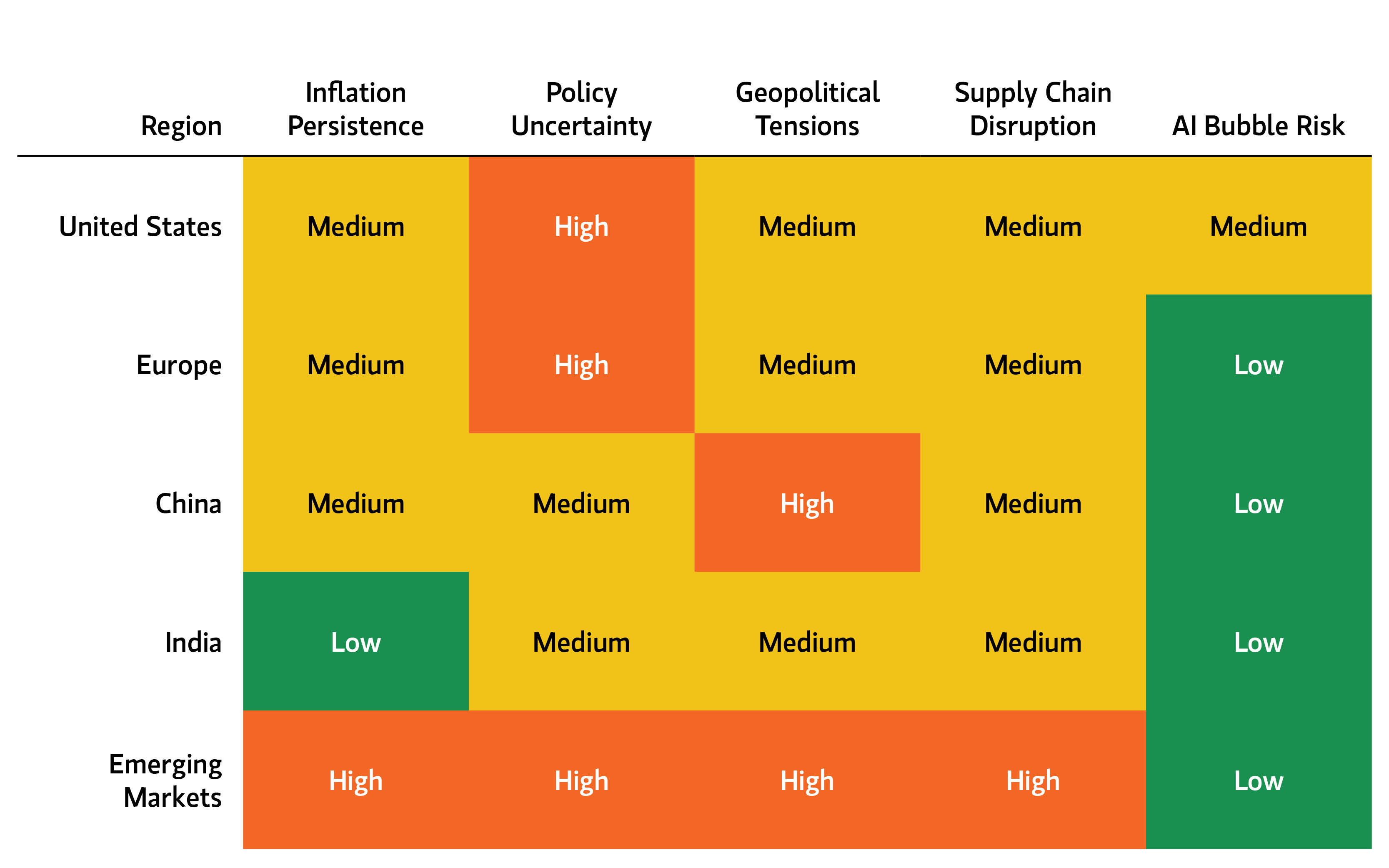
In 2026, "Emerging Markets" is no longer a monolithic category. Orgel Wealth emphasizes a granular approach to EM. For instance, India’s demographic dividend and technological infrastructure have made it a cornerstone of international distribution, while other traditional EM players may face different headwinds. Navigating these shifts involves identifying which nations have the fiscal discipline and structural reforms necessary to sustain growth.
European Resilience and Value
Despite structural challenges, European markets in 2026 offer significant "value" opportunities. Many of the world’s leaders in luxury goods, renewable energy, and industrial automation are based in Europe. Orgel Wealth incorporates these sectors to provide a hedge against U.S. sector concentration, particularly in technology.
The Role of Alternative Investments and Private Equity
In 2026, traditional stock and bond portfolios (the classic 60/40) are often supplemented with alternative investments. Orgel Wealth views alternatives not as speculative gambles, but as tools for diversification and volatility dampening.
- Private Credit: With traditional banks facing stricter capital requirements, private credit has become a vital source of funding for mid-market companies. For qualified investors, this provides an income stream that is often less correlated with public bond markets.
- Real Assets: Infrastructure, timber, and specialized real estate (such as data centers and cold storage) provide a tangible hedge against inflation. Orgel Wealth analyzes these assets' ability to generate cash flow regardless of public market sentiment.
- Hedged Strategies: Strategies designed to capture market "alpha" while minimizing "beta" (market risk) are used to protect capital during the heightened volatility seen in mid-2026.
Comparison: Traditional vs. 2026 Modern Portfolio Theory
The following table illustrates the shift from traditional asset distribution models to the more nuanced approach required in 2026.
| Asset Component | Traditional Approach (Pre-2020) | 2026 Modern Approach |
|---|---|---|
| Geographic Focus | 70-80% Domestic (U.S.) | 50-60% Domestic; 40-50% Global/EM |
| Fixed Income | Focus on Nominal Yield (Government Bonds) | Focus on Real Yield and Credit Quality |
| Technology Sector | Pure Growth Play | Integration of AI Infrastructure & Hardware |
| Inflation Protection | Minimal; relied on low CPI | Integral; Real Assets & TIPS |
| Rebalancing Frequency | Annual or Semi-Annual | Systematic, Data-Triggered Rebalancing |
| Risk Assessment | Historical Volatility (Standard Deviation) | Forward-Looking Stress Testing & Geopolitical Risk |
Technology and Data in Global Asset Distribution
The year 2026 marks a turning point in how wealth managers use technology. Orgel Wealth leverages advanced data analytics to monitor global asset shifts in real-time. This does not mean high-frequency trading; rather, it means using "Big Data" to understand consumer behavior, energy consumption, and trade flows before they are fully reflected in traditional quarterly reports.
Artificial Intelligence (AI) serves as a co-pilot for Orgel’s research team. By processing thousands of global economic indicators, AI helps identify "regime changes"—moments when the market moves from a low-volatility environment to a high-volatility one. This allows for more proactive risk management and ensures that client portfolios are not caught off-guard by sudden shifts in global capital flows.
Risk Management and Volatility Mitigation
Navigating global shifts is inherently risky. Political instability, trade wars, and currency fluctuations are constant threats. Orgel Wealth employs several layers of risk management:
- Currency Hedging: As global asset distribution increases, so does exposure to foreign currencies. Orgel evaluates when to hedge currency risk to protect returns from a strengthening or weakening dollar.
- Tax-Loss Harvesting: Systematic rebalancing provides opportunities to capture losses that can offset capital gains, a critical component of maximizing after-tax returns in a complex global market.
- Stress Testing: Portfolios are subjected to "what-if" scenarios, such as a sudden spike in oil prices or a localized conflict in key trade corridors.
Practical Implementation: Steps for Investors
For individuals looking to align their portfolios with the shifts in global asset distribution, the process involves several critical steps practiced by the Orgel Wealth team:
- Inventory of Current Holdings: Understanding exactly where your capital is currently deployed across sectors and geographies.
- Gap Analysis: Identifying where the portfolio is "over-indexed" to aging economic models and "under-indexed" to future growth drivers.
- Execution of Rebalance: Gradually shifting assets to the target distribution to avoid "timing the market" errors.
- Continuous Monitoring: Global distribution is not a "set it and forget it" task. It requires ongoing oversight to account for shifting valuations and macro-economic data.
FAQ: Navigating Global Asset Distribution
How does Orgel Wealth handle the volatility of emerging markets? Orgel Wealth manages EM volatility through rigorous diversification and by using institutional-grade funds that emphasize companies with strong balance sheets and transparent governance. They avoid concentrated bets on single countries, preferring a broad-based approach that captures the growth of the region while minimizing the impact of a single nation’s political instability.
Is the 60/40 portfolio still relevant in 2026? The 60/40 model remains a foundational concept, but Orgel Wealth often adapts it. In 2026, the "40" in bonds is often more diversified across international debt and private credit, while the "60" in stocks includes a heavier weight toward international and value-oriented sectors than in previous decades.
What is the impact of AI on asset distribution? AI acts as an analytical tool that identifies patterns in global trade and sentiment. At Orgel Wealth, AI does not replace human judgment; instead, it provides the data necessary for advisors to make informed decisions about when a specific asset class has become overvalued or when a new opportunity is emerging in a foreign market.
How often should a global portfolio be rebalanced? Orgel Wealth utilizes systematic rebalancing. Rather than a fixed calendar date, rebalancing is often triggered when an asset class drifts beyond a specific percentage of its target allocation. This ensures that the portfolio "sells high" on outperforming assets and "buys low" on underperforming ones.
Does Orgel Wealth offer sustainable or ESG-focused global distribution? Yes, in 2026, environmental, social, and governance (ESG) factors are integrated into the core risk-management process. Orgel Wealth recognizes that companies with high sustainability standards are often better positioned to navigate the regulatory and environmental shifts of the mid-2020s.
Next Actions for Global Investors
To effectively navigate the shifts in global asset distribution, investors should first seek a comprehensive review of their current portfolio’s geographic and sector exposure. If your portfolio has not been adjusted since the early 2020s, it likely carries significant "concentration risk" in U.S. large-cap technology stocks.
The next step is to consult with a fiduciary advisor to establish a "Target Allocation" that reflects the multi-polar economic reality of 2026. This includes exploring international small-cap stocks, emerging market debt, and real assets. By shifting from a reactive mindset to a disciplined, global perspective, investors can better protect their wealth against local downturns and participate in the broader growth of the global economy.
The information provided in this article is for educational purposes only and does not constitute financial, legal, or tax advice. For specific guidance, please consult with a qualified professional. Orgel Wealth Management is an SEC-registered investment advisor.
Image Gallery