Understanding the South Carolina Workers’ Compensation Maximum for 2026
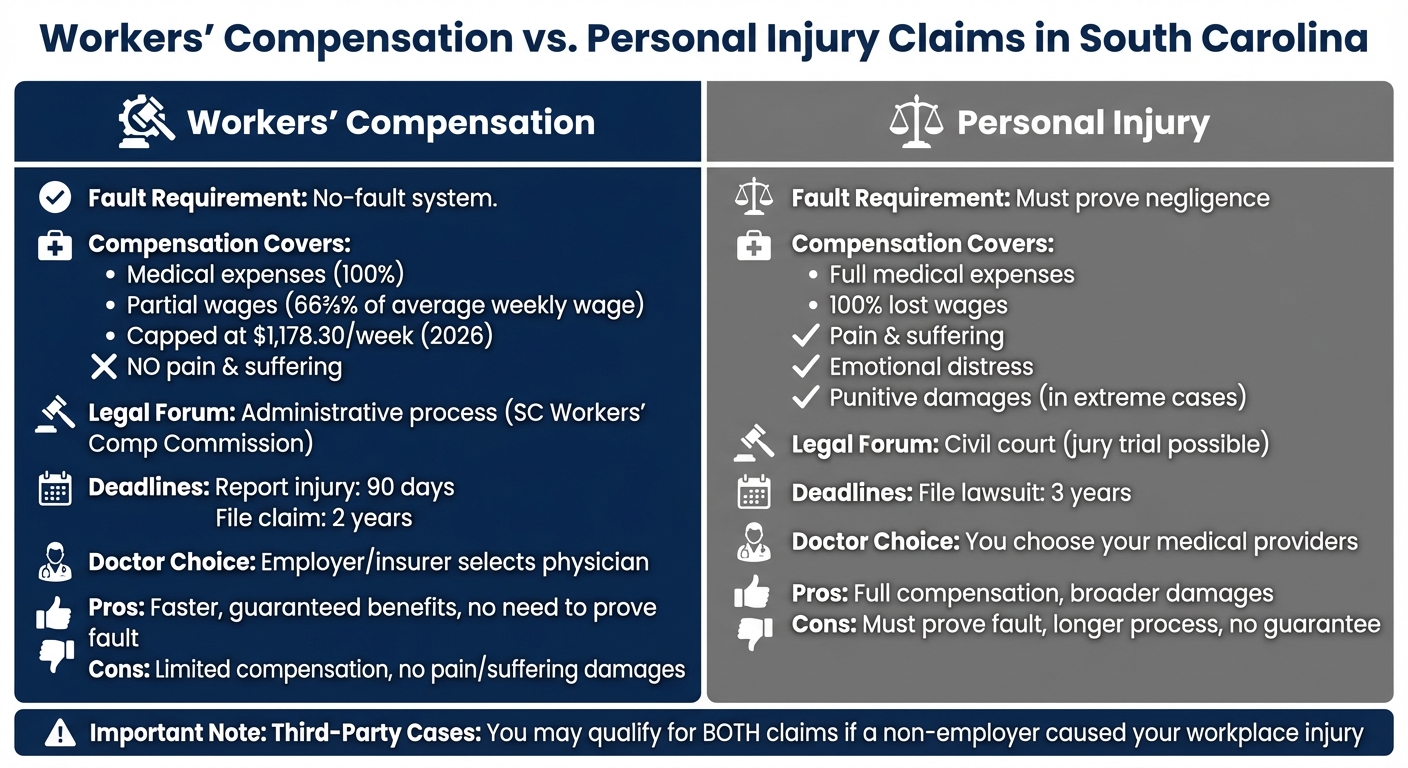
In 2026, the South Carolina workers’ compensation maximum represents the absolute ceiling on the weekly indemnity benefits an injured worker can receive. Regardless of your pre-injury earnings, your weekly disability check cannot excee...
In 2026, the South Carolina workers’ compensation maximum represents the absolute ceiling on the weekly indemnity benefits an injured worker can receive. Regardless of your pre-injury earnings, your weekly disability check cannot exceed this state-mandated limit, which is recalculated annually by the South Carolina Workers’ Compensation Commission (SCWCC) based on the state’s average weekly wage.
Contents
When you are injured on the job in South Carolina, the law provides for medical treatment and "indemnity" (wage replacement) benefits. While the standard rule is that you should receive two-thirds of your average weekly wage, the "maximum" acts as a legal bottleneck. For high-income earners or those with significant overtime, this cap often means their actual benefit is much lower than the expected 66.6%. Understanding how this figure is derived and applied is essential for financial planning during recovery.
The Statutory Basis of the Maximum Weekly Benefit
The maximum weekly compensation rate in South Carolina is not an arbitrary number. It is tethered to the South Carolina Department of Employment and Workforce (DEW) calculations. Every year, the DEW calculates the average weekly wage for all workers in the state for the preceding fiscal year. Under South Carolina Code Section 42-9-10, the maximum weekly benefit for workers' compensation is set at 100% of that state average weekly wage (SAWW).
For 2026, this maximum applies to all injuries occurring on or after January 1st of this year. If your injury occurred in a previous year, you are subject to the maximum that was in effect on the date of your accident. These rates do not "adjust up" for existing claimants when the state average rises; your rate is locked in based on your date of injury.
How the Rate is Calculated for the Individual
To understand how the maximum affects you, you must first calculate your Average Weekly Wage (AWW). This is generally determined by taking your total earnings from the four quarters (13 weeks) immediately preceding your injury and dividing by the number of weeks worked. This total includes:
- Base salary or hourly wages.
- Overtime pay.
- Bonuses and commissions.
- The value of certain fringe benefits, such as a company-provided vehicle or housing (if those benefits are discontinued after the injury).
Once the AWW is established, the "Compensation Rate" is calculated as 66 2/3% of that amount. If that result is higher than the 2026 state maximum, you are "capped" at the maximum.
How the 2026 Maximum Impacts Different Benefit Tiers
Workers' compensation benefits in South Carolina are categorized into different types depending on the nature and duration of the disability. The maximum weekly rate applies to each of these indemnity categories.
Temporary Total Disability (TTD)
TTD benefits are paid when a doctor determines you are completely unable to work while recovering from your injury. These benefits continue until you reach Maximum Medical Improvement (MMI) or return to work. For a high earner—for example, someone earning $3,000 per week—two-thirds would be $2,000. However, if the 2026 state maximum is $1,192.12, that worker will only receive $1,192.12 per week, resulting in a significant income gap.
Temporary Partial Disability (TPD)
If you can return to work in a "light duty" capacity but earn less than you did before the injury, you may receive TPD. The benefit is calculated as two-thirds of the difference between your pre-injury AWW and your current light-duty wages. Even in this scenario, the total benefit paid cannot cause your total income to exceed the state maximum.
Permanent Partial Disability (PPD)
PPD benefits are paid when you reach MMI but have a permanent impairment. This is often calculated using a "scheduled member" list (explained below). The weekly rate used for these settlements is the same rate established during your TTD period, which remains subject to the maximum cap.
The "Scheduled Member" Maximums and Total Award Caps
South Carolina law uses a "schedule" to determine the value of specific body parts. Each body part is assigned a specific number of weeks. For example, the loss of an arm is worth 312 weeks, while a leg is worth 280 weeks.
The "maximum" affects these awards in two ways:
- Weekly Rate Cap: The dollar amount paid for each of those weeks is capped at the 2026 maximum.
- Duration Cap: For most injuries, the maximum duration for which you can receive benefits is 500 weeks.
| Body Part (Scheduled Member) | Maximum Duration (Weeks) | Calculation Method |
|---|---|---|
| Arm | 312 Weeks | (Comp Rate) x (% Impairment) x 312 |
| Leg | 280 Weeks | (Comp Rate) x (% Impairment) x 280 |
| Hand | 185 Weeks | (Comp Rate) x (% Impairment) x 185 |
| Foot | 173 Weeks | (Comp Rate) x (% Impairment) x 173 |
| Eye | 140 Weeks | (Comp Rate) x (% Impairment) x 140 |
| Total Disability / Death | 500 Weeks | Standard limit for most claims |
If a worker suffers a "total and permanent" injury, such as paraplegia or physical brain damage, the 500-week limit may be waived, and benefits can continue for the remainder of the worker's life. However, even in these life-award cases, the weekly amount remains capped at the maximum rate that was in effect at the time of the injury.
Why High Earners Face Unique Risks
The South Carolina workers’ compensation maximum creates a "regressive" benefit structure. While a worker earning $40,000 a year will likely receive a full two-thirds of their income, a professional earning $150,000 a year will receive far less than half of their income.
Strategies for High-Income Workers
If you are an executive, specialized engineer, or medical professional in South Carolina, the workers' compensation maximum may not cover your basic mortgage or living expenses. Because of this, many professionals carry supplemental private disability insurance. It is important to note that workers' compensation is "exclusive remedy" law, meaning you generally cannot sue your employer for the "gap" in wages between the state maximum and your actual salary.
Common Pitfalls in Calculating the Maximum Benefit
The South Carolina Workers’ Compensation Commission frequently sees disputes regarding how the Average Weekly Wage is calculated. If the insurance carrier calculates your AWW too low, you might not even reach the maximum cap, even if you are entitled to it.
- Missing Quarters: If the employer provides payroll data for only the most recent weeks rather than the full four quarters, it may miss seasonal bonuses or periods of heavy overtime.
- Fringe Benefit Exclusion: Employers often forget to include the value of non-monetary compensation. Under S.C. Regulation 67-1603, if the employer stops providing a benefit like a housing allowance because of the injury, that value must be added to the AWW.
- Multiple Jobs: If you were working two jobs at the time of injury, South Carolina law generally allows you to aggregate your income from both sources to calculate your AWW, provided both employers are covered under the Act. This aggregation is often necessary for a worker to reach the maximum benefit level.
The Role of the 2026 Maximum in Settlements
When a workers' compensation case moves toward a "clincher" (a full and final settlement), the maximum rate is used as the multiplier for all future value calculations. For instance, if you are negotiating a settlement for a back injury that resulted in a 20% permanent partial disability to the back (which is valued at 300 weeks in SC), the math looks like this:
- 300 weeks (Back) x 20% = 60 weeks.
- 60 weeks x Your Compensation Rate (Capped at the 2026 Maximum).
If the maximum is $1,192.12, the maximum possible PPD settlement for that specific 20% impairment would be $71,527.20. Understanding this ceiling helps set realistic expectations during mediation or hearings before a Commissioner.
Frequently Asked Questions
Does the maximum rate change if I am on benefits for several years?
No. Your maximum weekly benefit is determined by the date of your accident. If you were injured in 2024, you are bound by the 2024 maximum for the life of that claim, even if you are still receiving checks in 2026. The 2026 rate only applies to new injuries occurring within this calendar year.
Is the maximum benefit taxable?
In almost all cases, workers' compensation indemnity benefits are exempt from federal and state income tax. This tax-exempt status helps offset the fact that you are only receiving a portion of your pre-injury income. However, if you also receive Social Security Disability (SSDI) benefits, there may be a "Social Security Offset" that impacts your total take-home amount.
Can I get more than the maximum if I have multiple injuries?
The weekly cap is absolute. Even if you injure multiple body parts in a single accident, your weekly indemnity check cannot exceed the state maximum for 2026. However, multiple injuries may increase the duration of your benefits or qualify you for "Permanent Total Disability" status, which extends the total award length beyond the standard 500-week cap.
What if my average weekly wage is lower than the state minimum?
South Carolina also has a "minimum" weekly compensation rate. If your calculated two-thirds rate is lower than the state minimum, you will receive the minimum rate, or your full actual AWW if your actual earnings were even lower than the minimum.
Does the maximum apply to medical bills?
No. The maximum weekly rate only applies to wage replacement (indemnity) and disability awards. There is no statutory "maximum" dollar amount for authorized medical treatment. The employer/carrier is responsible for all "reasonable and necessary" medical care related to the injury for as long as it is required to tend to the condition or afford relief.
Practical Recommendation for Injured Workers
If you have suffered a workplace injury in 2026, your first step should be to verify the Form 15 or Form 18 issued by the insurance carrier. This form lists your Average Weekly Wage and your Compensation Rate. Do not assume the insurance company's math is correct. Cross-reference their figures with your own pay stubs and W-2s from the last four quarters. If your earnings were high enough to put you near or over the state maximum, ensure that every bonus and perk has been factored in to ensure you are receiving the full 2026 maximum rate. Given the complexity of the "scheduled member" system and the long-term impact of the 500-week cap, consulting with a legal professional familiar with South Carolina Workers’ Compensation Commission regulations is often the most effective way to protect your financial interests.
Image Gallery