Forethought Life Insurance Company Maxima Policy Explained
The Forethought Life Insurance Company Maxima policy is a specialized financial product designed to provide permanent life insurance protection combined with cash value accumulation potential, tailored primarily for estate planning and...
The Forethought Life Insurance Company Maxima policy is a specialized financial product designed to provide permanent life insurance protection combined with cash value accumulation potential, tailored primarily for estate planning and legacy preservation goals.
Contents
Navigating the landscape of permanent life insurance requires a clear understanding of how specific products function, what underlying financial commitments they demand, and how they serve long-term wealth management strategies. Among various offerings in the insurance marketplace, life insurance policies issued by Forethought Life Insurance Company—a subsidiary of Global Atlantic Financial Group—often capture the attention of individuals seeking accumulation-oriented protection. Understanding the mechanics, features, and constraints of these policies is essential for policyholders and estate planners evaluating risk mitigation and asset transfer vehicles.
Understanding Forethought Life Insurance Company and Its Market Position
Forethought Life Insurance Company operates as a prominent insurance provider focusing on pre-need life insurance, annuities, and life insurance products tailored for retirement and estate planning. Acquired by Global Atlantic Financial Group, the company benefits from institutional backing and financial stability ratings from major agencies such as A.M. Best, S&P, and Moody's.
When evaluating a permanent insurance product underwritten by Forethought, it is vital to contextualize the issuing carrier's financial strength. Policyholders rely on the long-term claims-paying ability of the insurer, especially for whole life or universal life policies designed to span decades. Forethought’s emphasis on retirement-focused solutions means its product suite—including variations marketed under various series names—frequently integrates features addressing tax-advantaged growth, legacy creation, and liquidity needs during retirement.
Core Characteristics of Permanent Life Insurance Policies
Permanent life insurance differs fundamentally from term life insurance by offering lifetime coverage paired with a savings component known as cash value. To evaluate how a product like the Maxima functions, one must examine the foundational pillars of permanent insurance:
- Lifetime Protection: As long as required premiums are paid, the policy remains in force until the insured’s death, ensuring a guaranteed death benefit payout to designated beneficiaries.
- Cash Value Accumulation: A portion of each premium payment is directed into a tax-deferred cash value account. This account grows over time based on fixed interest, dividends, or market-linked indexing, depending on the specific policy design.
- Policy Loans and Withdrawals: Policyholders can typically access the accumulated cash value during their lifetime via tax-advantaged policy loans or withdrawals, providing a source of liquidity for emergencies or supplemental retirement income.
Products categorized under accumulation or estate strategies are typically structured to maximize the internal cash value growth relative to the death benefit, subject to federal tax guidelines governing life insurance contracts.
Key Features Associated with Accumulation and Estate Policies
While specific product availability and exact contractual terms vary based on underwriting year, state availability, and individual risk profiles, policies designed with high cash-value focus generally share several structural attributes:
Premium Flexibility and Funding Design
Many modern permanent policies offer structured premium payment schedules, ranging from single-premium options to continuous pay over the lifetime of the insured or limited-pay periods (such as 10-pay or 20-pay). For accumulation-focused products, funding is often optimized up to the maximum limits allowed by the Internal Revenue Code (IRC) Section 7702 without classifying the contract as a Modified Endowment Contract (MEC), unless a short-term funding structure is intentionally desired for estate liquidity.
Growth Mechanisms
The accumulation component within these policies relies on the underlying crediting strategy. Depending on the exact iteration of the policy, growth may be tied to:
- Fixed Accounts: Offering a guaranteed minimum interest rate established by the insurer.
- Indexed Accounts: Crediting interest based on the performance of an external market index (such as the S&P 500) without direct participation in the stock market, often featuring participation rates, caps, and a 0% floor to protect against market downturns.
Death Benefit Options
Policyholders typically choose between a level death benefit (Option A) or an increasing death benefit (Option B). A level death benefit maintains a steady payout while cash value grows internally, whereas an increasing death benefit adds the accumulated cash value to the base amount, generally resulting in higher ongoing insurance costs as the insured ages.
Comparative Overview of Permanent Policy Types
To better understand where accumulation-oriented or specialized permanent policies fit within the broader insurance spectrum, the following comparison outlines common permanent life insurance structures:
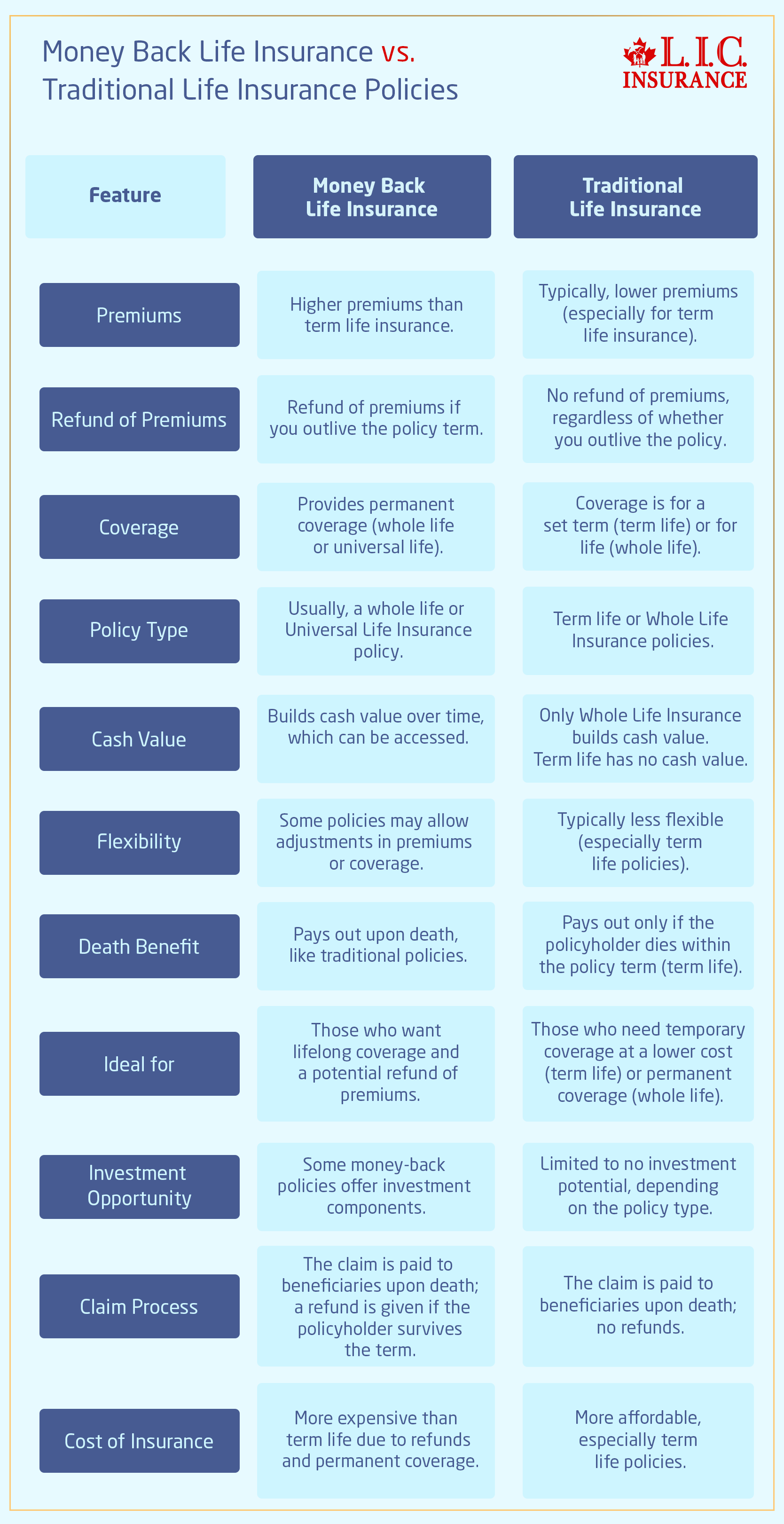
| Feature / Attribute | Traditional Whole Life | Universal Life (UL) | Indexed Universal Life (IUL) | Specialized Accumulation / Maxima Structures |
|---|---|---|---|---|
| Premium Structure | Fixed and mandatory | Flexible within contractual limits | Flexible within contractual limits | Optimized for cash efficiency or structured funding |
| Cash Value Growth | Guaranteed interest plus potential dividends | Tied to current general account interest rates | Linked to external market index performance with floors | Designed for maximum cash accumulation efficiency |
| Flexibility | Rigid; missed payments risk lapse | High flexibility in premium timing and amounts | Moderate to high flexibility with adjustable death benefits | Tailored to specific estate or retirement income targets |
| Risk Profile | Low insurer discretion; high guarantees | Interest rate risk borne by policyholder | Index cap/floor risk; potential for zero growth in down years | Balances accumulation potential with permanent death benefit security |
Potential Benefits of Strategic Policy Structuring
Utilizing specialized life insurance policies as part of a comprehensive financial plan offers several distinct advantages when structured and managed correctly:
- Tax-Advantaged Growth: Cash value grows on a tax-deferred basis, meaning policyholders do not pay annual income taxes on the internal gains.
- Tax-Free Income Potential: Through properly structured withdrawals up to the policy's cost basis, followed by tax-free policy loans, individuals can access liquidity during retirement without triggering ordinary income tax brackets, provided the policy remains active.
- Estate Liquidity: For high-net-worth individuals whose assets are tied up in real estate, private businesses, or taxable investment portfolios, a permanent life insurance death benefit provides immediate, income-tax-free liquidity to cover estate taxes, probate costs, or equalized inheritance distribution among heirs.
- Creditor Protection: In many jurisdictions, life insurance cash values and death benefits enjoy statutory protection from creditors, adding an extra layer of asset protection.
Operational Limitations and Risk Factors
Despite their advantages, permanent life insurance policies involve complex mechanics and specific financial risks that require careful evaluation:
- Cost of Insurance (COI) Increases: As the insured ages, the net amount at risk for the insurer increases, which can cause internal COI charges to rise. If cash value fails to keep pace due to poor market performance or insufficient funding, higher premiums may be required to keep the policy from lapsing.
- Surrender Charges: Most permanent policies feature a declining surrender charge schedule that spans the first 10 to 15 years of the contract. Withdrawing funds or surrendering the policy during this window can result in substantial financial penalties.
- MEC Classifications: Exceeding funding limits defined by IRC Section 7702A converts the policy into a Modified Endowment Contract. This alters the tax treatment of withdrawals and loans, making distributions taxable as ordinary income and subject to a 10% penalty if taken before age 59½.
- Underwriting Requirements: Securing optimal rates requires passing medical underwriting, including paramedical exams, blood panels, and historical health evaluations. Pre-existing conditions or advanced age can significantly increase premium costs.
Evaluating Suitability and Professional Guidance
Choosing a permanent life insurance policy requires balancing long-term financial commitments with clear objectives. Because these contracts involve significant upfront and ongoing capital allocation, they are generally best suited for individuals who have maximized traditional retirement accounts (such as 401(k)s and IRAs) and are seeking alternative tax-advantaged vehicles for estate planning or supplemental cash flow.
Disclaimer: This article is for informational and educational purposes only and does not constitute financial, legal, or tax advice. Life insurance products involve complex contractual obligations, fees, and risks. Individuals should consult with a licensed financial advisor, certified financial planner, or tax professional before purchasing or modifying any insurance policy.
Frequently Asked Questions
What is the primary purpose of a Forethought permanent life insurance policy?
The primary purpose is to provide permanent death benefit protection combined with tax-deferred cash value accumulation. These products are often utilized for estate planning, legacy creation, and supplemental retirement liquidity strategies.
How does cash value grow inside these policies?
Cash value growth depends on the specific policy design, which may utilize fixed interest crediting, dividends (in whole life contracts), or index-linked crediting strategies tied to external market performance with guaranteed minimum floors.
Can I lose money in an indexed or accumulation-focused life insurance policy?
While policies tied to market indices typically feature a 0% floor to protect principal from market downturns, policyholders can still experience a reduction in cash value if the internal cost of insurance and administrative fees exceed the interest credited during periods of low or zero market growth.
What happens if I stop paying premiums on a permanent policy?
If the accumulated cash value is insufficient to cover ongoing monthly deductions and cost of insurance charges, the policy will enter a grace period and eventually lapse. Once a policy lapses, the death benefit is lost, and any remaining surrender value is disbursed according to contract terms.
Are policy loans taxable?
Policy loans are generally not considered taxable income, as they are treated as loans secured by the cash value rather than distributions of earnings. However, if the policy lapses or is surrendered while a loan is outstanding, the outstanding loan balance becomes taxable as ordinary income in that tax year, potentially creating a significant tax liability.
Image Gallery