Understanding Global Wealth Disparities: Bill Gates Net Worth and Kim Jong Un Net Worth
Estimating the net worth of Bill Gates and Kim Jong Un involves fundamentally different financial methodologies. While Bill Gates’ wealth is transparent and market-derived through publicly traded assets and investment disclosures, the...
Estimating the net worth of Bill Gates and Kim Jong Un involves fundamentally different financial methodologies. While Bill Gates’ wealth is transparent and market-derived through publicly traded assets and investment disclosures, the net worth of Kim Jong Un is opaque, rooted in state control, systemic power, and opaque management of the North Korean economy, making direct comparisons mathematically elusive and contextually distinct.
Contents
The Financial Architecture of Bill Gates
Bill Gates, the co-founder of Microsoft, maintains a wealth profile that is largely tracked by financial institutions and market analysts. As of 2026, the majority of his fortune is not held in Microsoft stock, which he has significantly divested over the decades, but rather through Cascade Investment, LLC. This holding company manages his diverse portfolio, which includes significant stakes in waste management, hospitality, automotive engineering, and agricultural land.
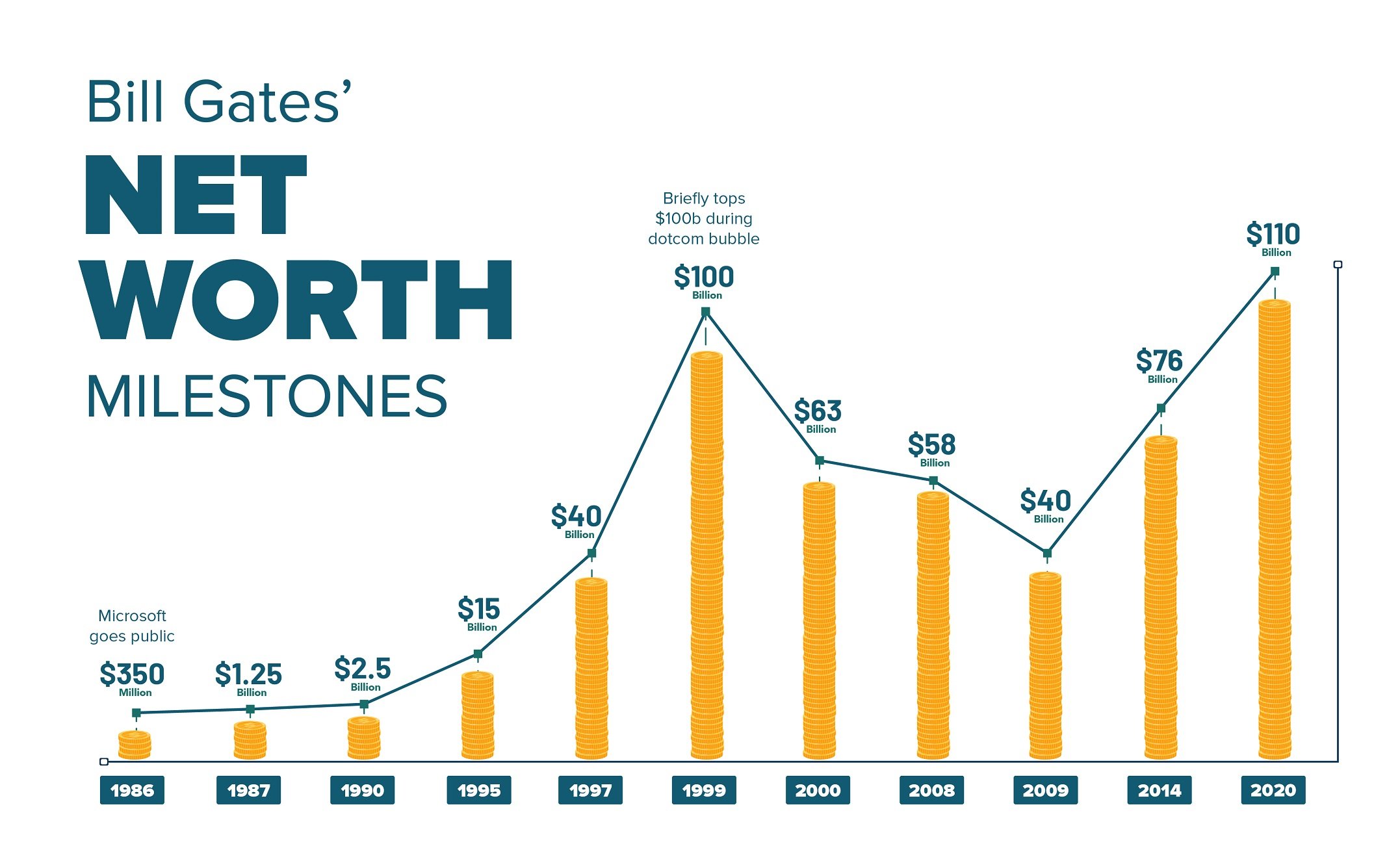
The valuation of Gates’ wealth is subject to real-time market fluctuations. Because his assets—such as shares in Republic Services, Deere & Company, and Canadian National Railway—are traded on public exchanges, analysts can derive a reliable estimate of his net worth. His financial transparency is supported by mandatory filings with the U.S. Securities and Exchange Commission (SEC), which provide the public with a granular view of his equity positions. This transparency ensures that his estimated net worth, generally cited in the range of $100 billion to $130 billion depending on market conditions in 2026, is a reflection of liquid capital, equity, and diversified investment holdings.
The Complexity of State Wealth: Kim Jong Un
Quantifying the net worth of Kim Jong Un presents an entirely different challenge. Unlike Western billionaires, Kim Jong Un does not possess personal wealth in a traditional market sense. His "net worth" is inextricably linked to the national economy of the Democratic People’s Republic of Korea (DPRK).
In the context of authoritarian leadership, the lines between personal assets and state property are intentionally blurred. Various intelligence reports and investigative studies have suggested that the leader manages a "slush fund" or a collection of assets—often referred to as the "Office 39" or similar mechanisms—which generates foreign currency through state-led enterprises, overseas labor, and illicit trade. Estimates regarding his wealth often vary wildly, ranging from $1 billion to $5 billion, though these figures are speculative. They do not represent a balance sheet in the conventional sense but rather the total value of assets under his direct control. Consequently, when discussions arise regarding his net worth, they are less about personal balance sheets and more about the command economy’s ability to generate liquidity for the ruling elite.
Comparative Framework: Transparency vs. Sovereignty
To understand why these two figures are often mentioned in the same analytical context, one must distinguish between individual capital accumulation and sovereign control.
| Feature | Bill Gates | Kim Jong Un |
|---|---|---|
| Primary Wealth Source | Equity, dividends, market investments | State resources, command economy control |
| Verification Method | Public filings, SEC disclosures, market data | Intelligence estimates, expert conjecture |
| Liquidity | Highly liquid through market access | Largely tied to state treasury and power |
| Regulatory Oversight | Subject to tax and securities laws | No institutional oversight |
This comparison highlights a broader economic reality: the distinction between the wealth of a private individual operating in a free-market capitalist system and the power exerted by a supreme leader in a command economy. Gates’ wealth is a byproduct of enterprise value creation, whereas the wealth associated with Kim Jong Un is a manifestation of absolute authority over a nation’s resources.
The Role of Investment Disclosure
Bill Gates’ wealth management is defined by long-term strategic allocation. His philanthropic efforts via the Bill & Melinda Gates Foundation also play a critical role in his net worth. While the assets transferred to the foundation are no longer counted toward his personal net worth, the scale of his capital movement is unparalleled in modern history. Analysts look at his filings to determine the health of sectors he invests in, treating his moves as market signals.
In contrast, there is no "investment disclosure" for the North Korean leadership. The economic data emanating from Pyongyang is state-controlled and often sanitized. Attempts to "value" Kim Jong Un’s assets are essentially exercises in estimating the total value of the assets he can command or requisition from the state, which is structurally incompatible with the methodology used for valuing a private billionaire.
Methodological Limitations in Estimation
When financial publications rank the world’s wealthiest people, they rely on standardized metrics. These include real estate holdings (verified by property deeds), share ownership (verified by corporate filings), and cash reserves. These metrics are objective, verifiable, and consistent across geographies where rule of law prevails.
These methods fail when applied to Kim Jong Un. If an analyst assigns a value to the palaces, vehicles, or luxury imports associated with the North Korean leadership, they are often guessing at the value of state-owned luxury goods that cannot be liquidated or traded. The "net worth" attributed to him is a geopolitical estimation rather than a financial calculation. Readers should be cautious when viewing "billionaire lists" that include political leaders, as the categorization often conflates private sector wealth with the misappropriation of national funds.
Frequently Asked Questions
Is Kim Jong Un officially the wealthiest person in North Korea? Yes, in terms of command and control, he possesses absolute authority over national resources. However, this is not "wealth" in the sense of owning stocks or bonds that can be traded on a global market. He occupies a unique position where the state's budget and his personal interests are functionally identical.
Why is Bill Gates' net worth reported so differently across news outlets? Net worth fluctuates daily based on the stock prices of the companies he holds. Because Bill Gates' portfolio is vast and includes assets in multiple sectors, small percentage changes in these markets can result in billions of dollars in valuation shifts by the time the market closes.
Are there legal ways to compare these two types of wealth? No formal legal framework exists to compare them because they exist in different economic systems. One is private property governed by contract law and the other is sovereign control governed by administrative decree. Comparing them is an exercise in political science rather than finance.
Does Kim Jong Un pay taxes on his reported net worth? No. In a command economy, the leader defines the tax structure for the population but is not subject to it. Bill Gates, by contrast, is a significant taxpayer, and his net worth is calculated after accounting for the various tax implications of his capital gains and dividends.
Can sanctions affect the wealth of leaders like Kim Jong Un? Sanctions are the primary tool used by the international community to freeze assets associated with the North Korean leadership. While they do not "calculate" his net worth, they attempt to limit his access to foreign currency, effectively reducing his ability to move assets, which is a form of indirect wealth management.
What happens to this wealth when leadership changes? In the case of private individuals like Bill Gates, wealth is transferred through trusts, estates, and foundations, governed by specific legal documents. In a command structure, wealth is usually tied to the position of power rather than the individual, meaning the "assets" are typically passed to the successor of the office, not to the individual's private heirs.
Final Perspective
The pursuit of understanding the net worth of individuals like Bill Gates versus Kim Jong Un serves as a stark reminder of the global economic spectrum. One figure represents the pinnacle of private wealth accumulation within a globalized market, where assets are governed by transparency and legal regulation. The other represents the total centralization of a nation’s economic output under a single authority. Analyzing these figures requires a deep understanding of whether one is calculating market value or measuring geopolitical control. Readers looking to understand wealth should focus on the transparency of the assets; where information is public and regulated, estimates are reliable. Where power is absolute and opaque, estimates remain largely theoretical.
Image Gallery