Why Understanding Operands and Operators Matters in Code
Understanding operands and operators is essential because they form the foundational grammar of every programming language. Mastering how compilers and interpreters evaluate these elements allows developers to prevent subtle logic bugs...
Understanding operands and operators is essential because they form the foundational grammar of every programming language. Mastering how compilers and interpreters evaluate these elements allows developers to prevent subtle logic bugs, eliminate implicit type coercion errors, optimize low-level performance, manage execution side effects, and write predictable, clean code across diverse execution environments.
Contents
Defining the Fundamentals: What Are Operands and Operators?
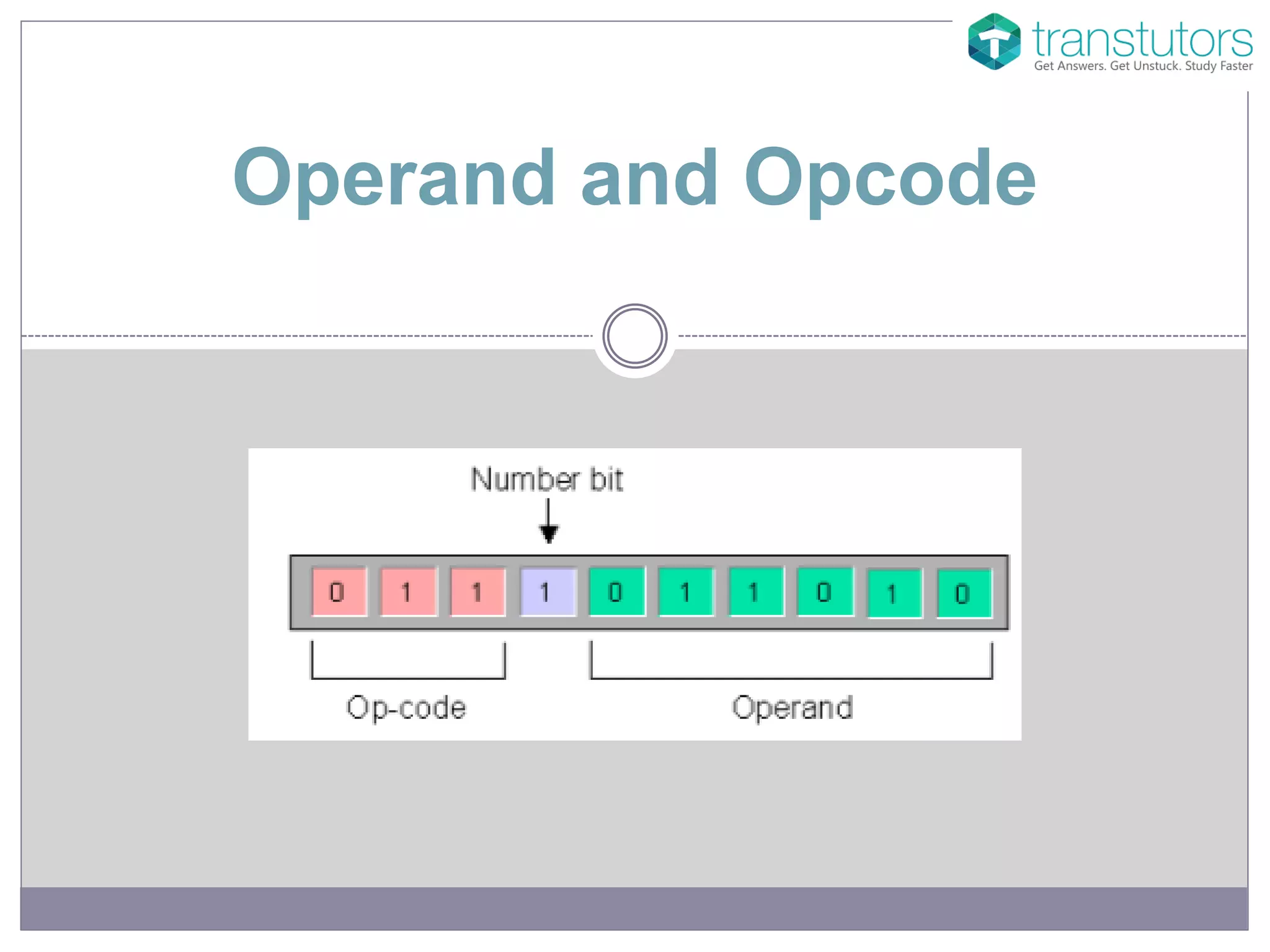
In computer programming, every expression consists of two primary components: data entities and computational rules. Operands represent the data entities upon which operations are performed, while operators represent the specific symbols or keywords that dictate what action should be taken on those operands.
While the concept appears simple at a surface level, the interaction between operands and operators governs how source code translates into machine-level instructions.
The Role of Operands in Memory and State
An operand can be a literal value (such as the integer 42 or the string "hello"), a variable holding a value, a function call returning a result, or another nested expression. Operands represent data residing in memory locations, CPU registers, or constant pools.
In modern statically typed and dynamically typed languages alike, an operand carries two critical attributes:
- Value: The raw bits stored in memory or evaluated during runtime.
- Data Type: The structural interpretation of those bits, which determines what operations are legally permitted on the value.
When an expression is parsed, the execution engine retrieves the operands from their respective memory addresses or stack frames before feeding them into the CPU's Arithmetic Logic Unit (ALU) or passing them through high-level runtime subroutines.
The Role of Operators as Computational Rules
An operator is a functional token that defines how one or more operands are manipulated, evaluated, or transformed. Operators are classified primarily by their arity—the exact number of operands they require to execute:
- Unary Operators: Require a single operand (for example, logical NOT
!x, bitwise NOT~x, or negation-x). - Binary Operators: Require two operands (for example, addition
a + b, comparisona > b, or logical ANDa && b). - Ternary Operators: Require three operands (for example, the conditional operator
condition ? standard_value : fallback_value).
Operators perform distinct structural duties, ranging from mathematical calculations and bit manipulations to assignment operations and memory address resolution.
The Core Mechanics: Precedence, Associativity, and Evaluation Order
One of the most frequent sources of subtle software defects is the confusion surrounding how execution engines resolve complex expressions containing multiple operators and operands. Understanding the underlying rules of precedence, associativity, and evaluation order is critical for predicting code behavior accurately.
Operator Precedence vs. Order of Evaluation
Developer discussions often conflate operator precedence with order of evaluation, yet they refer to distinct computational phases.
Operator precedence defines the grouping of operators and operands within an unparenthesized expression. It determines which operators bind more tightly to their surrounding operands, effectively structuring the syntax tree. For example, in the expression a + b * c, multiplication holds higher precedence than addition, meaning b * c forms a single sub-expression before a is added to its result.
Order of evaluation, by contrast, dictates the sequence in which the CPU or runtime engine actually computes the values of the operands themselves. In many programming languages—such as C, C++, and historical versions of mainstream languages—the order of operand evaluation is explicitly unspecified for standard binary operators. In foo() + bar() * baz(), although bar() and baz() are multiplied first conceptually, the language runtime may execute foo() before or after bar() and baz().
Left-to-Right and Right-to-Left Associativity
When an expression contains consecutive operators of equal precedence, associativity dictates how the expression is grouped:
- Left-Associative Operators: Evaluated from left to right. Most binary arithmetic operators (such as
+,-,*,/) are left-associative. The expression10 - 4 - 2is evaluated as(10 - 4) - 2 = 4, not10 - (4 - 2) = 8. - Right-Associative Operators: Evaluated from right to left. Assignment operators (
=,+=) and exponentiation operators (such as**in Python or JavaScript) are typically right-associative. The assignment chainx = y = z = 5evaluatesz = 5first, returning5, which is then assigned toy, and finally tox.
Failing to account for associativity leads to severe architectural bugs in high-precision algorithms, financial software, and cryptography implementations.
Critical Reasons Why Operand and Operator Mechanics Matter
Preventing Implicit Type Coercion and Implicit Conversions
Dynamically typed languages like JavaScript and PHP, alongside statically typed languages with implicit casting rules like C and C++, perform automatic conversions when an operator receives operands of mismatched types. Understanding operand-operator interactions allows developers to avoid dangerous dynamic behaviors.
Consider the binary addition operator + in JavaScript:
- When both operands are numbers (
5 + 10), it performs numeric addition (15). - When one operand is a string and the other is a number (
"5" + 10), the operator converts the numeric operand into a string, performing string concatenation ("510"). - When subtracting (
"5" - 2), the subtraction operator-strictly expects numeric operands, coercing"5"into the number5to yield3.
In low-level systems programming, mixing signed and unsigned integer operands with relational operators can result in security vulnerabilities. In C, comparing a negative signed integer to an unsigned integer using a < b forces the signed operand to be cast to a large positive unsigned value, reversing the intended outcome of the conditional check.
Controlling Short-Circuit Evaluation and Side Effects
Logical operators (&& and ||) in modern languages employ short-circuit evaluation, a process where the second operand is evaluated only if the first operand does not conclusively determine the outcome of the expression.
- In a logical AND expression
A && B, ifAevaluates tofalse, the overall expression must befalse. The runtime bypasses the evaluation of operandBentirely. - In a logical OR expression
A || B, ifAevaluates totrue, the overall expression must betrue. OperandBis never evaluated.
Short-circuit evaluation is frequently utilized for null safety checks, such as user != null && user.isActive(). However, if operand B contains a function call that produces a critical side effect (such as updating a database record or modifying a global counter), short-circuiting will prevent that side effect from executing when A short-circuits. Understanding how operators consume operands prevents missed updates and unexpected control flow skips.
Optimizing Low-Level Performance and Memory Overhead
At the hardware level, different operators demand vastly different CPU cycle overheads. Simple binary operators like bitwise AND (&), OR (|), and shifts (<<, >>) execute within a single clock cycle on modern processors. Basic arithmetic operators like addition and subtraction are similarly efficient.
However, arithmetic division (/) and modulo (%) require significantly more instruction cycles. When high-performance applications (such as graphics engines, physics simulators, and low-latency financial systems) process millions of operands per second, understanding how operators operate on raw bit patterns enables powerful optimizations:
- Replacing division by powers of two with right bit-shift operators (
x >> 3instead ofx / 8). - Replacing modulo checks for even/odd values with bitwise masking (
x & 1instead ofx % 2). - Utilizing vector operators (SIMD) to perform single operations across multiple operands simultaneously in memory.
Avoiding Undefined Behavior Across Compiler Architectures
In compiled languages like C and C++, modifying an operand more than once within a single expression sequence without an intervening sequence point triggers undefined behavior.
For example, an expression like i = i++ + ++i yields completely unpredictable results depending on the compiler version, optimization level, and target CPU platform. The language specification explicitly leaves the behavior undefined because the underlying assignment and increment operators modify the state of operand i out of sync with the expression evaluation lifecycle. Modern standard guidelines strictly prohibit modifying an operand while simultaneously using it elsewhere in the same expression.
Comparative Overview: Operator Characteristics and Behaviors
The table below outlines common operator classifications, their associativity, evaluation rules, and common developer pitfalls.
| Operator Category | Typical Syntax | Associativity | Short-Circuiting? | Primary Risk / Common Pitfall |
|---|---|---|---|---|
| Arithmetic | +, -, *, /, % |
Left-to-Right | No | Integer overflow, zero division, and floating-point precision loss. |
| Relational / Comparison | ==, !=, <, >, <=, >= |
Left-to-Right | No | Confusing equality (==) with assignment (=); implicit type coercion. |
| Strict Equality | ===, !== |
Left-to-Right | No | Assuming equality checks handle structural or object comparison rather than identity. |
| Logical AND / OR | &&, ||, and, or |
Left-to-Right | Yes | Skipping critical side effects inside the right-hand operand due to short-circuiting. |
| Bitwise | &, |, ^, ~, <<, >> |
Left-to-Right | No | Low operator precedence causing unexpected binding when mixed with relational operators. |
| Assignment | =, +=, -=, *=, /= |
Right-to-Left | No | Accidental assignment inside conditional statements (if (x = 5)). |
| Ternary / Conditional | ? : |
Right-to-Left | Yes (conditional) | Deep nesting reducing code readability and masking subtle type mismatches. |
How Modern Compilers Process Operands and Operators
Understanding how machine tools handle source code helps illuminate why operand-operator structure is so vital to software design. Compilers do not read expressions as simple linear text; they transform them into intermediate formal structures.
Abstract Syntax Trees (ASTs) and Expression Parsing
During the lexical analysis and parsing phases, compilers convert written expressions into an Abstract Syntax Tree (AST). In an AST:
- Operators become interior parent nodes (branch nodes).
- Operands become child leaf nodes.
For the expression (a + b) * (c - d), the compiler builds a tree where the multiplication operator * sits at the root. The left child is an addition operator + with leaf operands a and b, while the right child is a subtraction operator - with leaf operands c and d.
By structuring code into an AST, the compiler ensures that precedence and explicit grouping (parentheses) dictate the exact order of operation, regardless of the physical line layout in the original source file.
Constant Folding and Operator-Level Compiler Optimizations
Modern compilers use knowledge of operators and static operands to perform advanced optimizations during compilation, long before the binary runs:
- Constant Folding: If an operator receives operands that are all compile-time constants (for example,
const int seconds = 60 * 60 * 24), the compiler evaluates the result (86400) during compilation, eliminating runtime calculation overhead. - Strength Reduction: Compilers automatically replace expensive operators with cheaper ones. For instance, multiplying an integer operand by 2 (
x * 2) is routinely transformed by the optimizer into a bitwise left-shift (x << 1) or an addition instruction (x + x). - Algebraic Simplification: Compilers eliminate redundant operators and operands entirely, such as simplifying
x + 0tox, orx && truetox.
Common Pitfalls and Debugging Strategies
Even experienced developers encounter bugs caused by operand and operator misuse. Recognizing common error patterns speeds up root-cause analysis and code reviews.
Off-by-One and Precedence Errors in Complex Conditionals
Combining bitwise operators with comparison operators without explicit parentheses is a common source of software defects. In languages like C, C++, Java, and JavaScript, comparison operators have higher precedence than bitwise operators.
For example, consider an attempt to test whether a specific bit mask is set in a status flag:
if (flags & MASK == EXPECTED_VALUE)
Because == takes precedence over &, the engine parses this expression as flags & (MASK == EXPECTED_VALUE). The equality check executes first, evaluating to true (1) or false (0), which is then bitwise-ANDed with flags. This yields entirely incorrect logic. The correct pattern requires explicit parentheses around the bitwise operand pair:
if ((flags & MASK) == EXPECTED_VALUE)
Unintended Mutation via Unary Pre- and Post-Increment Operators
Unary increment (++) and decrement (--) operators behave differently based on whether they are placed before (prefix) or after (postfix) the operand:
- Prefix (
++x): Increments the operand value first, then evaluates to the new value. - Postfix (
x++): Evaluates to the current operand value first, then increments the operand in memory.
In loop structures and data structure indexing, mixing these up causes severe off-by-one errors:
array[index++] = value;
Here, value is assigned to array[index], and index is incremented afterward. If a developer mistakenly changes this to array[++index] = value;, the zero-th index of the array is skipped, corrupting data layouts and leading to index-out-of-bounds exceptions.
Frequently Asked Questions
What is the difference between an operand and an operator?
An operand is a data item (such as a variable, literal, or returned value) that is acted upon, whereas an operator is a symbol or keyword (such as +, &&, or ==) that defines the operation to perform on those data items.
Why does operator precedence matter if developers can just use parentheses?
While explicit parentheses override default operator precedence and clarify intent, understanding precedence is necessary for reading existing codebases, conducting code reviews, and writing idiomatic code without cluttering expressions with redundant syntax.
How does short-circuit evaluation affect function calls in conditional statements?
In short-circuit evaluation, if the first operand of a logical operator (like && or ||) determines the final truth value of the expression, subsequent operands are not evaluated at all. If those subsequent operands include function calls with side effects, those functions will not execute.
What is the difference between binary and unary operators?
A unary operator requires only one operand to perform its calculation (for example, logical NOT !flag or negation -5). A binary operator requires two operands to produce a result (for example, addition a + b or relational comparison x > y).
Why do floating-point operands produce inaccurate results with standard operators?
Floating-point numbers are stored using binary fractions (IEEE 754 standard). Because fractions like 0.1 cannot be represented precisely in binary, applying arithmetic operators to floating-point operands leads to rounding errors, making direct equality comparisons (0.1 + 0.2 == 0.3) evaluate to false.
Actionable Best Practices for Clean Code
To minimize bugs, improve code readability, and ensure robust performance, adopt these practical rules when working with operands and operators:
- Use Explicit Parentheses for Mixed Operators: Do not rely on team members memorizing complex operator precedence tables. Use explicit parentheses when mixing bitwise, logical, arithmetic, and comparison operators within a single statement.
- Avoid Modifying Operands Inside Expressions: Do not combine assignment operators (
=), side-effect-heavy functions, or increment operators (++,--) inside complex expressions. Perform state modifications on their own dedicated lines. - Favor Strict Equality Operators: In dynamically typed environments, use strict equality operators (
===and!==) to prevent unpredictable type coercion between operands of different types. - Isolate Side Effects from Short-Circuit Conditionals: Store function results in clearly named boolean variables before feeding them into logical
&&or||expressions if the side effects must execute unconditionally. - Audit Signed vs. Unsigned Operands: In low-level languages like C, Rust, or C++, explicitly check operand types before comparison or bit-shifting to prevent unsigned wrapping and sign-extension security flaws.
Image Gallery