Charlemagne: The Historical Foundation of the Father of Europe Title
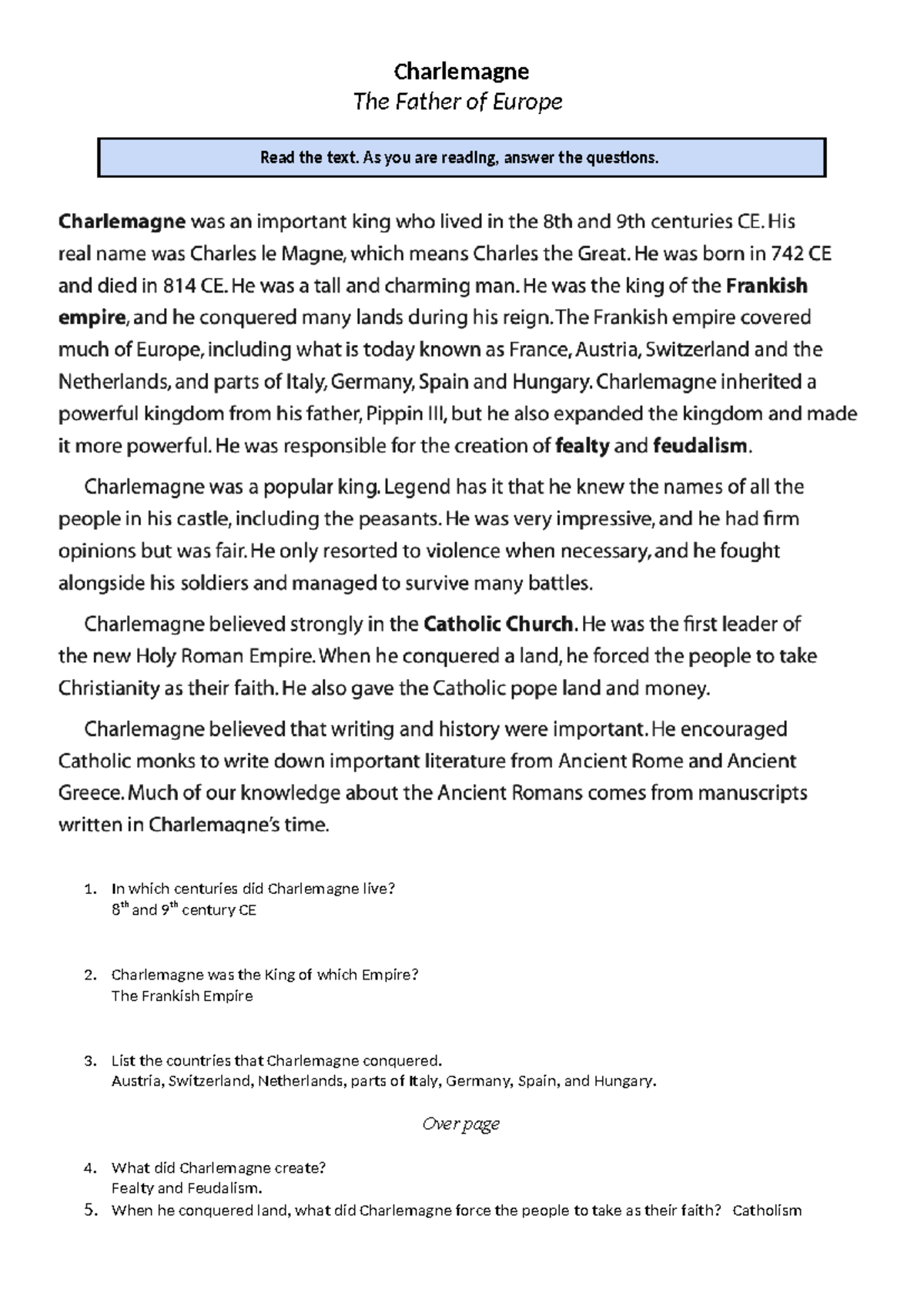
Charlemagne earned the title "Father of Europe" (Pater Europae) by unifying most of Western and Central Europe for the first time since the Roman Empire's collapse. Through military conquest, administrative standardization, and the Car...
Charlemagne earned the title "Father of Europe" (Pater Europae) by unifying most of Western and Central Europe for the first time since the Roman Empire's collapse. Through military conquest, administrative standardization, and the Carolingian Renaissance, he established the political, religious, and cultural frameworks that define the modern European identity and its historical development.
Contents
The Origin and Meaning of "Pater Europae"
The moniker Pater Europae is not a modern invention of 21st-century historians; it dates back to the late 8th century. During his own lifetime, an anonymous poet (often identified as the "Paderborn Epic" author) hailed Charlemagne as the "venerable beacon of Europe" and the "father of the continent." This was a profound shift in nomenclature. Previously, the Mediterranean was the center of the civilized world, and "Europe" was a vague geographical term. Under Charlemagne, the focus shifted northward, and "Europe" began to describe a distinct geopolitical entity bound by Latin Christianity and Frankish rule.
As of 2026, scholars continue to debate whether Charlemagne’s "European" vision was intentional or a byproduct of his desire to expand the Frankish Kingdom. Regardless of his intent, the result was a consolidated territory that included modern-day France, Germany, Italy, the Low Countries, and parts of Central Europe. This territorial core remains the heart of the European Union today, often cited by political leaders as the historical precedent for continental integration.
Political Unification and the Carolingian Empire
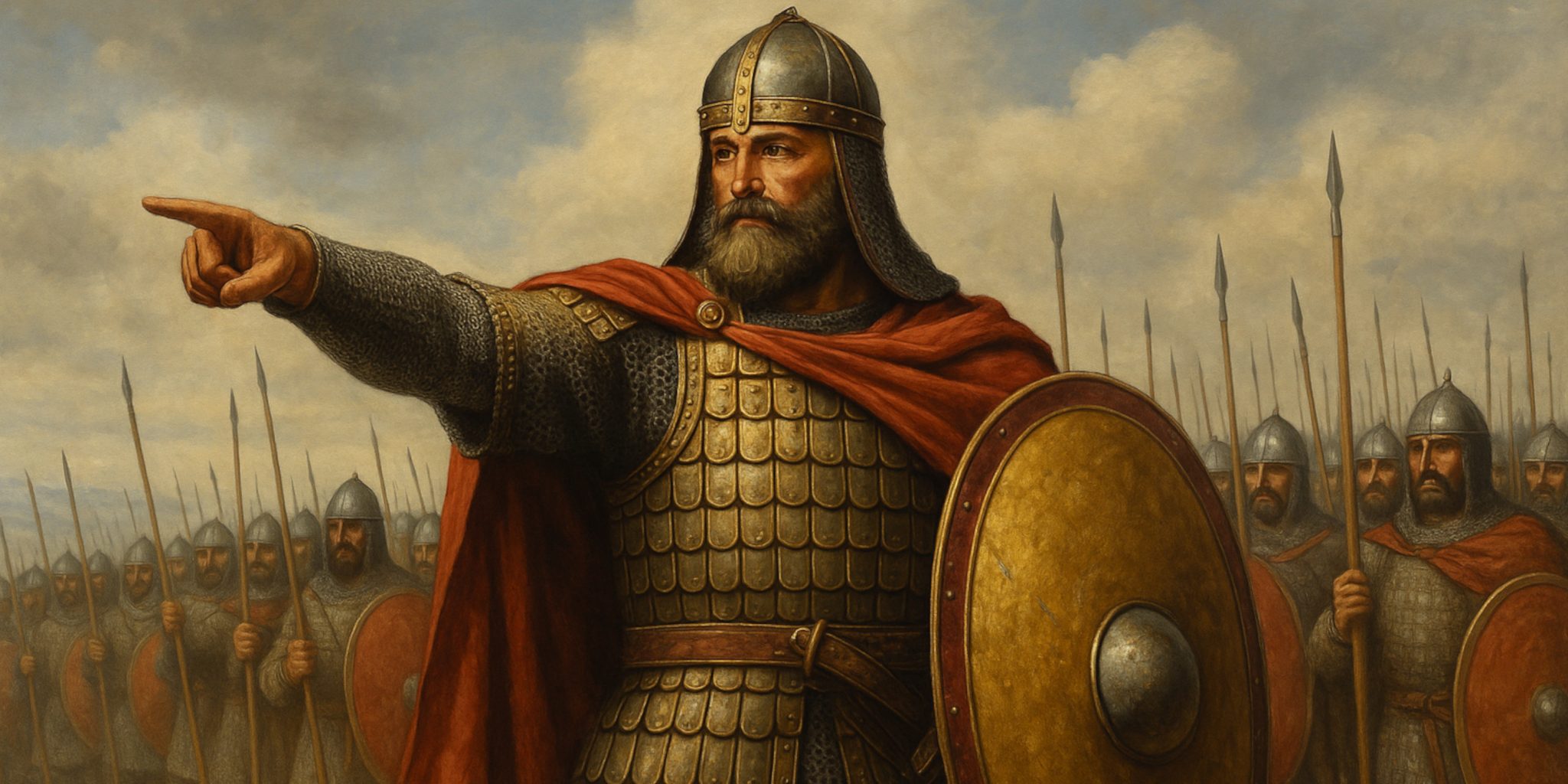
Charlemagne’s reign (768–814 AD) was defined by near-constant warfare to expand and secure his borders. His military campaigns against the Saxons, Lombards, and Avars were not merely about land; they were about bringing disparate tribes under a single administrative and religious umbrella.
The Role of the Missi Dominici
To govern such a vast expanse, Charlemagne implemented a sophisticated system of oversight. He utilized missi dominici (envoys of the lord), typically paired as one secular official and one church official. These envoys traveled throughout the empire to ensure that local counts were following the Emperor’s decrees and that justice was being administered fairly. This created a level of centralized accountability that had been absent in Europe for centuries.
Legal and Administrative Standardization
Charlemagne issued Capitularies, which were legislative acts divided into small chapters. These decrees covered everything from military obligations and property rights to the behavior of the clergy. By imposing a uniform legal framework over diverse ethnic groups, he fostered a sense of shared citizenship and common law that predated modern European legal systems.
The Carolingian Renaissance: A Cultural Rebirth
One of the most significant arguments for Charlemagne as the "Father of Europe" lies in his commitment to education and literacy, a period known as the Carolingian Renaissance. Recognizing that his empire needed literate administrators and a disciplined clergy, he recruited the finest minds from across the continent, most notably Alcuin of York.
The Invention of Carolingian Minuscule
Perhaps his most lasting technical legacy is the development of Carolingian minuscule. Before this, scripts were regional, cramped, and difficult to read (often referred to as "broken" scripts). Carolingian minuscule introduced clear, rounded characters, spaces between words, and punctuation. This standardization made it possible for a scholar in Aachen to read a manuscript written in Rome or Tours. It is the direct ancestor of our modern lowercase alphabet.
Preservation of Classical Texts
Under Charlemagne’s patronage, monasteries became scriptoria—hubs of book production. Monks painstakingly copied Latin classics and Christian scriptures. Historians estimate that the vast majority of Latin literature that survives today does so because it was preserved in Carolingian copies. By saving the Roman past, Charlemagne provided the intellectual foundation for the later High Middle Ages and the Renaissance.
Religious Unity and the Holy Roman Empire
The coronation of Charlemagne as Imperator Romanorum (Emperor of the Romans) on Christmas Day, 800 AD, by Pope Leo III, was a watershed moment. It signaled the birth of the Holy Roman Empire and solidified the alliance between the Frankish monarchy and the Papacy.
This alliance gave the Pope a military protector and gave Charlemagne the divine legitimacy to rule. It also created a unified "Christendom." By enforcing liturgical uniformity—standardizing the way Mass was said and which prayers were used—Charlemagne ensured that a peasant in the Pyrenees and a merchant in the Rhineland shared a common religious experience. This shared faith became the primary cultural adhesive of Europe for the next millennium.
Economic and Monetary Reform
Charlemagne recognized that a unified empire required a functional economy. He moved Europe away from a gold-based currency, which was scarce and often controlled by the Byzantine Empire, to a silver standard.
He introduced the denier (silver penny), which became the standard unit of currency across his domains. He also standardized weights and measures, facilitating trade between distant regions. This economic integration laid the groundwork for the commercial networks that would eventually evolve into the European market systems we recognize in 2026.
| Feature | Pre-Carolingian Period | Carolingian Reform (Charlemagne) |
|---|---|---|
| Governance | Fragmented tribal lordships | Centralized empire with missi dominici |
| Literacy/Script | Difficult regional scripts (Merovingian) | Standardized Carolingian Minuscule |
| Currency | Unstable, varied gold/barter | Uniform Silver Denier standard |
| Legal System | Oral tradition and local custom | Written Capitularies and codified law |
| Religious Scope | Diverse local rites and pagan pockets | Unified Latin Christendom |
| Education | Limited to high-ranking clergy | Cathedral and monastic schools for all |
The Strategic Importance of the Treaty of Verdun
While Charlemagne’s empire did not stay united after his death, its dissolution in 843 AD via the Treaty of Verdun actually defined the borders of modern Europe. The empire was split among his three grandsons:
- West Francia: Evolved into modern France.
- East Francia: Evolved into modern Germany.
- Middle Francia (Lotharingia): The "buffer zone" including the Low Countries, Switzerland, and Northern Italy.
The struggle over Middle Francia—the "middle kingdom"—would dominate European geopolitics for over a thousand years, fueling conflicts from the Middle Ages through the World Wars of the 20th century. By creating these distinct blocks, Charlemagne’s lineage inadvertently established the framework of the European nation-state.
FAQs: Understanding the Legacy of Charlemagne
Was Charlemagne actually French or German?
He was neither in the modern sense. Charlemagne was a Frank, a Germanic people who inhabited the territory of modern-day France, Germany, and the Benelux region. Both France and Germany claim him as their founding father; in French, he is Charlemagne, and in German, he is Karl der Große.
Why is he called the "Father of Europe" if his empire collapsed?
While the political entity (the Carolingian Empire) fractured, the institutional and cultural foundations he laid remained. His reforms in education, law, currency, and religion survived the split. The concept of a unified "Western" identity distinct from the Byzantine East began with him.
What was the Carolingian Renaissance?
It was a period of cultural and intellectual revival during the late 8th and early 9th centuries. It focused on improving the literacy of the clergy and nobility, standardizing the Latin language, and preserving classical Roman literature and Christian texts.
How did Charlemagne influence modern European currency?
Charlemagne’s silver penny (denier) established a system where 12 pence equaled a shilling and 20 shillings equaled a pound. This system was so resilient that it remained the basis of British currency until decimalization in 1971 and influenced continental systems for centuries.
Did Charlemagne use force to spread Christianity?
Yes. His campaigns against the Saxons, in particular, involved "baptism by the sword." He issued the Capitulatio de partibus Saxoniae, which imposed the death penalty for those who refused to be baptized or who observed pagan rites. This forceful integration was a primary tool for creating religious homogeneity.
Next Steps for History Researchers
To fully grasp the "Father of Europe" concept, researchers should examine the primary sources of the era, specifically Einhard’s Life of Charlemagne (Vita Karoli Magni), which provides an intimate look at his character and goals. Additionally, visiting the Aachen Cathedral, a UNESCO World Heritage site and Charlemagne’s final resting place, offers physical evidence of the Romanesque architectural synthesis he championed. Understanding his reign is essential for anyone studying the origins of the European Union or the historical development of Western civilization.
Image Gallery